 Vietnamnet.vn

 Podcast



During the negotiations for the $1 billion loan for the Nhon Trach 3 LNG power plant project, Nguyen Duy Giang, deputy general director of PetroVietnam Power Corporation (PV Power), worked with several major partners, such as SMBC (Sumitomo Mitsui Banking Corporation - Japan) and ING Bank (Netherlands).
International partners scrutinized the project carefully, as the Vietnamese government has committed to Net Zero by 2050. They questioned the project's long-term feasibility, noting that the Nhon Trach plant would only break even after about 25 years, and asked how long PV Power plans to operate the plant before transitioning to clean hydrogen energy.
This illustrated the biggest challenge: Vietnamese companies must comply with ESG (environmental, social, and governance) standards to access international financing.
“To work and negotiate terms with international organizations, we had to hire specialists from another company in HCMC. They are not only fluent in foreign languages but also professionally trained and knowledgeable about global environmental policies. They are capable of going toe-to-toe with international partners,” Giang said.
Personnel needed for green transition
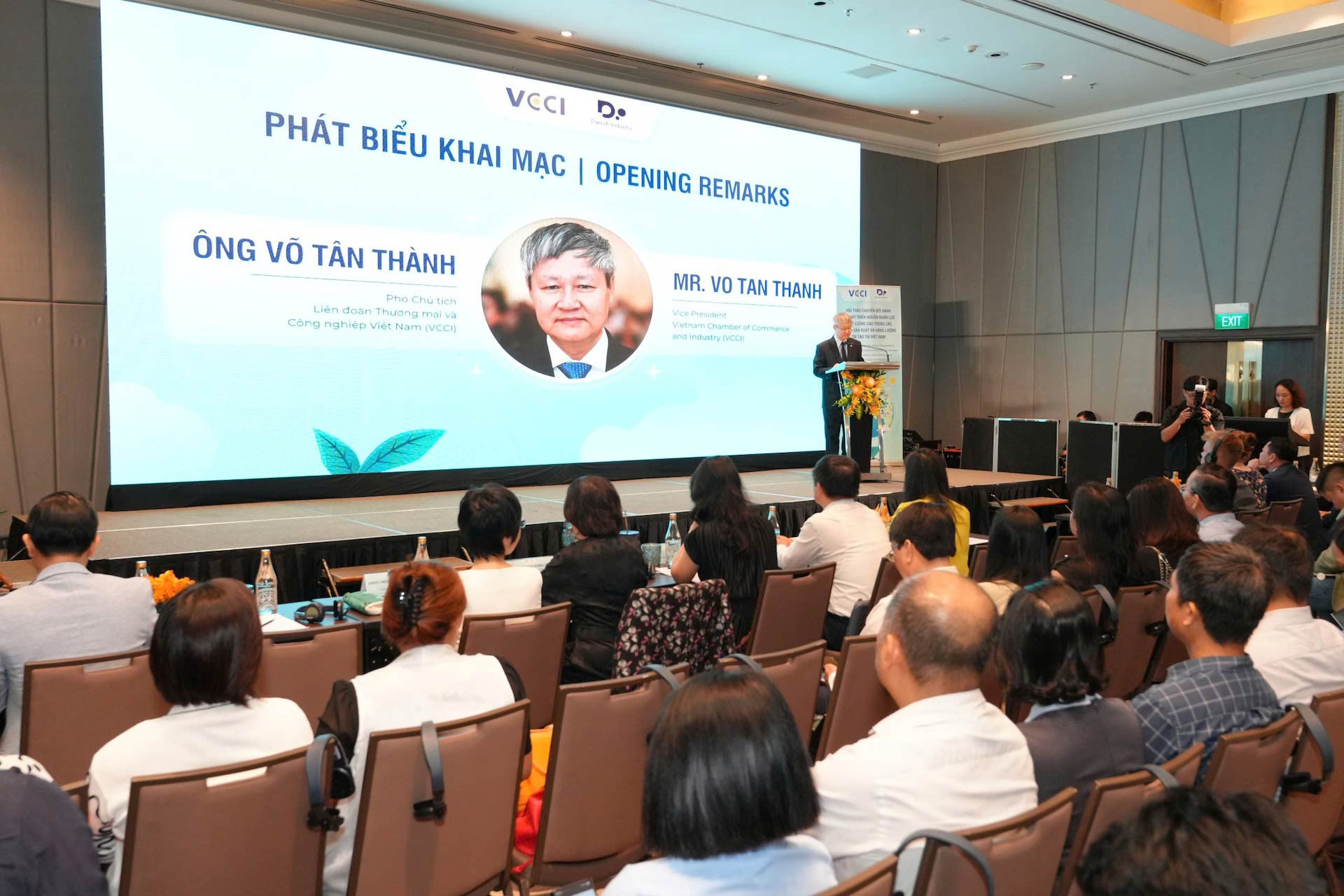
The PV Power executive shared this information at the recent workshop “Green transition and development of high-quality human resources in manufacturing and renewable energy sectors in Vietnam”, co-hosted by the Vietnam Chamber of Commerce and Industry (VCCI) and the Confederation of Danish Industry (DI).
Giang noted that the shortage of highly specialized personnel is a major concern for businesses amid the energy transition. Currently, no university in Vietnam offers training programs on environmental policies that meet international standards.
Even if the loan is approved and the project begins, the enterprise still requires ESG-savvy personnel to ensure stable operations.
“Many schools provide environmental training, but it’s mostly theoretical. ESG practice demands professionals who understand global standards. Very few institutions can train experts who are ready to work directly with foreign partners or financial institutions in this field,” he added.
A 2023 report by the World Bank pointed out that green jobs account for only about 3.6 percent of total employment in Vietnam, mainly in electricity, gas, water supply, mining, and market services. This highlights a significant gap between demand and the actual human resources available for a green economy.
Green economy to create 24 million new jobs
Dao Trong Do, from the Department of Vocational and Continuing Education under the Ministry of Education and Training, acknowledged that the current challenge lies in the shortage of skilled and properly trained workforce in renewable energy and green transition.
In reality, while some institutions are providing training in this field, Vietnam still lacks access to many global new standards. Some schools focus on training in fiber optics or semiconductors, while businesses often want 70-80 percent of their labor force to come from vocational colleges so they can operate and work directly without additional training.
Regarding solutions to attract students to renewable energy fields, Do said that state authorities are developing a list of key industries with high social demand but low enrollment and training rates.
Based on the list, the state will fully subsidize training costs, similar to the pedagogy sector. In addition to covering tuition fees, students will receive living expense support.
For financial support, authorities will mobilize enterprise participation. As businesses face severe labor shortages, they need to present their workforce needs so educational institutions can tailor training to meet actual market demands.
The official said some northern schools are collaborating with VinFast in a model in which enterprises place training orders. During their studies, students pay tuition as usual. Upon graduation, if VinFast deems them suitable for recruitment, students are hired, and the company reimburses their full tuition costs along with additional support.
Meanwhile, VinFast provides schools with funding equivalent to the training costs. Thus, enterprises are involved in human resource training from the outset.
Tran Thi Lan Anh, VCCI Secretary General, said that the green transition is not just about adopting clean technologies but also about changing mindsets and work culture. It has created new and more diverse job opportunities.
She cited a 2021 report by the International Labour Organization (ILO), which estimated that the green economy could generate 24 million new jobs worldwide by 2030, especially in renewable energy and energy efficiency sectors. These jobs are inclusive, regardless of gender, age or background, opening doors for a wide range of people, including women and youth.
Tran Chung
.svg)
