 Vietnamnet.vn

 Podcast



1. Resolution 71 sets national agenda for education breakthrough
On August 22, the Politburo issued Resolution 71-NQ/TW, a landmark directive reaffirming education as Vietnam’s highest national policy and, for the first time, defining it as the decisive factor for the nation’s future and a critical engine of economic development.
At a national conference to implement key Party resolutions, General Secretary To Lam emphasized: “Investing in education is investing in the country’s vital essence - it’s the foundation for future growth, productivity, and competitiveness.”
2. Free tuition and strategic investments in education system
Alongside Resolution 71, the Politburo introduced numerous strategic measures to reform and expand education.
These include full tuition waivers for students from preschool to the end of public high school, plans to modernize education from 2026 to 2035, and the construction of 248 inter-level boarding schools in border areas, with 100 set to be completed by 2026.
Additionally, To Lam endorsed providing lunch subsidies to primary and lower secondary students in border communes and supported expanding full-day classes in elementary and middle schools, based on local capacity.
3. Breakthroughs in education legislation and governance
In 2025, the Ministry of Education and Training passed or proposed 99 legal documents - including laws, resolutions, and circulars - marking an unprecedented push for institutional reform.
Four major education laws were passed by the National Assembly: the Law on Teachers, amendments to the Law on Education, the Law on Higher Education, and the Law on Vocational Education.
Four resolutions were also adopted to support early childhood education, nationwide tuition exemptions, policy innovation, and modernization goals for 2026–2035.
4. First Party Congress for the education sector sets strategic direction
On August 21, the Ministry’s first Party Congress for the 2025–2030 term was held. The event outlined strategic orientations for continued reform and quality improvement to meet national socio-economic goals.
5. 80th anniversary of the education sector celebrated nationwide
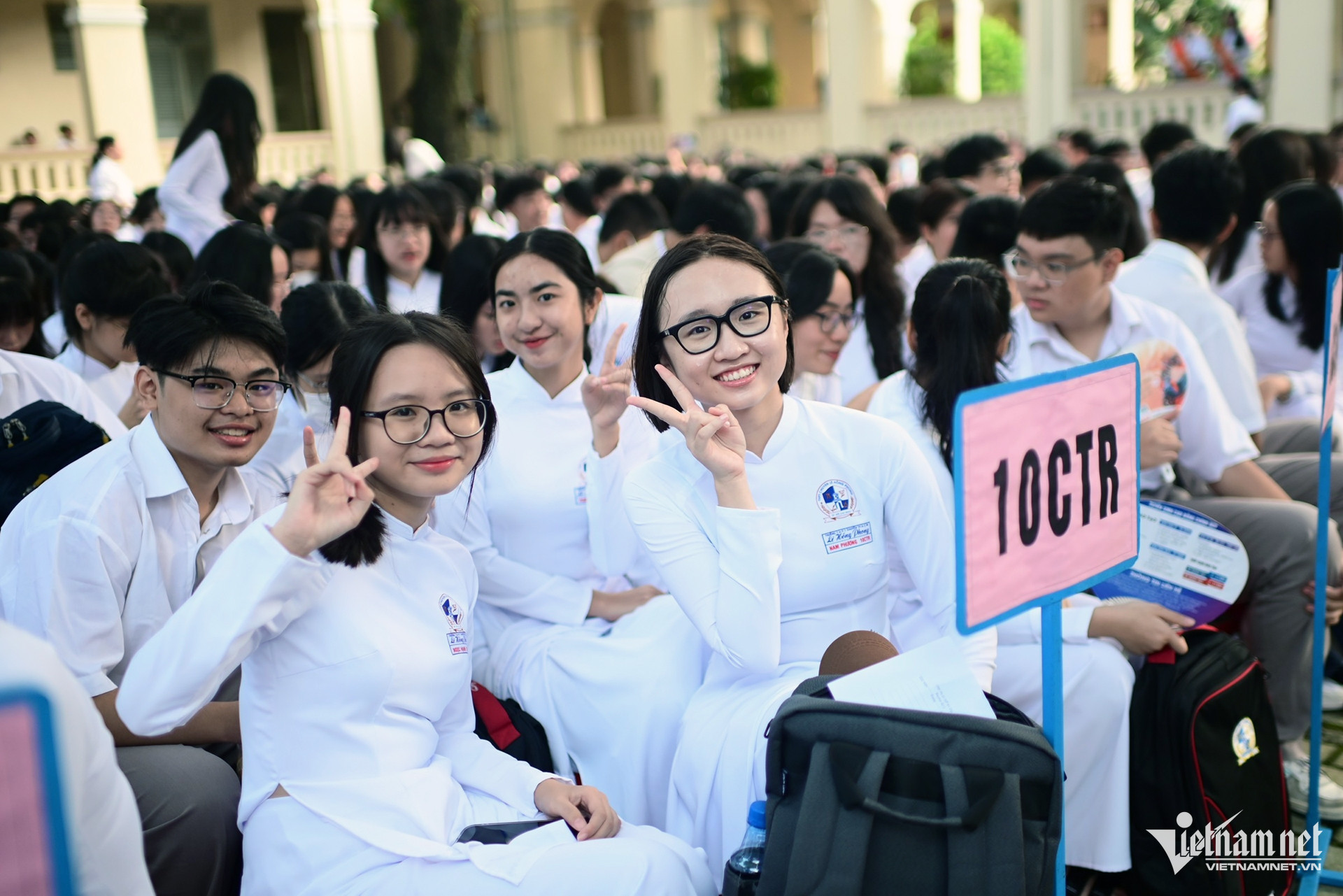
The September 5 back-to-school ceremony coincided with celebrations of the education sector’s 80th anniversary.
The unprecedented event was attended by senior leaders from the Party and State, local officials, and approximately 26 million students and 1.6 million teachers across over 50,000 institutions.
6. Ministry restructures for leaner, more efficient operations
In 2025, the Ministry streamlined its structure to 18 departments, reducing one general department and six units. It also assumed management of vocational education from the Ministry of Labor, and transferred its inspection division to the Government Inspectorate.
Decentralization efforts led to two decrees and six circulars on local authority roles, with 87 of 181 duties (46.5%) devolved to local levels. Online training was held for 50,000 local education leaders and school principals.
7. Completion of new national curriculum from grades 1 to 12
The year marked the full implementation of Vietnam’s revised general education curriculum across all grades.
The Ministry also began preparations for nationwide use of a unified set of textbooks from the 2026–2027 academic year, which will be freely provided to all students by 2030.
The 2025 national high school graduation exam was the first to include students under the 2018 curriculum while still accommodating those from the 2006 framework. With over 1.1 million participants, it was the largest in the nation’s history.
8. Continued excellence in academic competitions
Vietnam sent seven teams with 37 students to international and regional Olympiads in 2025. All students won medals - 13 gold, 16 silver, and 8 bronze - marking the highest overall medal count to date.
At the International Science and Engineering Fair (ISEF) in the US, Vietnamese students achieved unprecedented success: two second-place, one third-place, three fourth-place, and four special awards from sponsors - the best result since Vietnam began participating in 2013.
9. Breakthroughs in higher education and strategic human resource development
The Ministry rolled out key initiatives to boost research, innovation, and high-tech workforce training. Universities launched new programs in fields like semiconductors, AI, Industry 4.0, and high-speed rail.
Sixteen Vietnamese universities appeared in the Times Higher Education Impact Rankings for the first time.
STEM enrollments surged, with first-choice registrations rising 10.5%. Admission scores for teaching, science, and technology fields also rose, signaling renewed public trust in these disciplines.
International research publications reached record highs.
10. Digital transformation of the education system
In 2025, the national education database integrated 24.55 million student records.
All high school graduation and university/college admission applications were processed entirely online via the National Public Service Portal.
Over 10 million student records and 1.5 million digital diplomas were issued.
Digital diplomas were synchronized with national databases and VNeID, allowing students to access their academic credentials directly through the digital ID platform.
Thanh Hung
.svg)
