 Vietnamnet.vn

 Podcast



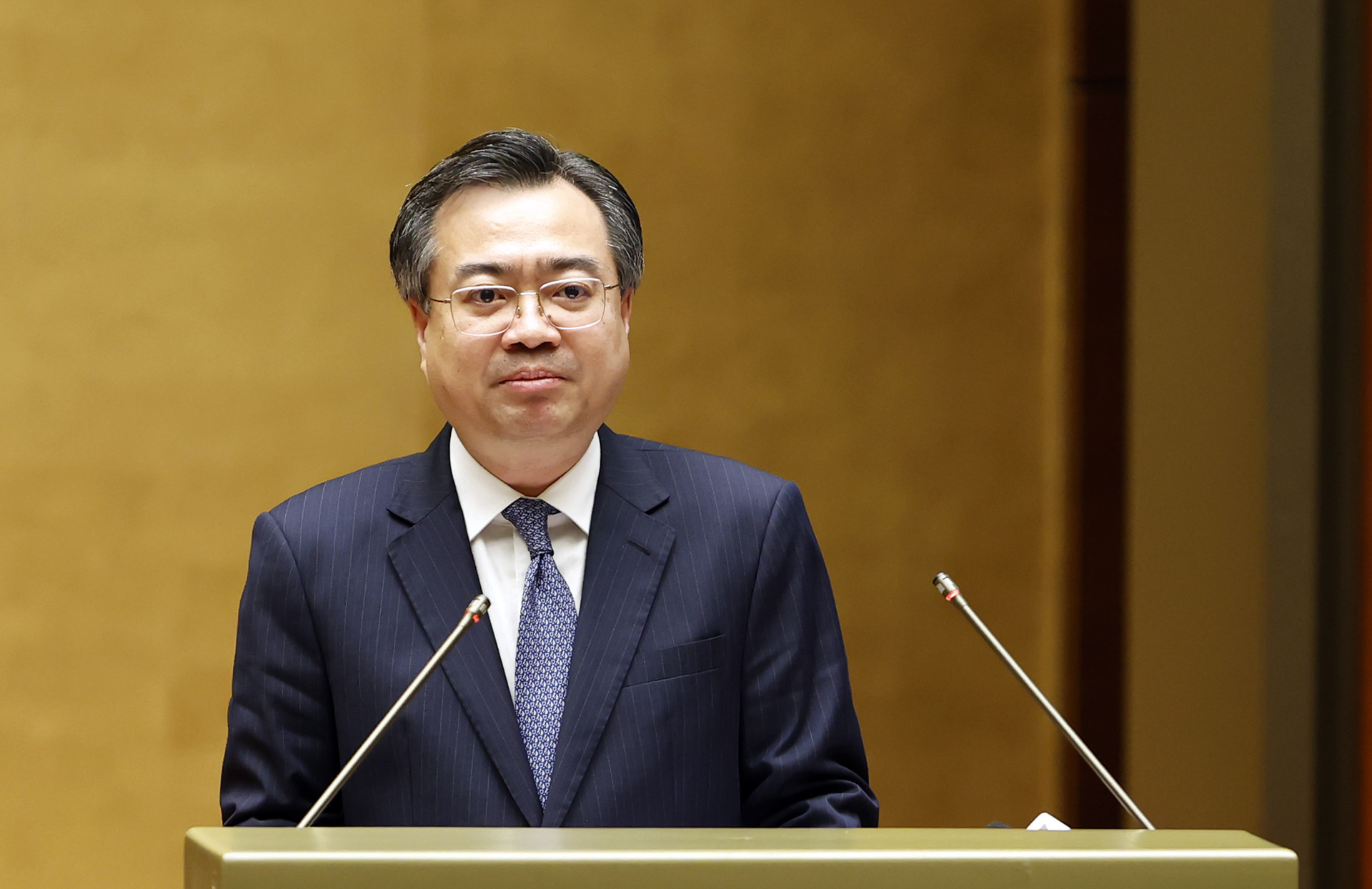
Outlining the key socio-economic results of the past term, Nghi said the coming period will witness epoch-making changes, creating opportunities and favorable conditions, while also posing difficulties and intertwined challenges.
Vietnam’s economy in the 2021–2025 period saw important accomplishments, with 22 out of 26 key socio-economic indicators met or exceeded. All social and social security indicators surpassed targets; in particular, in 2024 and 2025, all 15 out of 15 indicators were met or exceeded.
He said the 14th National Party Congress set out five groups of guiding viewpoints for national construction and development in the new period.
Among them, for the first time, is a new viewpoint of “using development for stability, and stability to promote fast and sustainable national development,” along with requirements for strategic autonomy and innovation of the development model.
The Congress also, for the first time, identified environmental protection as a central task alongside economic and social development tasks.
Regarding the general goals set in the Congress resolution, Nghi said that by 2030, Vietnam aims to become a developing country with modern industry and higher average income, realizing the vision to become a developed, high-income country by 2045.
“The socio-economic development goals and targets identified by the 14th Congress in the Resolution show that these are all very high, difficult, and challenging targets, but they reflect a great aspiration for development. This is an objective requirement and a measure of the courage, will, and aspiration of the nation,” Nghi emphasized.
He cited the GDP growth target, noting that in 40 years of Renovation, Vietnam has never achieved a GDP growth rate of 10 percent or higher. However, at this Congress, the Party identified the goal and requirement to achieve an average GDP growth rate of 10 percent or higher in 2026-2030.
According to Nghi, this reflects a very high requirement for Vietnam to reach the 2045 goal of becoming a developed, high-income nation.
To realize these goals, Nghi outlined many key socio-economic development tasks, especially the strong innovation, with focus on building and perfecting an institutional regime.
Among these, Nghi noted the strong shift in State management methods from pre-inspection to post-inspection, coupled with the establishment of standards and regulations for management and increased inspection and supervision; the promotion of administrative reform, and the building of a service-oriented, professional and transparent administration.
Another key task is establishing a new growth model, restructuring the economy, promoting industrialization and modernization, taking science, technology, innovation, and digital transformation as the main drivers; and focusing on implementing breakthroughs in national science, technology, innovation, and digital transformation development.
Regarding the effective management and use of resources, environmental protection, and proactive adaptation to climate change, Nghi emphasized the tasks of proactive natural disaster prevention and response, investment in environmental protection works, disaster prevention, and climate change adaptation; proactive relocation and resettlement of residents in high-risk disaster areas; and handling of serious environmental pollution in major cities like HCMC.
In addition, Nghi mentioned other solutions regarding developing Vietnamese culture and human resources; managing and developing the economy in association with ensuring social progress and justice; and combining national defense and security closely and effectively with economic, cultural, social, and foreign affairs development.
The congress documents identified six groups of key tasks and three strategic breakthroughs, including breakthroughs in institutional regime, human resources, and socio-economic infrastructure, especially transport infrastructure.
Among these, he highlighted appropriate institutions to establish a new growth model, restructure the economy, accelerate industrialization and modernization, and take science, technology, innovation, and digital transformation as the main drivers.
Along with that, the Minister believed it is necessary to strengthen the training of experts; place Vietnamese people into international and regional organizations; equip and re-equip professional skills and foreign languages; innovate cadre evaluation work; have mechanisms and policies to attract talent and screen cadres; and have mechanisms to encourage, treat, use, and value talents.
The Foreign Affairs sector determines to promote a “culture of execution,” where “words go hand in hand with actions, and tasks are followed through to the end” as directed by Party Chief To Lam. In this regard, international commitments and agreements must go hand in hand with perfecting domestic institutions and policies.
Tran Thuong
.svg)
