 Vietnamnet.vn

 Podcast



Land payments will be based on the principle of equal value, with land prices recalculated according to market mechanisms at the time of allocation.
After being abandoned for nearly 20 years since the relocation of Sai Gon Tobacco Factory in 2008, the 31,000 sqm land plot at 152 Tran Phu Street, Cho Quan Ward, HCMC, is set to be included in the land fund designated for BT project payments.
This is one of 33 land plots recently approved by the HCMC People’s Council for potential payment to investors implementing BT projects.
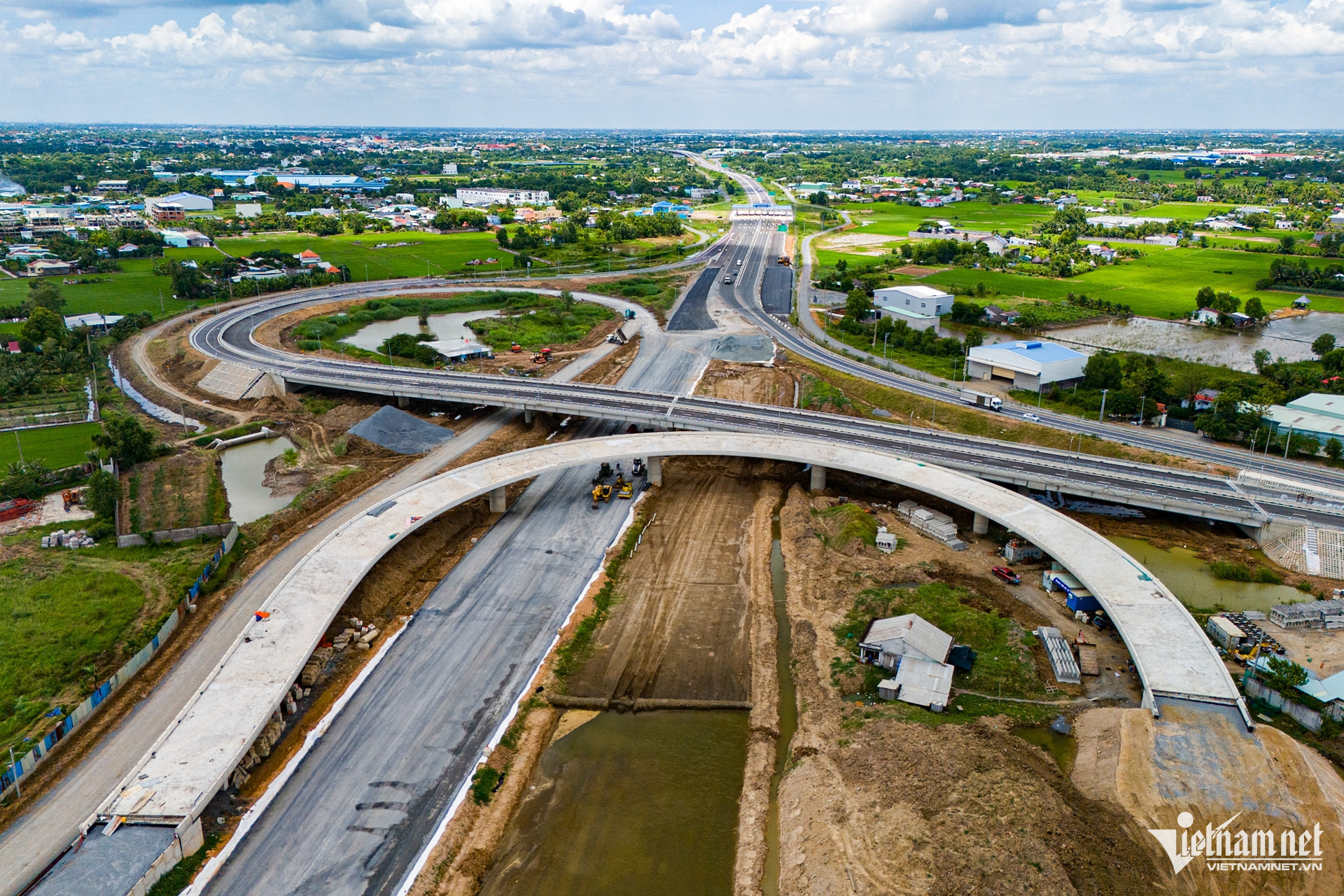
According to the HCMC People's Committee, the demand for infrastructure capital is very high with infrastructure works of significant importance such as the Can Gio bridge, Phu My 2 bridge, Rach Chiec National Sports Complex, Can Gio - Vung Tau connection route, Ho Tram - Long Thanh expressway, Metro line 2, and wastewater treatment plants.
If all projects are implemented, total capital demand for BT projects in HCMC could exceed VND500 trillion.
In the context of limited budgets and urgent infrastructure development pressure, the city believes a more flexible resource mobilization mechanism is needed to ensure the financial feasibility of projects.
The BT model is a land capitalization tool. Unlike the mechanism applied in the previous period which caused much controversy over the risk of public land loss, the current mechanism for BT projects has been significantly tightened and made more transparent. The 2020 PPP (Public Private Partnership) Law along with Decrees 243 and 257/2025 have added many layers of control to limit the disproportionate “exchange of land for infrastructure.”
After a project ends, all investment costs must be finalized to serve as a basis for determining the final payment value. These regulations help significantly reduce the risk of public asset loss while creating a more transparent framework for mobilizing private resources for infrastructure investment.
Harmonizing interests
The HCMC Real Estate Association (HoREA) believes that Decree No 257/2025/ND-CP dated October 8, 2025 “detailing the implementation of projects applying the build-transfer (BT) contract type” which took effect from the date of signing, has helped complete the legal basis for applying the BT contract type.
The decree has created conditions for localities to have a solid legal basis to mobilize resources from the private sector for investing in infrastructure projects and works, contributing to the country's development in the nation's rising era and achieving the goal of double-digit economic growth in 2026 and subsequent years.
However, after more than seven months of implementation, Decree 257 on BT projects has revealed many inadequacies, causing investors to face great financial risks.
According to HoREA, the value of BT works is currently fixed from the signing of the contract and cannot be adjusted upward during the implementation process.
Meanwhile, large-scale infrastructure projects often last many years, subjected to the impact of inflation and fluctuations in material and labor prices. This leaves enterprises at risk of having to bear the entire additional cost themselves.
Conversely, the land fund that is used to pay investors is determined according to the land price at the time of actual land handover. As land prices usually increase over time, enterprises may see a reduction in the land area paid or have to pay additional land use fees, affecting investment efficiency.
HoREA believes the current mechanism creates “inequality” between the State and the investor in the BT contract. The Association proposes that the value of the payment land fund should be determined and fixed from the time of signing the BT contract to ensure the principle of equivalent value.
Additionally, HoREA petitioned to amend regulations related to early land fund allocation to investors. According to the Association, even though enterprises have bank guarantees to receive land, they still cannot exploit or mobilize capital on this land until a part of the BT work is completed.
HoREA proposes allowing investors to deposit money into a frozen account serving construction to be recognized for the corresponding financial obligations, while simultaneously reducing the bank guarantee value according to project progress to reduce capital pressure on enterprises.
Manh Ha
.svg)
