 Vietnamnet.vn

 Podcast



Not every upgrade is revolutionary, and the Galaxy S25 Ultra is a prime example of a phone that takes small, incremental steps. Meanwhile, the iPhone 17 Pro Max has stunned users with dramatic design changes and major improvements to video recording, enough for Apple to confidently broadcast select MLB games via Apple TV Plus.
In CNET lab tests, the iPhone 17 Pro Max also achieved the longest battery life among all smartphones tested, surpassing the Galaxy S25 Ultra.
Even though the Galaxy S25 Ultra boasts the best anti-glare display available today, Samsung still has room to innovate with its next flagship, potentially named the Galaxy S26 Ultra.
Here are three features fans hope to see in the new model.
Square-sensor selfie camera: A small upgrade with big impact
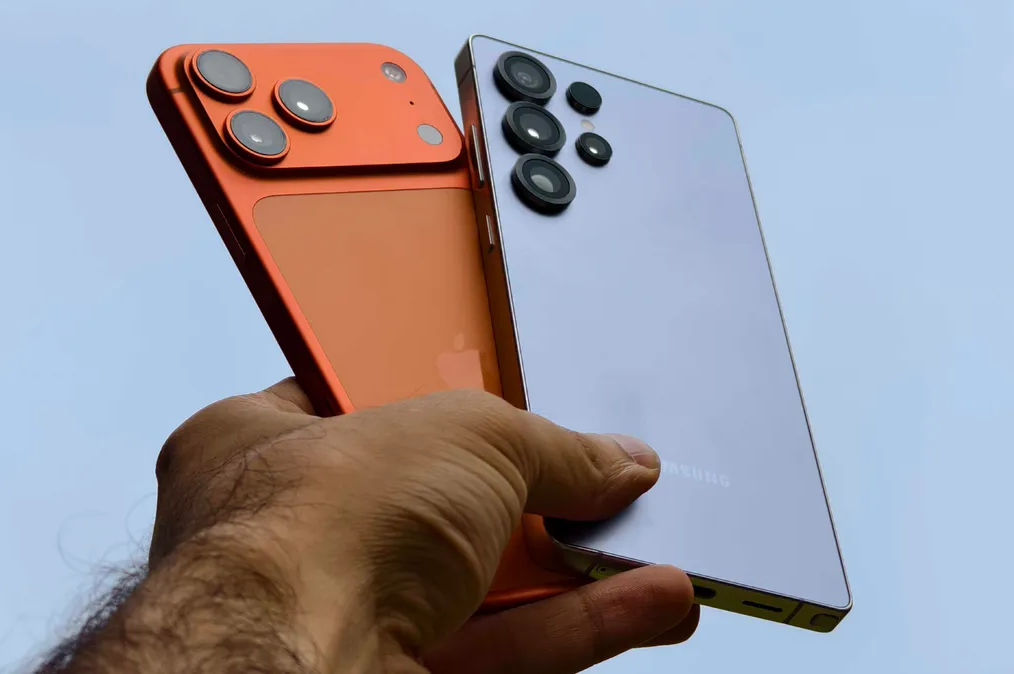
In terms of AI, Samsung's Galaxy AI still leads Apple Intelligence overall. However, the iPhone 17 series introduced a surprisingly practical AI feature that Samsung would do well to adopt.
Apple’s Center Stage 18MP selfie camera uses a square sensor, allowing users to shoot wide-angle horizontal selfies even when holding the phone vertically. The AI also auto-expands the frame when more people appear in the shot.
While this may sound minor, it’s incredibly convenient. Users can capture group photos without rotating the phone or fumbling with frame adjustments - making it easier not to miss key moments. The Auto Zoom and Auto Rotate features on the iPhone 17 perform smoothly.
Samsung does offer AI auto-zoom on the Galaxy Z Flip 6 and 7, but only on the rear camera and without video call support. Fans hope Samsung will bring this technology to the Galaxy S26 Ultra’s selfie camera.
Moreover, the square sensor improves video stability for both filming and video calls. Compared to the Galaxy S25 Ultra, the iPhone 17 Pro’s front-facing video is noticeably smoother.
If Samsung implements a square sensor on the S26 Ultra’s front camera, the user experience will become significantly more accessible and enjoyable.
Telephoto camera upgrades: Time to reclaim the zoom throne
Once known as the "king of zoom" in the smartphone world, Samsung has slipped in recent years. As Xiaomi, Vivo, and Oppo push boundaries, Samsung’s U.S. offerings have seen slower camera innovation.
CNET reports that the iPhone 17 Pro Max now boasts the longest battery life across all tested smartphones, beating out the Galaxy S25 Ultra.
Google uses AI to optimize zoom beyond 30x. Apple shifted to a 4x lens with exceptional image stabilization - even at 8x. Meanwhile, the Galaxy S25 Ultra comes with dual telephoto lenses (3x and 5x), but only one performs competitively.
Samsung replaced its once-unique 10x optical zoom with a 5x periscope lens used since two generations ago. Despite bumping the 5x sensor to 50MP, the 3x lens has barely changed in years, resulting in noisy images in low light - disappointing for a phone priced at 1,300 USD.
When it comes to 3x zoom shots - portraits, travel, or street photography - the S25 Ultra falls short of flagship expectations.
For the S26 Ultra, Samsung should invest in a major upgrade for the 3x telephoto lens and ensure both zoom cameras deliver equally high quality - or outperform the competition. Only then will the dual-telephoto advantage be fully realized.
Design refinement: Making the Ultra more comfortable to hold
The iPhone 17 Pro Max features a new unibody aluminum design and a larger battery, making it heavier than its predecessor (231g vs. 227g). Still, it feels comfortable in the hand.
In contrast, Samsung reduced the S25 Ultra’s weight (218g vs. 232g on the S24 Ultra) but sacrificed ergonomics. The flatter edges make the phone’s back feel sharp, causing hand fatigue during extended use.
Meanwhile, the iPhone 17 Pro Max’s soft corners and subtly curved back make it more pleasant to hold - despite being heavier.
Samsung would do well to adopt this design philosophy while keeping the Galaxy S26 Ultra under 220g. This would make it one of the most comfortable large-format phones to hold.
Many frequent travelers were disappointed by features removed in recent Ultra generations.
First, eliminating the 10x optical zoom in 2024 let down many loyal users.
Second, Samsung dropped Bluetooth support on the S Pen in 2025, meaning users can no longer use it as a remote shutter - one of the pen’s two key features.
The Ultra identity: What’s at stake for Samsung
Samsung’s Ultra line has always stood for “the most complete feature set,” but recent models suggest a step back. The Galaxy S25 Ultra still excels in screen quality, weight, and UI - but feels too similar to the S24 Ultra and lacks standout highlights.
While Galaxy phones have a strong identity, Samsung should consider a bolder design shift - similar to the dramatic transformation of the Galaxy Z Fold 7 - and deliver a true generational upgrade with the S26 Ultra.
If Samsung upgrades the 3x telephoto lens, adds a square selfie sensor like the iPhone 17 Pro, and refines the design for better comfort, the Galaxy S26 Ultra could be the most exciting S-series update in years.
Hai Phong
.svg)
