 Vietnamnet.vn

 Podcast



As the Lunar New Year draws closer, Vietnam’s oldest incense village is in a full sprint. In Quan Huong village, located in Thang Binh commune, Da Nang City, over 100 households are producing incense at maximum capacity to meet the surging demand for Tet.
The village, which lies along National Highway 1A, has been making incense for more than two centuries. Although production happens year-round, peak season comes during the 11th and 12th lunar months, when orders flood in ahead of the holiday.
From early morning to late at night, the whir of incense-making machines echoes through the alleys. The scent of agarwood and cinnamon rides the wind, soaking the yards and footpaths in fragrance. To keep up with the rush, many households are working day and night.
“Tet is our biggest season”
Nguyen Thi Tuyet, born in 1973, runs one of the village’s largest workshops. Her family has passed down the trade for generations. While orders come in throughout the year, she said, Tet brings a dramatic spike in production - up to 200–300 kilograms of incense a day.
“From the tenth lunar month, we ramp up production. This year, we’ve had so many orders that I had to hire extra workers to keep up,” Tuyet shared.
The biggest challenge, she said, is the wet, cold weather typical of late-year months. If the incense can’t dry in the sun, it may lose its scent or become moldy. To compensate, families make use of every available indoor space to dry and cure the product.
Machines enhance an age-old craft
Fellow artisan Vo Thi Hoang, born in 1971 and the fifth generation in her family to make incense, said her workshop is working overtime to finish nearly 10 tons of incense for Tet.
“This time of year, demand is three to four times higher than usual, so we’ve brought in eight extra workers running in shifts,” she said.
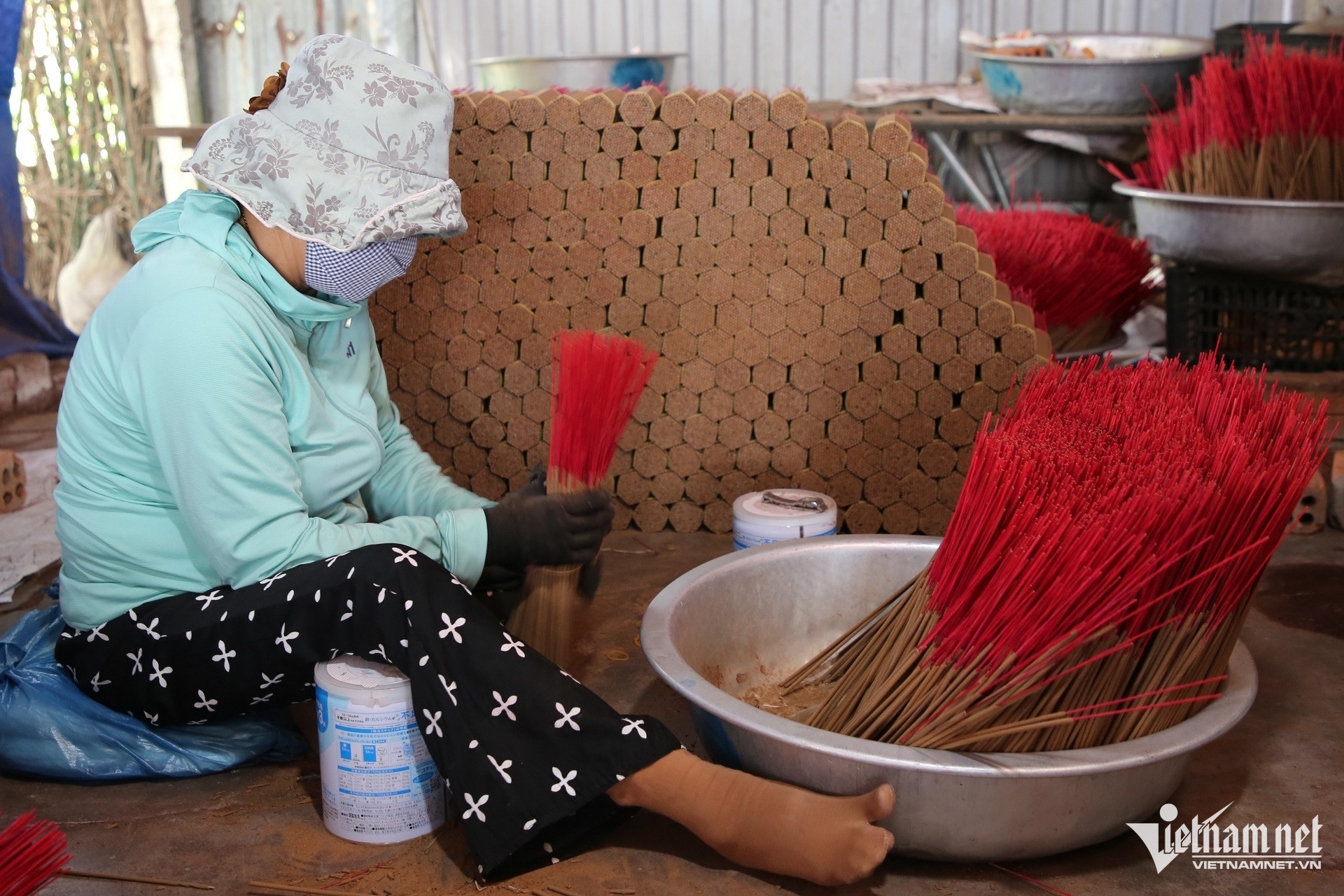
Hoang noted that introducing machinery into the mixing and shaping processes has greatly increased efficiency and product quality.
“In the past, everything was done by hand. Now, machines can churn out dozens of perfect incense sticks every minute, saving us a lot of effort,” she said.
Drying incense under pressure
Once shaped, the incense needs to dry under sunlight for 4–8 hours. On rainy days, the drying process may stretch out to 2–3 days. To meet deadlines, many households work past midnight, sometimes until 1 or 2 a.m.
Every part of the production process is handled with care. The incense stems are made from la nga bamboo sourced from the northern provinces, chosen for strength and durability. The incense powder is a blend of cinnamon bark, sawdust, and a starchy binder. For added cohesion, artisans use powdered bark from the bời lời tree, harvested in the Central Highlands.
A community sustained by scent
The craft not only preserves tradition but also provides vital income. Nguyen Thi Vinh, 63, from Thăng Bình, earns extra cash wrapping incense bundles in her spare time.
“Those who are fast and experienced can make $6 to $12 a day. For many of us, it’s an important source of income before Tet,” she said.
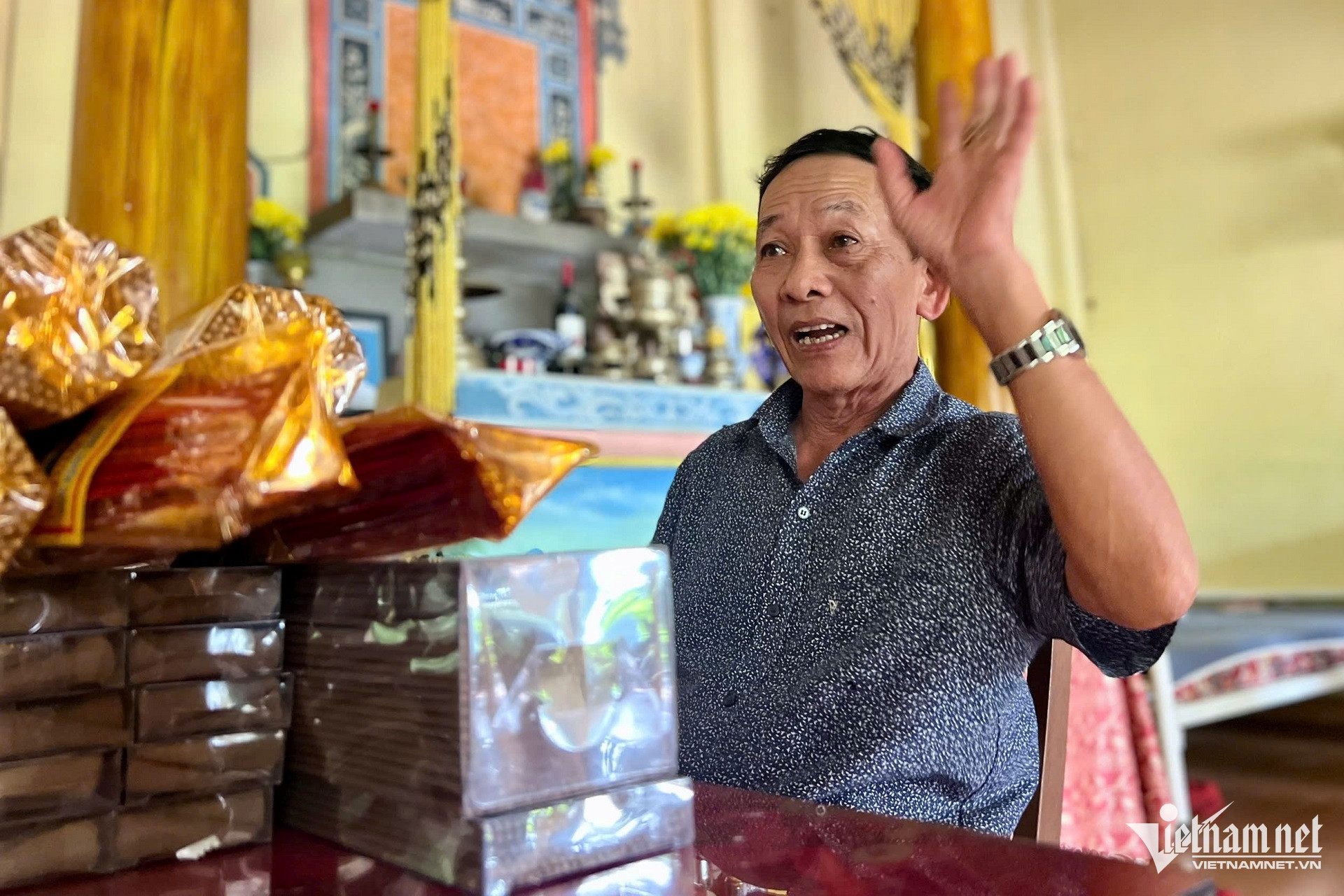
According to Vo Tan Hieu, born in 1954 and head of the village’s craft association, Quan Huong produces over 1,000 tons of incense annually - supplying both domestic and export markets, including Laos. During peak Tet season, output rises to 15 tons per day.
“This trade doesn’t just sustain our livelihoods - it helps keep alive the spiritual and cultural traditions of ancestor worship,” Hieu said.
“Quan Huong has become a brand in itself. What concerns us now is how to improve quality, enhance packaging, and train younger generations to carry the tradition forward.”
As Tet approaches, the pace in Quan Huong grows more intense. Amid the mingling scents of cinnamon and agarwood, bundles of incense are labeled and packed, ready to travel across the country - bringing the fragrance of New Year to every home.
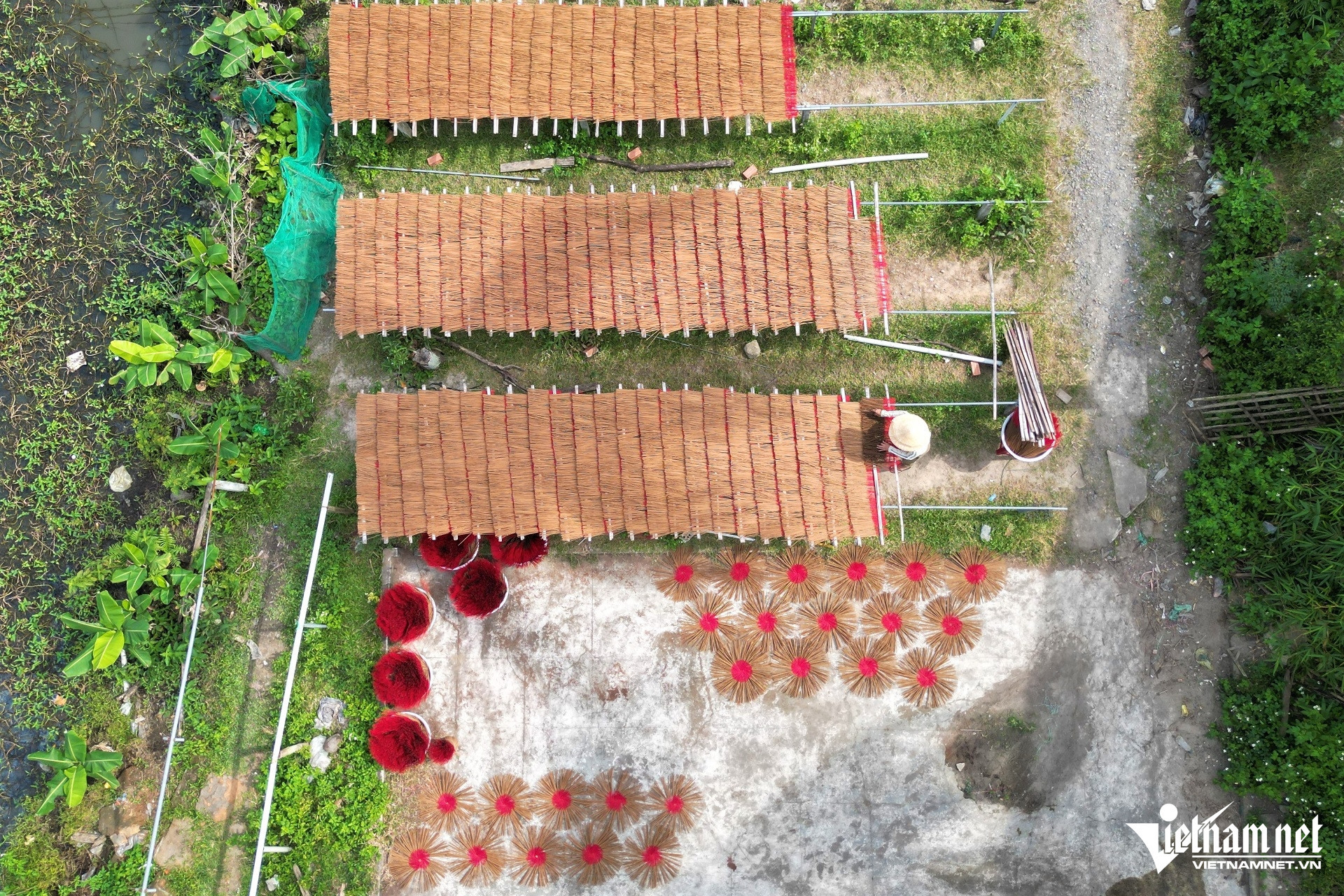
The closer it gets to Tet, the busier life becomes in Quan Huong incense village.
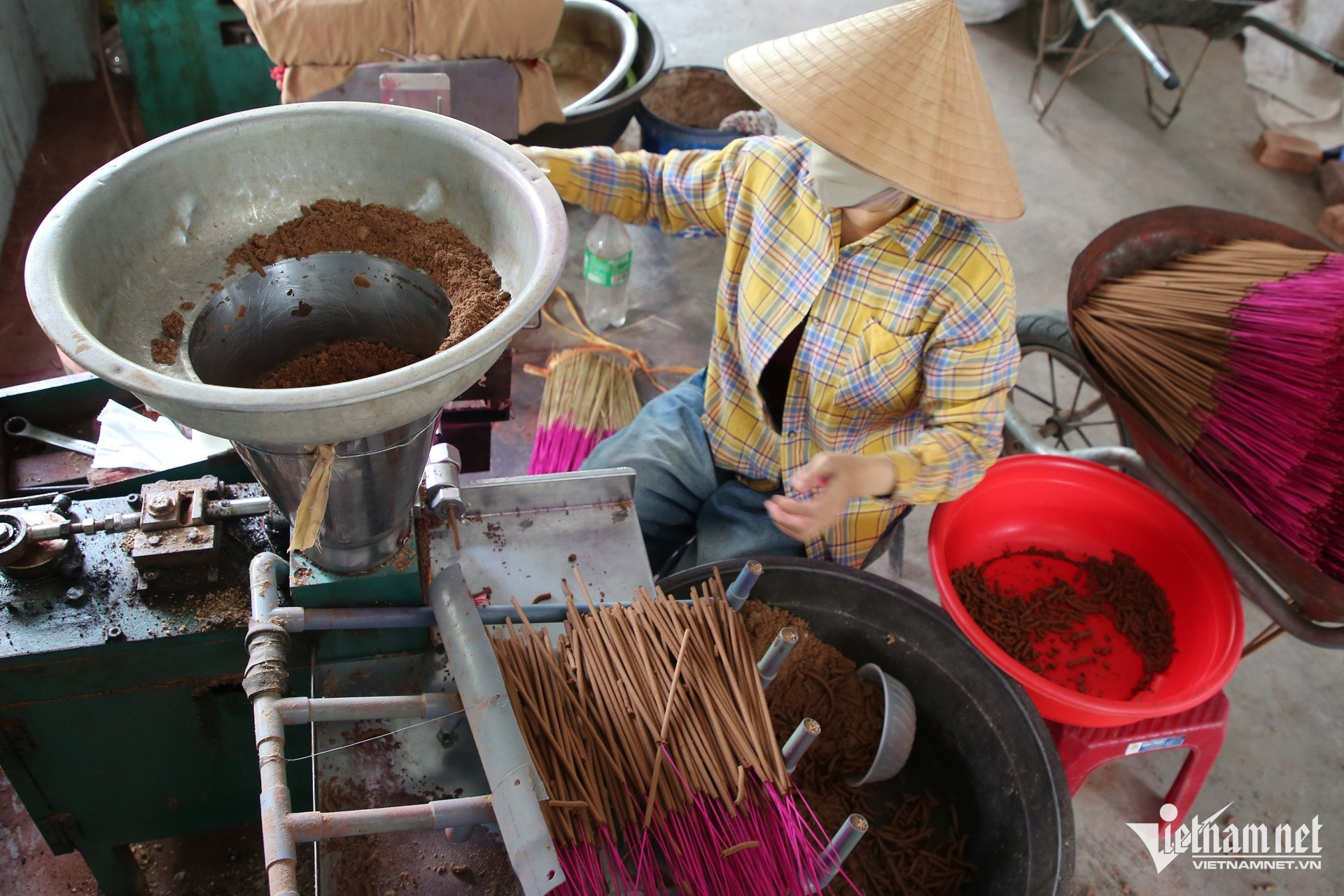
As the holiday nears, workshops operate at full capacity to fulfill orders.
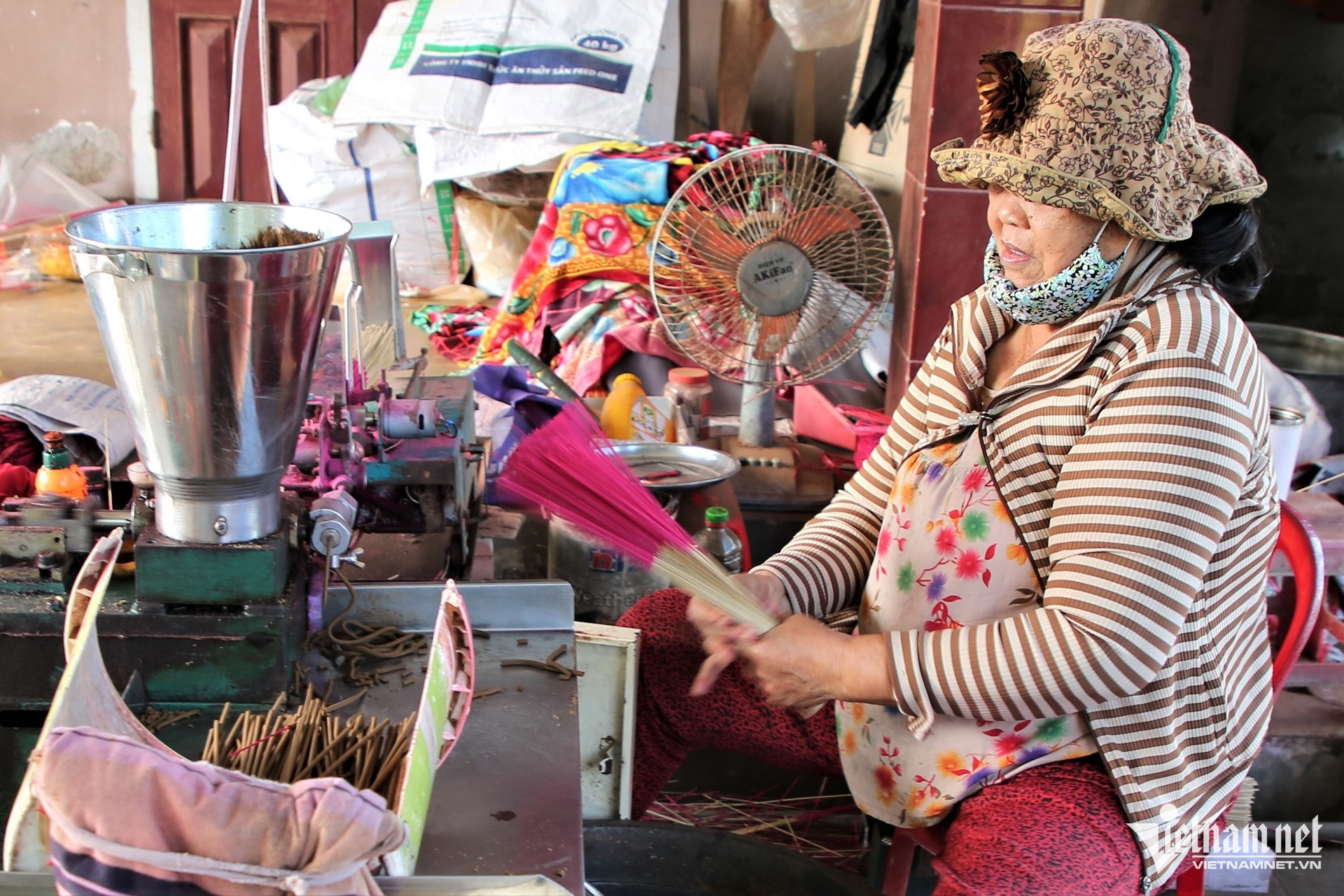
Machines run non-stop to meet the Tet demand.
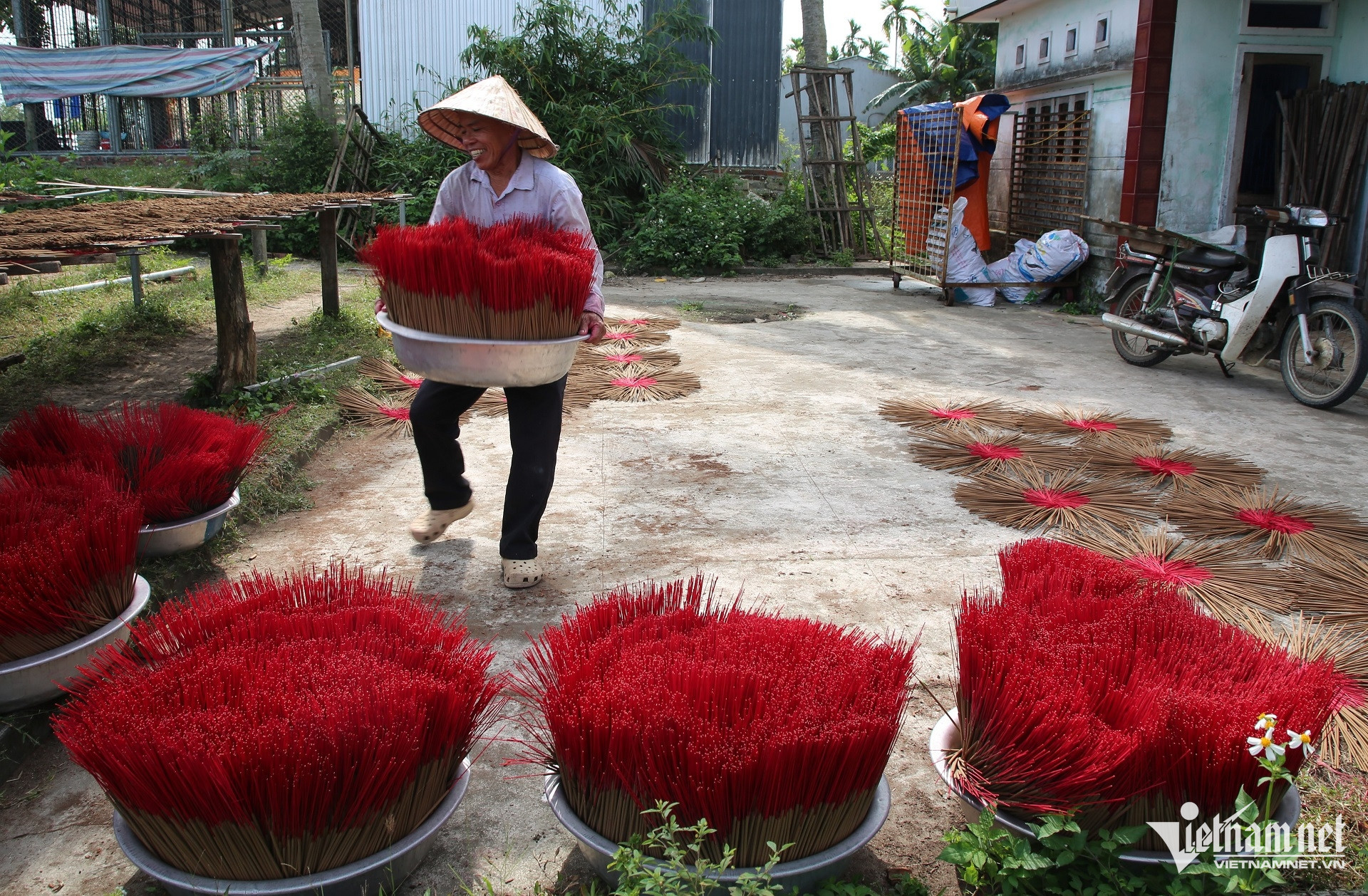
Residents take advantage of sunny days to dry incense across their yards.
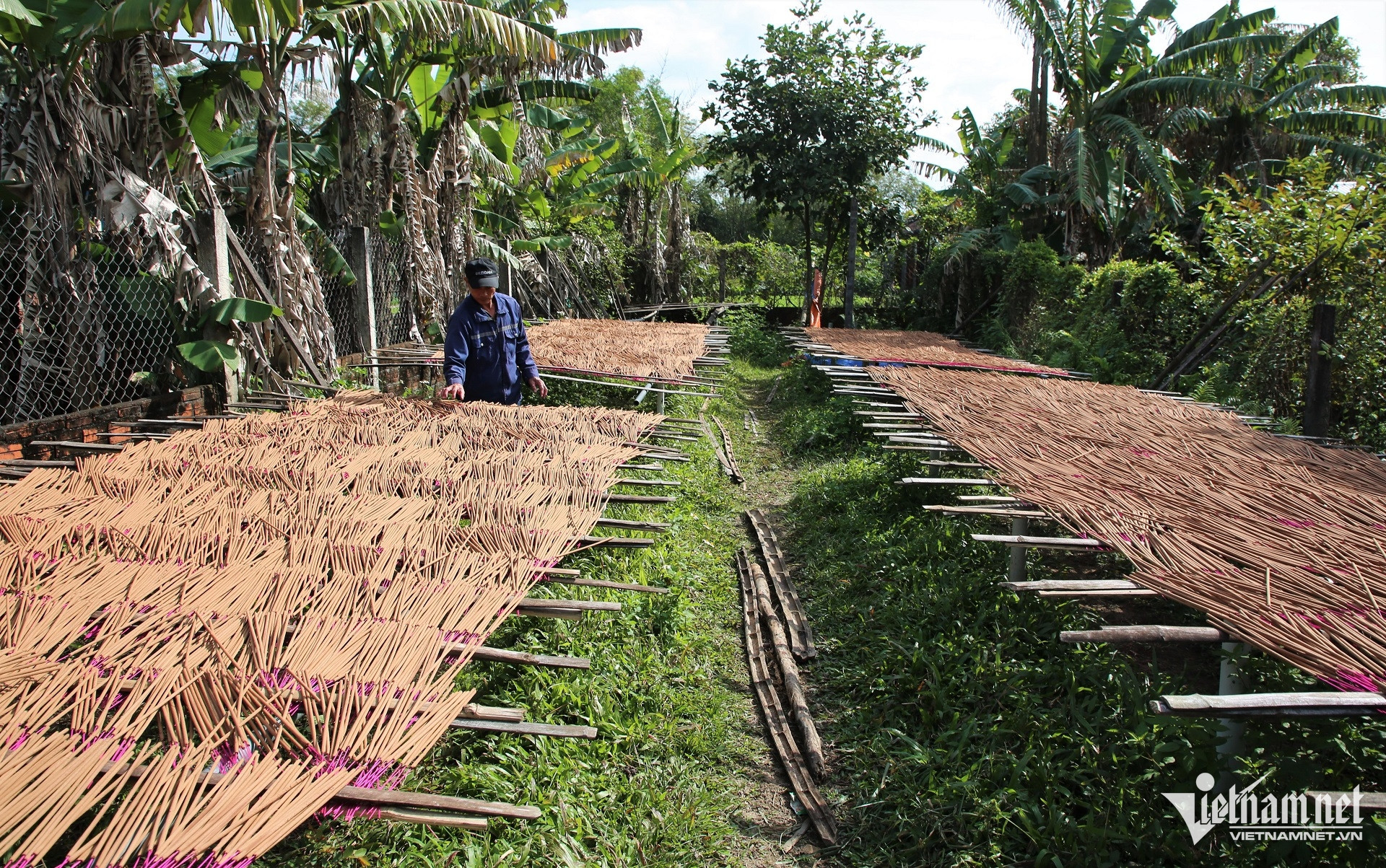
Proper sun drying is critical - underdried incense can spoil easily.
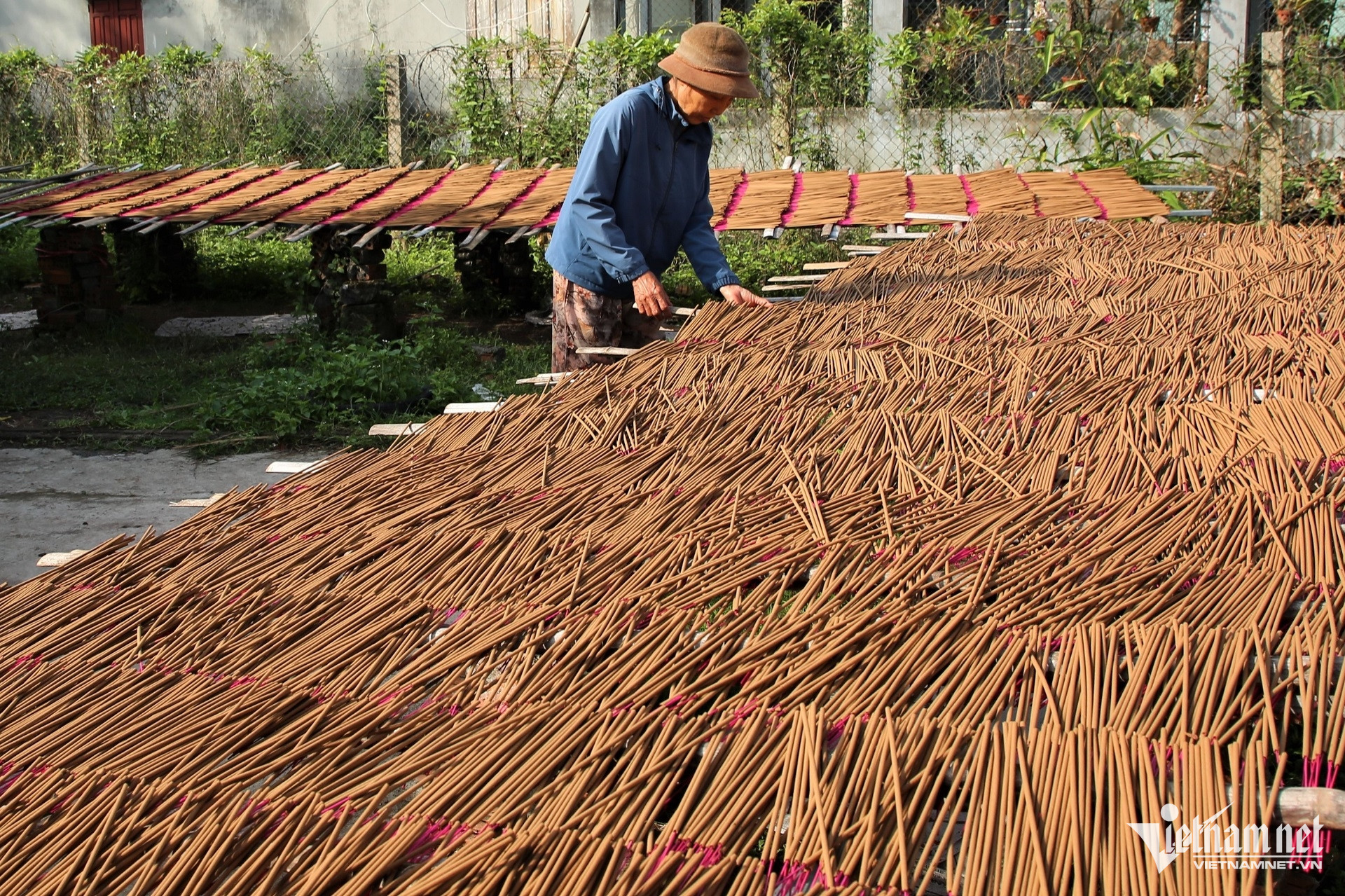
Villagers make use of every available space for drying.
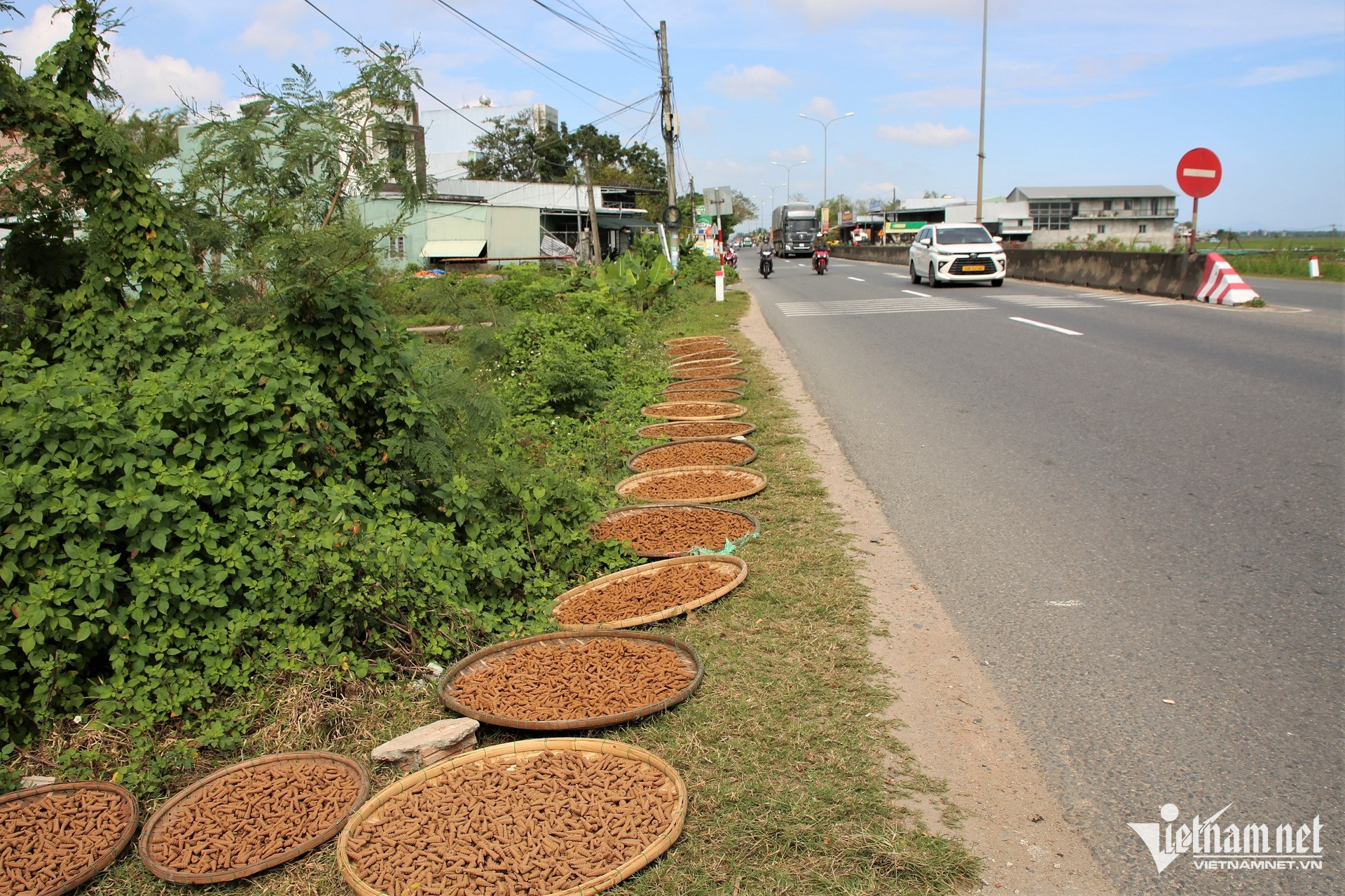
Incense cones are laid out along Highway 1A to dry.
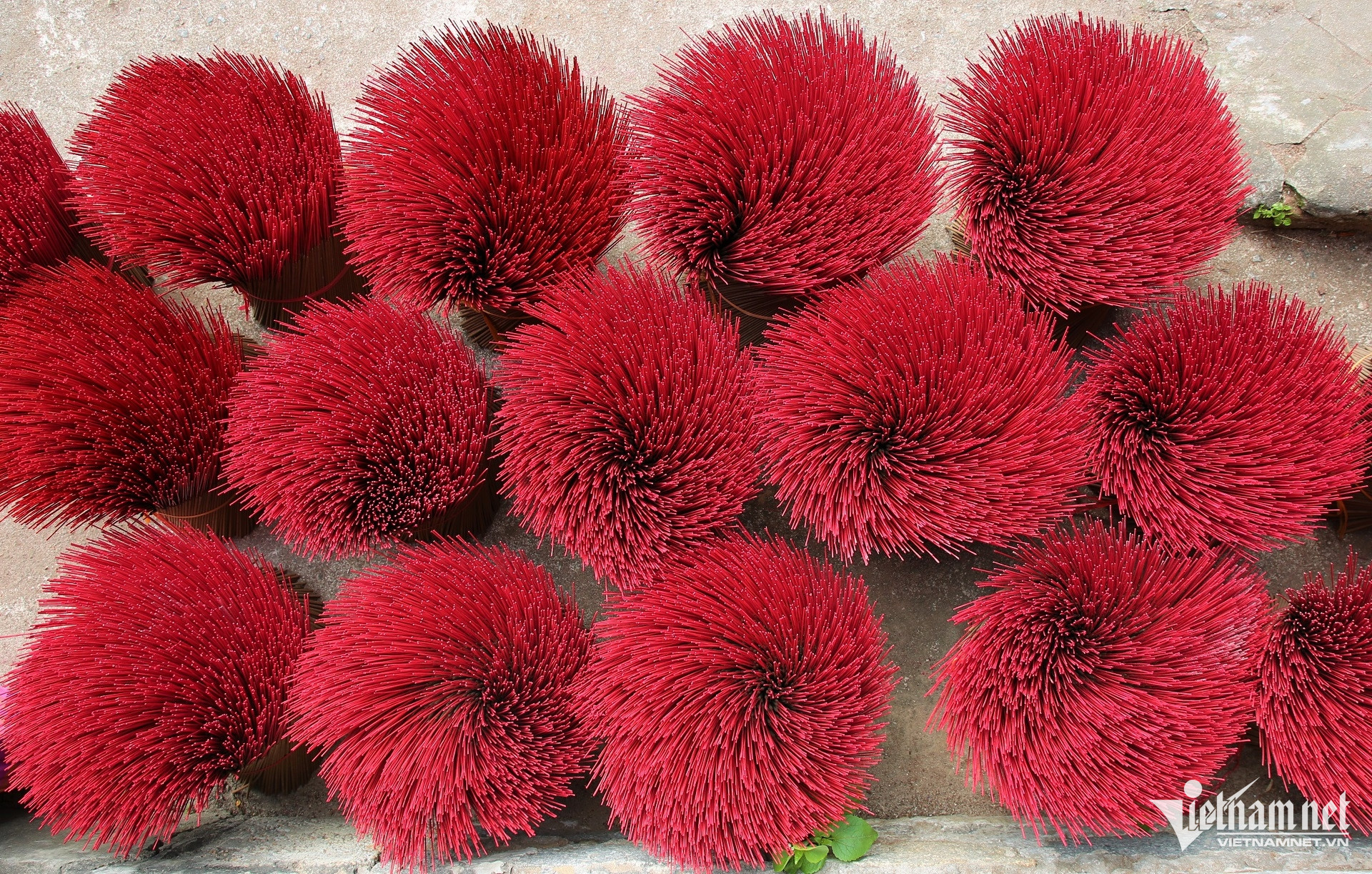
Thousands of incense sticks are set down at once, forming perfect drying circles.
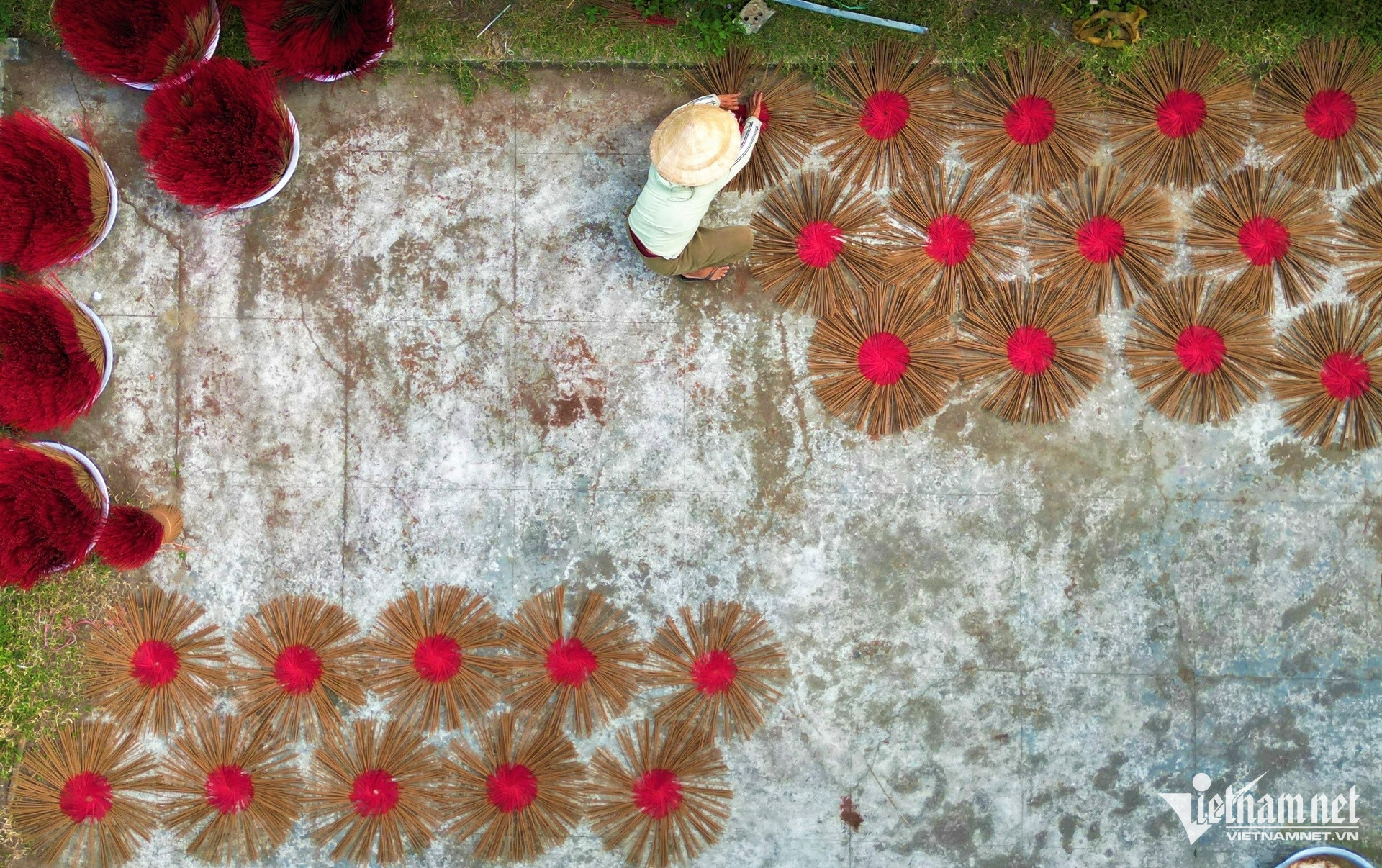
More drying circles of incense laid neatly in open courtyards.
Thousands of sticks dropped together create symmetrical patterns in the drying yard.
Ha Nam
.svg)
