 Vietnamnet.vn

 Podcast



Ha Nam
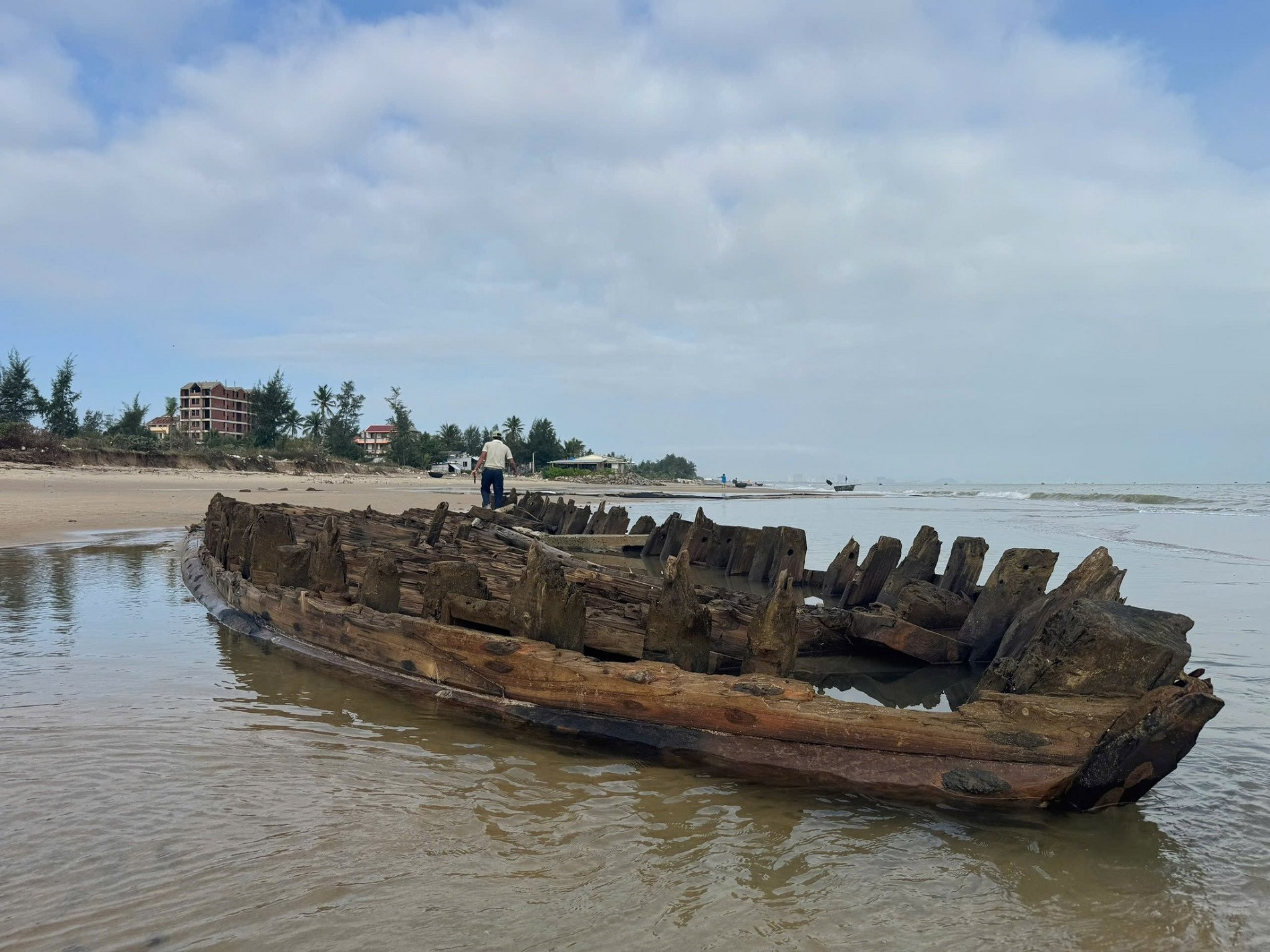
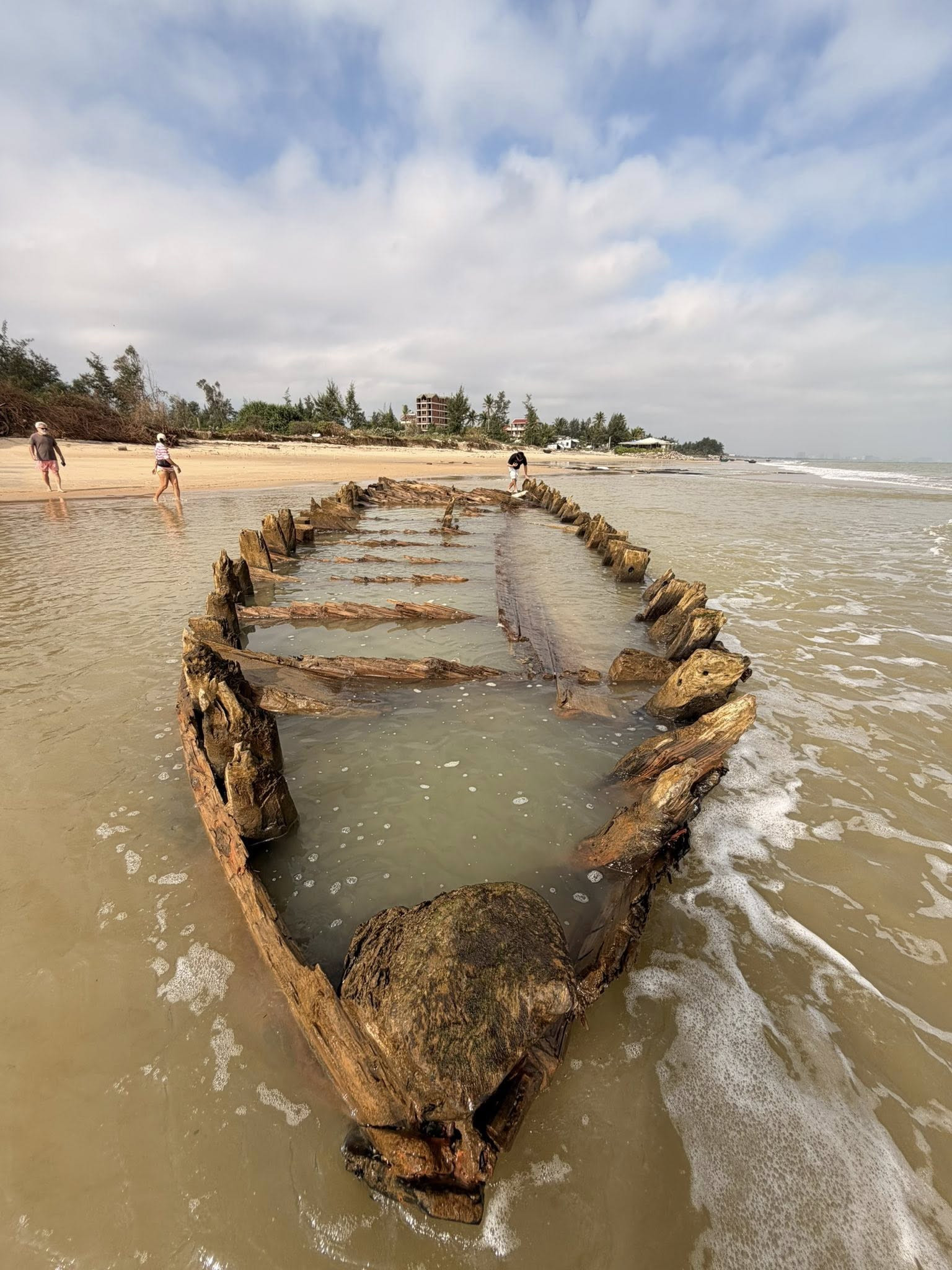
On November 8, the Hoi An Center for the Preservation of World Cultural Heritage announced that authorities are currently cordoning off the site of the shipwreck and raising awareness about underwater cultural heritage protection laws to encourage public participation in its preservation.
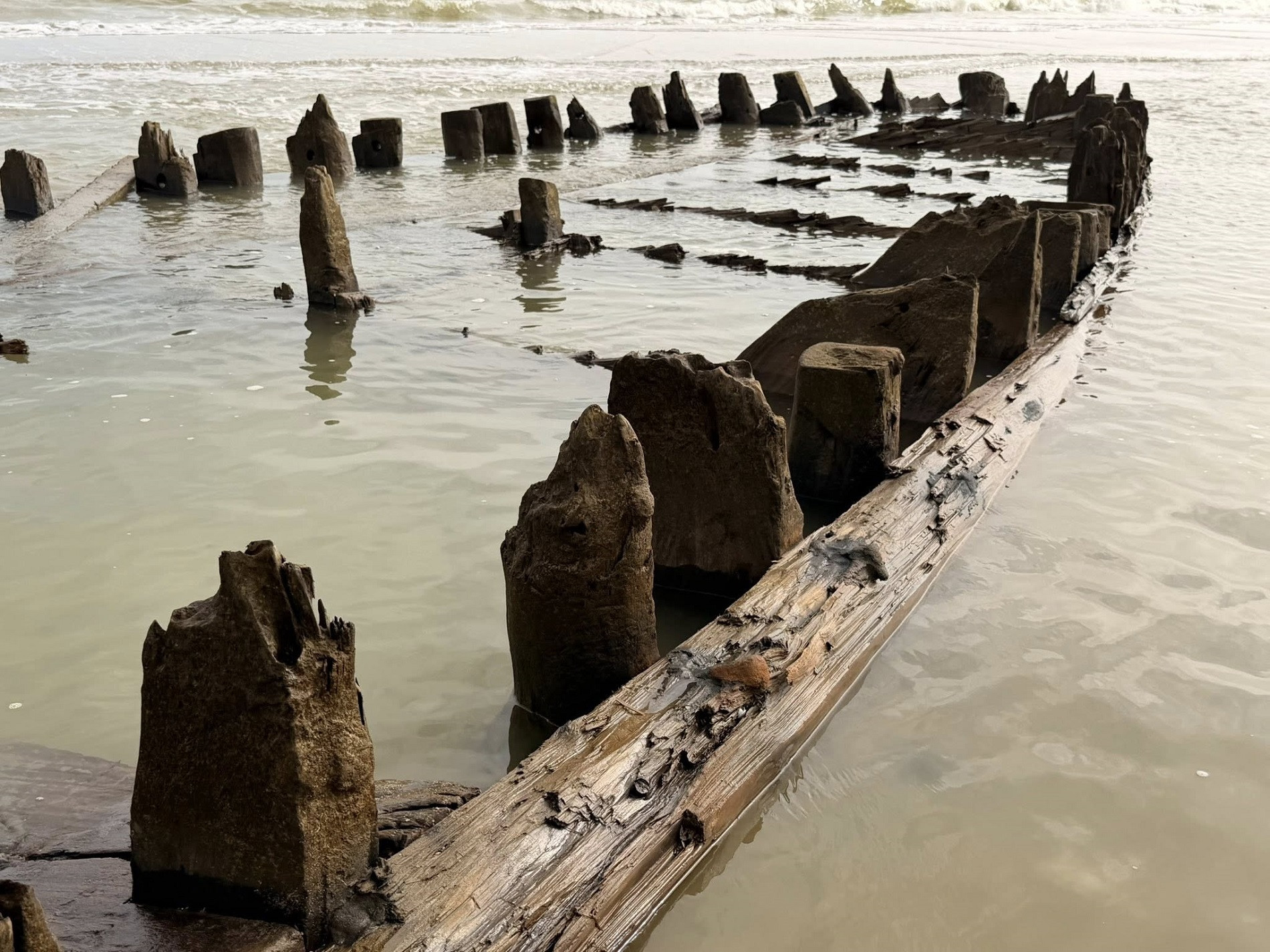
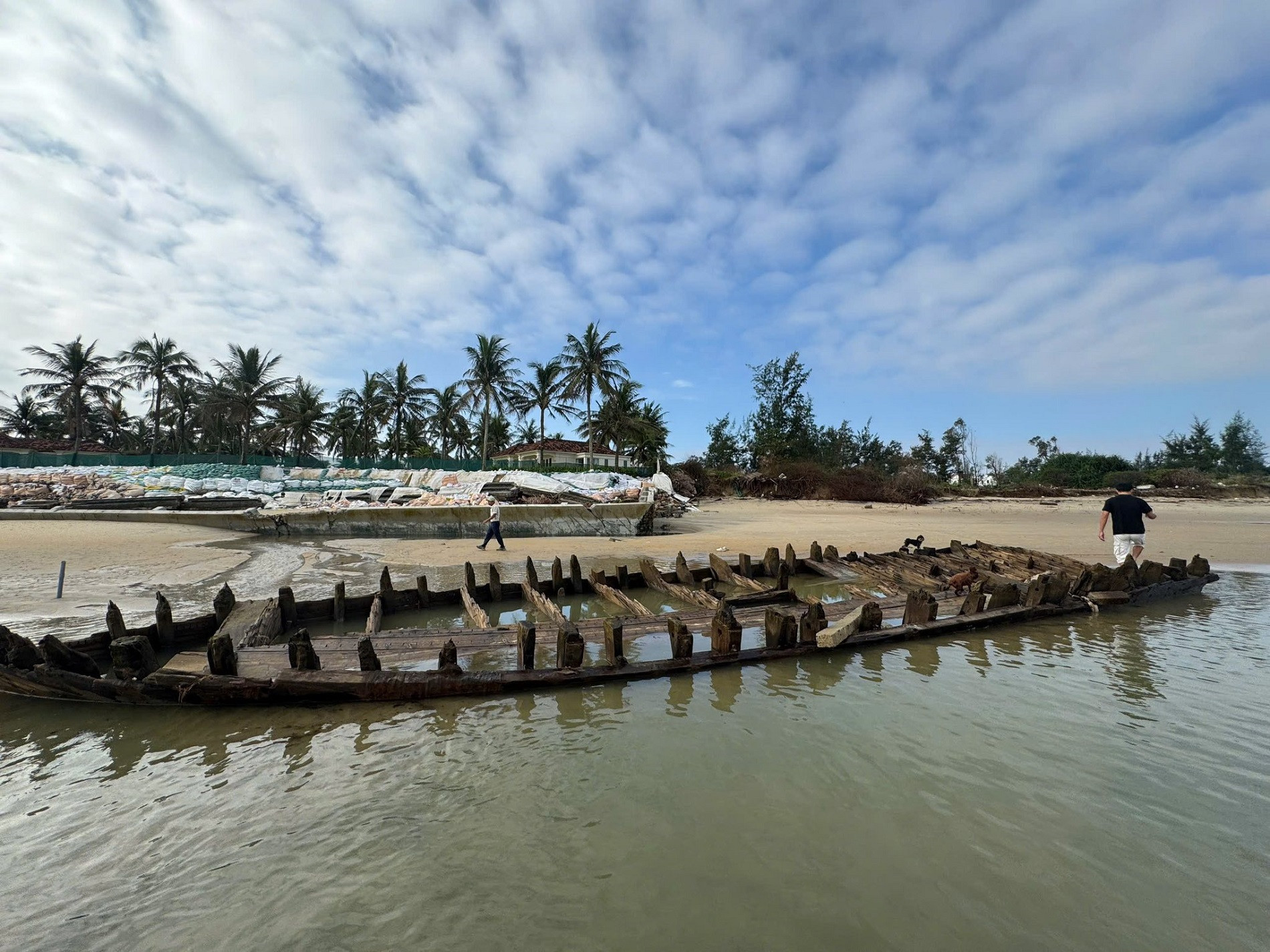
In recent days, strong waves have continued to erode the shoreline, washing away sand that once concealed the vessel. Combined with low morning tides, large sections of the wooden ship, which spans dozens of meters, are now clearly visible. The ship lies parallel to the shore, with many components still intact, drawing considerable attention from both locals and tourists.
The ancient ship was first discovered in December 2023 at Tan Thanh Beach (Hoi An City, formerly Quang Nam Province). At the time, only a few wooden planks were visible on the sand.
Local authorities, in coordination with experts, collected wood samples for radiocarbon dating. By January 2024, however, seasonal high tides and accumulating sand once again buried the ship beneath the beach.
According to Pham Phu Ngoc, Deputy Director of the Hoi An Center for the Preservation of World Cultural Heritage, preservation staff have taken preliminary measurements of the ship’s structure. A detailed report is expected early next week after a municipal survey team completes its inspection.
Mr. Ngoc noted that whether the ship will be excavated or preserved in situ will depend on actual conditions. He stated that while the excavation itself may not be overly complicated, the greatest challenge lies in preserving the artifacts once they are brought ashore. Without a suitable preservation environment, the wooden components would rapidly deteriorate and lose their research value.
Initial assessments suggest the vessel dates from the 14th to 16th century. Its construction reflects a blend of Southeast Asian and East Asian shipbuilding styles. It is considered one of the most intact ancient shipwrecks ever uncovered in Vietnam.
Ngoc emphasized that the shipwreck is a crucial testament to the maritime trade that once thrived along the Hoi An route - once a major hub in Southeast Asia.
"Preservation and treatment plans will be carefully evaluated. We are likely to invite local and international experts, including from Japan, to ensure scientific accuracy and the safety of the relic," Ngoc added.

.svg)
