 Vietnamnet.vn

 Podcast



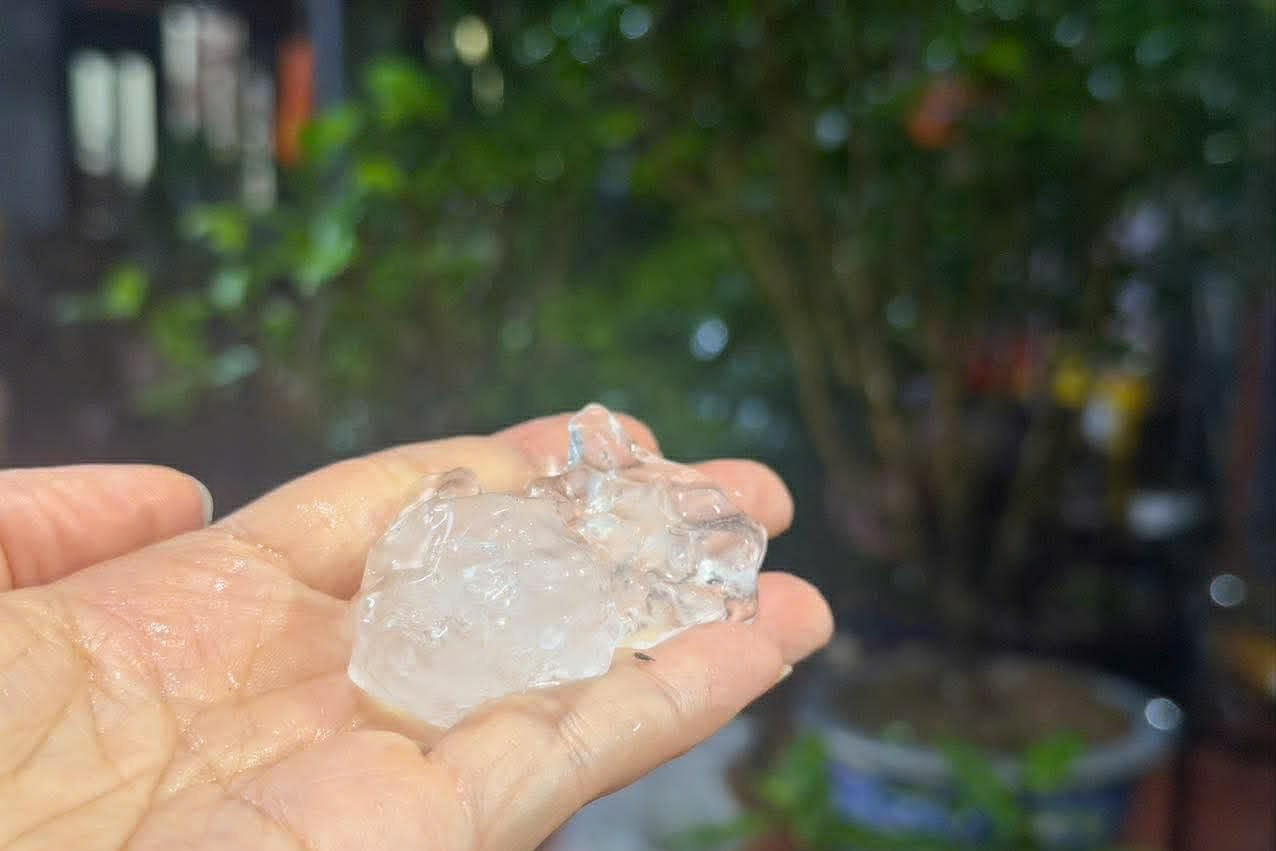
In early May 2026, northern Vietnam and parts of the north-central region were hit by repeated thunderstorms, lightning and hail, causing significant damage. Some hailstones reached extraordinary sizes - even as large as tennis balls - raising questions about the unusual weather pattern.
Widespread hail is a rare occurrence
According to Nguyen Van Huong, Head of Weather Forecasting at the National Center for Hydro-Meteorological Forecasting, the recent wave of hailstorms across the northern and north-central regions reflects a broader weather trend and offers clues about what may come next.

Meteorologist Nguyen Van Huong discusses recent weather trends.
Between May 2 and May 4, severe thunderstorms accompanied by hail caused heavy damage in multiple provinces, particularly in northern mountainous areas.
Data from local reports show that on the evening of May 2 alone, storms and hail affected provinces including Dien Bien Province, Lai Chau Province, Lao Cai Province, Tuyen Quang Province, Phu Tho Province, Thai Nguyen Province and Hanoi. On the following evening, the phenomenon continued in Nghe An Province and Ha Tinh Province.
From the evening of May 2 through the morning of May 4, the region also experienced widespread thunderstorms, with localized heavy rainfall. Some areas recorded significant precipitation, such as Tan Pheo (Phu Tho) with 171mm, Lam Thao (Phu Tho) with 168mm and Ky Giang (Ha Tinh) with 156mm.
Huong noted that thunderstorms, lightning and hail are common during seasonal transitions in northern Vietnam, typically occurring in April-May and September-October. However, the simultaneous appearance of hail across a wide geographic area - from mountainous regions to plains - is considered relatively rare.
Why are hailstones so large?
The unusually large hailstones, some comparable in size to eggs or tennis balls in areas such as Phu Tho and Thai Nguyen, can be explained by a combination of meteorological factors.
Recently, the region has experienced hot and humid conditions with strong daytime sunshine, allowing convective energy in the atmosphere to build up. At higher altitudes, a low-pressure trough within strong westerly winds at around 5,000 meters persisted, while a weak cold air mass from the north compressed this trough over the northern region.
In the afternoon, rising temperatures force warm, moist air upward, forming rapidly developing thunderclouds that grow vertically. In such unstable atmospheric conditions, powerful updrafts keep ice particles suspended longer inside the clouds, allowing them to grow larger before falling.
“If ice particles melt before reaching the ground, they become rain. If they do not, they fall as hail,” Huong explained.
Risk of continued extreme weather
Unusual atmospheric conditions have led to large hailstones in several localities.
Looking ahead, the expert warned that the likelihood of El Nino developing from mid-2026 is very high, at around 80-90%. It could reach strong intensity by the end of the year (20-25%) and persist into 2027.
This year, heatwaves are expected to be more frequent and intense than average, while overall rainfall and storm activity may decrease. However, extreme events such as thunderstorms, hail and localized heavy rain during transitional seasons could become more frequent.
Short-duration, high-intensity rainfall poses additional risks, including flash floods, landslides and urban flooding, particularly in mountainous and steep terrain.
In the near term, a new cold air mass is forecast to affect northern Vietnam around May 8-9, likely bringing further thunderstorms, along with risks of lightning, hail and strong winds.
Meanwhile, from May 5 to May 7, the southern Central Highlands and southern regions may also experience widespread showers and thunderstorms in the late afternoon and evening, with potential for severe weather.
Recognizing and preventing hail damage
Hailstorms typically occur alongside strong thunderstorms during seasonal transitions. Warning signs include rapidly developing storm clouds, a sudden shift from hot to cool conditions, strong gusty winds, heavy rain and thunder.
When these signs appear, people should seek safe shelter immediately and avoid staying outdoors, especially near large trees, power poles, billboards or temporary structures.
During hailstorms, it is safest to remain indoors, close windows and stay away from glass surfaces. In strong winds, homes should be secured and loose objects fastened to prevent damage.
Electrical devices should be turned off during lightning, and mobile phone use outdoors should be minimized to ensure safety.
Bao Anh
.svg)
