 Vietnamnet.vn

 Podcast



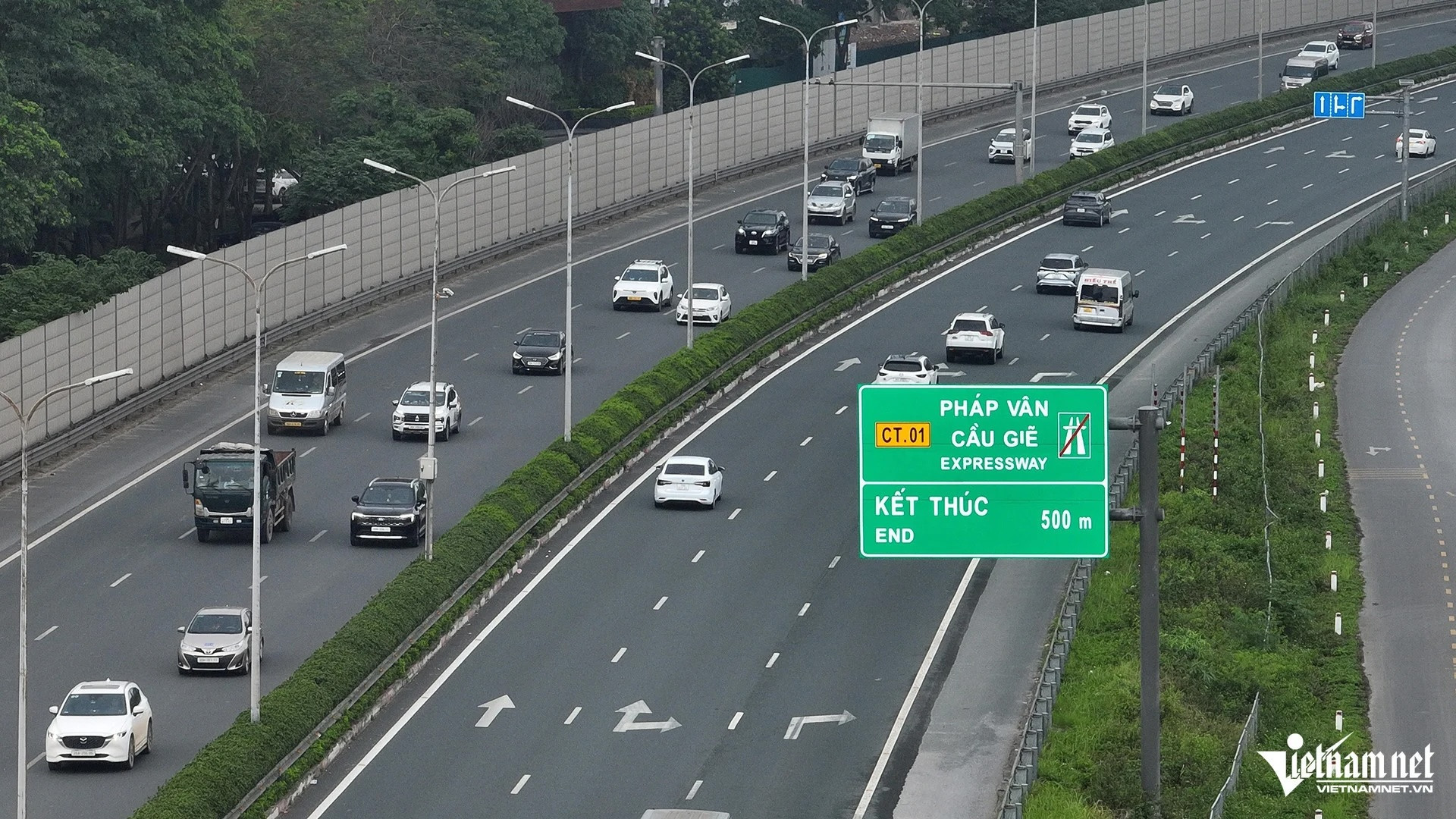
Permanent Deputy Prime Minister Pham Gia Tuc recently requested that handling of distance violations on expressways "must follow a suitable roadmap," combining communication and guidance; and implementation should only occur when infrastructure conditions, equipment, standards, and technical regulations are fully ensured without causing traffic congestion or conflicts, especially during holidays and Tet.
The Ministry of Construction was also assigned to study amending Circular 38/2024 so that safe distances are determined based on speed, bridge and road conditions, traffic density, terrain, and weather.
This is a notable adjustment in light of what happened ahead of the National Day holiday.
On August 26, the Traffic Police Department announced that it would begin penalizing drivers the following day for failing to maintain a safe distance on the Phap Van-Nghi Son Expressway. The aim was to reduce accidents, but the policy immediately raised a practical question: What happens when a vehicle is maintaining the required distance but another vehicle cuts in, reducing the gap?
Just a few days later, traffic police adjusted the approach. On August 31, the department said it would only penalize drivers who deliberately followed too closely, while other cases would mainly receive reminders.
On September 1, the Deputy Prime Minister ordered a review of the regulations, penalties and actual conditions. On September 11, he held a meeting with ministries and agencies on the regulation. And on September 14, the Deputy Prime Minister requested a review of Circular 38 itself.
Put simply, this was a policy U-turn. And it is a welcome one.
When trucks leave the expressway
The impact of a traffic policy can sometimes unfold in ways that are difficult to anticipate.
On September 14, the national television VTV reported that many heavy-truck drivers were choosing the old National Highway 1 instead of the expressway, increasing the risk of congestion and accidents and slowing traffic on a road that is narrower and already overloaded.
Speaking on national television, truck drivers said they were afraid of being caught by automated cameras and fined on the expressway, so they chose National Highway 1 instead. VTV reported that the shift from the expressway to National Highway 1A was occurring nationwide.
Drivers and transport companies do not simply stand still in response to a new policy. They recalculate routes, costs and how to organize transport operations. When trucks leave one expressway, they will show up on another road.
This context is particularly noteworthy as the transport sector is already facing a shortage of container-truck drivers.
According to the Vietnam Automobile Transportation Association, at times 25-30 percent of tractor-trailers have had to remain idle due to a shortage of CE-class drivers qualified to operate tractor-trailers towing semi-trailers. Some north-south trips have stretched from three days to four because there are no longer two drivers to take turns behind the wheel.
Failing to maintain a safe following distance is punishable by a fine of VND4-6 million and the deduction of two points from a driver's license, while it is only one of many penalties professional drivers may face.
A driver shortage is of course no reason to go easy on violations. But in a profession already facing a severe labor shortage, every new regulation needs to be carefully considered.
The question, therefore, is not only how violations should be punished, but also how to maintain safety without creating unnecessary additional costs.
A good traffic policy should not only look at the distance between two vehicles on an expressway. It must also consider where those vehicles will go.
Preventing new bottlenecks
This takes on greater significance as the government has pledged to remove institutional bottlenecks and “prevent new bottlenecks from emerging.”
Dr. Nguyen Dinh Cung, former director of the Central Institute for Economic Management, praised the recent adjustment. In his view, “laws must ultimately be tested against real life.” The goal of maintaining safe distances to reduce accidents is sound, but if implementation does not fit actual conditions, it must be revised.
Cung said the higher goal should be to prevent such problems from arising in the first place during the policymaking process.
Vietnam already has regulatory impact assessments (RIAs) and tools for quantifying compliance costs. The issue is that they must be carried out properly. Impact assessments must also take into account the responses of those subject to the regulations, rather than considering only their direct effects.
Tu Giang
.svg)
