 Vietnamnet.vn

 Podcast



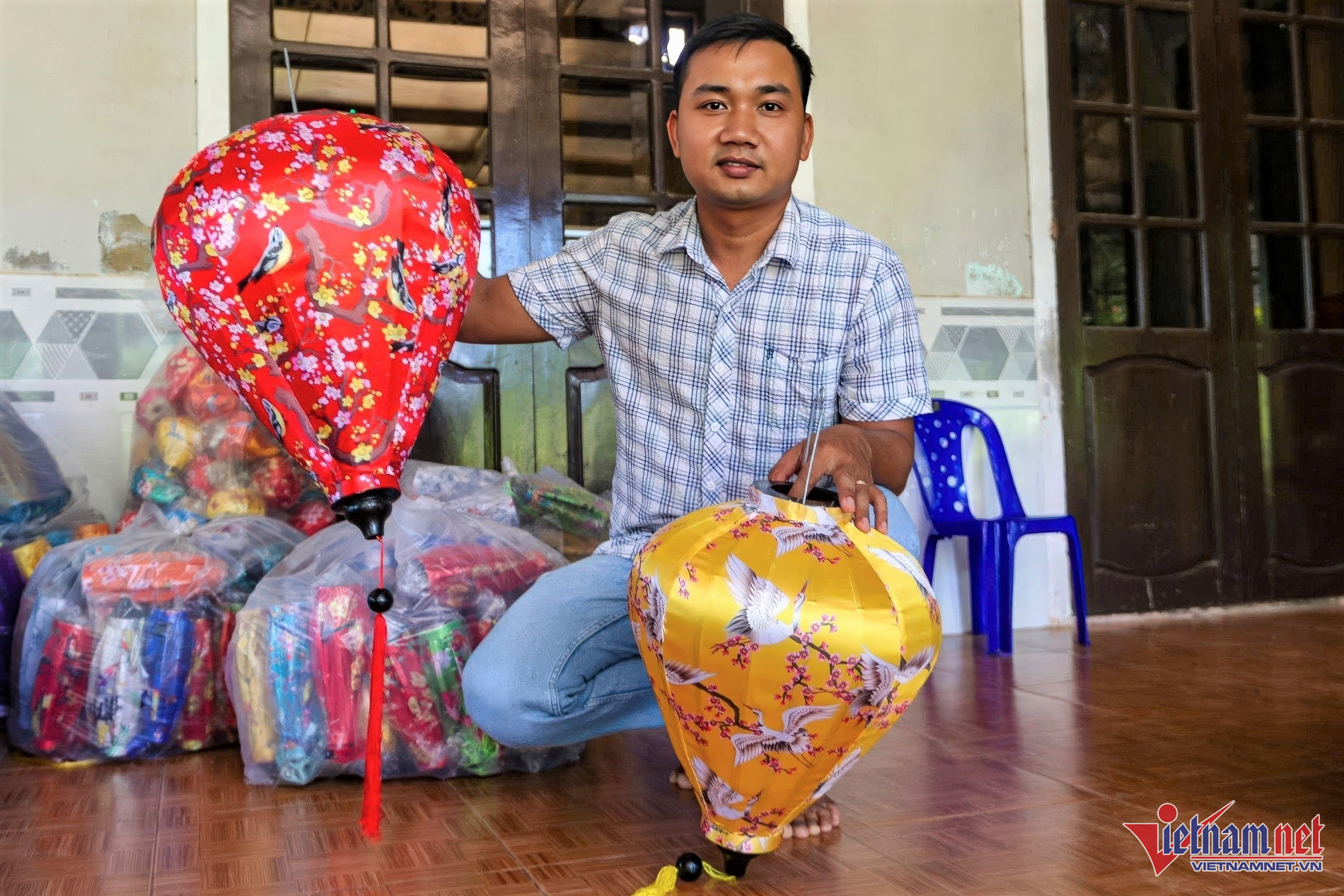
From his small workshop, traditional handmade products are now exported to many countries, generating VND2 billion in annual revenue.
Before dedicating himself to the craft, Ha (born 1994, Dien Ban ward, Da Nang city) was the owner of a coffee shop chain in HCMC. His business was stable with good income, but the Covid-19 crisis caused everything to collapse. With empty shops and plummeting revenue, he was forced to transfer his business.
“I once had everything in the city, but within a few months of the pandemic, I lost it all. At that moment, my wife and I decided to return home to start over,” Ha recalled.
Coming back to his father, Le Vinh Cuc, 63, who has been devoted to handmade lantern craft for over 25 years, Ha found renewed motivation. He learned the craft from his father and visited Hoi An’s old town to hone his skills further. Leveraging his family’s connections, he gathered skilled artisans and gradually built the Thien Dang production facility.
The production process at the facility is fully integrated, from selecting bamboo to final assembly. In the workshop, the sound of bamboo being shaved fills the air, mingling with the scent of freshly dried bamboo. Each bamboo strip is shaved thin and uniform, ready for the next step.
Cuc oversees the bamboo shaving process, the “soul” of the lantern, determining its durability and perfect shape.
“A good bamboo stalk must be thick, straight, flexible, and durable. After shaving, the strips are soaked and carefully dried to prevent termites and ensure long-term durability,” he shared.
Once the bamboo frame is complete, colorful silk fabric is stretched evenly and skillfully attached, creating vibrant lanterns. From seemingly simple materials, such as bamboo, fabric, and glue, artisans’ hands can transform them into products that are both sturdy and refined.
To avoid disruptions caused by weather changes, Ha built a drying oven and secured a steady bamboo supply, enabling year-round operations.
Finding buyers was his biggest concern from the start. Ha brought his products to trade fairs, exhibitions, promoted on social media, and directly approached customers. Step by step, the lanterns produced by his family gained a foothold in the market.
Creating jobs for over 20 people
Le Vinh Ha shared that, on average, his facility produces over 10,000 lanterns annually in various styles and colors. Customers are mainly domestic restaurants, hotels, and resorts, while the products have also been exported to countries like the US, Chile, Colombia, Malaysia, and more.
Thanks to the large market and stable demand, the facility generates over VND2 billion in annual revenue. Notably, the lantern workshop provides stable employment for over 20 local workers, mostly women and the elderly, with an average salary of VND6 million per month.
Le Thi Hoa, 59, a worker from the early days, said previously, she farmed with unstable income. Now, making lanterns provides steady earnings and flexible time, making life much less difficult.
To ensure quality, new workers have to undergo 5-6 months of training, learning while working. Ha said: “I don’t just want to maintain production; I want locals to gain a skill, increase their income, and help preserve our hometown’s tradition.”
In 2024, Thien Dang lanterns were certified as a 3-star OCOP (one commune, one product). This milestone has strengthened the brand’s position in the market.
“Our lanterns are made from uniform, mature bamboo strips with standard thickness; the frames are foldable for easy transport and storage; the fabric comes in diverse patterns and colors; and the sizes and shapes are varied for customer choice,” Ha said.
The entrepreneur also dreams of combining production with tourism development. He has created workshop experiences for tourists, where they can try making lanterns and take home their creations.
“Customers don’t just buy a lantern; they take home a memory and cultural experience. That’s how to retain customers long-term while promoting the traditional craft globally,” he shared.
Pham Van Ba, vice chair of Dien Ban ward’s people’s committee, said Ha’s facility not only contributes to family economic development but also creates jobs for many local workers.
Ha Nam
The locality is forming a survey team to develop the “Dien Ban tourism development” plan to 2030, in which the lantern workshop is among the units considered for inclusion in the overall plan.
Ha Nam
.svg)
