 Vietnamnet.vn

 Podcast



A student-led cultural initiative has brought fresh energy to Vietnam’s nearly 2,000-year-old water puppetry tradition, offering a new way for younger generations to connect with a heritage often seen as distant.

The project, titled “Roi Teu Nho,” concluded its journey with the event Thuy dinh vong anh, marking the culmination of more than 200 performances carried out with the participation of artisan Phan Thanh Liem.
Developed by a group of students including Hoang Quoc Dat, Nguyen Lan Phuong, Mai Lan Phuong, Bui Thao Vy and Nguyen Quang Truong, under the guidance of Dr. Nguyen Thu Hue, the initiative approached water puppetry not only with cultural appreciation but also with a clear mission - to reinterpret tradition through a language that resonates with Gen Z.
For the team, their role was not simply to preserve, but to act as translators of heritage, adapting storytelling methods to fit contemporary contexts while retaining the essence of the art form.
Working closely with Phan Thanh Liem, the group learned that innovation is as vital as preservation. Moving beyond the traditional water stage, the performances were brought into schools, public venues and even international settings, demonstrating that heritage does not need to remain confined within conventional boundaries.

That philosophy became the guiding principle of the project: if young people are to love heritage, it must be allowed to live within modern life.
The name “Roi Teu Nho” itself carries layered meaning. Read one way, it evokes a message addressed to Teu - the iconic character of water puppetry - reflecting both affection and concern. The word “roi” also hints at the emotional complexity of young people navigating a flood of global cultural influences.
Reversed, the phrase becomes “Nho Teu Roi” - a quiet expression of remembrance and gratitude toward tradition. This duality captures the project’s central idea: bridging past and present, tradition and modernity.
According to the team, the biggest barrier facing water puppetry today is not the art itself, but how it is communicated. Traditional approaches often feel overly academic and disconnected from everyday life.
“We want young people to see water puppetry not as something old, but as a creative technological performance invented by our ancestors centuries ago,” a representative of the group said.
To achieve that, the project refreshed its expressive language while preserving the core identity of the art. The familiar character of Teu was reimagined as a humorous VJ or social media persona, bringing a sense of immediacy and relatability.
At the same time, multi-platform content was developed, including entertainment-focused series and more in-depth educational formats, distributed across TikTok and Facebook to reach audiences organically.
Beyond digital platforms, the project introduced mobile water stages to schools and commercial spaces, allowing audiences not only to watch but also to interact - handling puppets, engaging with artisans and experiencing the craft firsthand.
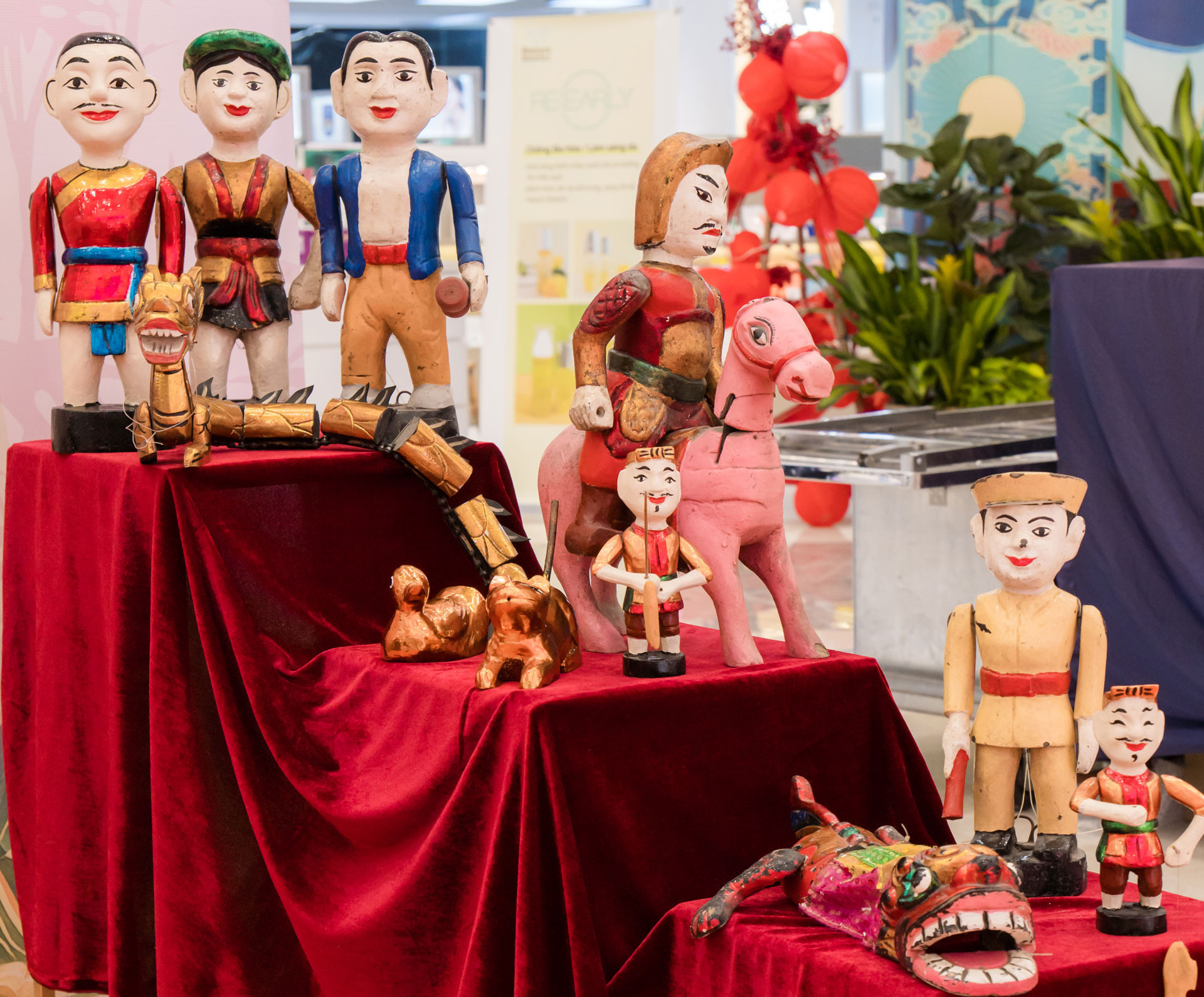
The live performances by Phan Thanh Liem became a highlight, consistently drawing full audiences. Nearly 200 seats were filled at each show, with hundreds more standing across surrounding areas to watch.
The performance space itself was transformed into a multi-sensory cultural environment. Visitors could explore infographic displays on the history and techniques of water puppetry, participate in traditional games, engage in creative workshops and enjoy live traditional music performances.
Together, these elements created an immersive experience where audiences did not simply observe, but actively engaged with the heritage.
The success of Thuy dinh vong anh suggests a promising direction. When placed in the right context and expressed through contemporary language, traditional heritage can become a vivid and meaningful part of modern life.
What began as a graduation project has grown into a notable cultural experiment. More importantly, it raises a lasting question: how can younger generations not only understand heritage, but truly embrace it as part of their everyday lives?
Tinh Le
.svg)
