 Vietnamnet.vn

 Podcast


According to its H1 2026 consolidated financial statements, HAG recorded revenue of VND3.732 trillion, a slight increase from the same period last year. Profit after tax attributable to the parent company reached more than VND2.12 trillion, up sharply from nearly VND834 billion a year earlier.
Net revenue in the first six months of the year reached VND3.707 trillion, according to the reviewed semiannual financial statements, with fruit contributing more than VND2.693 trillion.
Another positive development is the substantial reduction in borrowings. As of June 30, 2026, HAG had more than VND8.6 trillion in financial debt, well below the VND28 trillion recorded in 2018. Nevertheless, the debt burden remains significant amid high market interest rates.
Against this backdrop, Duc continues to expand investment, with coffee emerging as a new growth direction alongside bananas and durian.
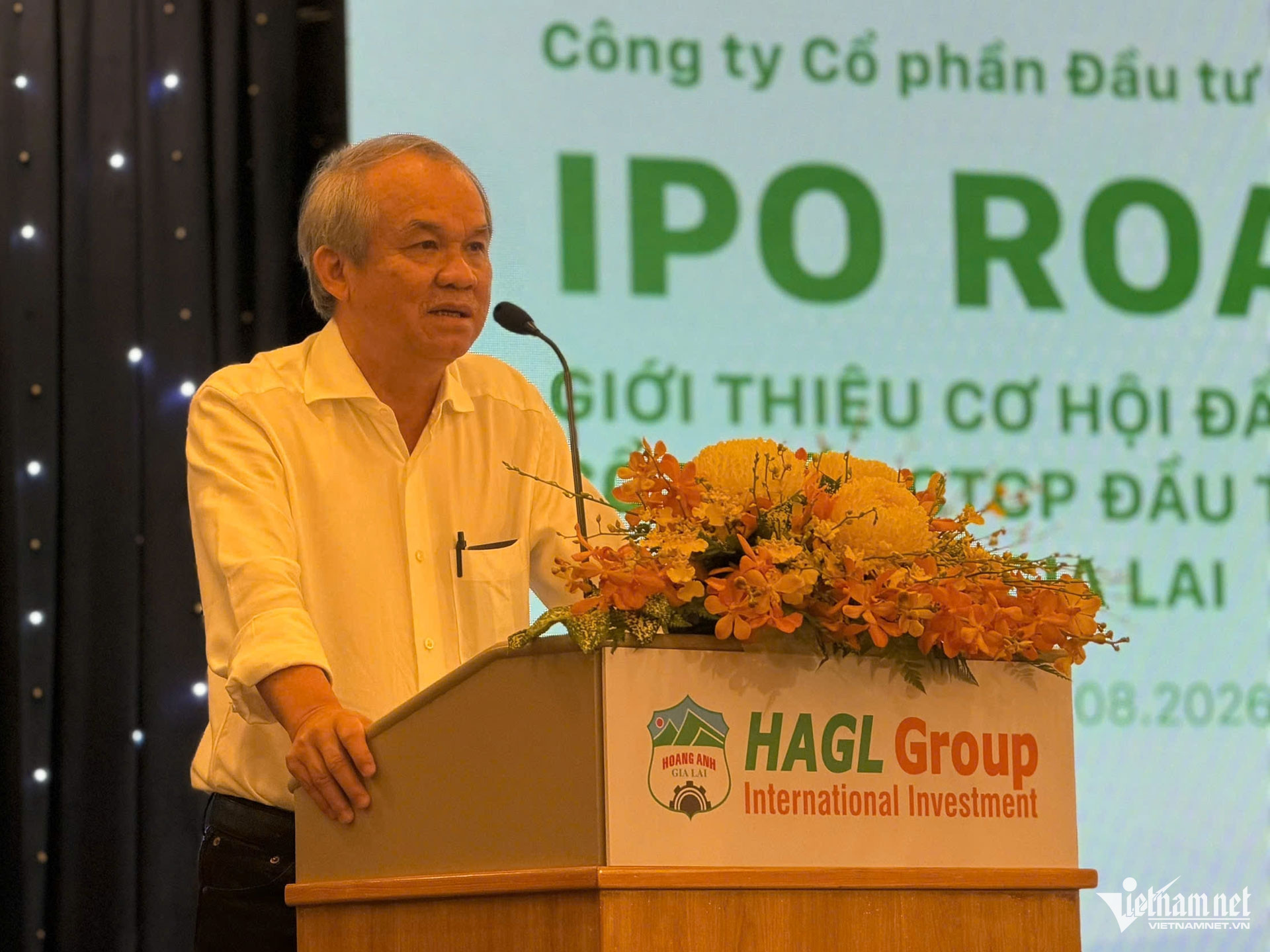
Speaking at an event introducing investment opportunities in HGI shares on August 18, Duc said he expects coffee to become HGI's largest revenue contributor over the next two years, followed by durian and bananas.
At the 2026 Vietnam-Laos Investment Promotion Conference in Vientiane, a project to develop coffee-growing areas and build a processing plant in Savannakhet Province was granted an investment registration certificate, with total investment exceeding $29.2 million. The project is expected to establish 2,083ha of coffee plantations in Nong District and build a processing plant with a designed capacity of 9,470 tons a year.
HAG aims to expand its coffee-growing area to 20,000ha by 2028. The company said it had developed around 3,000ha in 2025, plans to plant an additional 7,000ha in 2026, and intends to expand by another 5,000ha annually over the following two years.
Hoang Anh Gia Lai International Investment JSC (HGI) has signed an MOU on long-term cooperation with MQ Coffee, a company headquartered in Shanghai, China. HGI aims to supply 1,000 tons of green Arabica coffee beans in 2026 before increasing output to 5,000 tons a year, with supplies expected to come from growing areas in Laos.
HAG's journey of revival cannot be detached from the crisis that once pushed the enterprise to the brink of bankruptcy.
About 15-20 years ago, Hoang Anh Gia Lai was one of Vietnam's prominent private groups, with a business ecosystem spanning timber, real estate, hydropower and agriculture. Duc became known for his bold investment strategy, readily committing large amounts of capital to seize opportunities he believed would give the company a competitive advantage in the future.
However, rapid expansion costs the enterprise dearly.
Expecting rubber prices to stay high, HAG invested heavily in rubber, relying on borrowed capital to finance projects that would take years to generate cash flow. But the market did not develop as anticipated. Rubber prices plunged, long-term investments failed to deliver commensurate returns, and interest expenses continued to weigh on the company.
By late 2016, HAG's total liabilities exceeded VND36,000 billion, including nearly VND5,200 billion in short-term debt and over VND21,440 billion in long-term debt.
The misstep was not merely choosing rubber or oil palm. The larger flaw was concentrating excessive resources on a single market scenario, employing heavy financial leverage, and accepting long payback periods.
When the crisis hit, Duc was forced to confront reality and make painful decisions. HAG transferred most of its stake in HAGL Agrico, scaled down numerous operations, sold assets and restructured business segments that no longer matched its financial capacity.
Cooperation with Thaco during the agricultural restructuring process marked a major turning point. Rather than trying to preserve a diversified business empire at all costs, Duc accepted a narrower scope of operations and focused on core businesses that could still generate cash flow.
Notably, he did not abandon agriculture after the failure of his rubber investments. Instead, Duc chose to start over with crops and business models better suited to the company's capital requirements, harvesting cycles and market conditions.
Bananas became an early cash-flow pillar. Durian unlocked growth room as acreage entered major harvesting phases. Coffee was added as a longer-term investment track, while pig farming and related activities previously helped diversify revenue streams.
Nevertheless, agriculture is far from risk-free. Banana, durian and coffee prices all fluctuate, while weather conditions, pests, product quality, export standards and market demand can directly affect profitability.
Manh Ha

