 Vietnamnet.vn

 Podcast


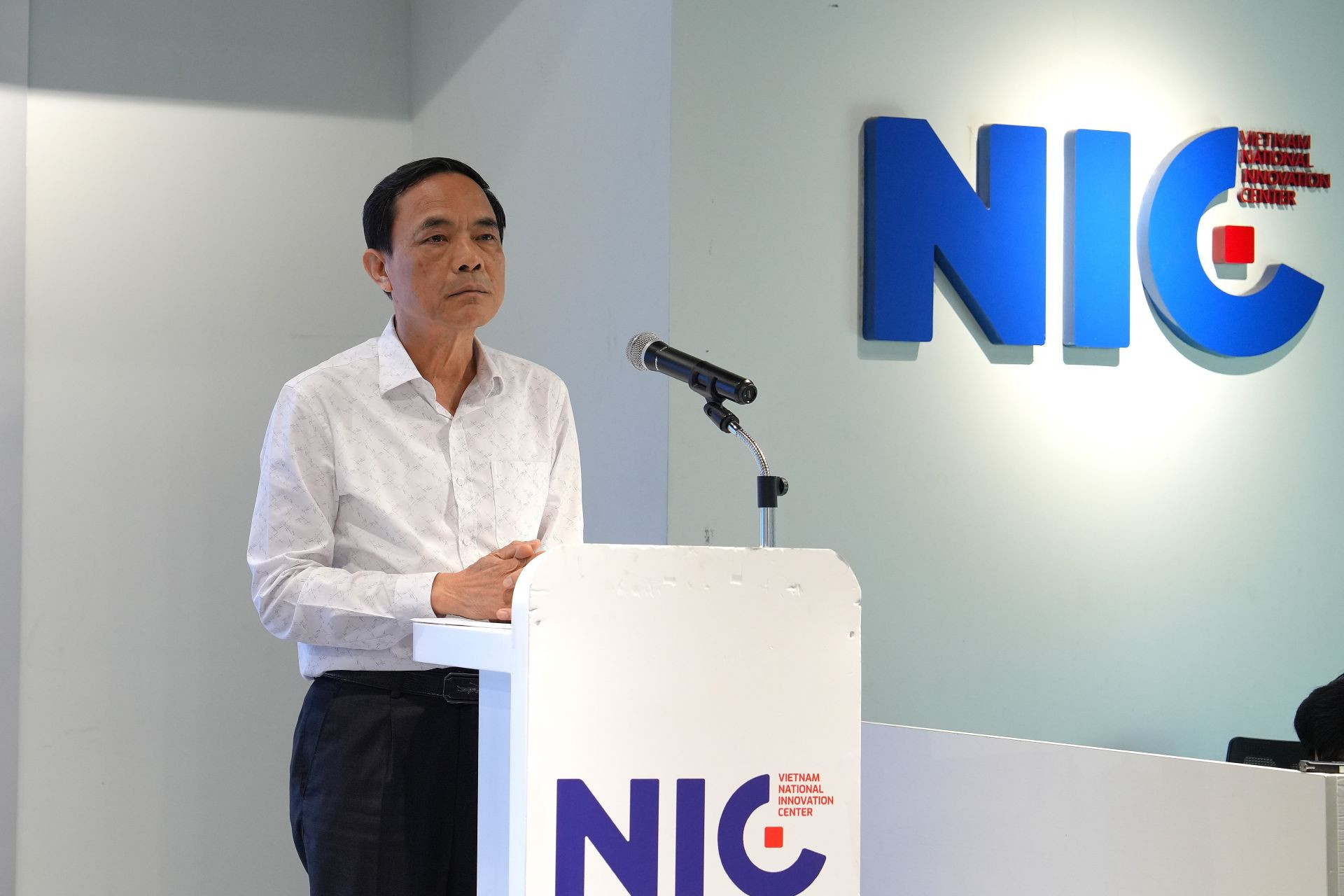
At a workshop held by the Government Cipher Committee on October 17 to announce three draft national standards for post-quantum cryptography (PQC), experts raised serious concerns about information security amid the emergence of new technologies.
Speaking during a discussion session, Son said: “AI is now extremely powerful and is becoming a Super Intelligence. Problems that scientists previously needed a great deal of time to solve can now be handled by AI. Using AI to break encryption will be a major issue that needs to be addressed.”
He had earlier pointed out that the challenges posed by quantum computers were no longer a distant prospect and that countries had already begun preparing to transition to post-quantum cryptography.
Particular attention must be paid to the “harvest now, decrypt later” approach to codebreaking, especially when it comes to data that must remain secure for long periods, such as blockchain systems and specialized digital signature systems used by the cipher sector for official government operations and e-government services.
The combination of quantum computers' parallel processing power and AI's ability to learn could threaten classical cryptographic algorithms sooner than expected.
This reality means the cryptography sector can no longer simply rely on passively adopting algorithms developed elsewhere.
Son noted: “We need a workforce with sufficient expertise to understand, implement and evaluate new cryptographic solutions, particularly post-quantum cryptography.
"This requires close cooperation among regulatory agencies, research institutes, universities and businesses, from training and research to product development. If the Institute of Cryptographic Science and Technology is not strong enough, we will not be able to master the algorithms. Any cryptographic product built on an algorithm that does not meet the standards will inevitably fail to meet them as well.”
At the event, the Government Cipher Committee officially announced three draft national standards for post-quantum cryptography (PQC). The draft suite includes:
Modified HB-PQSign Hash-based Post-Quantum Digital Signature Algorithm
Module-Lattice-Based Key-Encapsulation Mechanism (ML-KEM)
Module-Lattice-Based Digital Signature Algorithm (ML-DSA)
To gather expert feedback and public critiques from scientists, research institutes, and technology enterprises, technical documentation has been made publicly available on the official portals of the Government Cipher Committee, the Ministry of National Defence, and the National Commission for Standards, Metrology and Quality.
Regarding the three draft national standards for post-quantum cryptography, the lieutenant general praised the Government Cipher Committee for taking a balanced approach.
On one hand, it selectively adopts international standards to ensure interoperability and integration with global systems. On the other hand, it develops algorithms based on research by Vietnamese scientists, demonstrating the country's ability to master cryptographic technology, a field closely linked to national sovereignty.
Vietnamese standards to align with international requirements
The threat of quantum codebreaking also poses a difficult challenge for payment systems and banking transactions.
Sharing concerns based on experience in southern Vietnam, Dr. Tony Tran, Policy Director at TOTM Labs and an expert at the HCMC Center for the Fourth Industrial Revolution (HCMC C4IR), said financial institutions in the region, including those in Singapore, largely adhere closely to standards issued by the US National Institute of Standards and Technology (NIST).
“Financial institutions today work with foreign partners, so should they follow international standards such as NIST or national standards? Do they need to comply with both national standards and NIST, or would meeting national standards also ensure compliance with NIST, avoiding the need to do the work twice," Tony said.
Nguyen Quoc Toan, Director of the Institute of Cryptographic Science and Technology under the Government Cipher Committee, said: “When officially issued, at least two of the three standards will ensure compatibility. The other standards are partly based on ISO, are compatible with ISO and are also partly compatible with NIST. HB-PQSign, in particular, is a specialized solution designed to establish our ability to master the technology.”
Regarding the transition roadmap and cryptographic agility, Toan added: “Under Project 125, the State Bank of Vietnam, as the leading agency overseeing the financial system, will have to develop a plan and roadmap. A seamless transition without service disruptions is a very difficult requirement, but it must be addressed from the procurement, design and implementation stages to ensure systems can adapt to the future.”
Du Lam

