 Vietnamnet.vn

 Podcast



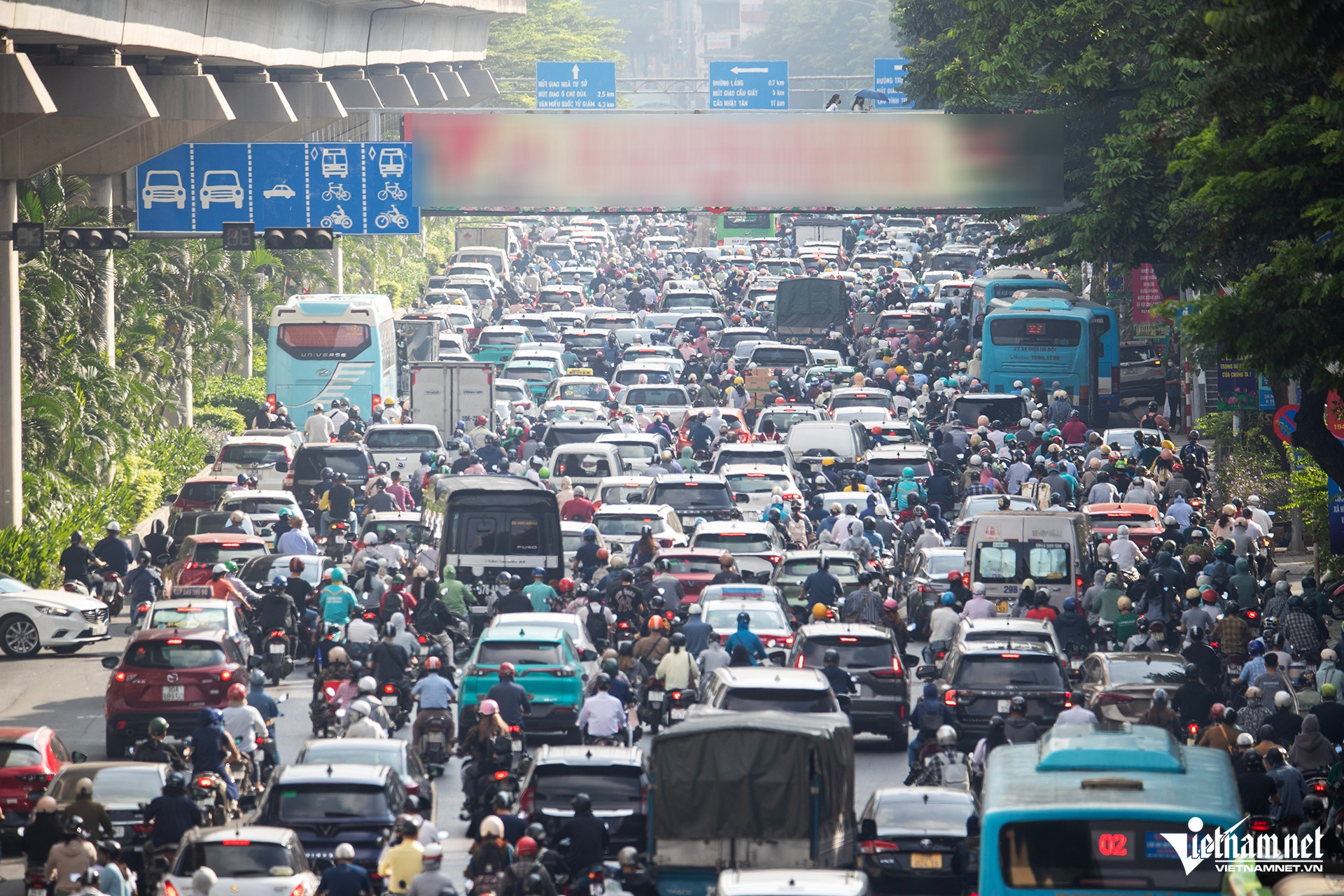
The Ministry of Natural Resources and Environment (MNRE) has issued an urgent directive to all centrally governed provinces and cities, calling for decisive action to tackle the escalating air pollution problem, particularly in Hanoi and Ho Chi Minh City.
Long-term monitoring data shows that from October to March each year, levels of air pollution - especially fine particulate matter PM2.5 - tend to spike, posing risks to public health and potentially hampering socioeconomic development.
The highest levels of PM10 and PM2.5 are consistently recorded in Hanoi and Ho Chi Minh City, with several localized pollution hotspots regularly appearing in surrounding provinces.
To proactively address this issue and protect public health, MNRE has called for a comprehensive, synchronized implementation of measures, with an emphasis on urgent and high-priority actions.
Key efforts include tightening control over sources of emissions and particulate matter stemming from industrial, commercial, and service-related activities that directly impact air quality.
For industrial sources, local governments are directed to conduct comprehensive reviews, random inspections, and strict enforcement against environmental violations at major emission facilities such as cement plants, thermal power plants, and steel factories. Facilities with high environmental risk profiles are also to be closely monitored.
In the transport sector, the ministry has urged cities to accelerate the development and implementation of low-emission zone projects. Local authorities are encouraged to transition to public transportation systems powered by clean and green energy, while also investing in infrastructure to support these vehicles.
Authorities are required to strictly regulate freight and construction material transport vehicles, especially those that operate without adequate covering, causing spillage and dust pollution.
Regarding construction activities, relevant agencies must intensify inspections and enforce compliance with dust and emission mitigation measures such as site covering, water spraying, and vehicle washing. Projects that repeatedly violate these regulations may face suspension.
Local communities are also instructed to crack down on the illegal burning of household waste and agricultural residues such as rice straw. Public awareness campaigns must be combined with inspections and penalties. Meanwhile, circular economic models are to be promoted for the collection and reuse of agricultural byproducts.
The ministry specifically calls on Hanoi and Ho Chi Minh City to mobilize all available resources and urgently develop detailed roadmaps to control vehicle emissions.
This includes accelerating key public transport infrastructure projects such as urban rail and electric bus networks to meet increasing mobility demands.
Polluted rivers and canals within inner-city areas must also be addressed through targeted environmental treatment plans. Additionally, a clear relocation schedule should be developed for polluting factories operating within residential and urban zones.
The Ministry of Natural Resources and Environment has pledged to closely coordinate with local authorities to implement the necessary interventions.
Tam An
.svg)
