 Vietnamnet.vn

 Podcast



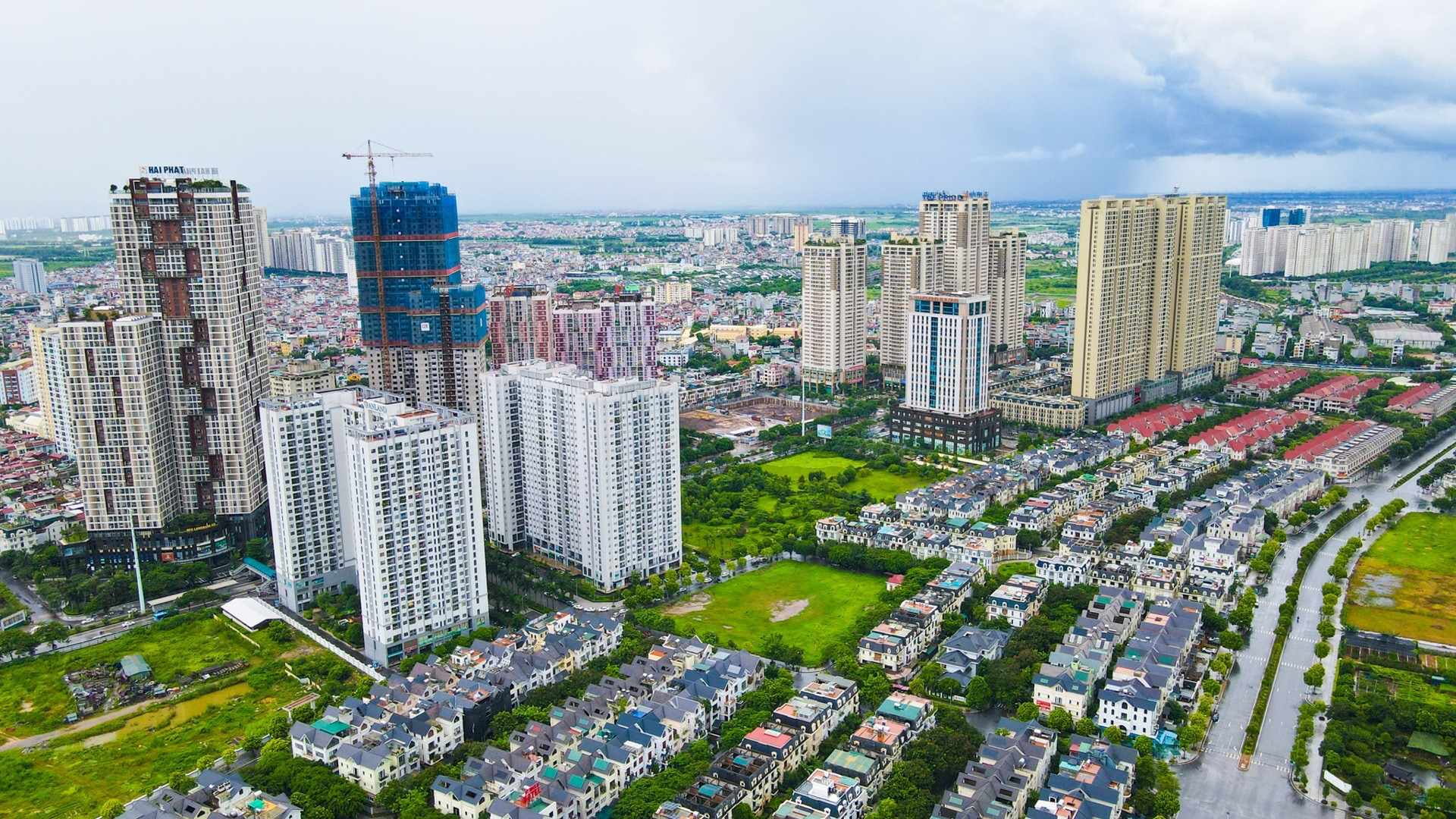
Despite residing with her daughter in an apartment complex for nearly three years, Lanh (Hoang Mai, Hanoi) has yet to accurately memorize the exact English name of the apartment building where she is living. The project is named Feliz, but multiple residents mistype it to Felice, Felis, or Phelit.
Driven by the difficulty in memorizing it, residents localized the name on their own to make it easier to call, such as "phe-lit hom" or shorter as "the phe-lit area."
The confusion is not limited to residents. Even real estate agents have struggled with project names. Nguyen Quang Thanh, a property broker, said many developers choose names that are difficult to pronounce. He recalled a project in West Lake area whose name was commonly rendered into Vietnamese phonetics as “de le roi so len” or “de roi xo la” to make it easier to say.
The apostrophe in project names beginning with “D’” also creates practical difficulties when typing on phones and computers. Entering the letter “D” followed by an apostrophe often results in the system automatically converting it into the Vietnamese letter “Đ” or causing font errors.
At one project launch event several years ago, a senior executive from the developer even mispronounced the name of his own project.
In reality, many developments now use English names that may have attractive meanings but remain difficult for Vietnamese speakers to pronounce. For example, West Heights is often shortened by residents to “wet hai,” while The Marq is pronounced as either “mark” or “mark-kyu.”
Projects with French or Spanish names, such as D'Capitale, Feliz en Vista, and Le Pavillon, also suffer from inconsistent pronunciation. D'. Palais de Louis is frequently misread as “de pa-lai de lu-it,” while D'. Le Pont D'or is often distorted into “de le pon do” because of its unfamiliar pronunciation.
Many developments also have lengthy commercial names, sometimes stretching to five to eight syllables due to the combination of the developer’s name, product line, location, and sub-zone branding.
What makes a suitable project name?
Tran Vi Thoai, director of IB Legal Vietnam Law Firm, noted that under current regulations, housing development projects may use foreign-language names, but they must first have a full Vietnamese name.
Point c, Clause 1, Article 33 of the 2023 Housing Law stipulates that housing development projects and areas within those projects must be named in Vietnamese. Social housing projects, housing for members of the armed forces, and resettlement housing projects are required to use Vietnamese names.
For commercial housing projects and apartment renovation or reconstruction projects, developers may add foreign-language names if desired, but the full Vietnamese name must appear first, followed by the foreign-language version.
Project names and the names of areas within a project must be included in approved investment policies or project documentation and must be used consistently throughout the construction, management, and operational phases.
Commenting on project naming practices, marketing expert Nguyen Thu Trang said the core principles of branding are simplicity, memorability, and clear positioning. When a foreign name becomes overly long, complicated, or filled with silent letters that conflict with local language habits, consumers instinctively adapt it into something easier to use.
Residents, drivers, and delivery workers often shorten or transform project names into familiar Vietnamese place references for daily communication. As a result, developers may spend billions of dong building brand awareness around a sophisticated foreign name only to see it largely ignored in everyday life. This creates a significant gap between marketing ambitions and actual customer experience.
Rather than forcing complicated English phrases into project branding in an effort to project an image of luxury or exclusivity, developers should consider a more balanced approach. This could involve combining a short, easy-to-pronounce international element with the developer’s name or the original local place name.
According to Trang, a successful project name should serve as a bridge between the development and the community. It should be modern enough to appeal to younger buyers and international customers, while remaining familiar and easy to remember so that it does not create unnecessary obstacles in daily life, transactions, or administrative procedures.
Hong Khanh
.svg)
