 Vietnamnet.vn

 Podcast



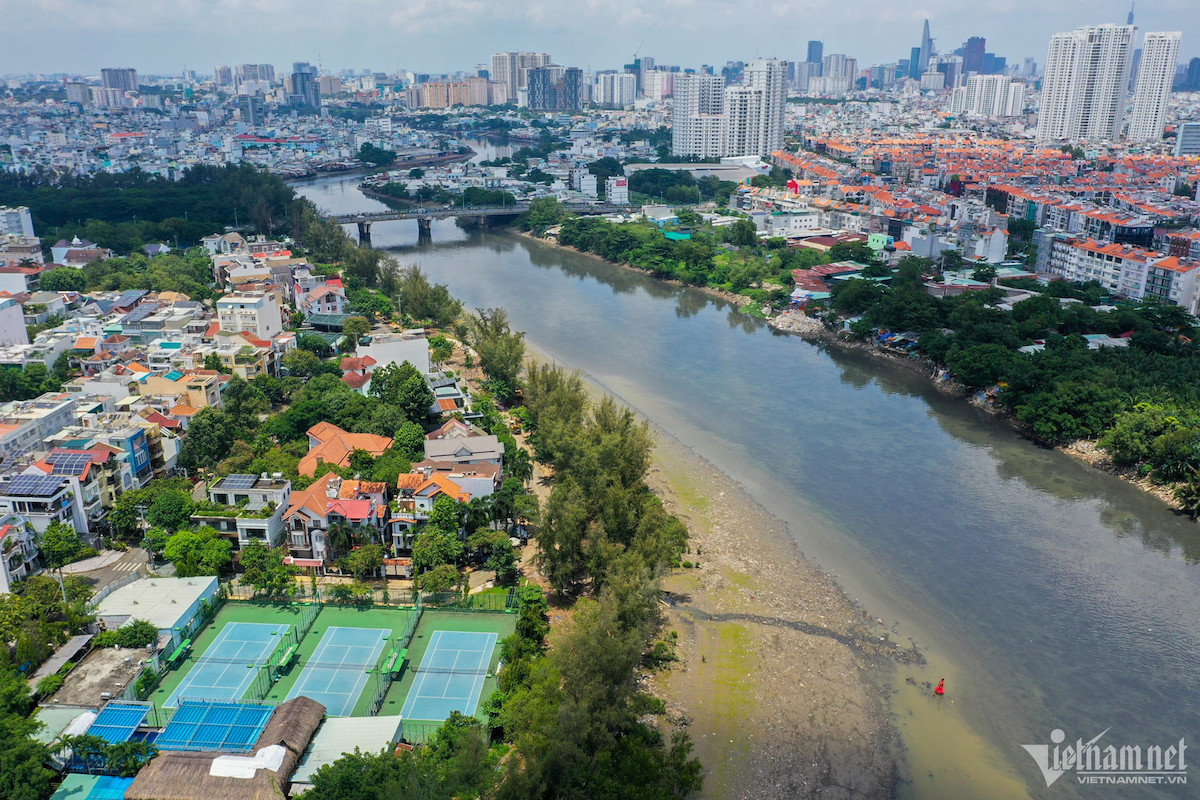
But apartment prices vary considerably between the two areas.
Using downtown District 1 as the reference point, the (formerly named) western districts such as Binh Tan, Tan Phu, and District 8 are not that much farther from the city center than Thu Duc in the eastern area.
However, apartment prices differ hugely between the western and eastern areas. Homebuyers in the western area pay about VND70 million/sqm, but in eastern Thu Duc common prices are approaching VND200 million/sqm.
A VietNamNet survey of projects currently for sale shows that most apartments in the western area in the (formerly named) districts such as Binh Tan and Tan Phu, District 6, and District 8 are priced around VND60–90 million/sqm.
In BinhTan, apartment projects such as Akari City, The Privia, and Moonlight Centre Point are offered at VND60-85 million per sqm, depending on location and launch phase.
In Tan Phu, projects within the Celadon City township, where amenities have been completed, command slightly higher prices of around VND70-100 million per sqm. It is one of the few areas in western HCMC where apartment prices have approached the VND100 million per sqm mark.
Projects in District 8, including D-Aqua, Green River, and Asiana Capella, are priced at VND55-80 million per sqm. New apartment supply in District 6 remains limited, with the few remaining projects on the market selling for around VND70-90 million per sqm.
The contrast becomes even more pronounced when compared with eastern HCMC. In the mid- to high-end segment in former Thu Duc City, projects such as Thao Dien Green, Gateway Thao Dien, and The River are marketed at around VND150-200 million per sqm, while larger units or those in prime locations exceed VND200 million per sqm.
Why are apartments in western HCM City cheaper?
The price gap between the west and east reflects location as well as different development processes.
While the east has benefited from large-scale infrastructure projects, with Thu Duc as the focal point, the west has mainly developed based on real housing demand and the advantage of affordable price levels.
The west has not had a strong enough price push to create a price leap like the east has experienced over the past decade. The difference in infrastructure, planning, and development drivers has widened the price gap between the two areas.
According to market research firms, the biggest difference between the two areas lies in infrastructure and urban development.
Over the past 10 years, the east has received large-scale projects such as Metro Line 1, HCMC-Long Thanh-Dau Giay Expressway, An Phu interchange, Ring Road 3, and the formation of Thu Duc City. This not only shortened travel time but also attracted tech firms, financial centers, and foreign expert communities.
In contrast, the west mainly relies on existing transport axes such as Vo Van Kiet Boulevard, Kinh Duong Vuong, National Highway 1, and Luy Ban Bich Street. Although many expansion and upgrade projects are underway, the area has not seen projects large enough to create a price push like in the east.
According to Savills Vietnam, housing supply in HCMC is shifting to outlying areas as downtown land becomes increasingly scarce. However, prices between areas will continue to diverge, depending on infrastructure, amenities, and ability to form resident communities.
DKRA Consulting’s Q1/2026 report shows the apartment segment continues to recover positively, and demand is for projects with full legal status and good infrastructure. This means areas with strong investment in transport and amenities will have more room for price increases.
DKRA Consulting experts say the west still has a lot of development potential thanks to a large population, strong housing demand, and low price levels compared with many other areas. However, for a common price level of VND100 million/sqm to appear, the area needs more large-scale infrastructure projects.
For investors, that also means profit expectations in the west will likely take longer.
When important infrastructure projects have not yet formed, price upside mainly comes from urbanization speed and real housing demand, rather than surges driven by planning or infrastructure news like the east has experienced.
Anh Phuong
.svg)
