 Vietnamnet.vn

 Podcast



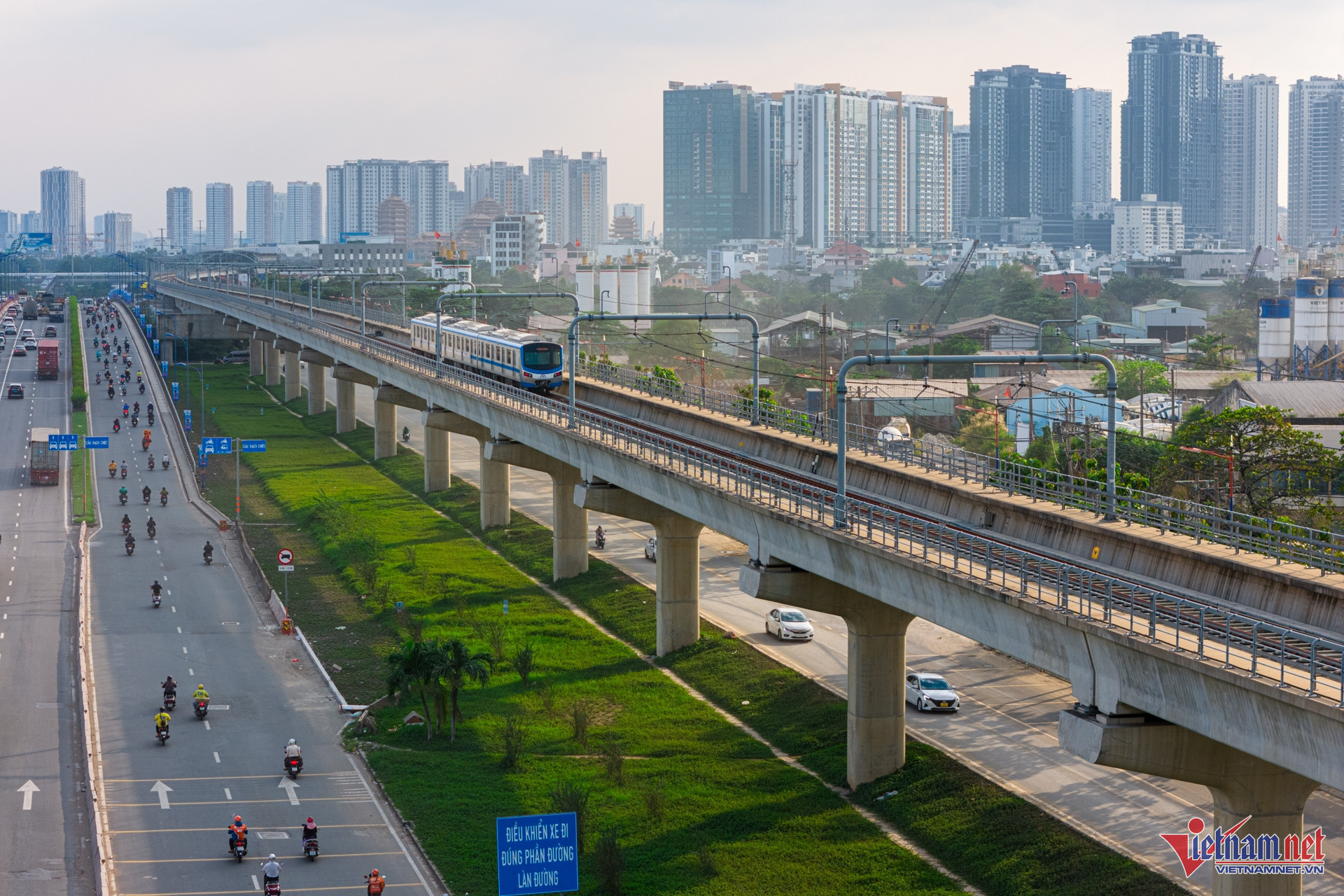
Metro Line 1 (Ben Thanh-Suoi Tien) officially began commercial operations in late 2024. Nearly two years on, HCMC's first urban railway has not only changed the way people travel but has also reshaped the residential property market in the city's eastern districts.
In 2018-2019, while Metro Line 1 was still under construction, many apartment projects along the route were launched at VND35-60 million per sqm. At that time, many buyers remained skeptical about the project's completion timeline, meaning the metro's impact was not yet fully reflected in property prices. Today, the picture is very different.
A VietNamNet survey of major station areas along Metro Line 1 shows that apartment prices have climbed sharply, although the pace of appreciation varies considerably by location.
In Thao Dien, apartment prices have reached the highest levels along the metro corridor. Projects such as Thao Dien Green, Q2 Thao Dien, Lumière Riverside and several nearby luxury developments are commonly listed at VND150-250 million per sqm. Some luxury apartments overlooking the Saigon River command even higher prices.
Nearby, An Phu has also established a new pricing benchmark. Projects including Masteri An Phu, The Vista, Estella Heights and Eaton Park are currently priced at around VND90-150 million per sqm in both the primary and secondary markets, representing a substantial increase compared with seven to eight years ago.
Meanwhile, areas surrounding Binh Thai and Thu Duc stations have recorded more moderate price growth but have still seen notable appreciation. Many apartment projects along Hanoi Highway are now commonly offered at VND70-100 million per sqm, significantly higher than during 2018-2019.
At the eastern end of the metro line, the Suoi Tien and Long Binh areas have also benefited from improved connectivity to the New Mien Dong Bus Station and the High-Tech Park. Apartment prices there range from VND60-90 million per sqm, compared with VND35-45 million per sqm just a few years ago.
According to many real estate brokers, demand for apartments near Metro Line 1 stations has increased markedly since the line began operations. Besides owner-occupiers, investors also expect property values around metro stations to continue rising as the public transport network becomes more effective.
Metro is only part of the story
Although these neighborhoods all lie along Metro Line 1, apartment price growth has varied considerably. Transport infrastructure is only one of several factors influencing property values.
Areas such as Thao Dien and An Phu have recorded stronger price appreciation because of their metro connectivity and long-established international residential communities.
In addition to increasingly scarce land, apartment values in these neighborhoods have been supported by a well-developed ecosystem of international schools, hospitals, shopping malls and other urban amenities.
By contrast, areas around Binh Thai, Thu Duc and Suoi Tien stations, while benefiting from improved transport infrastructure, are still expanding their urban amenities and services. As a result, apartment prices remain considerably lower than in Thao Dien and An Phu.
Giang Huynh, director of research and S22M at Savills HCMC, said transport infrastructure is an important factor in enhancing property appeal, but it is not the only determinant of value. She said housing prices fully reflect infrastructure improvements only when they are accompanied by urbanization, expanding amenities and services, and genuine end-user demand.
Savills Vietnam's first-quarter 2026 market report shows that new housing supply in HCMC is increasingly shifting to suburban areas as land in the city center becomes scarcer.
However, price differences between locations are expected to continue reflecting infrastructure quality, the maturity of local amenities and the formation of residential communities, rather than simply whether a metro line passes through the area.
Duong Thuy Dung from CBRE Vietnam said Metro Line 1 has been one of the infrastructure projects with the clearest impact on eastern HCMC's property market.
She noted that during the metro's construction and completion, many residential projects near stations recorded price increases of 25-75 percent compared with their initial launch prices, reflecting market confidence in modern public transport.
However, she noted that the metro effect has not been uniform. Areas with well-established infrastructure and mature urban ecosystems have captured the benefits more quickly, while locations with larger undeveloped land reserves will need more time for improved transport connectivity to translate into higher property values.
Anh Phuong
.svg)
