 Vietnamnet.vn

 Podcast



Based on the latest comments from Bloomberg journalist Mark Gurman, Apple may eventually address two key limitations of the iPhone Duo.
Users may have to wait, however, as the upgrades could arrive only with the third generation of Apple’s foldable iPhone.
Face ID and telephoto camera could come to iPhone Duo 3
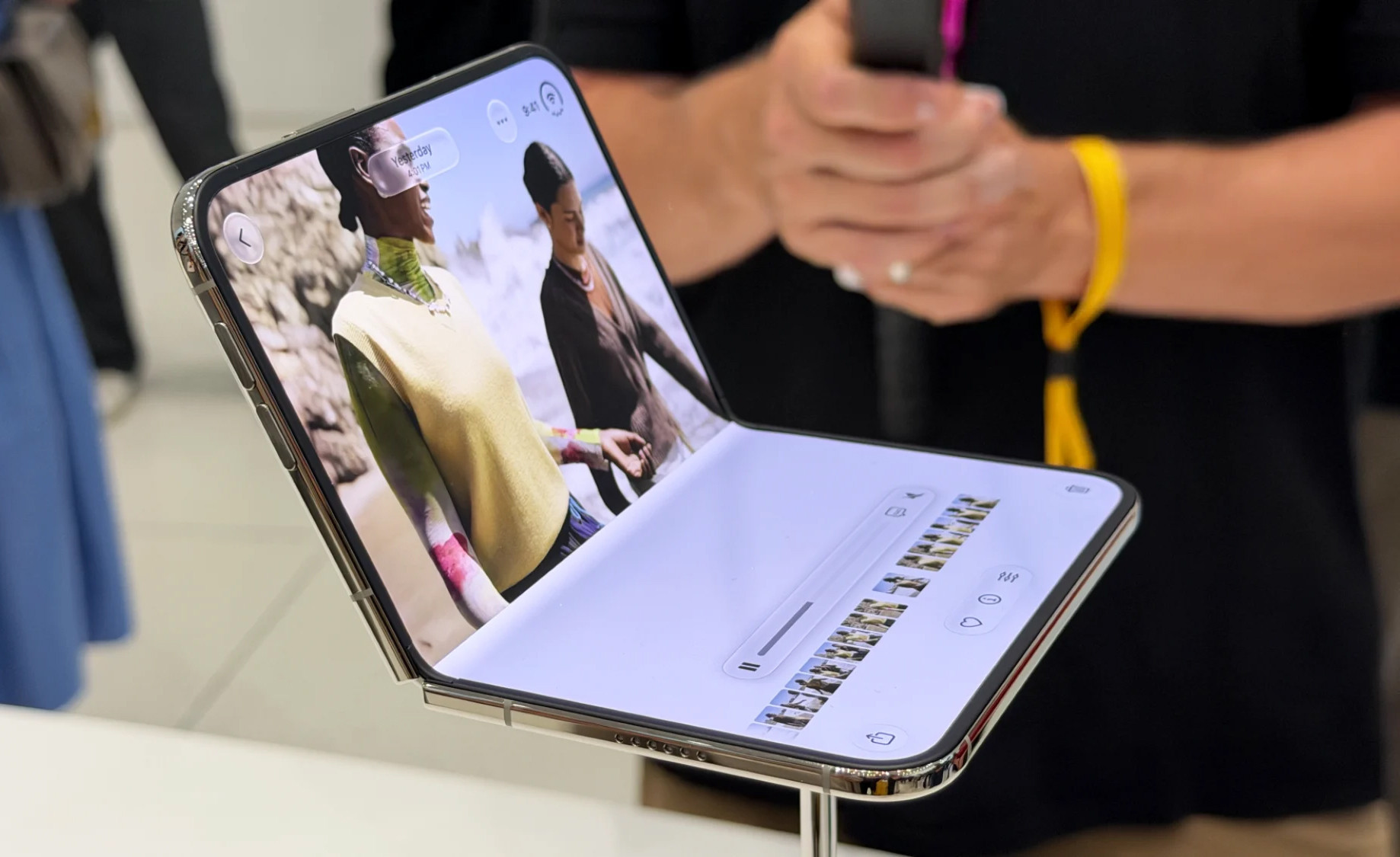
According to Gurman, Apple would like to bring Face ID and a telephoto camera to future generations of the iPhone Duo.
Gurman made the comments during a Q&A in his Power On newsletter, where he shared his own predictions about the future of Apple’s new foldable iPhone line.
Importantly, the predictions are not based on a leaked Apple product roadmap or any official information from the company. They are primarily Gurman’s assessment based on his years of covering Apple and the technology industry.
Many of Gurman’s reports, leaks and predictions in recent years have proved accurate.
His latest comments are therefore noteworthy, although they should not be regarded as confirmation of Apple’s plans.
According to Gurman, the main reason Apple has yet to bring Face ID and a telephoto camera to the iPhone Duo comes down to a fundamental constraint: physics.
Telephoto cameras, particularly those using periscope lens systems, require considerable space inside a smartphone.
The iPhone Duo, meanwhile, is designed to be exceptionally thin, leaving Apple with little room for the necessary components.
Gurman believes both features are difficult to integrate into a device as thin as the iPhone Duo because their components require considerable depth.
In other words, the challenge is primarily one of physical dimensions rather than simply a software problem.
Weight presents another obstacle. The current iPhone Duo weighs about 254 grams. Adding a relatively large and heavy periscope camera system would increase that figure further.
That is an issue Apple cannot easily ignore, as weight remains one of the biggest challenges for foldable smartphones.
Samsung even markets the Galaxy Z Fold 8 as the lightest foldable smartphone on the market, meaning Apple will need to keep weight under control if it wants to upgrade the hardware in future iPhone Duo generations.
Face ID presents a different challenge. Apple’s facial recognition system requires space, particularly depth, to project and accurately read the infrared dots used to map a user’s face.
The iPhone Duo is only about 5.2mm thick when fully unfolded, making it even thinner than the iPhone Air.
With such limited internal space, incorporating both Face ID and a telephoto camera is extremely difficult in the current generation.
That could change in the future.
AI could help Apple overcome hardware constraints
According to Gurman, Apple could turn to AI and computational photography to address space constraints rather than relying solely on smaller hardware components.
Instead of developing a bulky telephoto camera system or drastically shrinking the entire Face ID sensor array, Apple could use AI to help smaller and simpler sensors achieve accuracy comparable with current systems on conventional iPhones.
Gurman believes users may soon see an early example of this approach in the smart home hub Apple is developing.
It remains to be seen, however, whether AI and computational imaging can genuinely close the gap with a full periscope zoom system or make Face ID thin enough to fit inside the iPhone Duo.
Notably, some of Apple’s rivals appear to have addressed similar challenges without relying as heavily on AI-based solutions.
Gurman predicts Apple may need several more years to resolve the design and component constraints. Face ID and a telephoto camera could therefore arrive with the third-generation iPhone Duo rather than the next version.
That would also suggest Apple is taking a cautious approach to its foldable iPhone line.
Some passport-style foldable smartphones from Chinese manufacturers, including the Huawei Pura X Max and Xiaomi 18 Fold, already feature periscope telephoto cameras without being substantially thicker than the iPhone Duo.
These rivals also have an advantage in battery technology. Silicon-carbon batteries allow newer foldable smartphones to offer greater capacity while keeping weight under control.
Still, the iPhone Duo is showing signs of strong appeal among users, and its attraction may extend beyond hardware.
One feature that has proved particularly popular is the transition animation when the device is folded and unfolded.
The animation creates a seamless visual transition between the two states and has attracted enough attention that users have attempted to recreate similar effects on other devices, from the Galaxy Z Fold 8 to MacBooks.
If Apple can preserve the appeal of its software experience while overcoming the current physical constraints, the third-generation iPhone Duo could represent a more significant step forward for its foldable iPhone line.
Hai Phong
.svg)
