 Vietnamnet.vn

 Podcast


Apple's first foldable smartphone, the iPhone Duo, has officially gone on sale following a turbulent pre-order period in which available units reportedly sold out within seconds and estimated delivery dates slipped into next year.
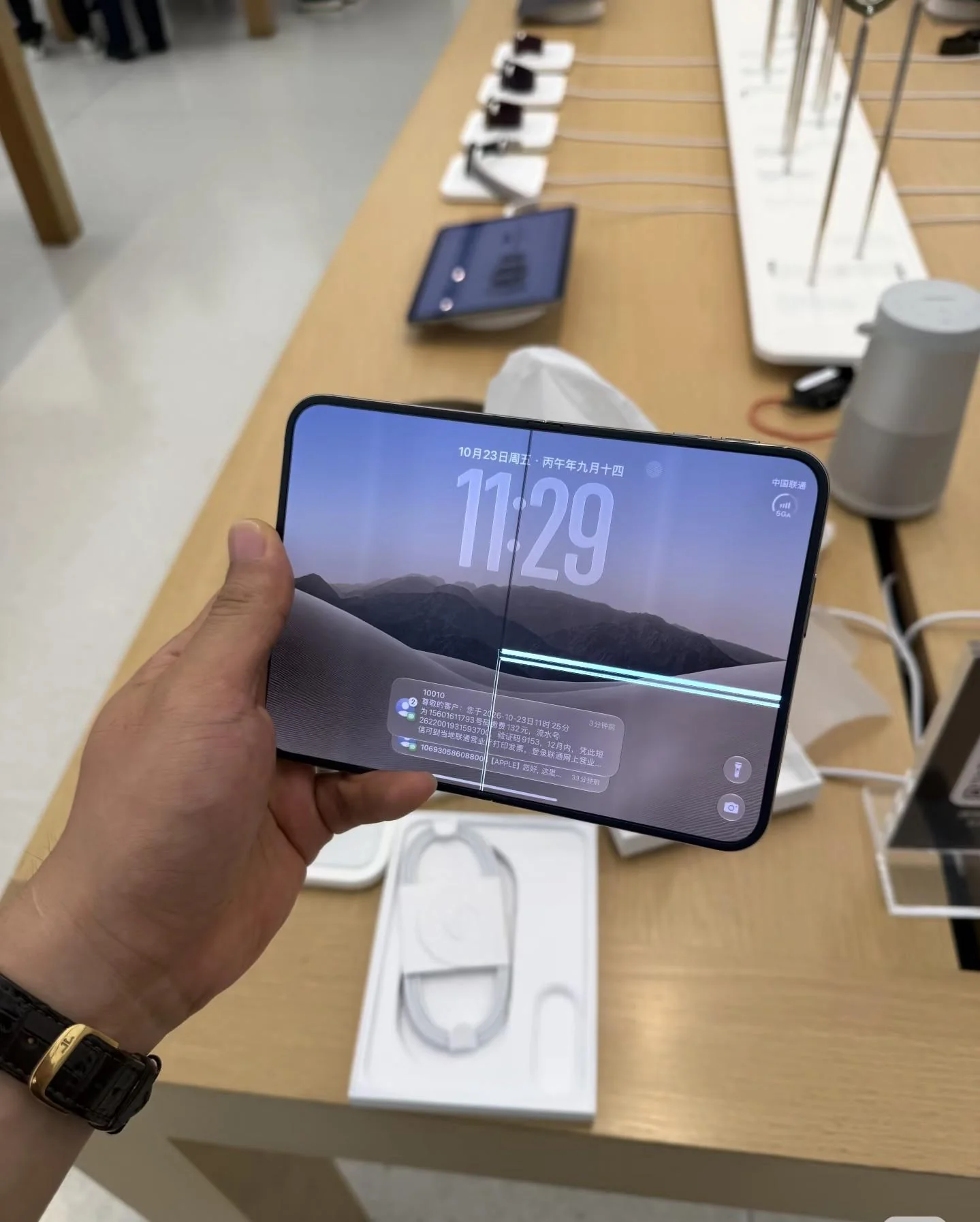
However, excitement among early buyers of the long-awaited device has been overshadowed by a potentially serious problem: reports of inner displays cracking down the middle.
The growing number of reported failures has raised concerns about whether the problem extends beyond isolated incidents. Some customers are already seeking replacements at a time when spare inventory is increasingly limited.
For those who warned against buying a first-generation product, the developments may not come as a complete surprise. For Apple, however, they could signal the need to reassess the design of the most expensive foldable phone in the iPhone lineup's history.
Owners of the iPhone Duo may want to take additional precautions while the cause of the reported failures remains unclear.
Cracks along the hinge raise questions about a possible design flaw
The most concerning reports involve the iPhone Duo's inner display, the large flexible panel that unfolds to provide a wider viewing area.
According to accounts from affected users, some devices developed cracks running vertically through the center of the screen, directly above the hinge, after only a few hours of use.
The damage goes beyond cosmetic defects. Users have also reported dead pixels and vertical lines appearing on the display, significantly affecting its functionality.
For a smartphone starting at around $2,000, such problems are particularly troubling for customers who have paid a premium to experience Apple's latest technology.
What makes the situation more concerning is that the reported failures appear to occur in roughly the same location.
This pattern has fueled speculation that the iPhone Duo may have a structural weakness rather than a series of unrelated incidents caused by accidental impacts or improper handling.
Nevertheless, more evidence is needed to establish the precise cause.
The initial photographs and user reports are insufficient to conclude that the entire iPhone Duo lineup is defective. They also provide no reliable indication of the proportion of affected devices among those sold.
For now, customers experiencing screen failures reportedly remain eligible for replacement devices.
Although retail supplies of the iPhone Duo are extremely limited, Apple is understood to have reserved some units to address problems arising immediately after launch.
Reports also suggest that Apple may follow procedures previously used for first-generation products by sending damaged devices to California for direct examination by its design and engineering teams.
Analyzing failed units could help the company identify the underlying cause, assess the severity of the problem and develop measures to prevent similar failures in future generations.
The risks of a first-generation foldable are becoming apparent
In the months leading up to the iPhone Duo's launch, industry observers repeatedly urged consumers to approach the device with caution.
The reasoning was straightforward: this is Apple's first foldable smartphone, a category involving complex mechanical structures and engineering challenges not encountered in conventional iPhones.
Foldable phones are inherently more sensitive to mechanical stress because their displays must bend repeatedly while the hinge and underlying material layers work together to maintain structural integrity.
That does not, however, mean all foldable devices have the same failure rates.
Samsung and Google have spent years developing foldable smartphones, gathering real-world usage data and refining their designs across successive generations.
In the author's view, this accumulated experience gives both companies a meaningful advantage over Apple, which has only recently entered the foldable smartphone segment.
Samsung's Galaxy Z TriFold offers another illustration of the challenges involved in introducing a new form factor.
The company's first tri-fold smartphone reportedly encountered problems of its own, demonstrating that experience with conventional foldables does not eliminate the difficulties of commercializing a substantially different design.
Even Apple's traditional iPhone lineup has occasionally faced problems following major design changes.
The iPhone 17 Pro, which introduced a significant visual redesign after several generations of relatively consistent styling, was also the subject of complaints involving cellular reception and damage to its frame.
With the iPhone Duo, early concerns have extended beyond hardware to the way applications behave on the foldable display.
Software-related limitations, however, can potentially be addressed through operating system updates and improved application optimization by developers.
Physical damage caused by the display structure or hinge mechanism would be considerably more difficult to resolve.
If the cracking stems from a fundamental hardware weakness, Apple may need to revise the design, adjust manufacturing processes or introduce improved materials in future production batches.
Apple's confidence in its foldable display faces a real-world test
Before the iPhone Duo launched, Tom Marieb, Apple's Vice President of Hardware Engineering, emphasized that the device's approach to the display crease differed from solutions used by competing manufacturers.
Marieb assumed the position previously held by John Ternus, who has since become Apple's CEO.
He also expressed confidence in the technology, suggesting that customers should hold Apple accountable if problems developed with the screen crease.
According to statements from Ternus, Senior Vice President of Worldwide Marketing Greg Joswiak and Marieb, the iPhone Duo was engineered with features intended to distinguish it from existing foldable smartphones.
Yet reports of cracks appearing directly around the hinge are now raising questions about how effectively those innovations withstand everyday use.
A design promoted as different from competing products may still encounter similar durability challenges if it cannot withstand repeated folding under real-world conditions.
This does not necessarily mean Apple's earlier claims were incorrect.
An ordinary display crease and an actual fracture are different phenomena, and the two should not be treated as interchangeable.
However, if reports of cracking continue to increase, Apple may face mounting pressure to explain the cause and outline how affected customers will be supported.
Not every iPhone Duo is necessarily at risk of failure. Many devices may continue functioning normally, but the reported cases have already prompted concern among industry observers.
One of the biggest risks for Apple is that the problem could become more widespread while replacement inventory remains insufficient.
Even before the official launch, the iPhone Duo was facing significant supply constraints, with estimated deliveries pushed into the following year shortly after pre-orders opened.
If the number of damaged devices rises sharply, Apple could struggle to provide replacements over the coming months.
Such difficulties would not only affect the customer experience but could also undermine the company's reputation for product quality, long considered one of its major competitive strengths.
Reports from China are also attracting attention because the iPhone Duo went on sale there earlier than in the United States.
However, a higher number of complaints from one market does not necessarily indicate a higher global failure rate.
Any meaningful assessment would need to account for the number of devices sold in each market and the methods used to collect reports.
Until Apple reaches a definitive conclusion, iPhone Duo owners are advised to monitor their displays for signs of damage, avoid placing excessive pressure on the hinge area and contact official Apple support if unusual symptoms appear.
Hai Phong

