 Vietnamnet.vn

 Podcast



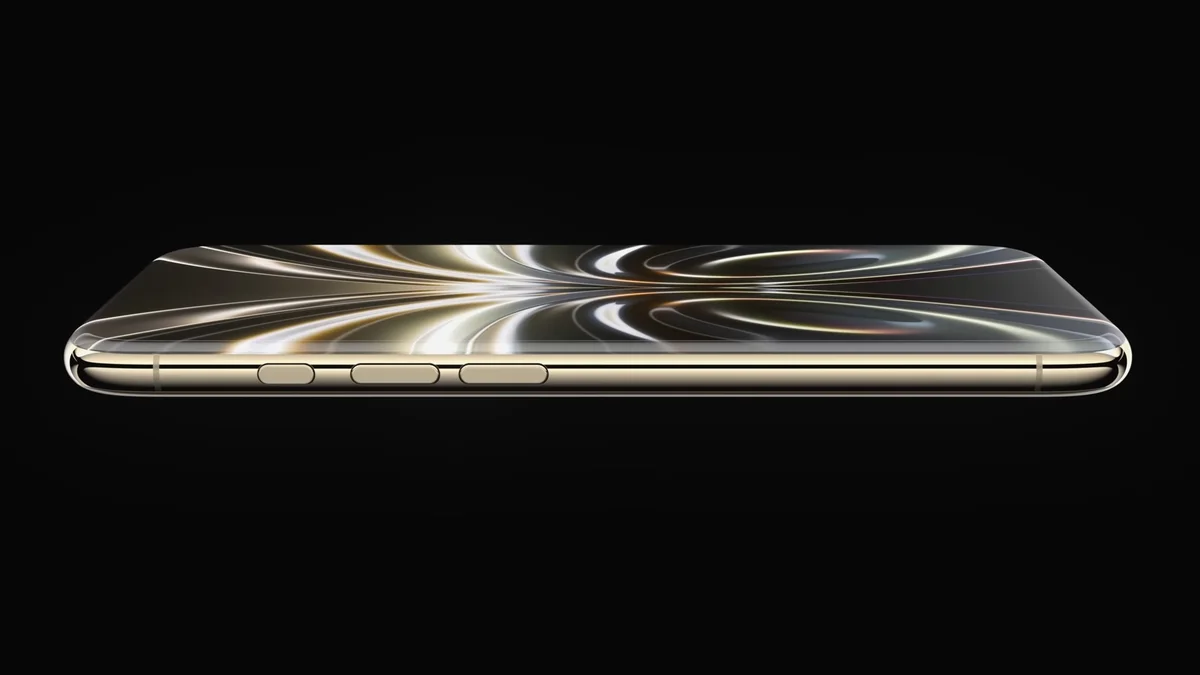
After years of making only incremental design changes to the iPhone lineup, Apple now appears to be entering a sweeping three-year redesign plan for its flagship smartphone series.
The transition is expected to begin with the iPhone 17 Pro Max, which is rumored to feature a larger rear camera module and a new aluminum frame. The iPhone 18 Pro Max would then serve as an important stepping stone before Apple unveils its true “strategic flagship” - the iPhone 20 Pro Max in 2027, coinciding with the 20th anniversary of the original iPhone.
Some reports suggest Apple may skip the iPhone 19 name entirely, similar to how the company bypassed the iPhone 9 branding in the past.
According to newly leaked renders and information from well-known source Jon Prosser, the iPhone 20 Pro Max could become the boldest smartphone Apple has ever created.
A fully immersive display with no visual interruptions
Apple’s biggest ambition for the iPhone 20 Pro Max is reportedly to create a device that is almost entirely screen.
Traditional display borders would disappear, along with the Dynamic Island and any visible camera cutouts.
Unlike older curved-screen phones such as Samsung’s Galaxy Edge lineup, Apple is said to be avoiding designs that distort content along the edges.
Instead, the display would curve gently across all four sides and blend naturally into the frame.
Users would still experience what feels like a mostly flat display while the bezels themselves become nearly invisible.
Perhaps the most notable rumored change is the complete removal of Dynamic Island. Rather than replacing it with a punch-hole camera like many Android manufacturers, Apple reportedly wants both the Face ID system and selfie camera fully hidden beneath the display.
If successful, it could represent one of the smartphone industry’s biggest breakthroughs in years - restoring the phone display to a completely uninterrupted viewing surface.
Prosser’s renders also suggest the iPhone 20 Pro Max may abandon Apple’s current flat-edge design language in favor of softer curved edges that support the display, making the device resemble a luxury piece of technology jewelry more than a conventional smartphone.
“Liquid Glass Display” and Apple’s display ambitions
Apple is also believed to be developing a completely new anti-reflective display coating for the iPhone 20 Pro Max.
The technology is expected to significantly improve outdoor visibility while creating a more premium viewing experience.
Some reports claim Apple may brand the technology as “Liquid Glass Display,” a name that aligns closely with the company’s broader Liquid Glass visual direction seen in recent versions of iOS.
Apple is reportedly not limiting its ambitions to display technology alone. The company is also said to be developing a new battery technology capable of increasing battery capacity without enlarging the battery itself.
However, the technology is not expected to rely on the silicon-carbon battery systems currently becoming popular among Chinese smartphone brands.
Apple’s ambitions may go even further. Several reports suggest the company ultimately wants the iPhone 20 Pro Max to become a truly “unibody” device - without physical buttons, visible speaker grilles or exposed components.
While such a design may still be unrealistic for 2027, Apple appears to be moving toward a future where the smartphone becomes a seamless block of glass.
Major technical hurdles remain
Despite the excitement surrounding the concept, Apple is reportedly facing significant technical challenges.
The company initially hoped to move Face ID beneath the display as early as the iPhone 18 Pro Max to help users gradually adapt to a truly full-screen design. However, that goal now appears uncertain.
According to multiple reports, current under-display Face ID systems still operate too slowly and lack the accuracy Apple demands for one of the iPhone’s signature features.
If Apple cannot perfect the technology in time, the iPhone 18 Pro Max could end up being a relatively modest upgrade rather than a transformative device.
Even the iPhone 20 Pro Max project itself is reportedly facing major engineering difficulties.
Apple is said to be struggling to achieve the display quality required for a truly “borderless” screen experience.
The new display structure may still produce slight content distortion near the edges, even if the effect is relatively minor.
In addition, brightness consistency across certain areas of the display could also be affected.
In other words, Apple’s three-year iPhone redesign strategy may not be progressing as smoothly as originally hoped. The iPhone 18 Pro Max could ultimately serve mainly as a transitional device before Apple reaches the vision it truly wants to deliver in 2027.
Even with those obstacles, the iPhone 20 Pro Max remains one of the industry’s most closely watched projects. After years of increasingly similar smartphone designs, Apple may finally be preparing for the next major display revolution.
Hai Phong
.svg)
