 Vietnamnet.vn

 Podcast



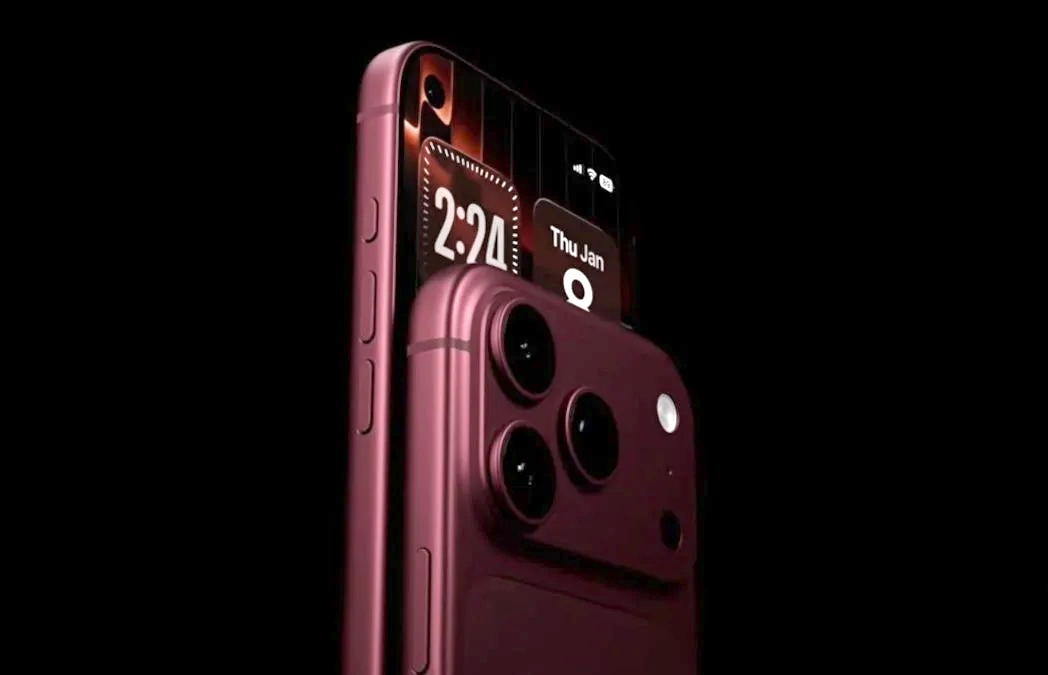
As rumors surrounding the iPhone 18 Pro Max continue to intensify, much of the spotlight has focused on the expected 2nm chip, under-display Face ID and Apple’s foldable ambitions. Yet a less discussed change may ultimately become one of the most meaningful upgrades for users concerned about privacy: Apple’s self-developed C2 modem.
At first, the C2 modem was expected to deliver faster 5G speeds, improved mmWave support and better battery efficiency through deeper hardware-software optimization. However, new reports suggest the chip could also unlock a privacy feature unavailable on current iPhone Pro models.
The move may represent a subtle but highly strategic step in Apple’s broader effort to tighten control over personal data - an area increasingly becoming a key battleground in the premium smartphone market.
The small privacy feature that could matter the most
According to recent reports, Apple’s transition toward in-house modem technology allows the company to enable a feature called “Limit Precise Location,” a setting quietly introduced in iOS 26.3 earlier this year.
The feature allows users to reduce how much location data mobile carriers can collect from their devices. Instead of sharing an exact address or street-level position, the system provides only an approximate location at the neighborhood or district level.
At first glance, the difference may appear minor. In reality, it represents a major shift in personal privacy protection. Location data remains one of the most valuable forms of information in the digital advertising and telecom industries, capable of revealing where users live, work, travel and spend time.
For years, telecom carriers have faced criticism over collecting or sharing customer location data with third parties. Apple’s ability to “blur” precise location information could therefore become a significant additional layer of protection.
What makes the situation more interesting is that not every iPhone currently supports the feature.
At the moment, “Limit Precise Location” only works on devices powered by Apple-designed modems, including the C1 and C1X. The supported lineup remains relatively small, consisting mainly of lower-profile devices such as the iPhone Air, iPhone 16e, iPhone 17e and iPad Pro M5.
Meanwhile, users who spend more money on an iPhone 17 Pro Max still cannot access the feature because the device continues to rely on Qualcomm modems.
That creates a striking contradiction in Apple’s product strategy: its most expensive flagship lacks a privacy tool already available on cheaper models.
And that is exactly why the iPhone 18 Pro Max is attracting growing attention.
Apple’s C2 modem could reshape the iPhone Pro experience
When the C2 modem arrives on the iPhone 18 Pro Max and Apple’s first foldable iPhone later this year, the privacy gap between Apple’s device tiers may finally disappear.
iPhone Pro users would gain access to a feature previously limited to less prominent products.
Privacy, however, is only part of the larger picture. The C2 modem is also expected to deliver several major technical improvements, including full mmWave 5G support, better carrier aggregation for faster network speeds and improved power efficiency.
More importantly, the modem represents another major step in Apple’s long-term effort to reduce dependence on Qualcomm. Over the years, Apple has gradually sought tighter control over the iPhone’s most critical internal components, from A-series chips and GPUs to the Neural Engine and now cellular connectivity.
If the C2 performs as expected, Apple could gain a substantial advantage in optimizing overall iPhone performance in ways many Android manufacturers may struggle to replicate.
The biggest challenge may come from telecom carriers
Still, the story is far from straightforward. The precise location limitation feature does not depend solely on the iPhone itself - it also requires support from mobile carriers. And this is where things become more complicated.
According to Apple’s current compatibility list, only Boost Mobile supports the feature in the United States. Major carriers including Verizon, AT&T and T-Mobile have yet to adopt it.
Several countries outside the US have already begun supporting the feature, including the UK, Germany, Denmark, Ireland, Austria and Thailand.
That means many iPhone 18 Pro Max users in the US could technically own the feature without actually being able to activate it.
Some analysts believe this signals a broader shift in the privacy battle. Instead of competing mainly against rival smartphone brands, Apple may increasingly find itself in conflict with telecom carriers over control of user data.
In today’s smartphone market, upgrades often revolve around better cameras, faster chips or thinner designs. Yet changes involving personal data and privacy may ultimately create the most lasting impact.
“Limit Precise Location” may not sound as flashy as under-display Face ID or a 2nm processor, but it clearly reflects Apple’s evolving strategy: turning privacy into a core selling point for its premium iPhone lineup.
If Apple fully rolls out the C2 modem across its Pro models this year, the iPhone 18 Pro and iPhone 18 Pro Max may become more than simple performance upgrades. They could mark the moment Apple begins taking much deeper control over how user data is shared with telecom networks.
Hai Phong
.svg)
