 Vietnamnet.vn

 Podcast



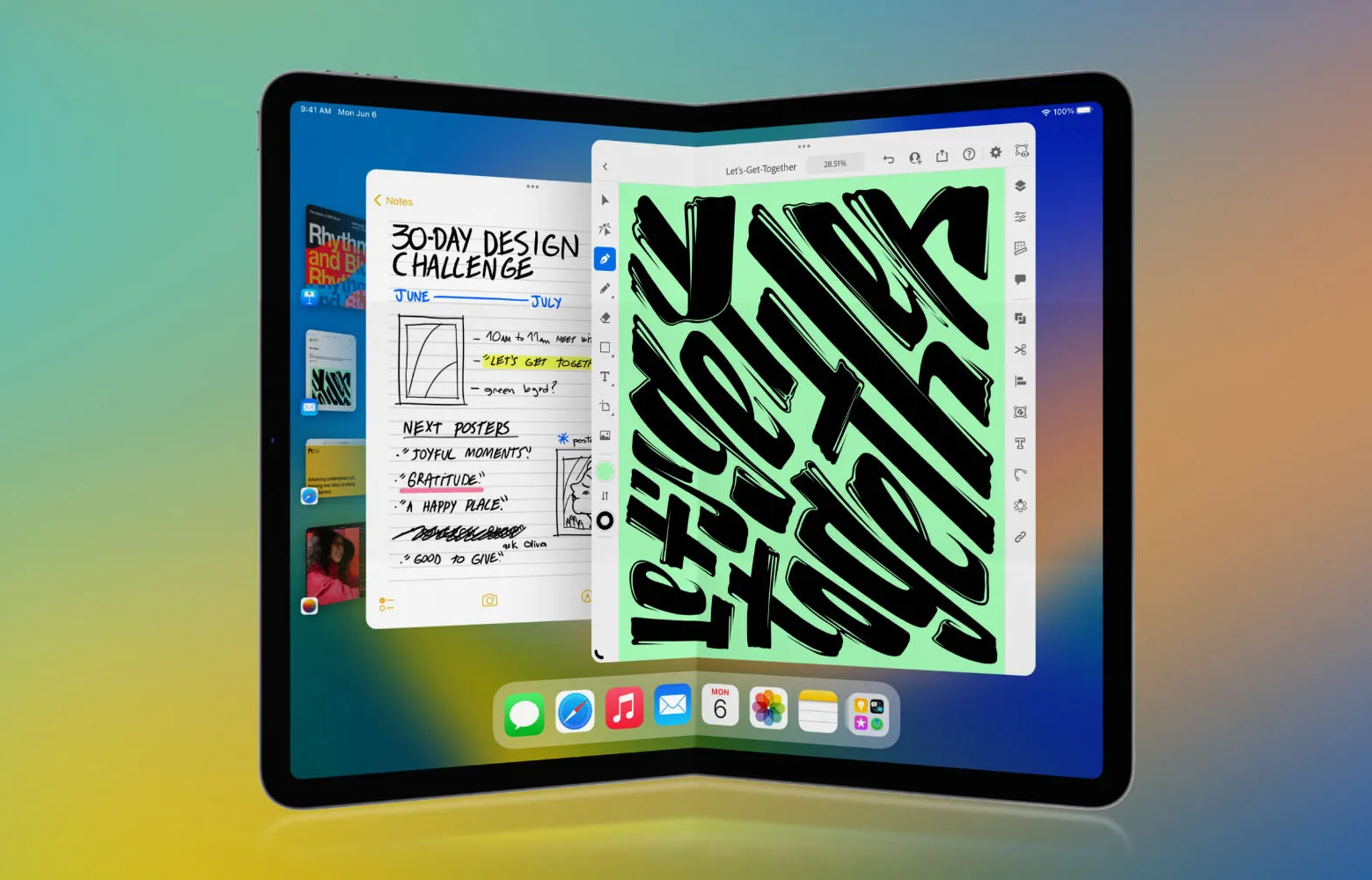
Is Apple still quietly developing a foldable iPad? Photo: 9to5Mac
For years, the tech industry has been flooded with rumors about a large foldable-screen device from Apple.
At times, the product was described as an iPad Fold, while other reports portrayed it as a futuristic MacBook with a soft touch keyboard and an enormous foldable display.
So far, however, every prediction about its release timeline has failed, leading many to question whether the project was ever viable enough for commercial launch.
Still, a new report from a relatively reliable leaker has reignited speculation that Apple continues to develop the device behind closed doors.
More importantly, the arrival of the so-called iPhone Ultra - also unofficially referred to as the iPhone Fold - could become a crucial stepping stone toward the eventual commercialization of a true foldable iPad.
From touchscreen MacBook to foldable iPad: What is Apple actually building?
One reason the market has struggled to understand Apple’s plans is the flood of conflicting leaks surrounding the project.
Early reports claimed Apple was developing a MacBook without a physical keyboard, replacing the entire foldable surface with a touchscreen display.
When unfolded, the device would resemble a futuristic laptop with an ultra-large screen.
More recent reports, however, have increasingly converged around the idea that the product is actually a foldable iPad.
The device is rumored to feature a display ranging from 18 to 20 inches when fully opened, with several sources now pointing to 18.8 inches as Apple’s preferred prototype size.
If accurate, it would become one of the largest portable displays Apple has ever developed, positioned somewhere between an iPad and a MacBook.
The project also reflects Apple’s ambition to create an entirely new product category rather than simply upgrading existing devices.
While the foldable smartphone market has expanded rapidly in recent years thanks to products from Samsung, Huawei and Google, Apple has remained notably absent.
That is not due to a lack of technological capability.
Instead, Apple traditionally enters a category only when it believes the technology has matured enough to meet its experience standards.
The biggest challenges facing foldable displays today remain the visible crease that develops over time and the long-term durability of folding hinges.
For a larger device like a foldable iPad, those problems become even more serious than they are on foldable smartphones.
As a result, Apple is reportedly spending years developing an almost “invisible” hinge system while trying to minimize screen creasing as much as possible.
That is also why the project has reportedly faced repeated delays.
iPhone Ultra could become Apple’s testing ground before a foldable iPad launch
According to well-known Weibo leaker Digital Chat Station, Apple and its supply chain partners are continuing to develop seamless hinge technology for large foldable devices.
Notably, the technology is expected to debut first on the iPhone Ultra before expanding to the foldable iPad project.
The strategy makes sense from Apple’s broader product perspective.
A foldable iPhone would allow the company to test critical technologies in real-world conditions, including flexible displays, folding mechanisms, hinge durability and software optimization for adaptive interfaces.
If the iPhone Ultra succeeds, Apple would gain enough practical data and experience to confidently move forward with a larger and far more complex device like the iPad Fold.
In other words, the iPhone Ultra could serve as a transitional platform, helping Apple reduce risk before entering the extremely expensive and technically challenging large-format foldable market.
Previously, Bloomberg technology journalist Mark Gurman suggested the foldable iPad project might simply be an unusual internal experiment that may never reach consumers.
That report fueled speculation that Apple had quietly abandoned the device altogether.
However, continued signs of foldable-screen development within Apple’s supply chain suggest the project is still alive.
While that does not guarantee the product will eventually launch, it indicates Apple is continuing to invest resources into research and development.
At a time when the traditional smartphone market is increasingly saturated, foldable devices are widely viewed as one of the industry’s most important growth opportunities for creating a new upgrade cycle.
Apple clearly understands this reality, but the company also appears determined not to repeat the compromises currently facing competitors.
If the iPhone Ultra truly arrives within the next few years, it may become the clearest sign yet that Apple is finally ready to enter the foldable era.
And if that happens, the foldable iPad may no longer remain a distant rumor.
Hai Phong
.svg)
