 Vietnamnet.vn

 Podcast



Architect Nguyen Xuan Thang is a member of the Vietnam Association for Supporting Martyrs’ Families and a member of the working group assisting the Deputy Prime Minister in the "500 days and nights to accelerate the search, recovery, and identification of martyrs’ remains" campaign.
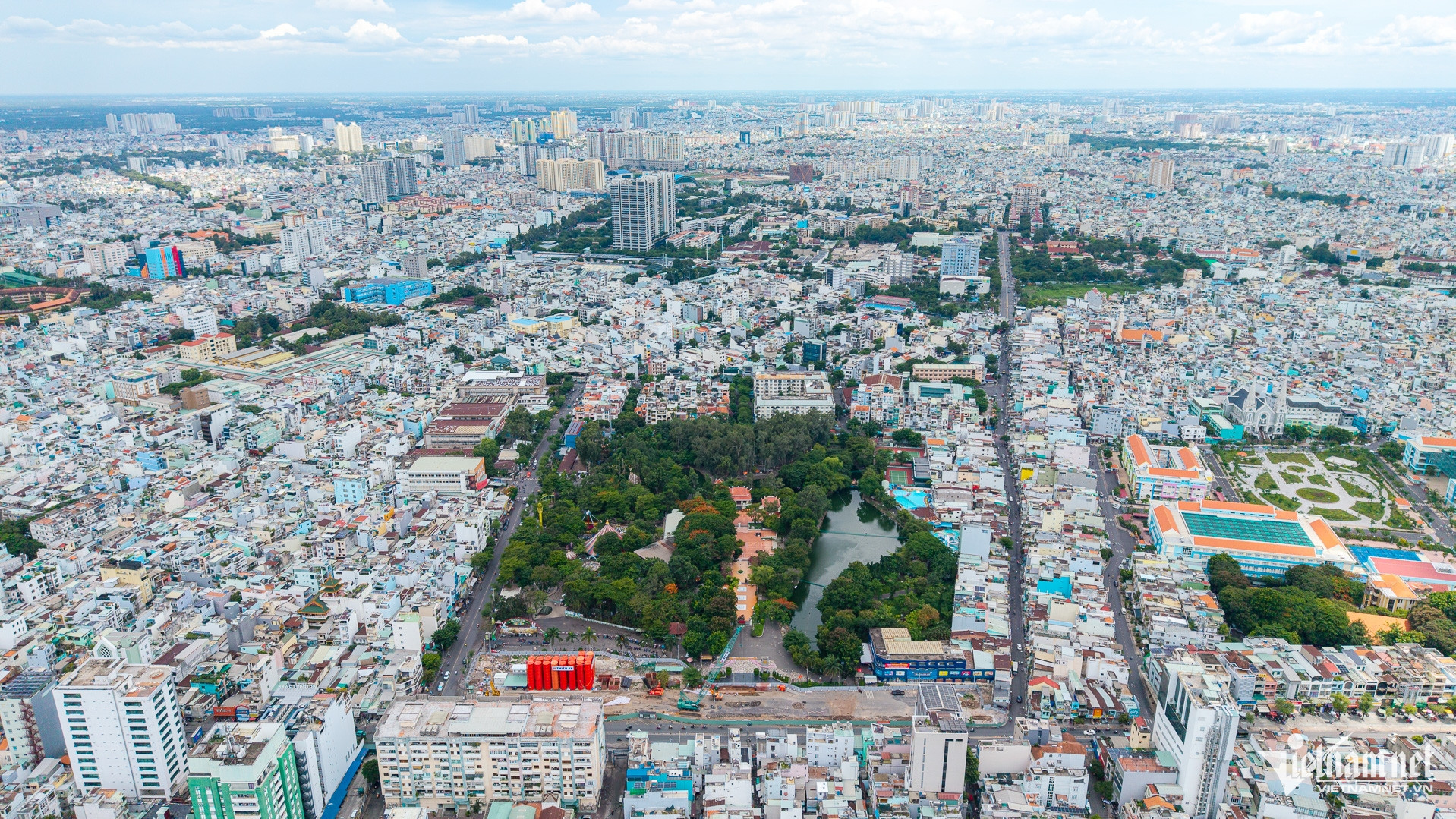
After years of following every clue from documentary photos, Thang’s research team and authorities identified at least five mass burial trenches of hundreds of soldiers who died in the 1968 Tet Offensive and Uprising at Chi Hoa – Cho Quan Cemetery, now Le Thi Rieng Park in Hoa Hung Ward, HCMC.
In 2016-2017, while participating in a search for soldiers’ remains at Bien Hoa Airport, Thang received information from American veteran Robert Ambrose Connor, who had once served on the airport’s security team.
From Connor’s account, Thang realized that the casualties suffered by the Liberation Army in urban battles, particularly during the 1968 Tet Offensive, were massive.
Because the bodies could not be transported elsewhere, the former government had collected and buried them at locations that remained unidentified.
On April 13, 2017, a mass grave at Bien Hoa was excavated at the exact coordinates provided by the American veteran. More than 80 sets of remains were recovered. The discovery became a turning point that motivated Thang to begin collecting archival photographs in an effort to identify mass graves in Saigon linked to the 1968 Tet Offensive.
The first photograph he found on Getty Images was a black-and-white image showing a young boy standing beside a mass burial trench containing numerous bodies. The clothing suggested the subjects were Vietnamese, but the image contained no geographic reference data.
Suspecting this was the resting place of civilians and soldiers who died in a major battle, he saved the photo with a lingering ache that lasted for years.
Around 2020 to 2021, he discovered a second photo on a war photo forum. It showed a man holding a bottle of disinfectant standing in a cemetery next to a boy herding cows. Looking closely behind the man, Thang could identify a large mass burial trench with bodies partially covered in lime powder for disinfection.
The key detail in the background was a water tower with a typical design and a residential area with rows of connected houses.
With an architect’s experience, Thang did field surveys and reviewed every water tower in HCMC, including areas at Hospital 175, the former District 12, and Military Region 7. Finally, he found that the water tower’s architecture matched exactly the tower at Bac Hai apartment complex, now in Hoa Hung Ward, HCMC.
Comparing aerial photos and old documentary images, Thang saw all elements matched. From that, he determined the burial trench was at Chi Hoa – Cho Quan Cemetery, now Le Thi Rieng Park.
Pinpointing this location solved about 75 percent of the work. However, the file was still not enough to report to authorities.
The turning point came when Thang found a third photo while searching keywords about the Vietnam War. It was a very sharp color photo taken by AP, the US news agency, on February 12, 1968, showing a mass burial at the same setting as the two earlier photos.
The most valuable data came from the photo’s Exif information, the technical data standard stored by cameras. The platform had not erased this data, providing key information: there were three burial trenches, with a caption stating that Saigon workers were burying martyrs and civilians at "the third trench" out of three large trenches. Each trench held about 300 people, totalling around 900.
Using professional research methods, Thang digitized and compared historical and contemporary maps to pinpoint the location of the three trenches within the present-day park with only a minimal margin of error.
Cross-referencing historical records, he determined that the trenches were located in an area designated for pauper burials - land reserved for homeless individuals, impoverished families and unidentified deceased persons - situated between sections of Chi Hoa–Cho Quan Cemetery.
Thang later handed over the complete dossier to the authorities.
To date, researchers have preliminarily concluded that there are at least five mass burial trenches containing the remains of soldiers who died during the first phase of the 1968 Tet Offensive and Uprising at Chi Hoa-Cho Quan Cemetery.
Phuoc Sang
.svg)
