 Vietnamnet.vn

 Podcast



“Huong dat” (Aroma of Soil) was a special show about the countryside of Vietnam that was staged using a contemporary artistic language.
Using four major stages with a philosophy about the close relations between human beings and soil, the show helped viewers, particularly foreigners, learn more about Vietnam’s culture and its wet-rice civilization.
In the belief that people are born,
grow up, live and die with the soil, “Huong dat” lively portrayed the
life of farmers with their sadness and happiness. It was considered a
familiar painting on the life of people in rural areas in Vietnam.
The show depicted village roads covered with yellow straw in harvest season, birds chattering near bamboo clusters, rural girls carrying baskets, farmers working hard in the fields, thatched cottages with earthen walls, smoke from cooking, buffaloes, ploughs, conical hats, and simple palm-leaf raincoats.
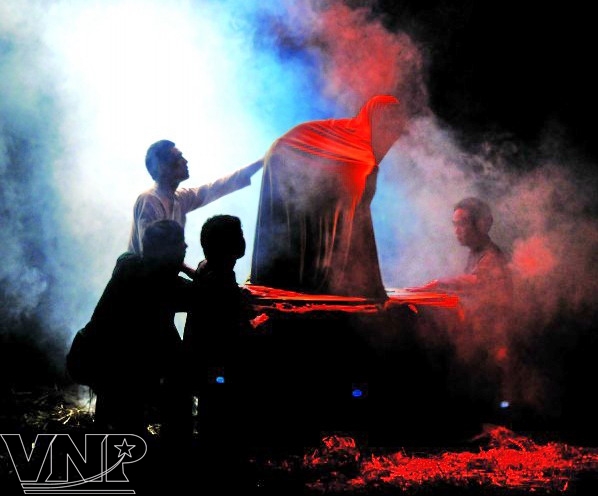 People create various products from soil to serve life. 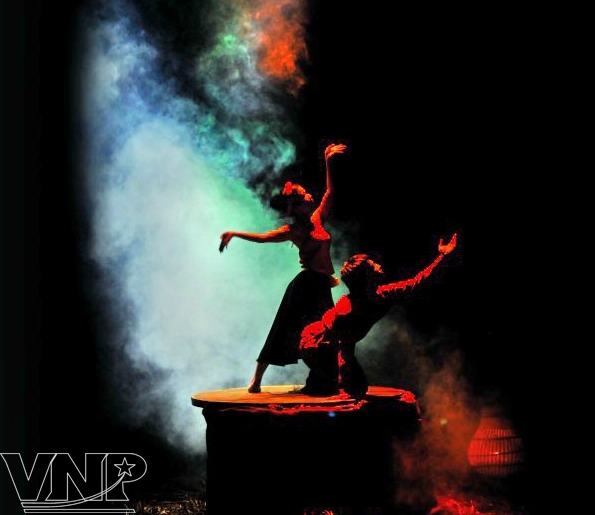 Products made from soil also have souls like human beings. 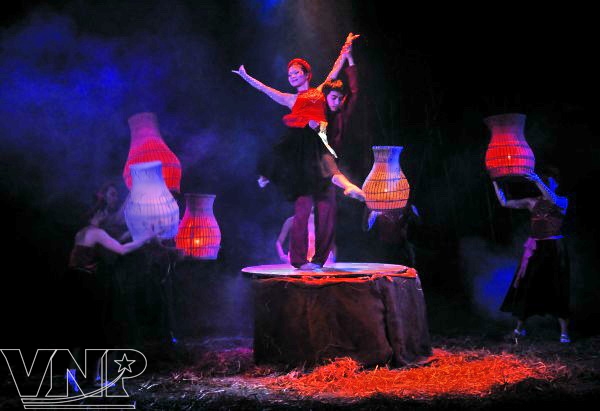 Soil sublimates after being fired. 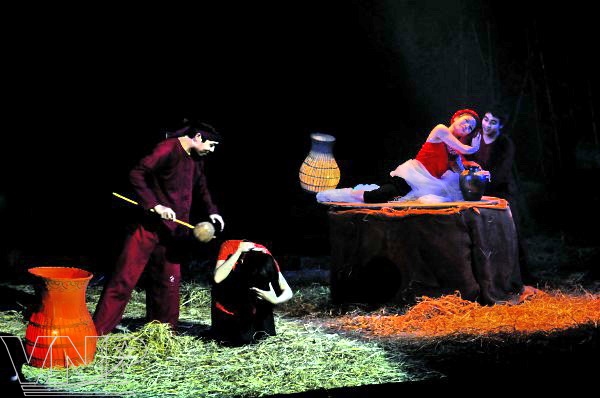 The happy life of Vietnamese farmers. 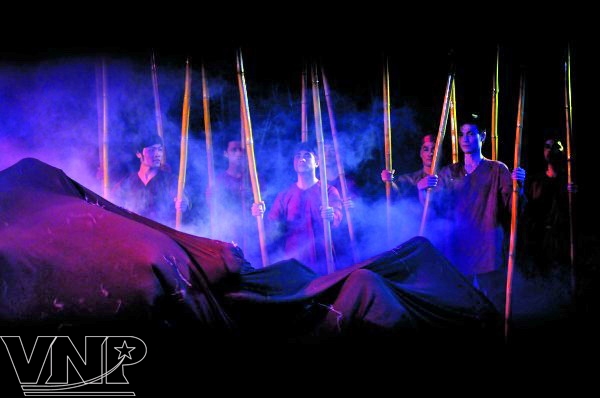 People are born from soil. 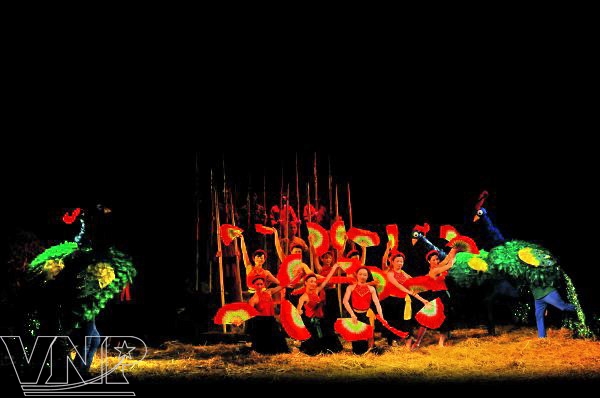 People use soil to exist and beautify life. 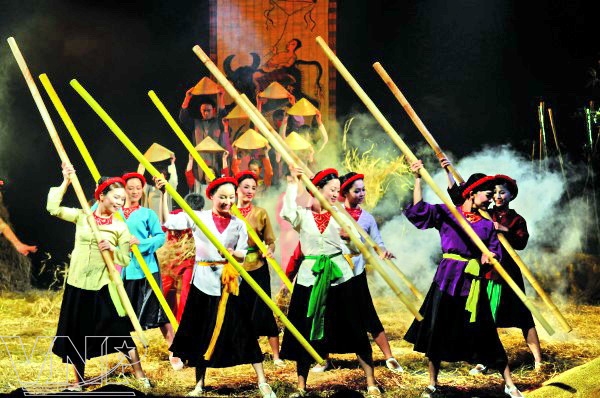 Farmers work on their land. 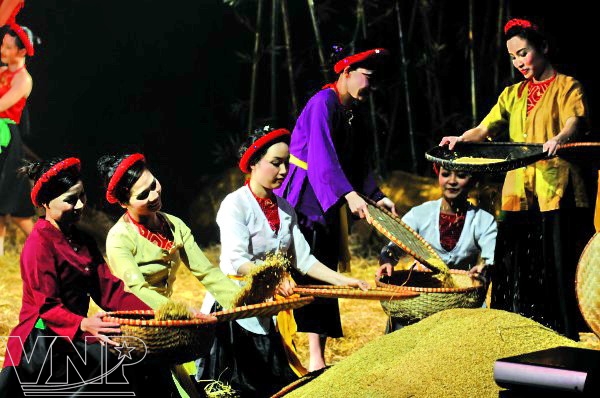 Farmers are happy with the fruit of their labour. 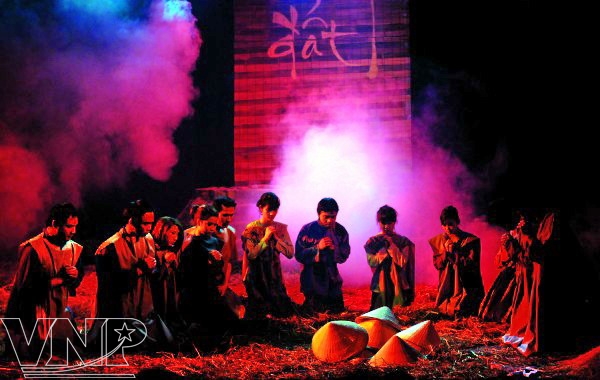 People are born, grow up, live and die with the soil. 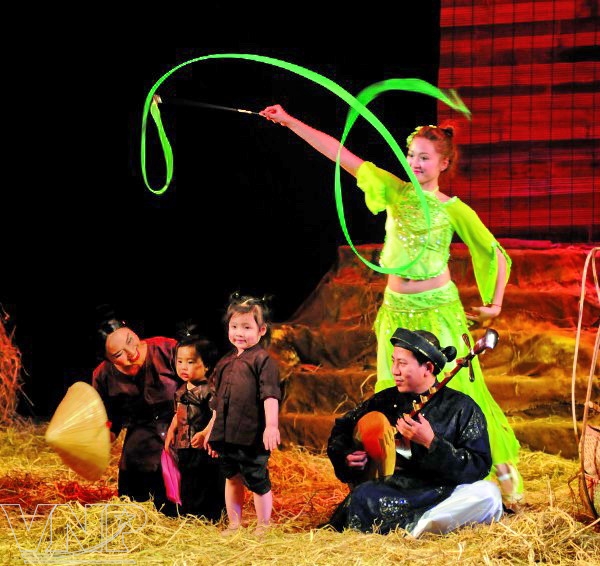 The newborn babies are embraced by the land mother. |
The show was not a Cheo (traditional operetta), Tuong (classical drama) or even a play. It was performed in a strange style with a combination of traditional and contemporary artistic forms. These included the contemporary art of installation, performance, puppetry, dances and songs, and traditional and contemporary music.
With the direction of People’s Artist Le Hung, the traditional and contemporary arts that should be in contrast with each other mingled, bringing viewers special feelings for the simple landscapes and sweet memories of the rural life and areas in Vietnam.
“Huong dat” was deemed an artistic event of great significance because it conveyed successfully the most typical and distinctive cultural and social aspects of this rural life in Vietnam, one of the important factors composing the traditional society of the Vietnamese people.
The show was designed by the Youth Theatre of Vietnam, and ASITEJ (International Association of Theater for Children and Young People) to promote the country’s images and its arts to the outside world.
VNP
.svg)
