 Vietnamnet.vn

 Podcast



More than 3,000 bottles of root canal medicine containing arsenic were illegally produced and sold through an underground network. According to experts, even minor contact with the substance can cause severe necrosis of the gums, posing major treatment challenges.
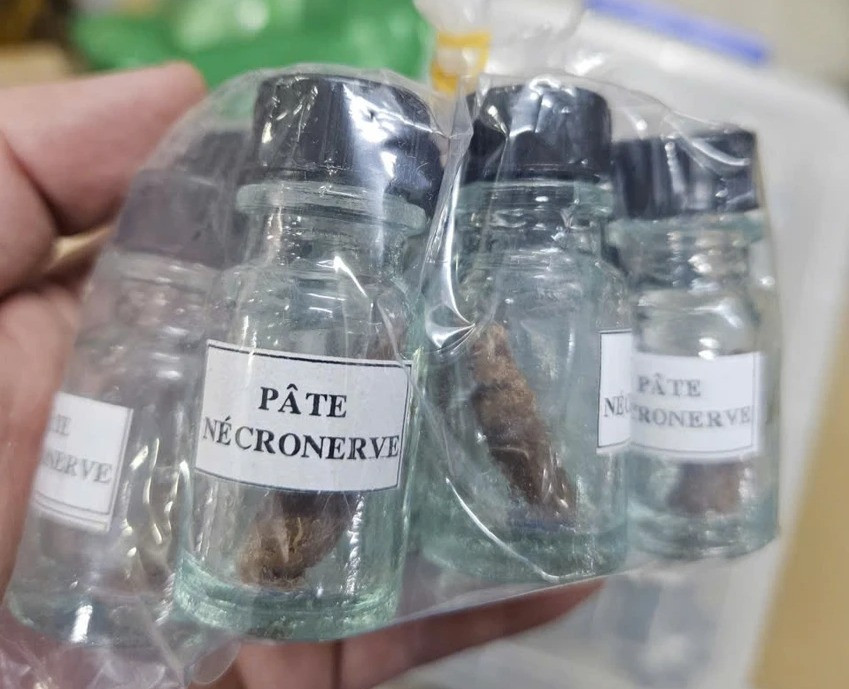
Police in Ho Chi Minh City have dismantled a criminal operation involving the unauthorized production and sale of arsenic-based dental materials. The substance in question - arsenic trioxide (As2O3), also known simply as arsenic - is listed as a highly toxic chemical subject to strict regulatory control.
On December 15, 2025, the city’s Economic Police Department (PC03), in coordination with local ward police in An Dong and the Department of Industry and Trade, conducted a raid on the Tan Da Dental Equipment Store located at the Ngo Quyen apartment complex. Authorities discovered that the store was selling Arsenic Blue 5g and multiple bottles of Pâte Nécronerve, a product used in dental procedures, without any documentation to verify their origin.
Police seized 534 bottles of Pâte Nécronerve and five boxes of Arsenic Blue 5g. Forensic analysis confirmed that all samples contained arsenic trioxide - a carcinogenic and highly dangerous substance known to cause severe health damage. The total weight of the confiscated toxic chemical exceeded 674 grams.
Investigators determined that from 2024 until the recent bust, the ringleader of the network had already sold more than 3,000 units of arsenic-based products to dental clinics across the country.
The discovery has sparked widespread public concern over the potential health implications.
Speaking with VietNamNet, Associate Professor Dr. Vu Manh Tuan of the Institute of Odonto-Stomatology at Hanoi Medical University explained that arsenic was once used in dentistry for root canal treatments. However, its use was subject to strict clinical protocols and very limited indications.
“In Vietnam, arsenic has virtually disappeared from dental practices for over a decade,” Dr. Tuan noted. “Modern anesthetics and root canal medications are now much safer and have effectively replaced arsenic.”
He emphasized that arsenic is extremely difficult to control. If it contacts the gums - particularly in cases where the cavity is near the gumline or not well-sealed - it can seep into surrounding tissues through saliva, leading to necrosis of the gums and jawbone. Treating such injuries is highly complex.
“At Hanoi Medical University, we no longer teach or use this technique in clinical training,” he added.
Dr. Tuan said that in the past, when arsenic had to be used, the indications were tightly regulated: the tooth had to have intact cavity walls, no exposed pulp, no proximity to gum tissue, and no vertical cracks.
“When applying arsenic, clinicians had to be extremely cautious. They had to determine the exact amount suitable for the cavity, ensure the filling material above was sealed tightly, and monitor the case closely - usually requiring follow-up within 3 to 5 days to assess and remove the arsenic,” he explained. “Any cavity near the gums or completely open was strictly contraindicated.”
Even the method of applying the chemical had detailed requirements, ensuring it did not come into contact with the oral mucosa.
Dr. Tuan stressed that the use of arsenic in dentistry was always limited to very specific and rare cases. With modern advances in medicine, this method is now essentially obsolete. Many reputable dental materials companies have stopped supplying any products containing arsenic.
N. Huyen
.svg)
