 Vietnamnet.vn

 Podcast



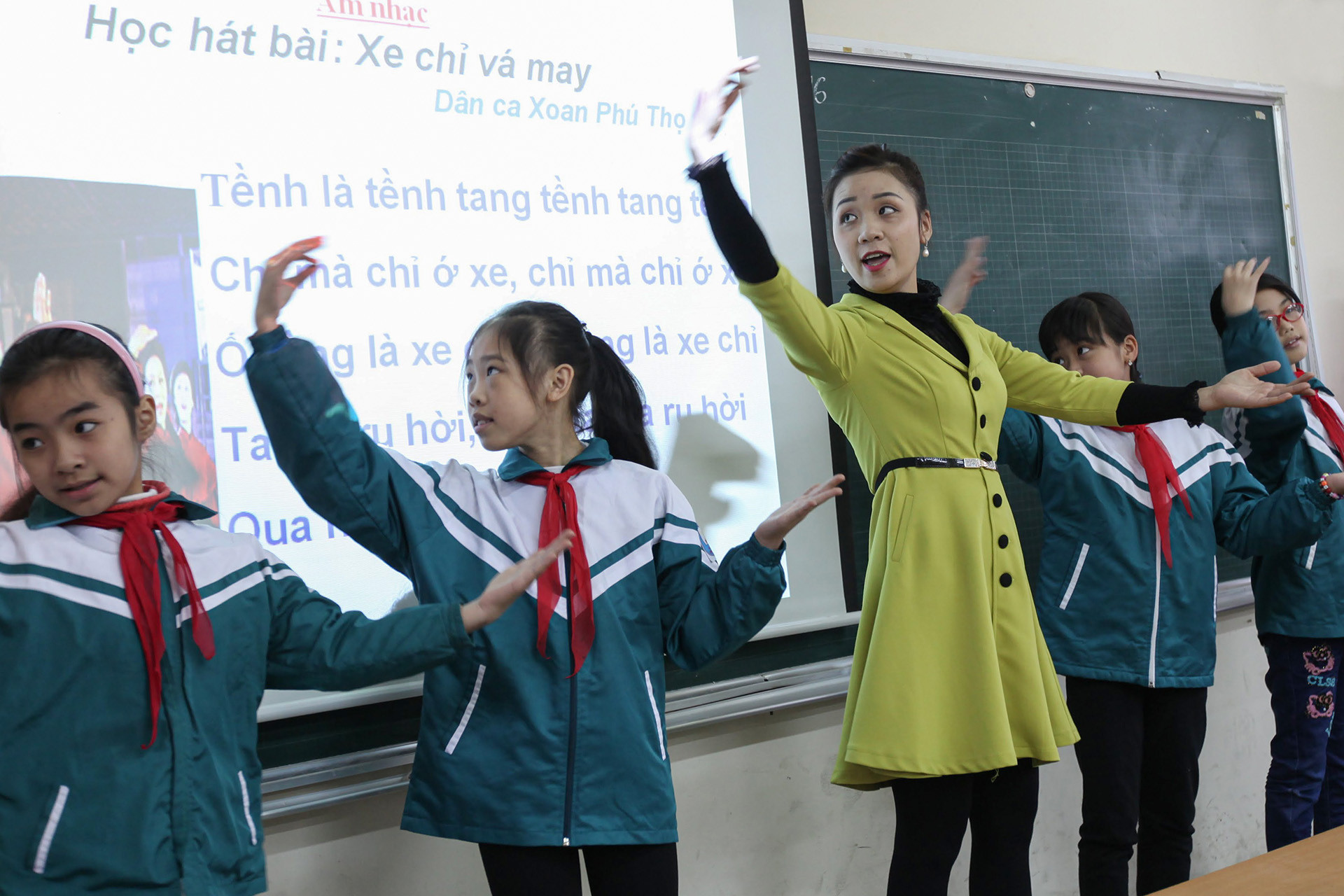
The Ministry of Education and Training (MOET), when guiding how to implement tasks for general education in 2025-2026, emphasised recruitment of highly qualified human resources, including artisans, artists, professional athletes, and foreign volunteers to participate in organizing educational activities in schools, particularly in culture, arts, sports, and life skills.
Amid the shortage of thousands of art and talent educators, especially at the high school level, this is considered a breath of fresh air in art education.
People’s Artist Tran Ly Ly, Chair of the Board of the Vietnam Dance Academy stated that this is a "wonderful" and correct policy that can ‘liberate’ resources and make suppliers and consumers meet each other.
"This is a sound policy that promotes holistic human development and will have a long-term impact. It’s a way to educate character and foster patriotism in children," Ly said.
She said artisans, artists, and athletes may not have formal pedagogical training, but they have been trained in their craft from a young age. "They have practiced their profession, and with years of experience, their ability to pass this on to students is wonderful..
However, she believes that it is necessary to provide additional pedagogical training and collaboration with teachers to ensure the curriculum is delivered effectively. Additionally, framework is needed to ensure continuity from primary to high school levels.
Ly believes that involving artists, artisans, and athletes in educational activities will benefit both them and the community. "What they have experienced and achieved can be passed on to the younger generation. One party has the expertise, the other has the need, and connecting them creates the best synergy.”
The 2018 New General Education Program places special emphasis on art education, viewing it as a key component in the holistic development of students. Art education is not just about teaching subjects like Music and Fine Arts, but is also integrated into other subjects and experiential activities.
Under the program, Music and Fine Arts are mandatory subjects for students from grades 1 to 9, and schools must ensure sufficient teaching hours as per the curriculum. At the high school level, Music and Fine Arts are part of the optional subject group, i.e students must choose at least one of them.
However, in reality, many schools face challenges due to a lack of teachers and inadequate facilities.
Ly noted that there are numerous art troupes, clubs, and cultural and artistic centers across the country. Collaboration between local Departments of Education and Training and Departments of Culture and Sports is needed to create connections.
"Art is broad, encompassing not only music and fine arts but also various forms such as dance, film, theater, storytelling, and creativity. We must leverage local strengths. Each region should promote its unique cultural spirit based on its specific conditions. For example, the Northern region has cheo and ca tru, while the Central region has tuong and ca Hue, and the Southern region has cai luong," Ly explained.
Through art troupes, connections can be made with artists to develop the most suitable programs for delivery. "The program must be structured as an experiential journey for students, not a platform for competition. This foundation must be solid. From primary school, students should understand and appreciate these arts, so when entering secondary school, they can discover their interests, and by the final stage, they can choose to specialize or develop a well-rounded character.
Therefore, collaboration with local authorities, art troupes, and centers is needed to create lists of suitable artists and artisans and develop a framework for appropriate teaching methods.”
However, many school leaders think the idea may not be feasible as it is difficult to invite artists to schools. The problem lies in the current low payment rates for inviting artisans and artists compared to their performance fees.
Ly suggested that this could be addressed by having each locality propose mechanisms for contracts, such as professional or special contracts.
"We can encourage social contributions to support specific localities. We must call on artists and artisans to see this as a meaningful and noble cause. This is about building the foundation for the future of society and its people," Ly said.
Thanh Hung
.svg)
