 Vietnamnet.vn

 Podcast



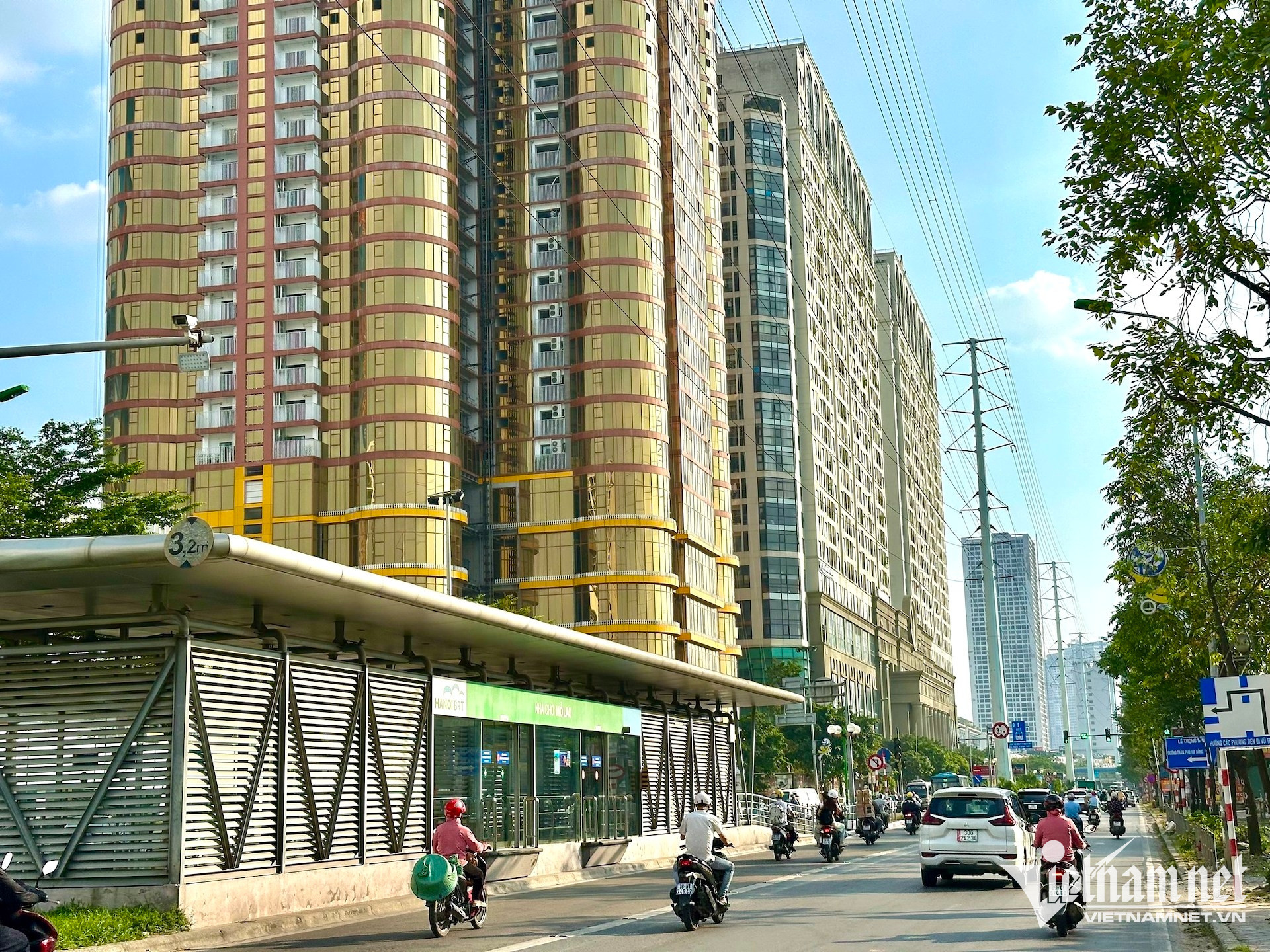
Savills Vietnam reported that in the second quarter Hanoi saw about 8,000 new apartments launched, bringing the total supply in the first half of the year to 14,900 units, up over 121 percent from the same period last year.
However, the average sale price in the primary market remained high at VND91 million/sq m, a 40 percent year-on-year increase.
Notably, 67 percent of apartments were priced above VND4 billion. The market has almost no primary supply below VND2 billion.
Do Thu Hang, senior director at Savills Hanoi, noted that most new projects are in the premium segment with prime locations, positioned by developers to maximize commercial value. High development costs and scarce land bank in the central area also pushed prices up.
The market showed stable demand and improved liquidity compared to last year, indicating no pressure to reduce prices. Additionally, expectations of future value growth due to infrastructure improvements and urbanization encouraged investors to accept the high price levels.
“The focus of new supply on the B-class segment, combined with stable secondary market prices and no significant price drops, reinforces the high price level across the market,” Hang said.
Savills data showed that of over 13,000 apartments sold in the first half of the year, 99 percent were A- and B-class units.
“The fact that most new supply came from the B-class segment, while the secondary market still maintained high prices and has not seen a sharp decline, further contributes to consolidating the high price level in the entire market,” Hang said.
Also according to Savills, of the more than 13,000 units sold in the first half of this year, up to 99 percent were class A and B apartments.
In the second quarter, real home buyers still appeared but investors still continued to dominate the market.
Hang said the price level is at a high level, causing real housing demand to somewhat narrow.
In Q2, buyers for actual residency remained present, but investors continued to dominate.
Hang said the high price level is shrinking demand for actual residency.
“For newly launched projects, often far from the city center or densely populated areas, buyers mainly bet on future price appreciation. Some purchase for use upon handover while staying flexible to adapt to market shifts. This forward-looking mindset makes investors a dominant force in total transactions,” Hang added.
However, experts warned that investors should be cautious about short-term profit expectations. Projects with large supply and high selling prices will find it difficult to achieve expected profits, especially when investors need to quickly divest or switch to other segments. If investing long-term in areas that still have room for development, opportunities still exist.
Apartment price drop in 2026?
Thanh Huong, 45, from Thanh Hoa said in February she looked into buying a social housing apartment in Dai Kim (Dinh Cong, Hanoi), which had been in use for seven years. At that time, brokers listed 70-sq m, two-bedroom units at VND4.2 billion, or VND60 million/sq m, affirming that the price was the cheapest compared to nearby apartments.
Finding the price high, her family hesitated. However, she regretted the decision. After a brief pause, listed prices have risen to nearly VND70 million/sq m. Her family decided to cancel their plan to buy an apartment in Hanoi and consider new ideas.
A report from the Institute of Construction Economics (Ministry of Construction), showed that in Hanoi, over 55.6 percent of secondary market apartments are priced above VND5 billion, with only 3.9 percent below VND2 billion. These prices exceed the affordability of most people, including middle- to high-income groups.
With prices rising and affordable supply stagnant, homebuyers seeking residency face growing challenges.
Savills predicted that by the end of 2025, 11,500 new apartments will hit the market, but A- and B-class units will remain dominant, limiting product diversity.
From 2026 onward, as legal bottlenecks of some projects are removed, the new supply will increase significantly.
In 2026-2027, Hanoi’s market could see 46,600 units from 43 projects. However, most are outside central areas. As a result, the overall price level may slightly decline but remain highly varied.
Projects with prime locations, developed by reputable investors, in high-demand areas with limited land are expected to hold or increase in value.
Nguyen Le
.svg)
