 Vietnamnet.vn

 Podcast


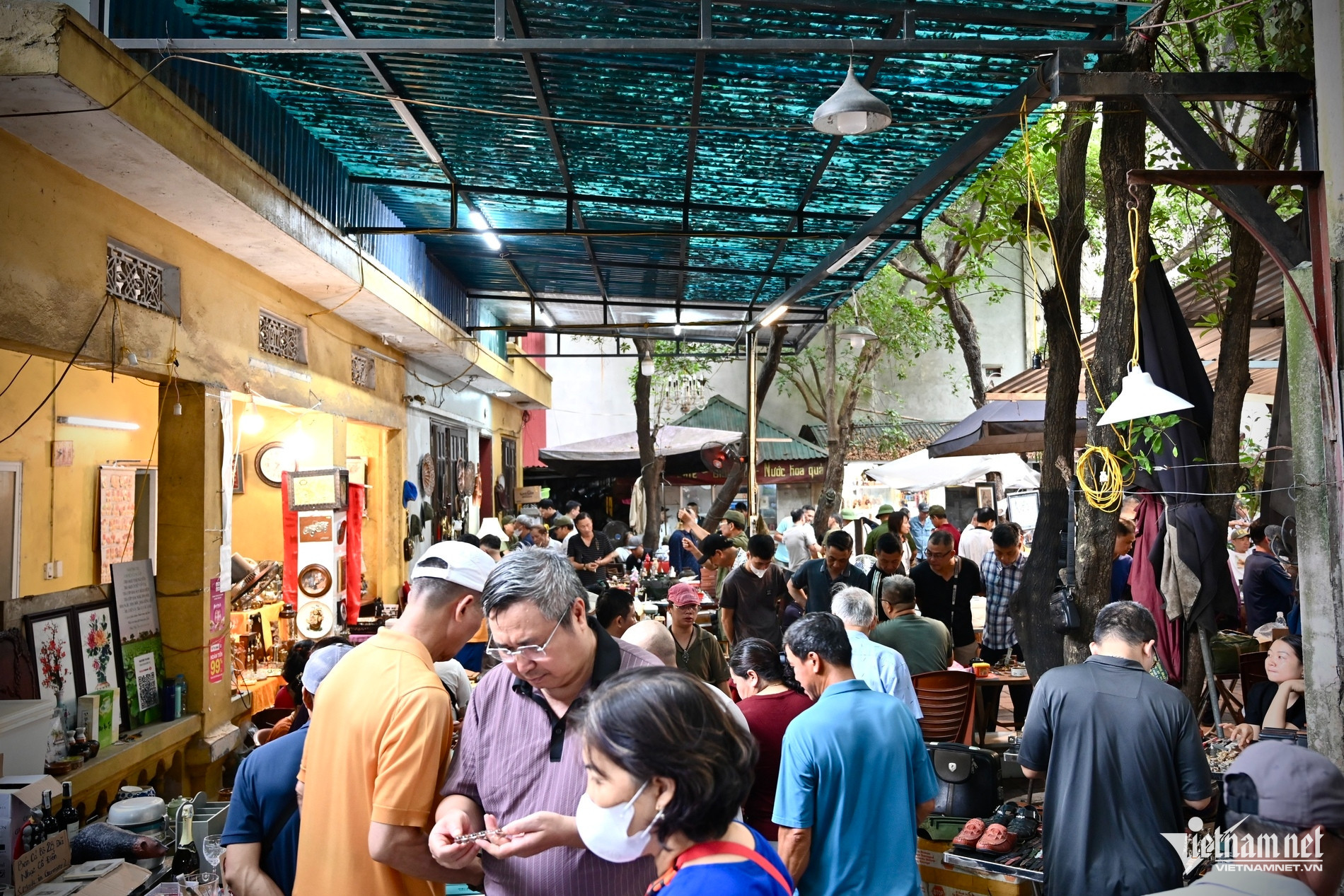
Hidden down an alley at 456 Hoang Hoa Tham Street, a weekend flea market has long been a familiar Saturday morning gathering place for Hanoi residents with a passion for vintage objects.
A flight of old steps leads visitors down to a spacious courtyard, where around 30 stalls sit close together beneath leafy trees, creating a lively marketplace far removed from the busy street outside.
The market opens at 6am and runs until around 1pm, with the largest crowds arriving after 9am.
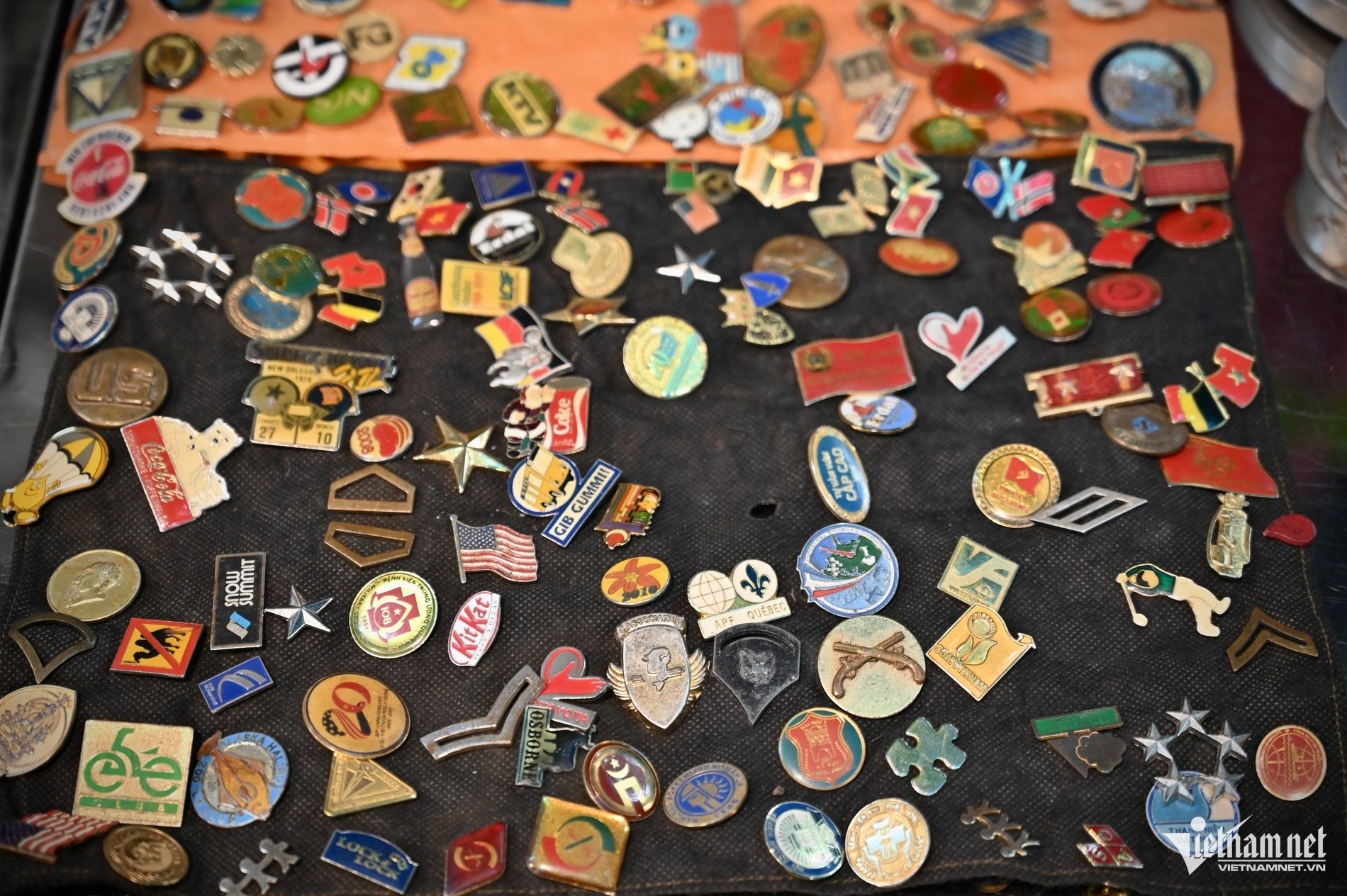
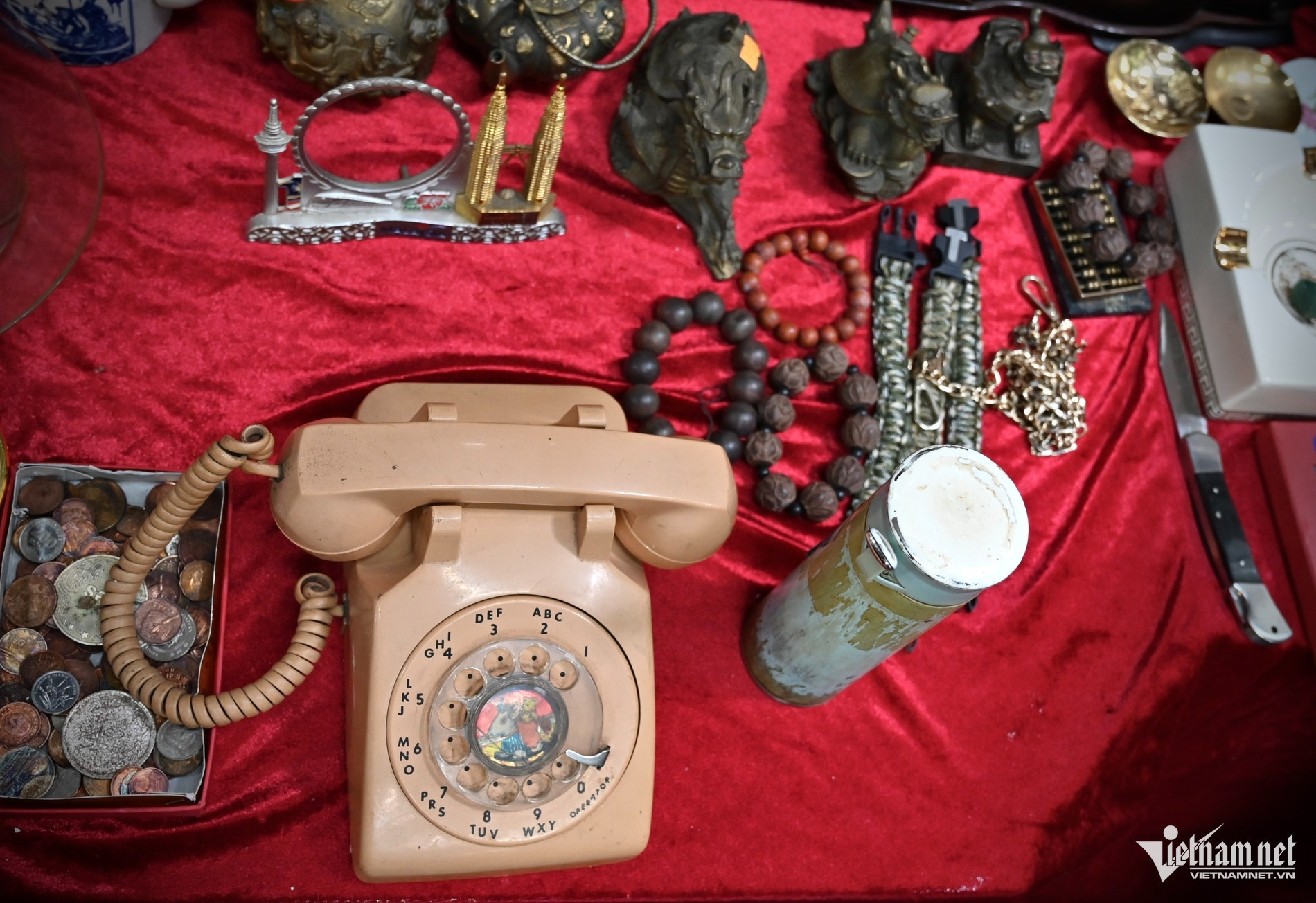
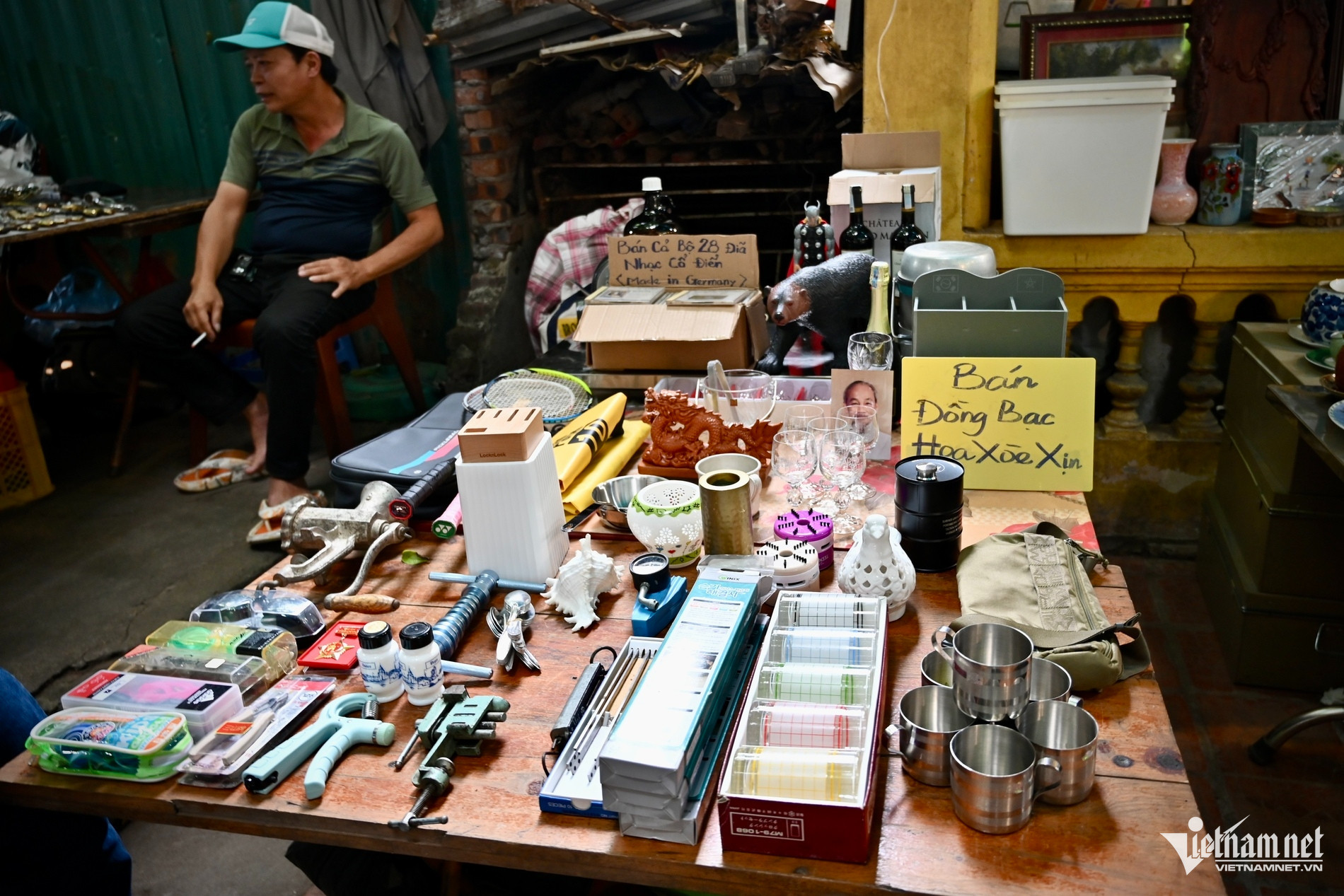
Small tables are neatly arranged with objects that have survived the passage of time, from clocks, ceramic vases and music players to old-fashioned spectacles.
Visitors wander leisurely between stalls, carefully picking up items for a closer look, asking about prices and chatting with vendors.
More than shopping, a place to share memories
For Le Van Thien, born in 1957 and living in Hanoi's Kham Thien neighborhood, visiting the market has been a regular Saturday pastime for several years.
He enjoys discovering unusual objects, meeting people who share his interests and exchanging stories about collecting.
Over the years, he has bought handicrafts, wooden objects and ceramics. He considers the prices reasonable, with plenty of room for bargaining.
Yet for him, the real attraction lies not in the price tags but in the history and memories that old objects carry.
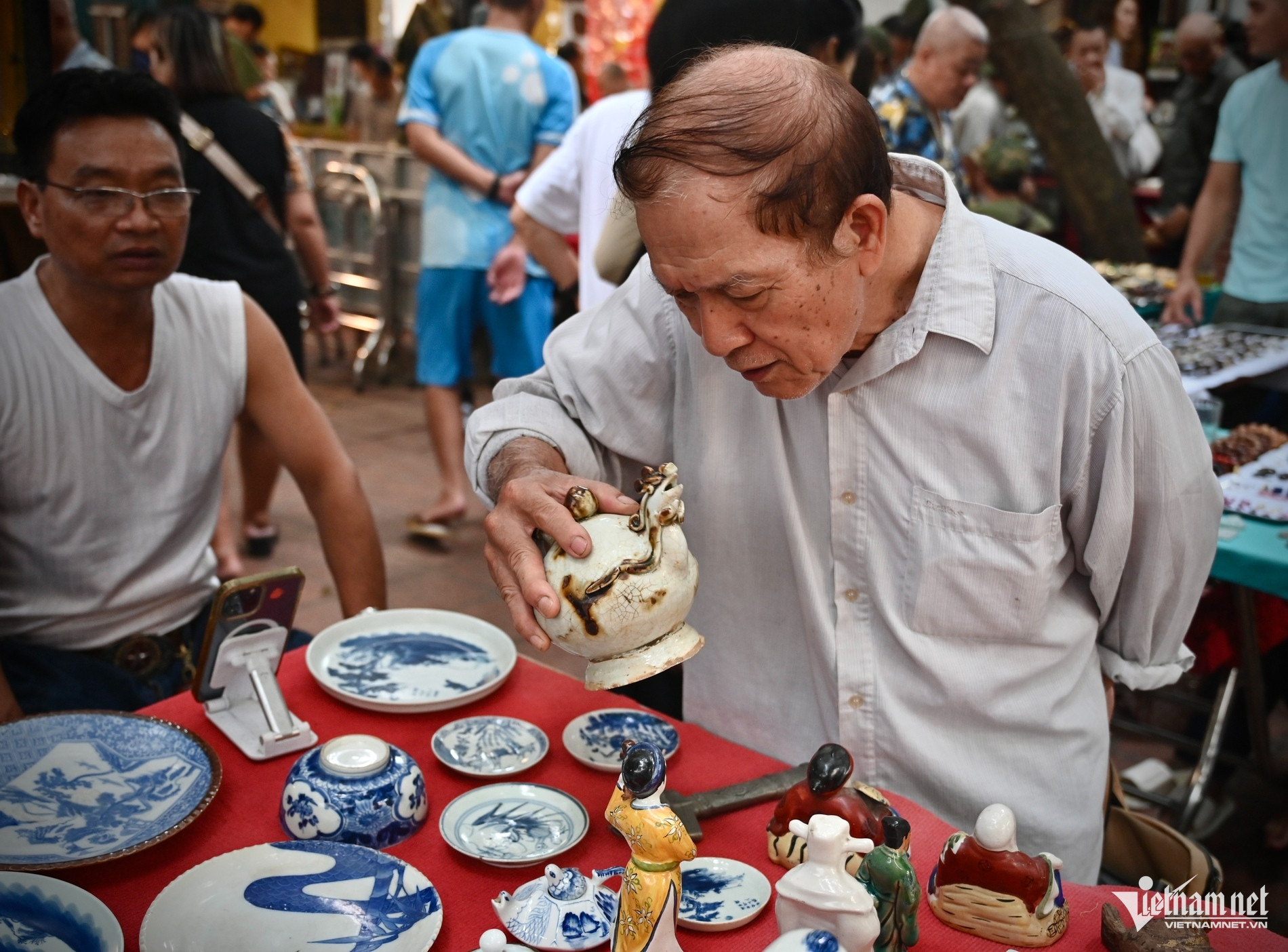
At a nearby ceramics stall, 75-year-old Van from Thanh Xuan carefully examines a rooster-shaped teapot, turning it in his hands to inspect the delicate crackle-glazed finish.
After taking his time, he decides to buy it for more than VND1 million (around $38).
Not everything at the market comes with a substantial price tag.
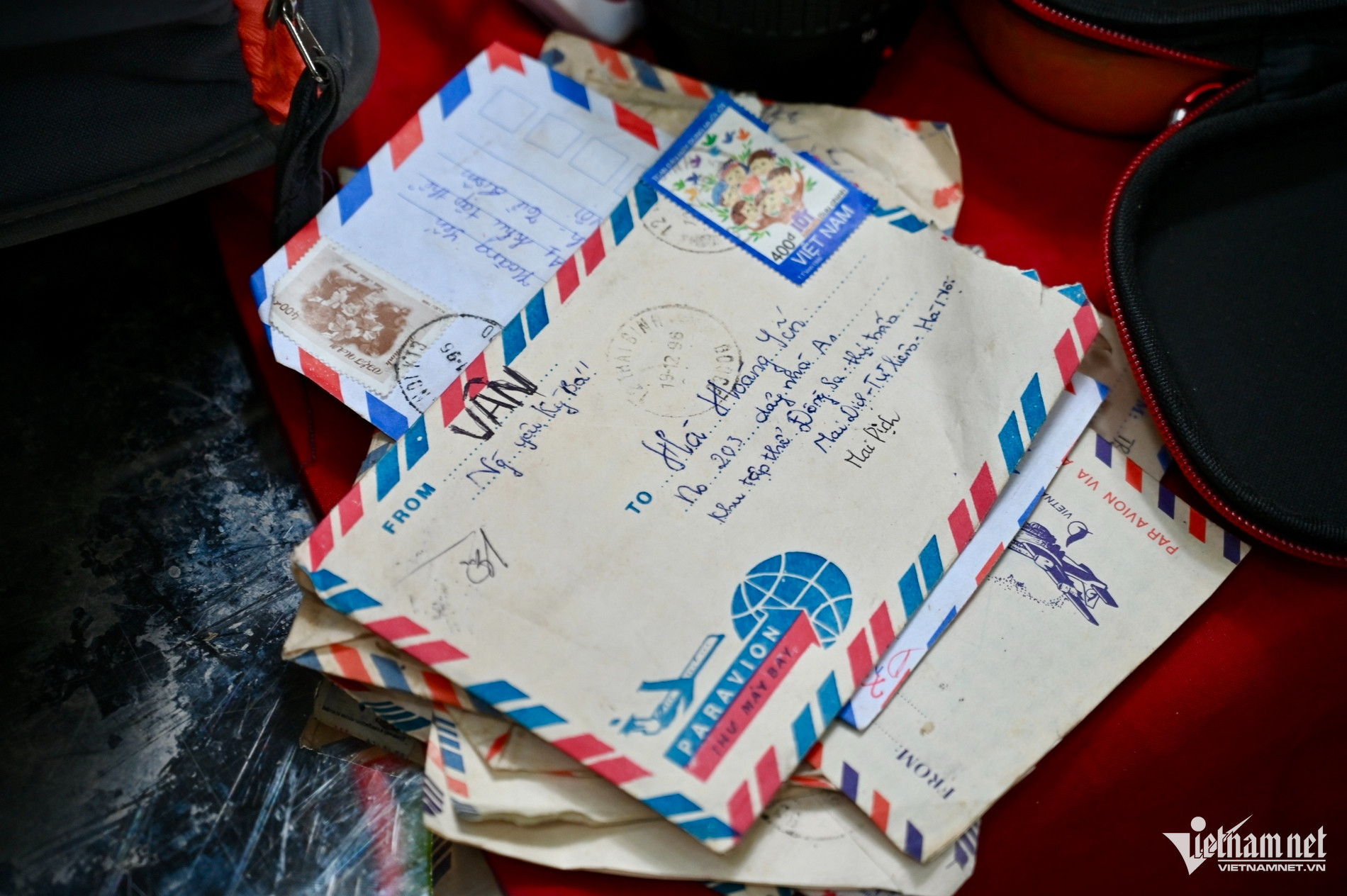
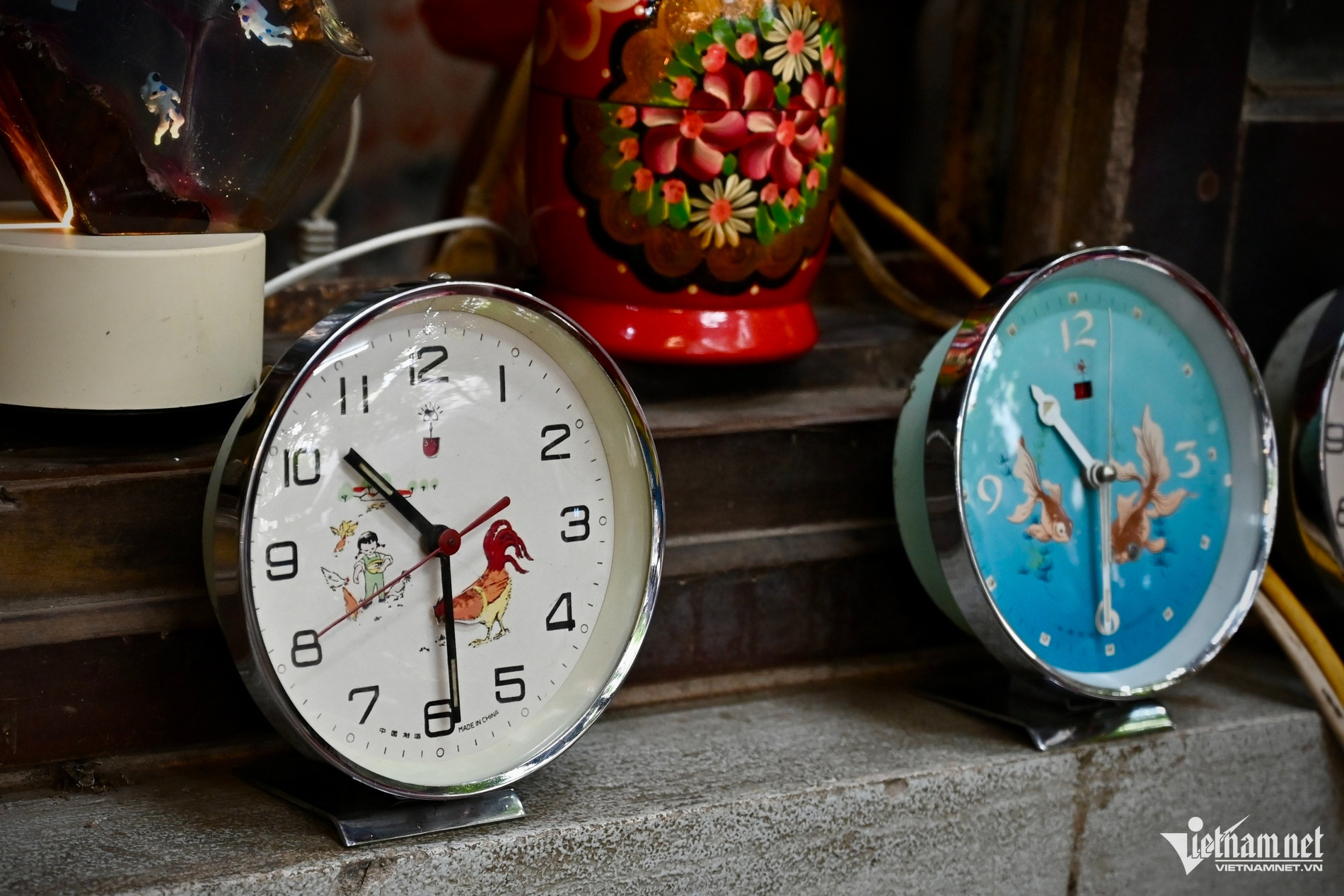
Some stalls offer old envelopes and faded lottery tickets for just a few tens of thousands of dong. Others display everyday objects once found in Vietnamese homes, including rooster-shaped alarm clocks and aging music players.
An old envelope can cost as little as VND20,000 (around $0.76).
Some visitors buy these objects to add to their collections. Others simply find themselves drawn to something that reminds them of a distant chapter of their lives.
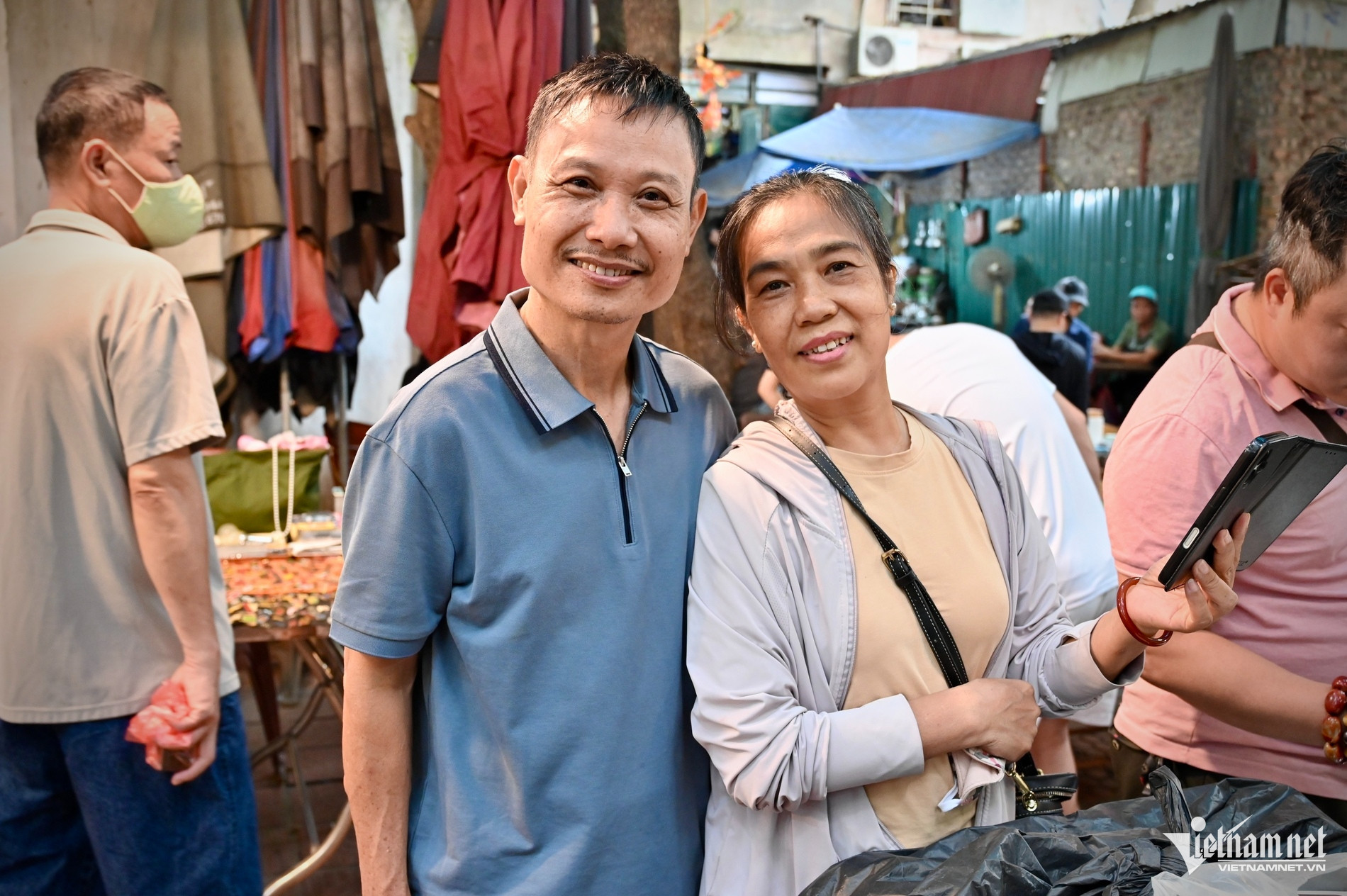
After discovering the market on Facebook, Tran Thi Hoa and her husband from Xuan Dinh arrived early to browse the stalls.
While Hoa searched for a bracelet, her husband wandered over to a neighboring stall in search of a watch that caught his eye.
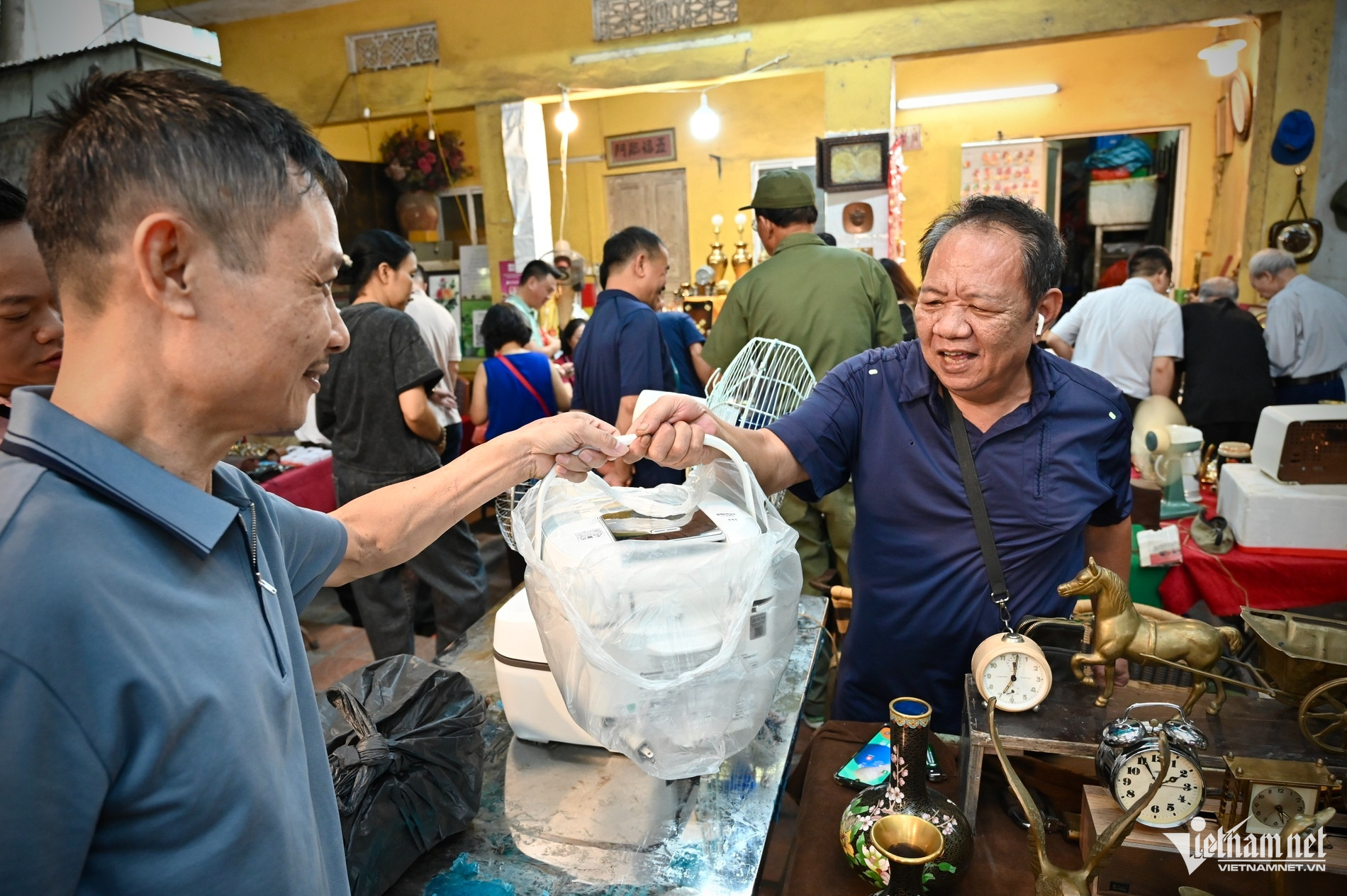
Elsewhere, Hoan and her husband, who live on Hoang Hoa Tham Street, proudly showed off their purchases: an old rice cooker and an antique clock.
"The total damage was VND5 million," she joked, referring to the roughly $190 they had spent.
The secondhand objects were heading to new homes, ready for another chapter of use and appreciation.
The market also attracts collectors from outside Hanoi.
Quang Minh, visiting the capital from Quang Tri Province, included the flea market in his itinerary alongside popular attractions such as the Ho Chi Minh Mausoleum and Hanoi's Old Quarter.
Wandering between the stalls, he was surprised to come across objects he remembered from earlier years. He listened to vendors share their stories and looked for something special to take home.
When collectors become sellers
For many vendors, selling vintage goods is an extension of their own collecting passion.
Ngo The Cuong, 62, a retired soldier from Ngoc Ha Ward, has been running a stall at the market for about a decade.
He says his enduring fascination with old objects was the main reason he started selling there.
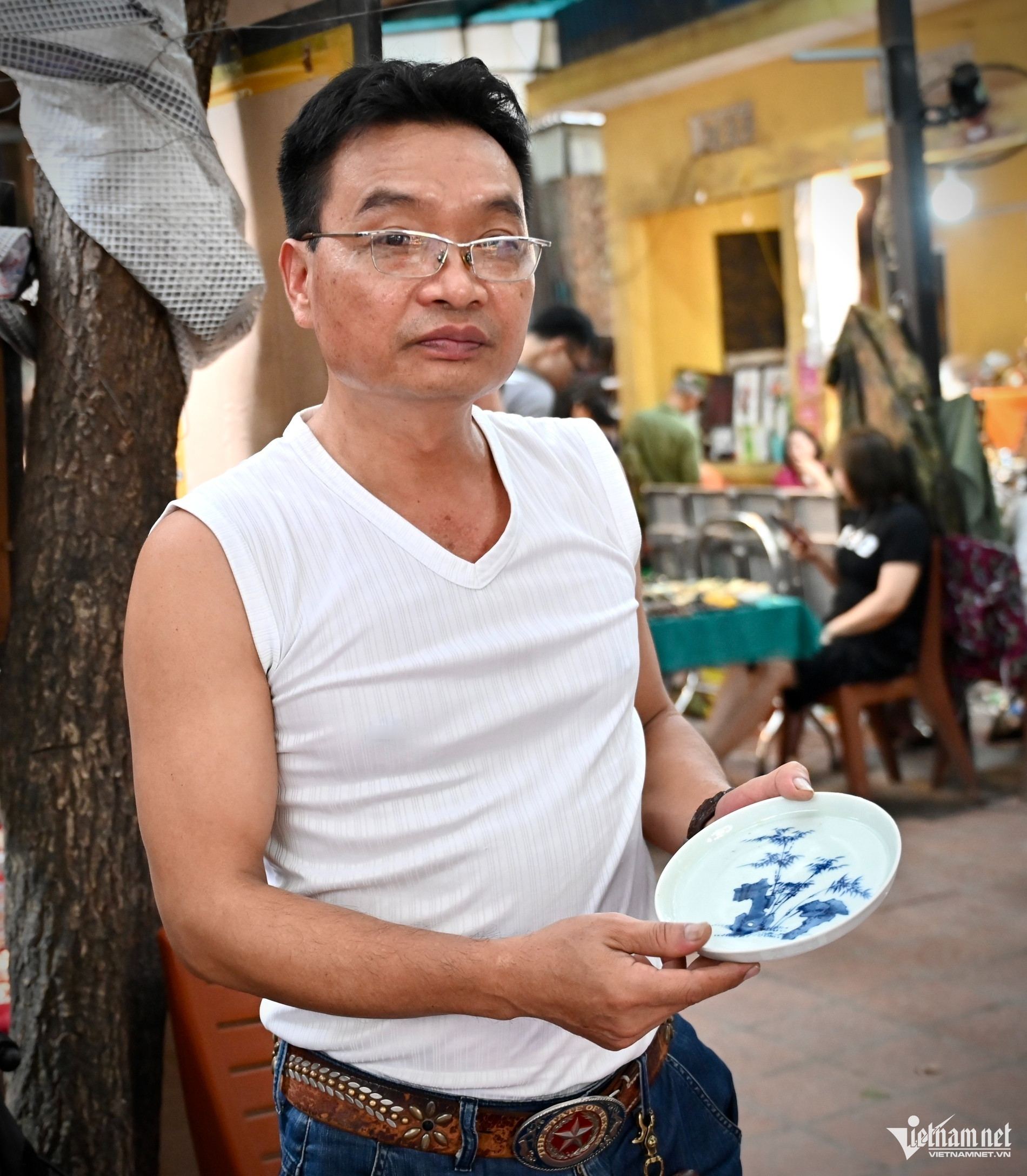
Sharing that enthusiasm is Hung, 56, from Dinh Cong Ward, who has been bringing ceramics to the market for around five years.
Before becoming a vendor, he was already an avid collector, particularly interested in pottery and hand-painted decorative patterns.
At his stall, bowls, plates, teapots and vases are carefully arranged on a red cloth.
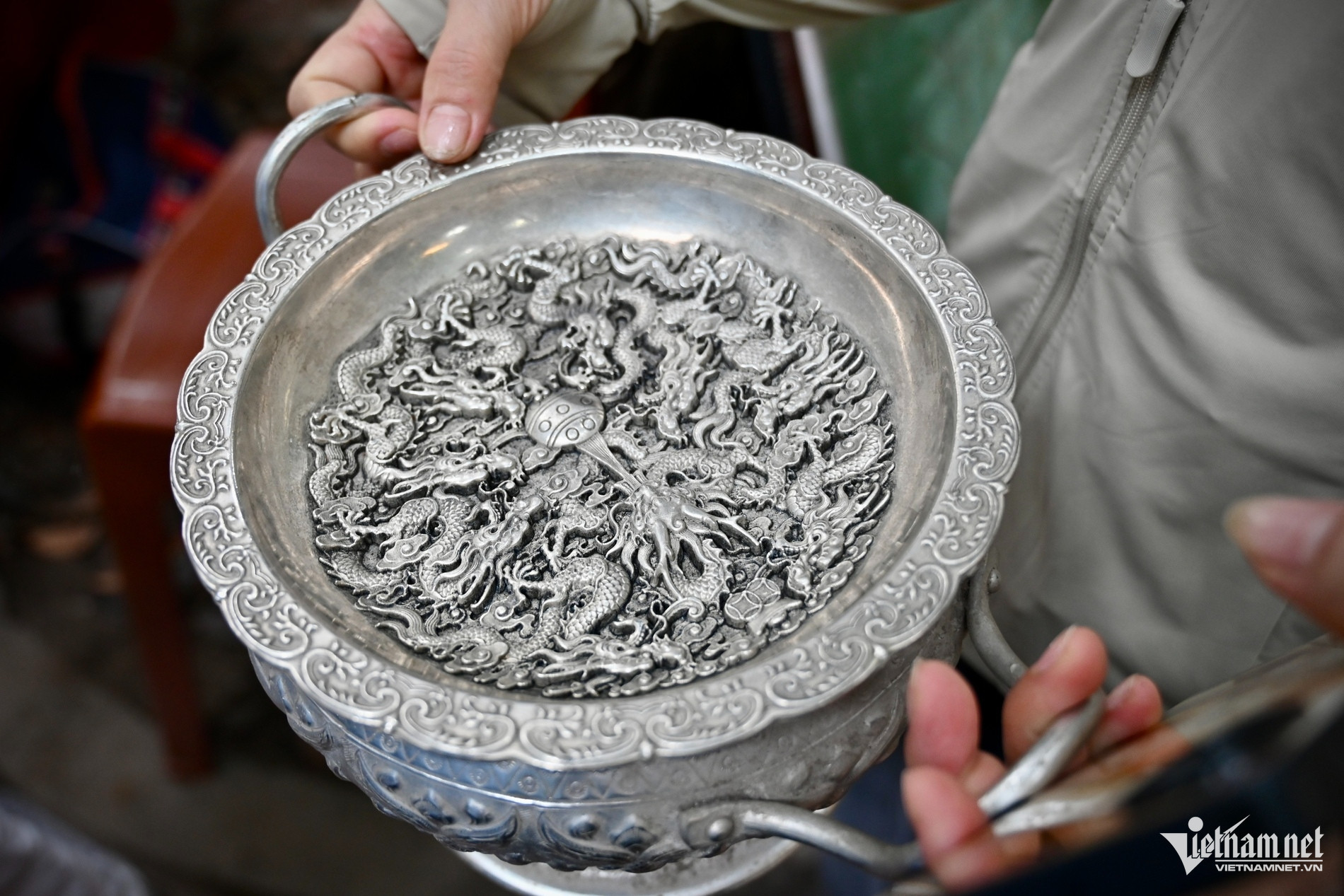
Many are pieces he particularly treasures, with some estimated to be around a century old and distinguished by intricate decorative details.
His collection ranges from secondhand and antique objects to newly made reproductions inspired by historical designs.
For pieces produced by Chinese craftsmen in the styles of the Ming and Song dynasties, he makes a point of explaining their origins so customers can make informed choices.
"Most items at my stall cost from a few hundred thousand dong to VND2-3 million, which suits the tastes and budgets of people browsing the market," he said. "On average, several dozen visitors stop by my stall each market day."
The market's appeal goes beyond buying and selling. For many regulars, it is also a place to exchange knowledge, meet fellow enthusiasts and revisit memories of earlier times.
Nguyen Thu Huong, who runs a gemstone stall and was among the market's earliest vendors, still remembers when the site was a tea shop.
In those days, just over a dozen vintage-object enthusiasts would arrange to meet there, bringing a few treasured pieces to admire and discuss.
According to Huong, the courtyard belongs to a private residence whose owner shares the same passion for collecting and has welcomed the gatherings.
What began as informal meetings among a small group of enthusiasts gradually attracted more people, bringing an increasingly diverse range of goods.
Today, the Saturday market continues to offer something beyond the objects displayed on its tables: a chance to reconnect with Hanoi's past through the everyday possessions and personal stories of earlier generations.







Thu Hien

