 Vietnamnet.vn

 Podcast



A debt resolution specialist from a Big 4 bank said that for many months his bank has had to hire security guards to watch over inventories, machinery, and production lines of a textile enterprise in Ninh Binh province.
“This monitoring will continue until the bank completes asset liquidation to recover bad debts, preventing customers from disposing of assets,” he said.
This explains why, in general, banks prioritize real estate as collateral for loans. A recent report by the State Audit shows the complexity of accepting non-real estate collateral.
At BIDV, the State Audit required the bank to review responsibilities of individuals and units at its East Hanoi branch for inadequate supervision of warehouses used as collateral for loans to Vinh Long Trading Co., Ltd.
The reason was that the borrower had sold goods without the bank’s approval and had used the funds for other purposes, affecting the bank’s debt recovery progress.
According to a corporate banking officer at a private bank, real estate is always prioritized because it has a clear legal framework.
“Each mortgaged property has a land use right certificate issued by state authorities, along with cadastral extracts and legal verification. Even if documents are lost or damaged, they can be reissued from official records,” the banker said.
This is a highly marketable asset; price fluctuations over time are predictable. The more real estate prices increase, the more the bank benefits.
“Real estate has a relatively clear valuation standard system. In large areas, banks can easily refer to market prices through surrounding land prices as a basis for comparison. This is much more convenient than valuing specialized assets such as imported X-ray systems,” the bank employee added.
According to a credit official from a Big 4 bank, because the risk level is low, loans with real estate collateral usually have lower interest rates compared to loans with high-risk collateral.
“With other types of assets such as machinery and equipment, banks have to spend a lot on asset disposal costs, going through multiple auctions without any inquiries or buyers,” this official said.
Workshops, machines, stocks
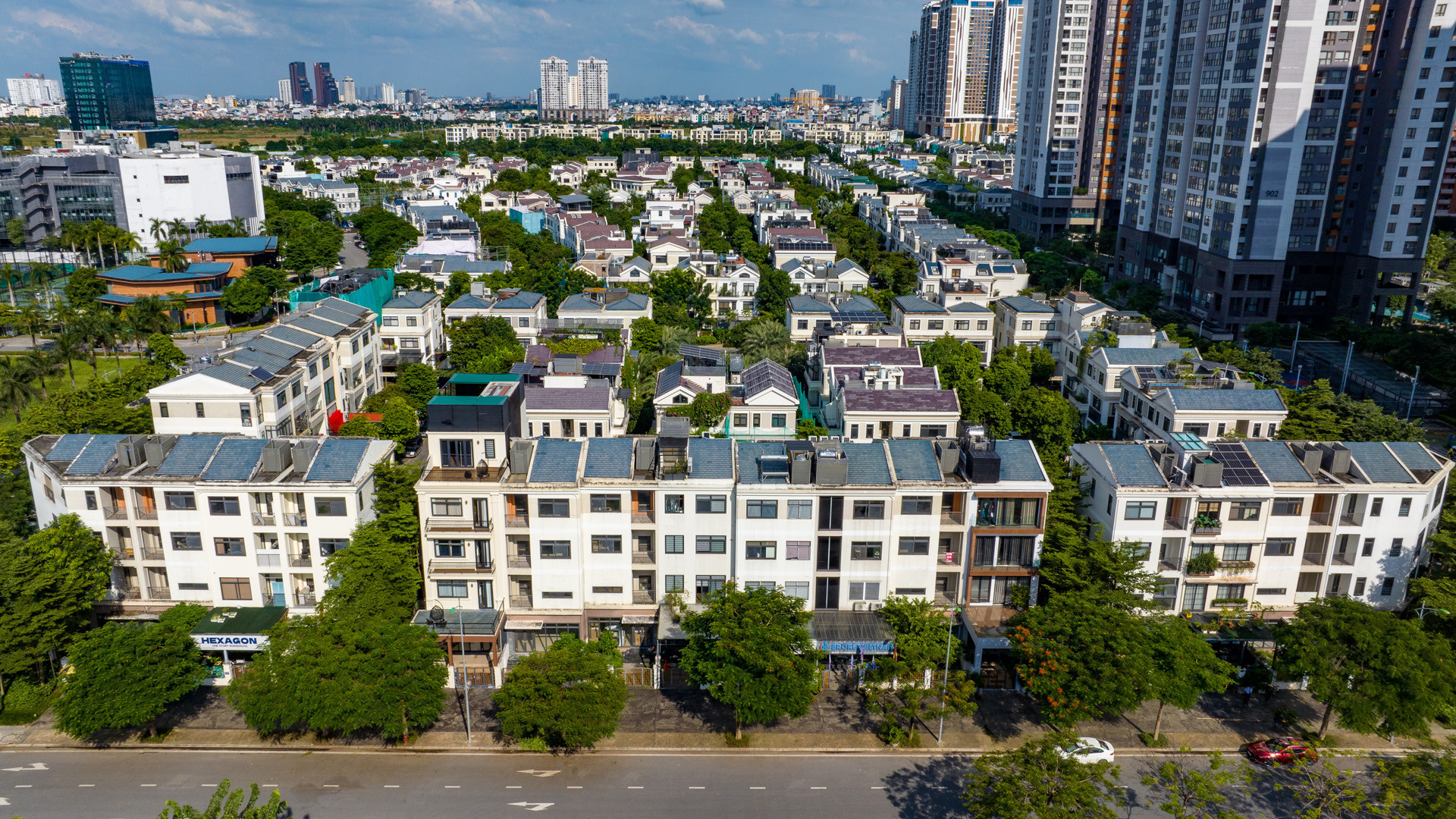
In reality, there is clearly a priority for real estate at commercial banks because it is almost the only asset that meets four factors: stable value, clear legality, easy control, and high liquidity.
At a credit conference organized by the SBV recently, the CEO of a large private commercial bank said that accepting real estate as collateral is safer because it has clear legal documents.
Even during a crisis, lending banks never worry about losing everything because the real estate collateral is still there.
Meanwhile, accepting other types of assets as collateral brings many risks to banks. For example, with assets like factories or production machinery, when it comes to settling bad debts, the banks themselves struggle, while stock collateral also brings significant price risks.
“In a worst-case scenario, banks can recover collateral like factories, equipment, or production lines. However, exploiting or disposing of these assets is not easy at all, because even the businesses themselves struggled to operate them effectively. Meanwhile, real estate assets have better liquidity and can be sold immediately or at a suitable time. For production loans, when a business falls into difficulty, the risk of bad debt arising is quite large,” the bank CEO said.
2025 reports showed that real estate mortgages at VietinBank reached VND2.75 quadrillion, out of a total of VND3.88 quadrillion in the value of assets and valuable papers received for mortgage, pledge, and discount/rediscount from customers.
At BIDV, real estate is also a familiar “appetite” for this bank when used as collateral for customer loans. Out of the total value of VND3.71 quadrillion in pledged and mortgaged assets at the bank as of December 31, 2025, more than VND2.6 quadrillion was real estate, up 10 percent compared to the beginning of the year.
At Vietcombank, over VND1.89 quadrillion is the value of real estate collateral at this bank, equivalent to 72 percent of the total collateral value, a 9.4 percent increase from the start of the year.
Agribank reported total collateral value of VND3.79 quadrillion as of December 31, 2025, up 19 percent. Of this, real estate accounted for over VND3.37 quadrillion, up 15 percent, making it the bank with the largest real estate collateral portfolio in the system.
Nguyen Le
.svg)
