 Vietnamnet.vn

 Podcast



Following positive results from its earlier implementation in three border communes in Tay Ninh Province, BAT Vietnam has expanded its 'Women's Empowerment' program to Phuoc Chi Commune, providing additional resources to help disadvantaged women develop household livelihoods and strengthen community stability along the border.
A livelihood support program for women in border areas
In border communes, local livelihoods are often built around small-scale economic activities such as livestock farming, crop cultivation, small businesses, seasonal work and home-based outsourcing. For many women, these activities provide an essential source of household income, helping cover daily expenses, support their children's education and improve resilience against life's uncertainties.
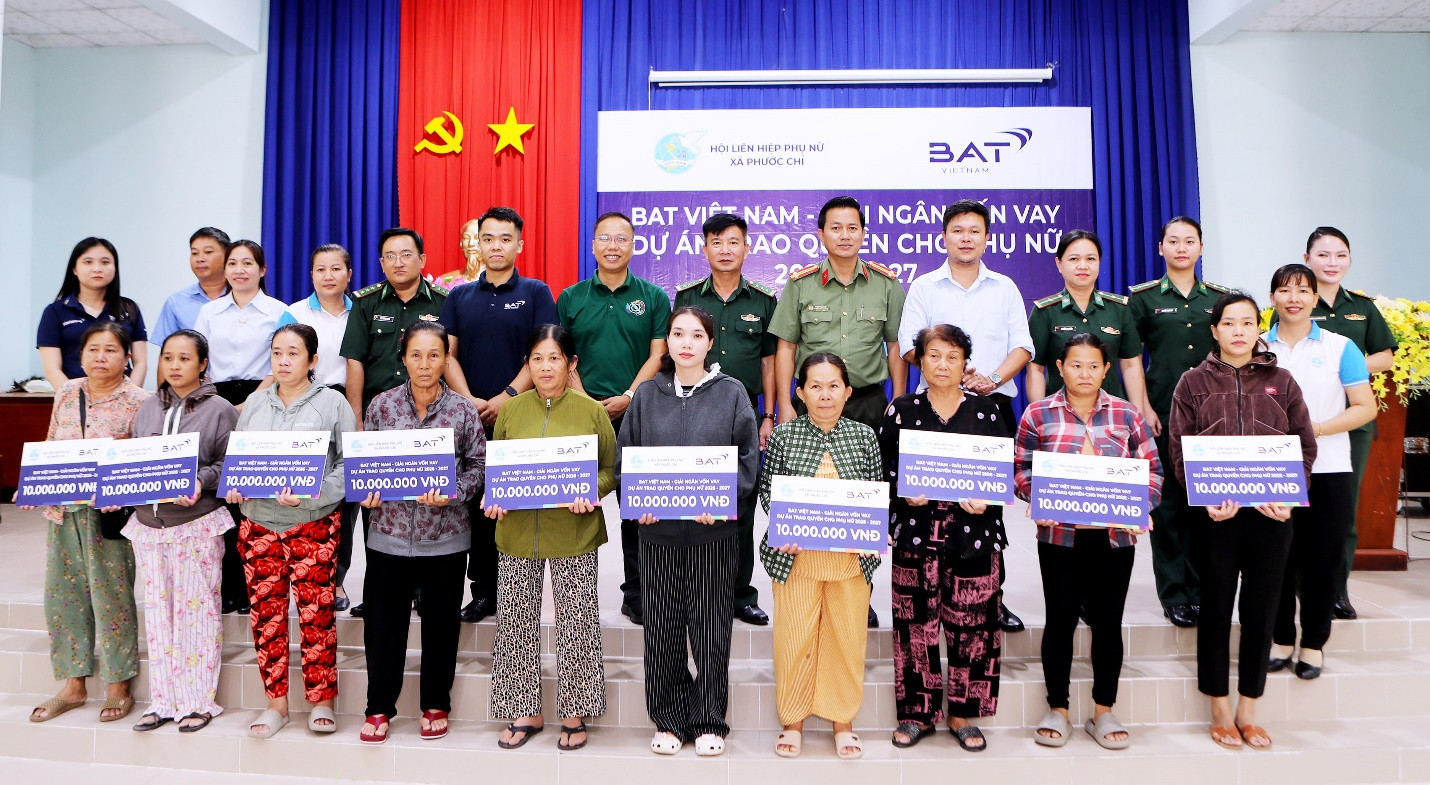
Against this backdrop, on June 25, BAT Vietnam expanded its 'Women's Empowerment' program to Phuoc Chi Commune in Tay Ninh Province, providing VND550 million (US$21,000) in loan capital to 55 disadvantaged women for the 2026-2027 period. Each household will receive an interest-free loan of VND10 million (US$380) for 12 months to develop legal, safe and suitable livelihood models based on their family's circumstances.
A loan of US$380 may not transform a family's life overnight. However, for households needing additional capital to begin raising livestock, replenish inventory for a small business or maintain production, it can become the starting point for a new cycle of income generation. With this initial funding, women have greater opportunities to earn income, build savings, repay loans and gradually gain confidence in managing their household finances.
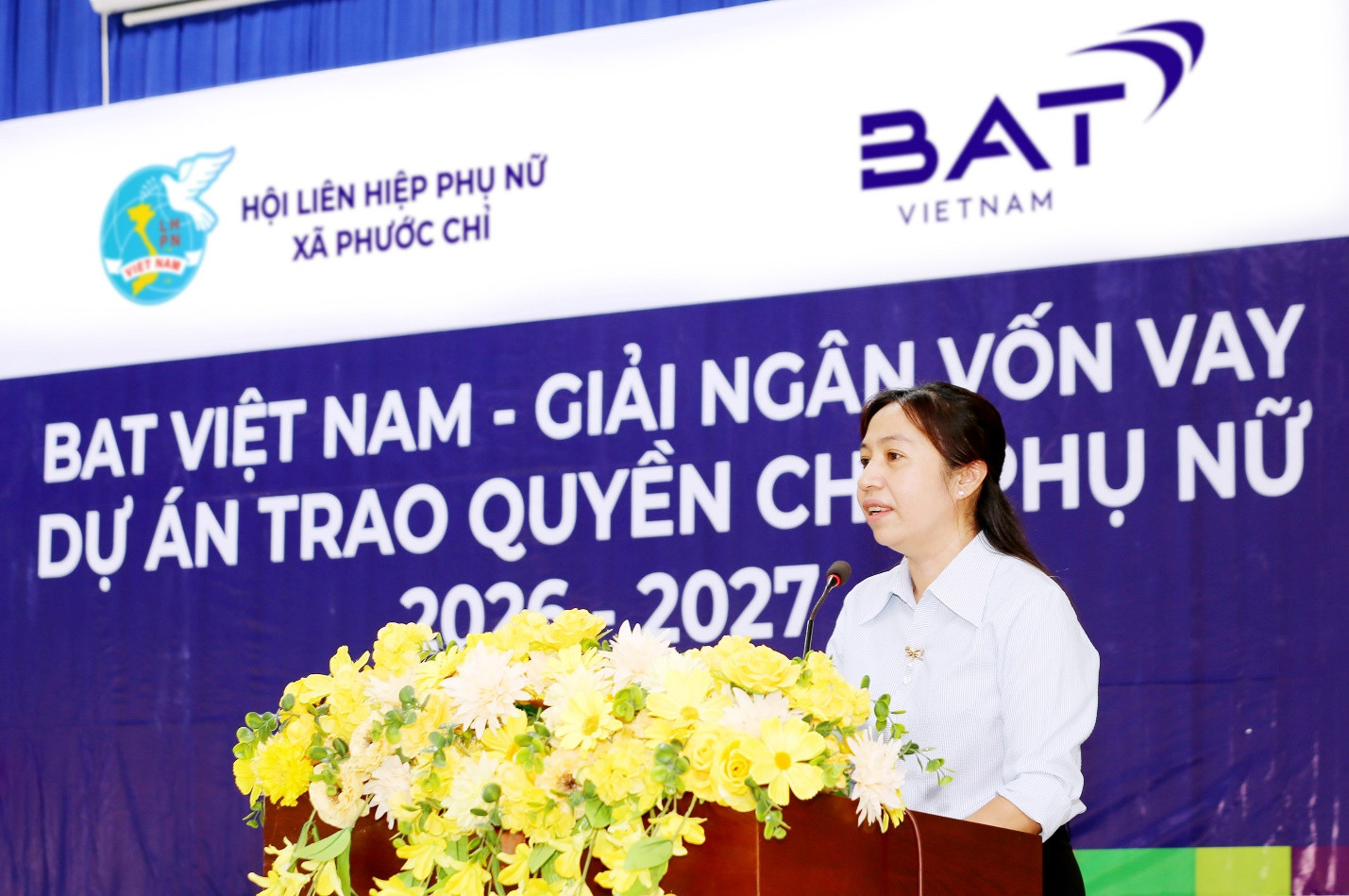
Thi Thi Be Loan, Chairwoman of the Women's Union of Phuoc Chi Commune, said the locality is entering a new stage of development in which improving living standards, particularly for disadvantaged women, remains a key priority.
"We highly appreciate the practical value of BAT Vietnam's 'Women's Empowerment' program. Beyond providing loan capital and encouraging women to use it effectively and for the right purposes, the program also supports participants through training activities, technical guidance on livestock farming and cultivation, household financial management, and awareness campaigns on avoiding involvement in or facilitating smuggling activities. These efforts help women strengthen their knowledge, take greater responsibility for their families and communities, and contribute to the overall stability of the locality," she said.
In border communities, stability is built on many foundations, including the well-being of individual households. When local people have jobs, stable incomes and the ability to remain connected to their land and communities, border areas gain stronger foundations for sustainable development.
For women, stable household livelihoods create better conditions to care for their children, safeguard their family's health, learn new skills and pursue personal development. This, in turn, enables them to participate more confidently in community activities and contribute more actively to local development.
From small loans to livelihood ownership
A distinguishing feature of the 'Women's Empowerment' program is not only the provision of capital, but also how that capital is managed. After receiving their loans, participating women are monitored, encouraged and guided by the local Women's Union and village-level women's groups to ensure the funds are used appropriately. They are also encouraged to develop regular saving habits.
As a result, the loans do more than address immediate financial needs. They also help borrowers develop stronger financial management skills, balance household spending and take greater responsibility for their long-term livelihood plans.
In late 2025, the program was introduced in three border communes in Tay Ninh Province - Nhon Hoa Lap, Dong Thanh and My Quy - with total funding of VND1 billion (US$38,000). After six months, the loans had supported a wide range of livelihood models suited to local conditions, including livestock farming, crop cultivation, small businesses, garment outsourcing, and the purchase of pumps and vehicles for agricultural production and transportation.
Mid-term reports showed that many of these livelihood models had already begun generating additional income for participating households. Some families raising chickens and pigs reported profits of VND6-10 million (US$230-380) per production cycle. Fish farming households earned VND8-12 million (US$305-460) per pond, garment outsourcing households generated around VND4-5 million (US$150-190) per month, while small business owners increased their monthly income by VND3-5 million (US$115-190). Notably, all participating households were encouraged to save regularly, helping establish a habit of financial planning while preparing for loan repayment.
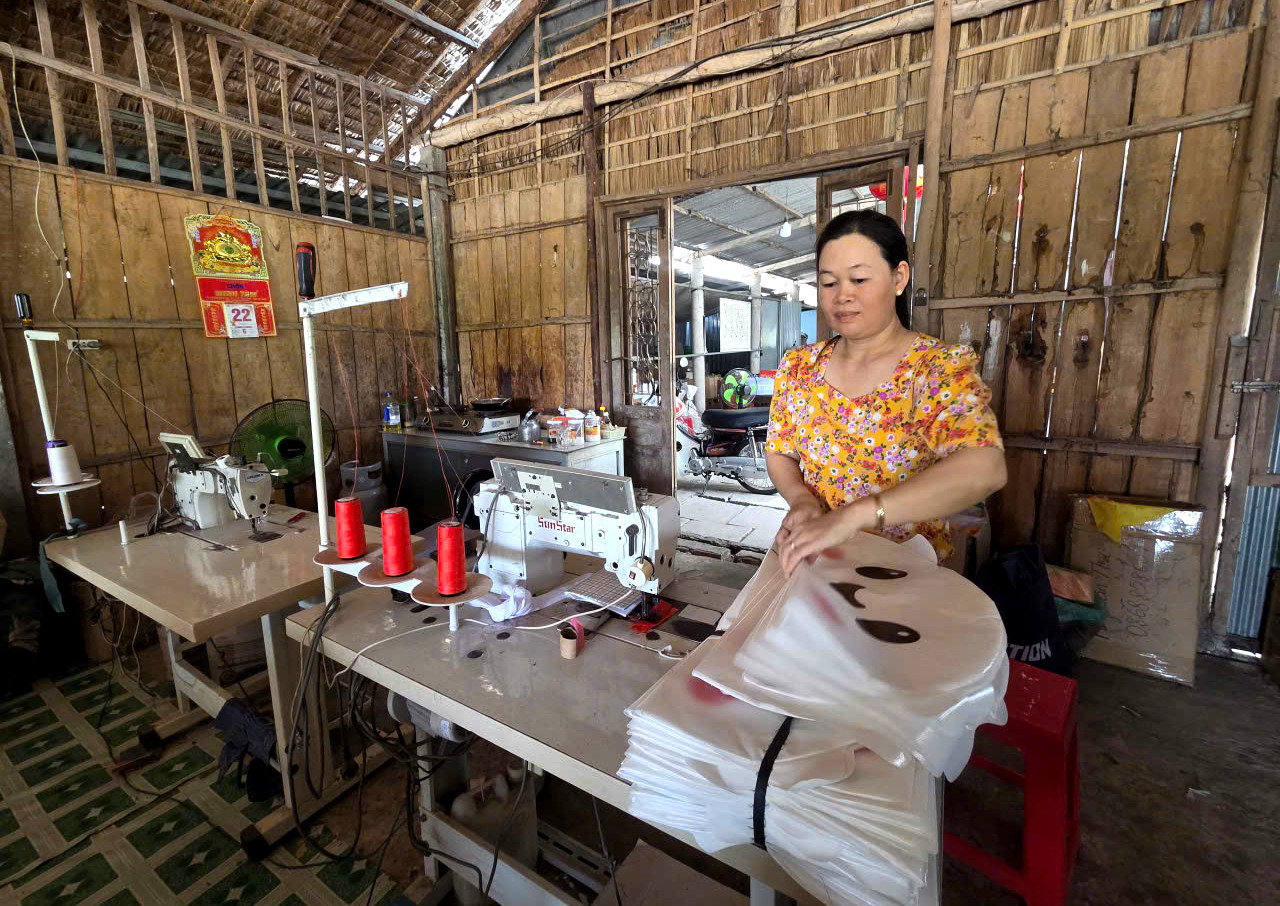
Nguyen Thi Ngoc Phuong, a participant from Dong Thanh Commune, said the loan had enabled her family to continue operating their home-based pig farming business.
"In the past, I wanted to expand our pig farming operation, but we had very limited capital and could only do so gradually. Since receiving the interest-free loan, I've been able to buy more piglets and manage our expenses more proactively. Every month, I also set aside some savings to prepare for repayment. The most rewarding part is that my family now has a more stable source of income, and I feel more confident because I can see that, with careful planning, even a small loan can help us achieve a great deal," she said.
The experience demonstrates that when modest financial support is paired with an appropriate support mechanism, its impact extends well beyond a single livelihood model. More importantly, women are empowered to assess their options, choose suitable approaches, build savings and take ownership of their family's economic future.
This represents empowerment in its most practical form - not doing things on behalf of women, nor simply providing financial assistance, but equipping them with the tools and opportunities to build sustainable livelihoods and stand on their own.
Through the 'Women's Empowerment' program, BAT Vietnam continues to work alongside Women's Union chapters at all levels to help disadvantaged women access interest-free loans and develop legal, safe and sustainable livelihoods.
In Phuoc Chi Commune, the 55 households receiving loan support will each turn that assistance into a concrete economic plan. If every loan is used effectively, every livelihood model generates additional income, and every family builds greater economic security, then the program's greatest value lies not only in the VND550 million (US$21,000) provided, but also in the confidence it helps inspire - confidence that women in border communities are fully capable of shaping their own path toward a better future.
PV
.svg)
