 Vietnamnet.vn

 Podcast



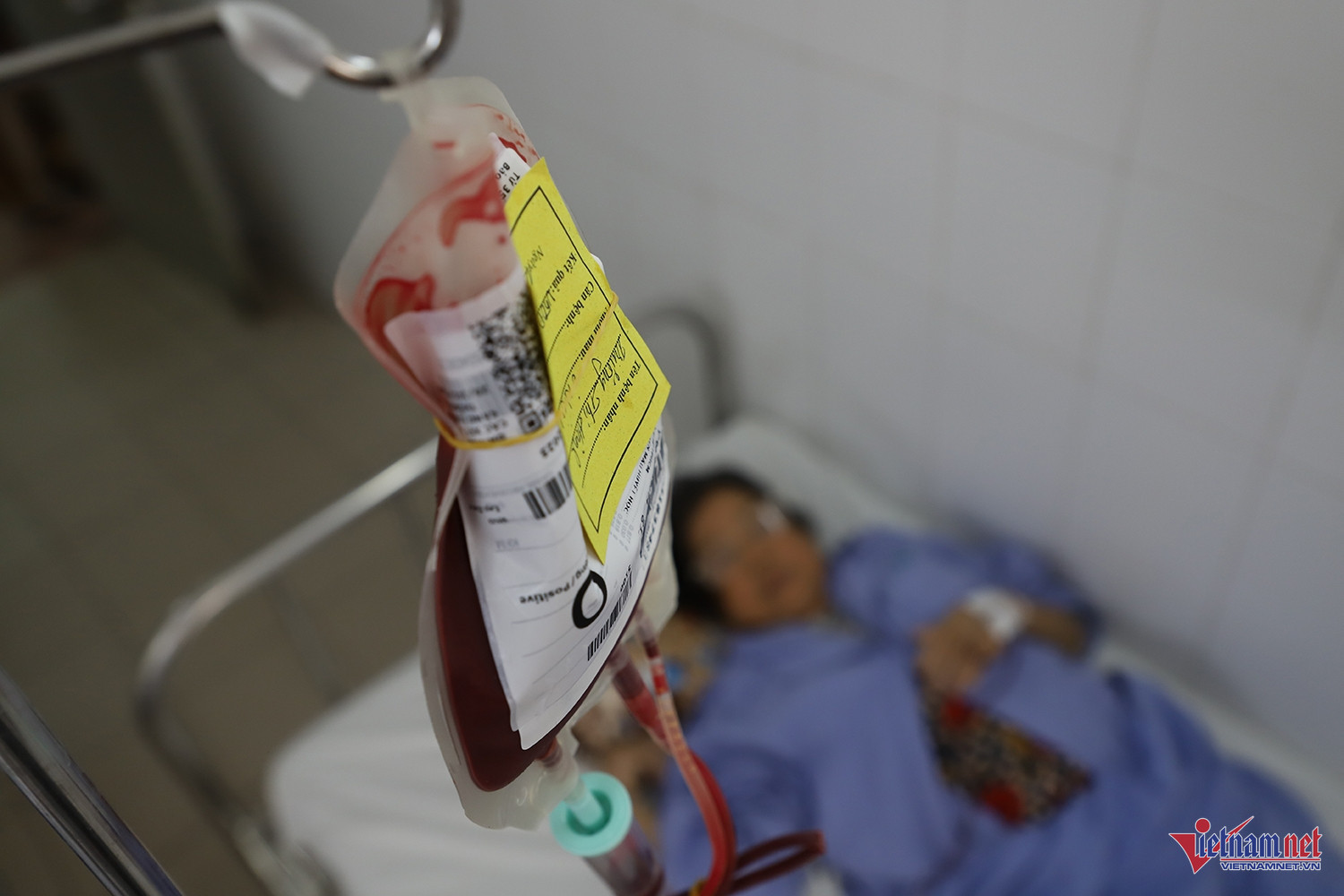
The Can Tho Central General Hospital needs around 700–800 units of blood a week. However, over the past three months, the hospital has been able to meet about 20 percent of its actual needs. Currently, it has only 427 units of blood, enough for only the next 4 to 5 days.
The hospital’s leadership has issued a notice to all departments requesting blood to be used conservatively and strictly according to clinical indications, with some cases temporarily postponed.
“We has contacted the HCMC Hematology and Blood Transfusion Hospital for additional support, but they could only help partially. If this situation continues, it will severely affect our ability to care for and treat patients,” said Le Hoang Phuc, head of the planning and general affairs department at Can Tho Central General Hospital.
Similarly, at Can Tho Hematology and Blood Transfusion Hospital, which serves as a regional blood bank for the Mekong Delta, supplies are only trickling in, just enough to maintain minimal distribution to other hospitals. In these conditions, doctors are powerless, and patients are left in despair.
Truong Thanh Phuoc, 35, from Dong Thap province, has suffered from pancreatic failure for nearly five years and relies on blood transfusions twice a month. He is the sole breadwinner of his family. Each month, his wife takes him to the hospital while their two young children are cared for by their grandparents.
“I’ve been hospitalized for three days but haven’t received a transfusion yet, and there’s still no word on when I will. Meanwhile, our travel and living costs continue to mount,” Phuoc said anxiously.
According to Phan Thi To Loan, deputy head of the blood screening, preparation, and distribution department, the hospital currently receives up to 5,000 units of blood per month, which covers less than 50 percent of the 14,000 units needed monthly by 74 hospitals in the Mekong Delta.
To address the problem, the hospital has renovated its blood donation facilities to attract donors from the public, universities, government departments, and even its own staff. As a result, donations have increased, peaking at over 60 units per day. However, this remains a temporary solution.
“While donors can give blood once every three months, patients need it every day. That’s why available blood supplies are dwindling with no signs of improvement. As the unit responsible for collecting and distributing blood products, we feel heartbroken watching colleagues travel long distances to collect just a few units,” Loan said.
According to Huynh Minh Phu, director of Can Tho Hematology and Blood Transfusion Hospital, recent administrative restructuring in localities has affected blood donation coordination.
Phuong Thuy
.svg)
