 Vietnamnet.vn

 Podcast



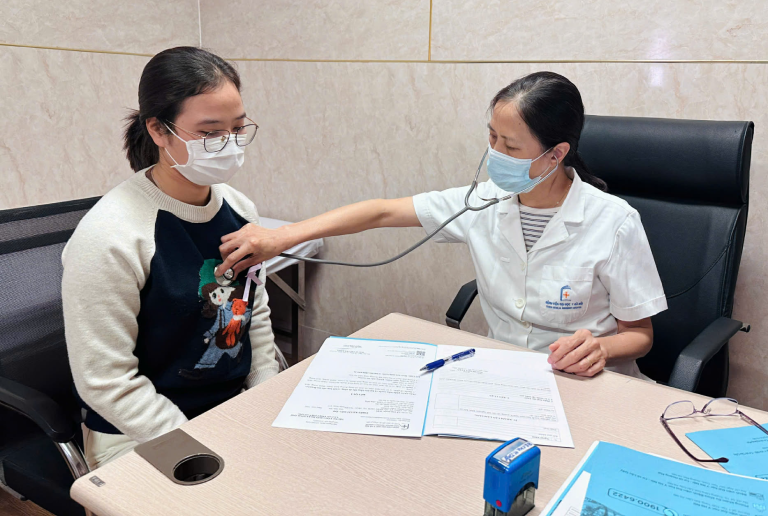
It is estimated that 1 in every 8 women will develop breast cancer during their lifetime, reports say.
The information was shared at the program “Cham se chia – Trao hy vong” (Touch to share and give hope) organized by the Vietnam Women’s Union on December 14.
Nguyen Thi Thu Hien, Vice President of the Central Committee of the Vietnam Women’s Union, said each year Vietnam also records 4,600 cases of cervical cancer, and nearly 1,500 cases of ovarian cancer. Notably, the rate of late-stage detection remains high because many women do not pay sufficient attention to regular screening.
Dr Pham Tuan Anh, head of the On-Demand Treatment Department at K Hospital (Hanoi), said that according to GLOBOCAN 2022 statistics, Vietnam records about 180,000 new cancer cases and 120,000 cancer-related deaths each year. Vietnam ranks 99th globally in terms of cancer incidence per capita.
The causes come not only from age and genetic factors, but also from smoking, alcohol consumption, viral infections (HPV, HBV, HCV), H. pylori bacteria, environmental pollution, obesity, unhealthy lifestyles, and physical inactivity.
Although cancer is a malignant disease, Anh noted that one third of cancer cases can be prevented, one third can be cured, and one third can be treated long term with improved quality of life.
Breast cancer ranks first among cancers in women, accounting for 28.5 percent. One in eight women will develop breast cancer during their lifetime.
Breast cancer is the most common malignant disease among women. GLOBOCAN reported that in 2022, more than 2.2 million women worldwide were diagnosed with breast cancer, with over 666,000 deaths.
In Vietnam, the disease causes more than 10,000 deaths each year, equivalent to 8.3 percent of all cancer deaths nationwide. The recorded incidence rate is 49.6 per 100,000 women.
Experts believe that breast cancer can be cured if detected early and treated promptly with appropriate methods, with high cure rates and relatively low treatment costs.
Prof Le Van Quang, director of K Hospital (Hanoi), said that applying advanced techniques in clinical practice in Vietnam for early breast cancer detection is one of the key factors helping patients receive treatment during the “golden time.”
Currently, vacuum-assisted biopsy is considered a major advancement that improves diagnostic accuracy.
In recent years, the rate of early-stage breast cancer detection (stages 0, 1, and 2) in Vietnam has reached 76.6 percent, compared with 52.4 percent during the 2008–2010 period. Experts say that if diagnosed early, the five-year survival rate can be as high as 90 percent. For younger patients diagnosed at an early stage, the ten-year survival rate exceeds 80 percent.
To detect the disease early, all women of reproductive age (from 18 years old) should perform regular breast self-examinations. Women aged 20–30 should have a specialist examination once every three years, while those aged 40 and above should have an annual specialist examination. Women over 40 should undergo breast cancer screening with breast ultrasound or mammography.
Women at high risk, such as those with a family history of breast or ovarian cancer, early menarche (before age 12), late menopause (after age 55), frequent use of oral contraceptives or estrogen hormone replacement therapy, or not having children or having their first child after age 30, should undergo screening once a year.
Compared with other cancers, breast cancer has the best prognosis if detected early. In the early stage, the five-year survival rate reaches 98–100 percent. Early detection can reduce the risk of death by up to 38 percent.
As for cervical cancer, it is the fourth most common cancer among women, accounting for about 6.8 percent, and is most commonly seen in women aged 35-55. Each year, Viet Nam records around 4,500 new cases.
Dr. Pham Tuan Anh said cervical cancer can be prevented through HPV vaccination and regular screening. Thanks to the increasing rate of preventive measures, mortality from this disease in Vietnam has been gradually declining.
Current medical recommendations suggest that women should receive HPV vaccination between the ages of 9 and 26, ideally before becoming sexually active. Women aged 25-65 should undergo HPV testing once every three years.
Phuong Thuy
.svg)
