 Vietnamnet.vn

 Podcast



From January 7 to 9, 2026, the Government Office organized an artificial intelligence (AI) training course aimed at enhancing the ability of its officials and civil servants to apply technology in policy advisory, document appraisal, and internal administration.
CMC Technology Group participated in the program with specialized sessions, trend analyses, and hands-on activities introducing “Make in Vietnam” AI solutions customized for the needs of government agencies.
At the opening session, Mai Thi Thu Van, Deputy Head of the Government Office, emphasized that AI has become a core technology, fundamentally shaping the operations of economies, societies, and national governance models.
With the volume of documents and data increasing in both size and complexity, she noted that training civil servants in AI is an urgent necessity to improve policy advisory quality and accelerate administrative workflows.
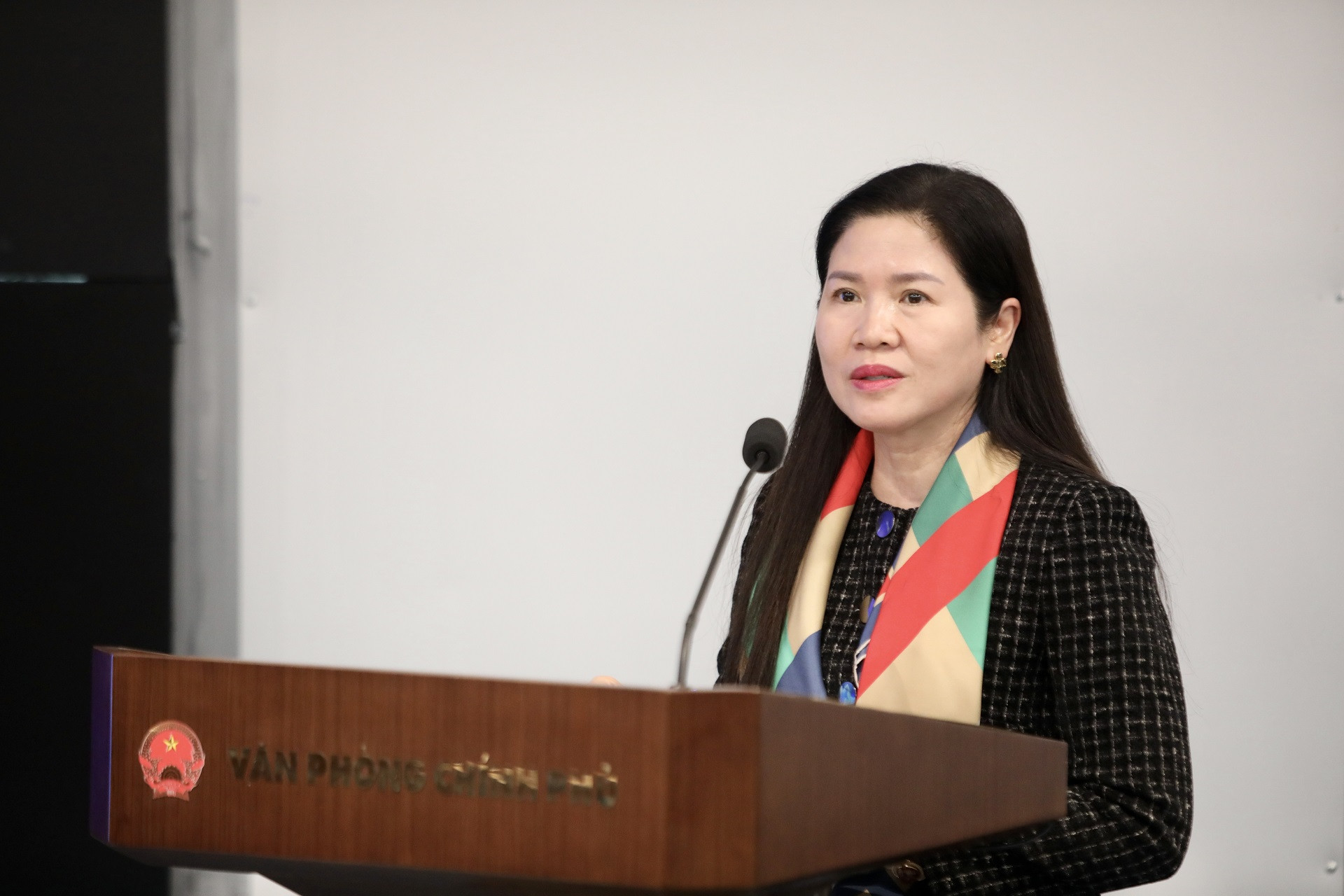
She also emphasized a guiding principle: “AI is a powerful support tool, but humans are the decisive actors,” and stressed that any AI application must align with standards of information safety, security, and public-service ethics.
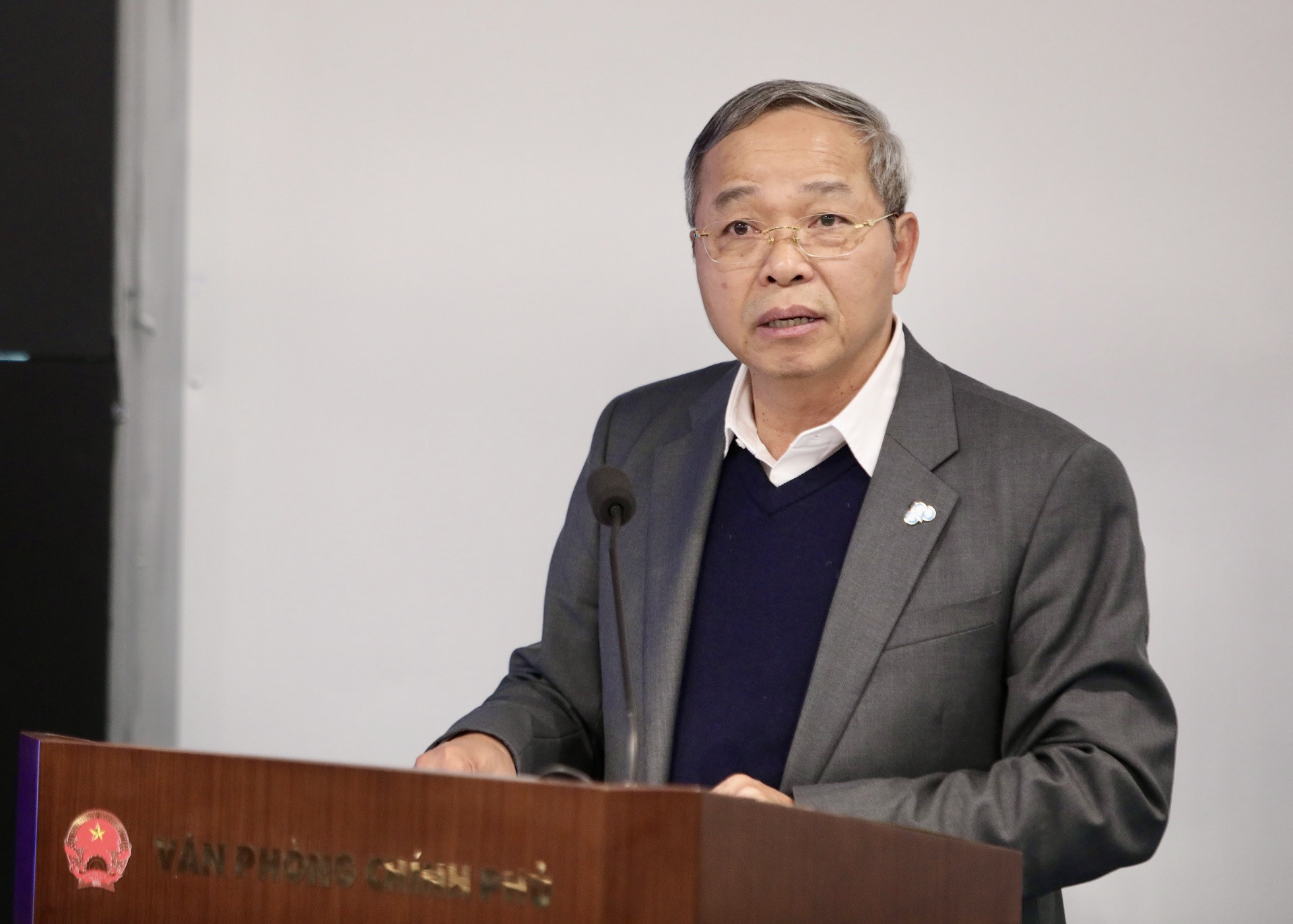
From the perspective of a tech enterprise, Nguyen Trung Chinh, Chairman of CMC Technology Group, remarked that implementing AI at the Government Office goes beyond mere technology deployment-it represents a transformation in work methods, management styles, and decision-making processes.
He stated that when AI is applied substantively, it empowers officials to complete tasks faster, with higher accuracy and greater transparency. Still, the determining factors remain human mindset, judgment, and a strong sense of responsibility in public service.
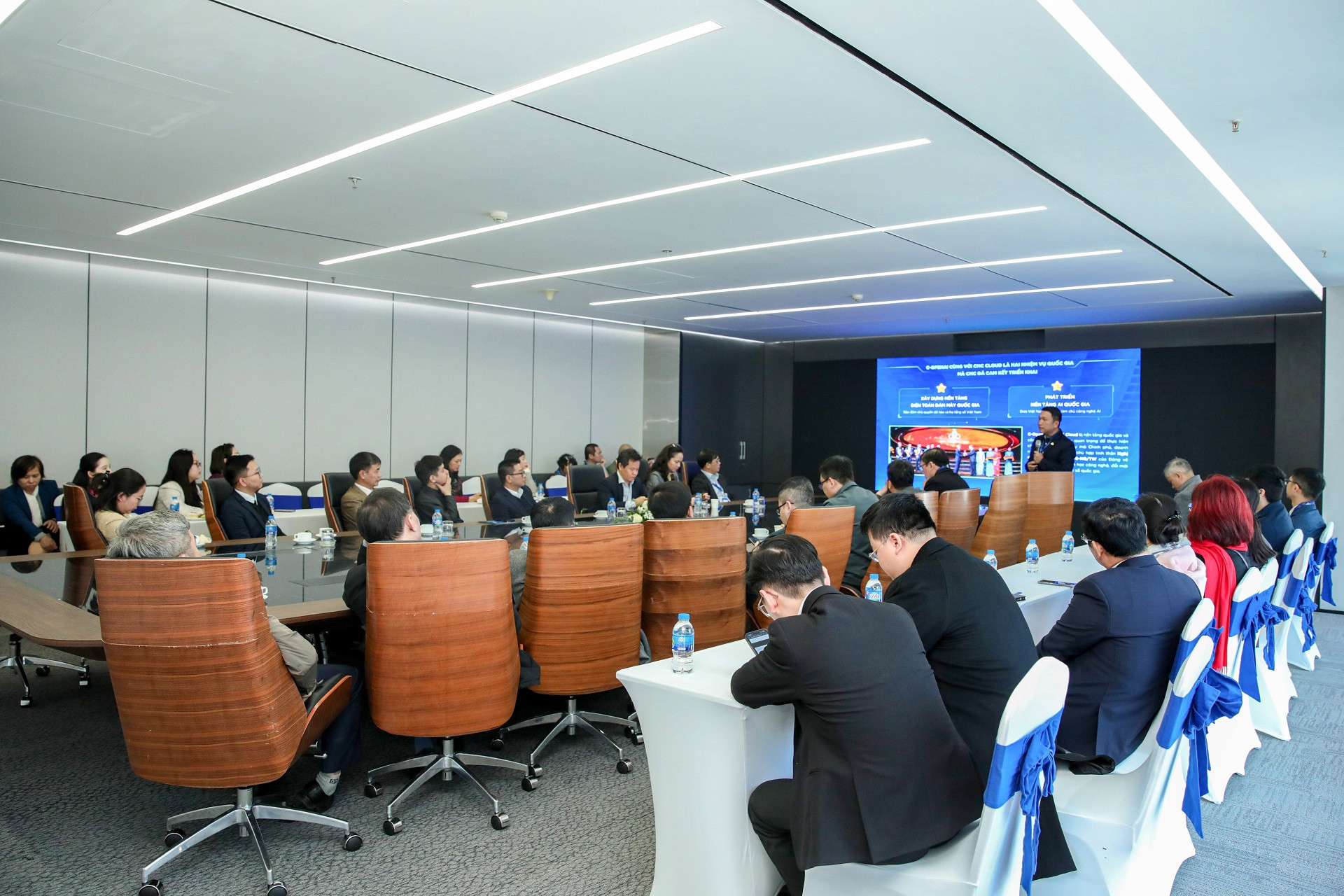
Trainees enthusiastic about hands-on experience, expect early application in work
One of the highlights of the course was its practical, hands-on sessions, where participants explored CMC’s AI transformation solution ecosystem.
Many expressed excitement about working directly with AI tools tailored for public service-from drafting and reviewing documents to summarizing reports and streamlining file management.
They voiced hope that such tools would soon be deployed in real workflows-especially in functions under pressure to process large, complex data sets and documents from diverse sources; to provide comprehensive, multi-dimensional policy analysis; and to modernize working methods that ensure both brevity and intellectual rigor in documents submitted to government leaders.
Participants also highlighted how AI could help reform administrative procedures and enhance internal governance, moving toward smarter and more transparent operations.
From a legal AI assistant to a “digital office” and edge AI
During the training, CMC presented several AI solution groups aligned with the professional tasks of the Government Office.
One such tool was C-AI Legal (CLS)-a virtual assistant designed to review legal documents. It enables quick lookups, cross-referencing, and detection of overlapping or contradictory regulations, thereby reducing manual workloads and accelerating legal document appraisal.
Another was C-AI Office-a “digital office” assistant that supports document drafting, content standardization, information compilation, and summarization upon request. This tool aims to optimize workflows and improve coordination between units.
The delegation also experienced edge AI devices developed by CMC ATI-computers embedded with AI capabilities that can be deployed directly where data is generated. These are suitable for use cases requiring low latency and strict control.
Additionally, CMC introduced C-Meet, a paperless meeting solution that supports digital organization, document handling, and minute-taking-helping make meetings more transparent and efficient.
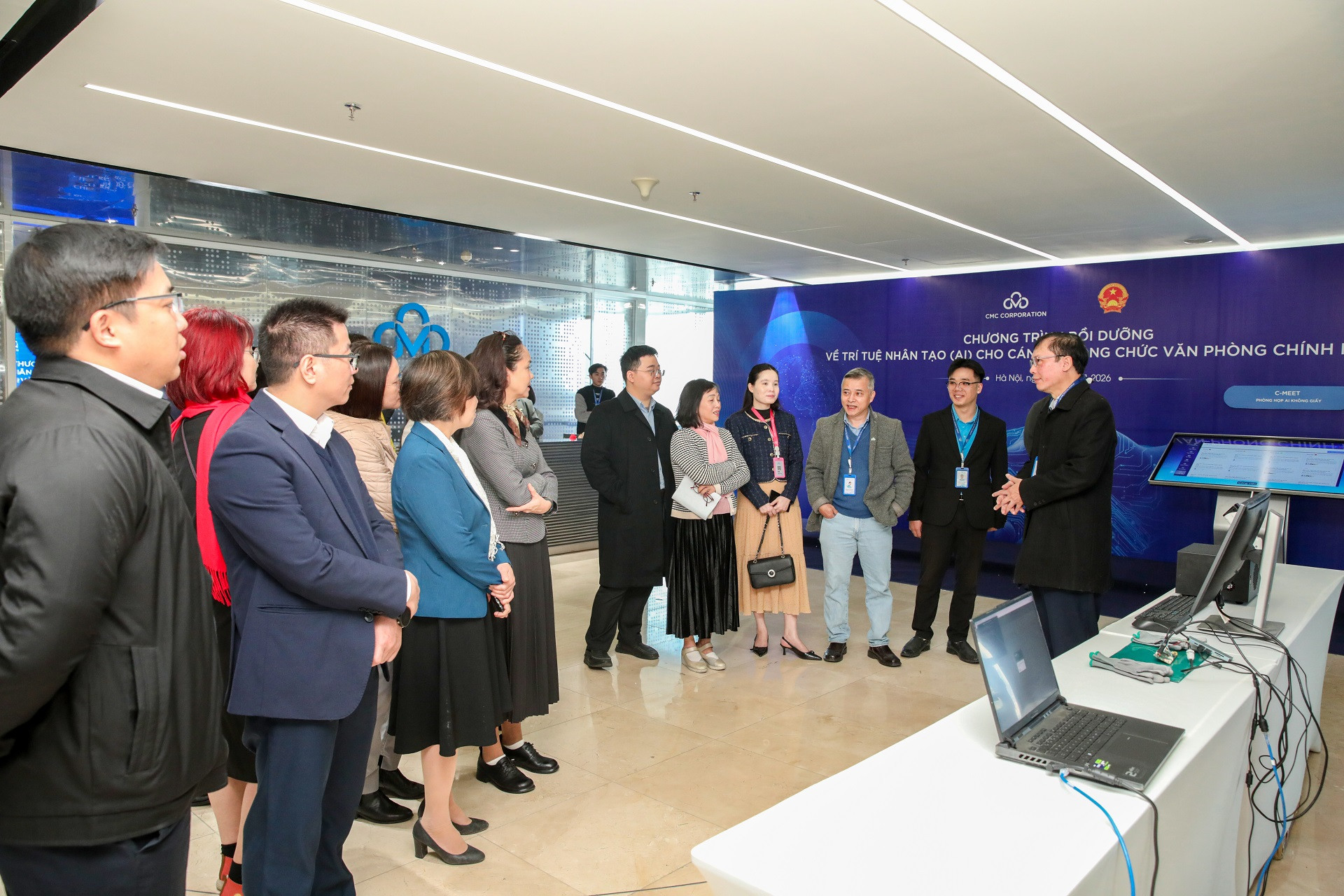
According to Chairman Nguyen Trung Chinh, the tools introduced are not isolated products but part of an integrated AI ecosystem. “AI must be tied to real problems, real data, and real people within each agency,” he said, warning against formality in adoption and urging for a focus on measurable operational value.
Emphasizing “human approval” and a long-term cooperation roadmap
At the closing session, Government Office leaders praised the trainees' commitment and called for concrete action plans to follow the training. They encouraged departments to identify manual, time-consuming processes that could benefit from pilot AI applications-particularly in digital transformation, legal work, and policy synthesis.
Leaders reiterated that AI must be applied responsibly. “AI can draft, but humans must be the approvers,” they said, emphasizing that state data must remain confidential and that no technology can replace the reasoning and responsibility of advisory personnel.
In this spirit, the Government Office aims to build a long-term cooperation roadmap with tech enterprises to continue refining specialized AI assistants aligned with the administrative language and workflows unique to public institutions.
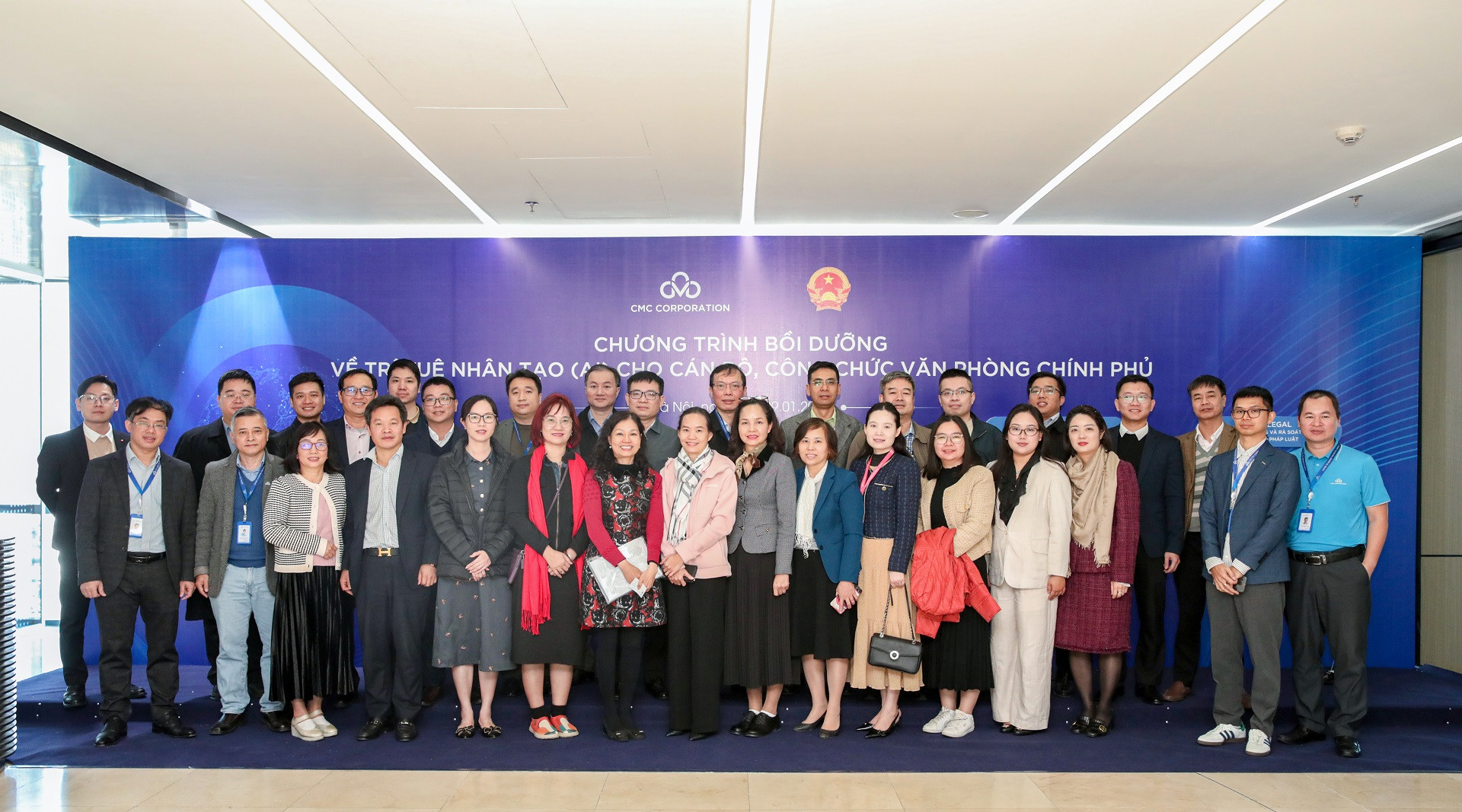
On its part, CMC affirmed its readiness to support not only training but also pilot programs, deployment, and optimization of AI applications-contributing to capacity building in key advisory bodies and advancing administrative modernization to better serve citizens and businesses.
PV
.svg)
