 Vietnamnet.vn

 Podcast



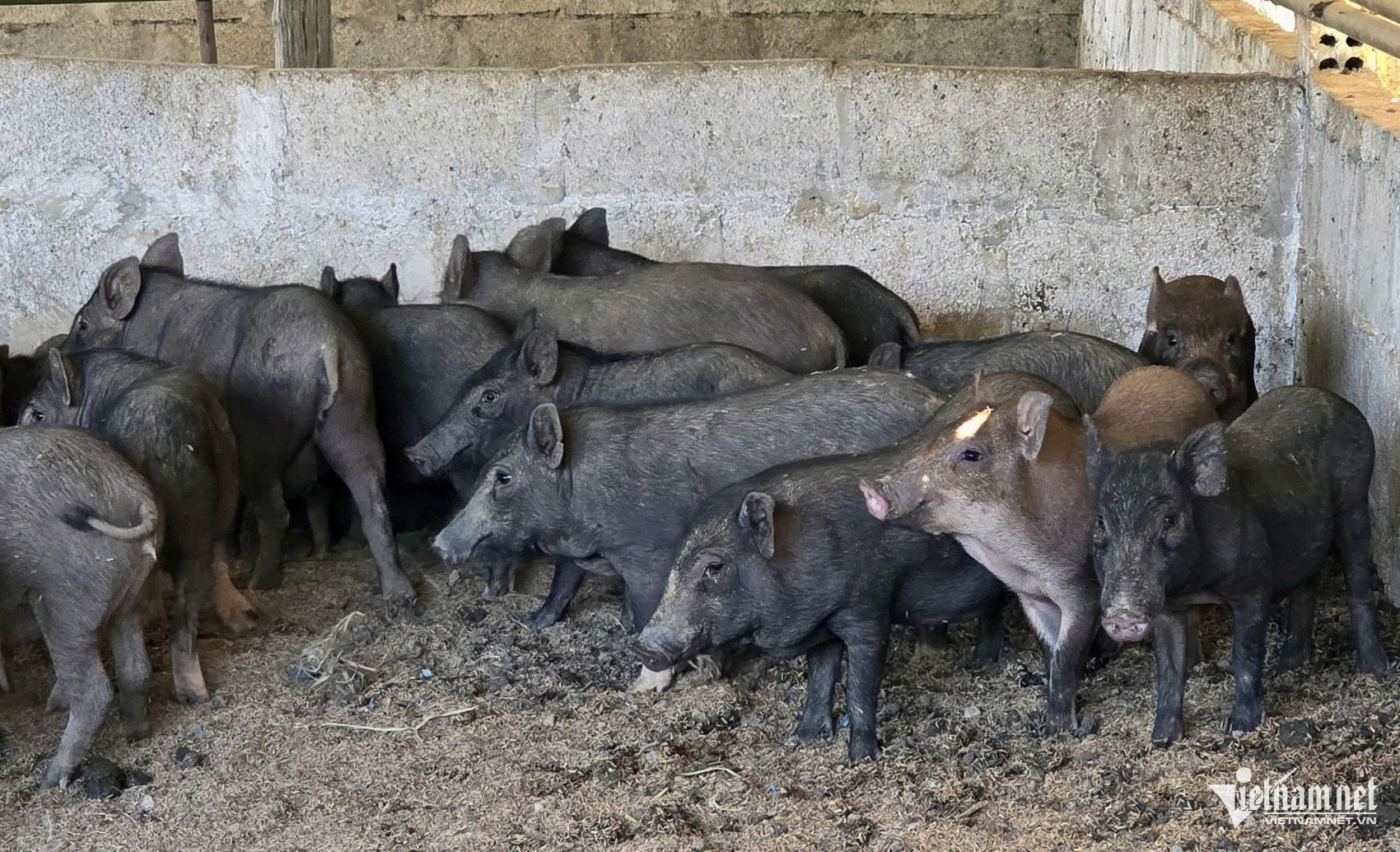
In recent years, this "miniature" pig breed has been successfully conserved, bred, and linked with the Bru Van Kieu ethnic community for biosecure farming, yielding commercial products for the market.
A long journey to scale up 'mini pig' farming
The Van Pa pig is a traditional livestock breed raised for generations by the Bru Van Kieu people in what were formerly Huong Hoa and Dakrong districts of Quang Tri Province. With an adult weight of just 25-30kg, it is considered Vietnam’s mini pig.
Van Pa pigs have a distinctive appearance: they are covered in hair and have either silver-black or jet-black skin, with some individuals occasionally having a reddish-yellow tint. The breed is known for its flavorful, high-quality meat. However, free-range farming practices have led to extensive crossbreeding, putting the purebred Van Pa gene pool at risk of disappearing.
To preserve the breed, scientists and agricultural officials have conducted a series of studies. In 2005, researchers Tran Van Do, Truong Thi Quynh and Tran Thi Hanh carried out a study titled “Growth performance of Van Pa pigs in Dakrong and Huong Hoa, Quang Tri.” In 2009, researcher Dang Hoang Bien conducted a study evaluating the reproductive performance, growth and meat production of Van Pa pigs raised in Quang Tri.
Appendix II of Decree 46/2022, issued on July 13, 2022, amending Decree 13/2020, issued on January 21, 2020, lists the Van Pa pig among livestock breeds requiring conservation.
Following years of scientific research and practical breeding efforts, the breed is now considered ready for wider propagation, with breeding programs linking Bru Van Kieu households to safe farming practices.
At the home of Ho Van Sang in An Bai Village, Kim Ngan Commune, Quang Tri, the Van Pa herd is developing well. The herd was supplied to Sang's family by the Quang Tri Agricultural Extension Center in March 2026.
Sang's family received 40 piglets, along with organic feed, veterinary medicines and microbial products for biological bedding. Before receiving the pigs, the family renovated its pens and attended training on concentrated, safe farming techniques.
After nearly five months of care, the herd has developed steadily, with many pigs reaching 25kg. Some females have reached breeding age and are being mated to expand the herd.
Sang said the breed's key advantage is its strong disease resistance. As part of the program, agricultural extension officers have provided his family with detailed guidance on housing, pen sanitation and disease prevention.
Another household in Kim Ngan, that of Pham Van Ty, has also begun raising Van Pa pigs after receiving 30 breeding pigs. The herd is developing well, with an average weight of around 25kg per animal.
Changing farming practices and creating livelihoods
In Quang Tri, Van Pa pigs are also being raised in Dakrong, Tuyen Lam and Lia communes. Commercial Van Pa pigs are already being sold in Dakrong and Tuyen Lam.
However, because supplies remain limited, the pigs are mainly sold to local tourist destinations and restaurants. When the pigs reach market weight, restaurant and tourism operators often compete to buy them, with some placing orders in advance.
Nguyen Thi Lien, deputy head of the Technical Transfer Division at the Quang Tri Agricultural Extension Center, said Van Pa pigs currently sell for VND150,000-180,000 per kilogram live weight.
The model is seen as an effective way to preserve the mini pig breed's valuable gene pool while helping ethnic minority households develop new livelihoods and improve their incomes in their hometowns.
As linked Van Pa farming expands and commercial products reach the market, consumers will also have legal access to a specialty product derived from a valuable native gene pool.
Under the plan, the Quang Tri Agricultural Extension Center will provide 270 breeding pigs to eight households in four communes in 2026. The program targets ethnic minority communities in particularly disadvantaged areas, with the aim of gradually changing traditional farming practices, applying improved techniques and improving local livelihoods.
Dang Van Duong, chair of the Kim Ngan People's Committee, said the Van Pa pig farming model had shown encouraging initial results, creating jobs and helping ethnic minority communities change their farming practices.
Once at risk of extinction, the Van Pa pig - Vietnam's so-called mini pig - is now being successfully bred and raised under organized farming models. Scientists and Quang Tri's agricultural extension sector are not only helping preserve a valuable native gene pool but also opening up new opportunities for the Bru Van Kieu people, for whom the mini pig has long been a traditional livestock breed.
Tien Pham
.svg)
