 Vietnamnet.vn

 Podcast



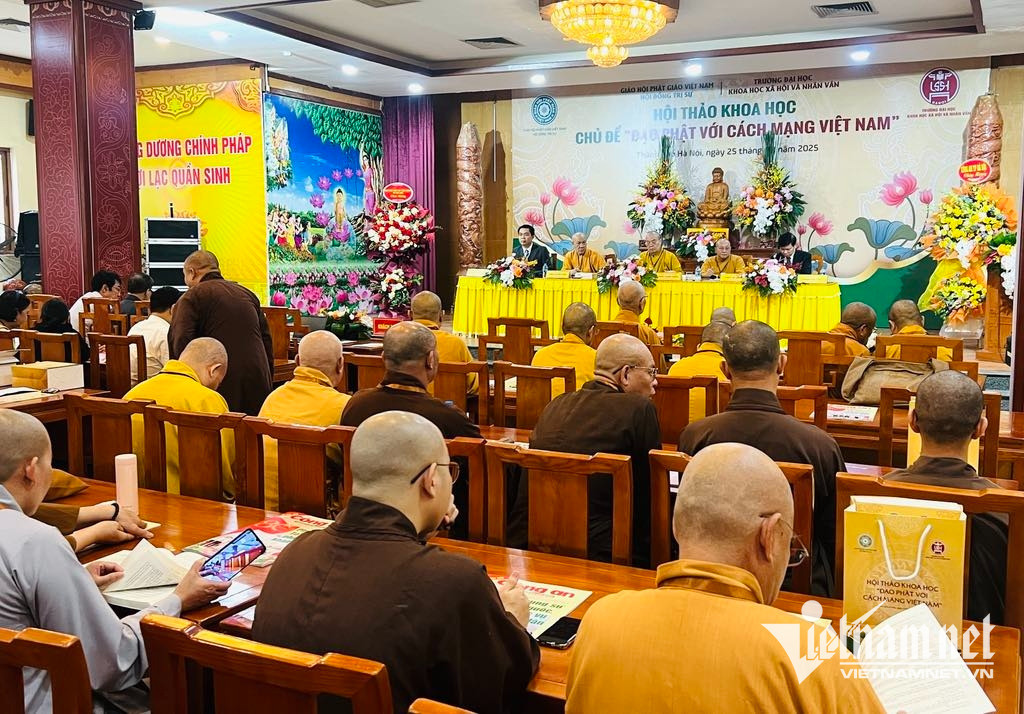
The seminar featured a wide range of presentations covering topics such as: the contributions of Vietnamese Buddhism to the two resistance wars, the relationship between religion and revolution, Buddhist participation in revolutionary governance, Dong Ky Pagoda as the cradle of the directive “Japan and France are fighting; what should we do?”, and the story of Monk Hanh - a silent revolutionary who spread revolutionary seeds in Kim Bang.
Speaking at the seminar, Dr. Hoang Anh Tuan, Rector of the University of Social Sciences and Humanities, emphasized: “Buddhism has walked alongside the nation for over 2,000 years, playing an essential role in state-building and national defense. Notably, it has been closely linked to the 80-year journey of reclaiming freedom and maintaining independence since the August Revolution of 1945.”
Under the light of Buddhist compassion and wisdom, generations of monks, nuns, and lay followers have continuously served their faith and homeland, embodying deep social engagement and helping to preserve national sovereignty and build a society rooted in peace, ethics, and civilization.
Carrying forward the Buddhist tradition of “protecting the nation and bringing peace to the people,” countless monks and followers have made the ultimate sacrifice for the country. Many pagodas served as revolutionary bases and combat zones; many monks were also revolutionaries.
“This reflects the social engagement of Vietnamese Buddhism - a living embodiment of the Buddha’s teachings - integrating spiritual life and secular duty. It continues the tradition of spiritual masters and monks from the Dinh, Le, Ly, and Tran dynasties who served the country,” said Dr. Tuan.
Buddhism as a socio-political force
Through two sessions of discussion, delegates agreed that Buddhism is not only a religion with a long-standing tradition but also a vital socio-political force. It has consistently aligned with the nation’s destiny, playing a tireless role in reinforcing national solidarity, defending independence, and advancing national development.
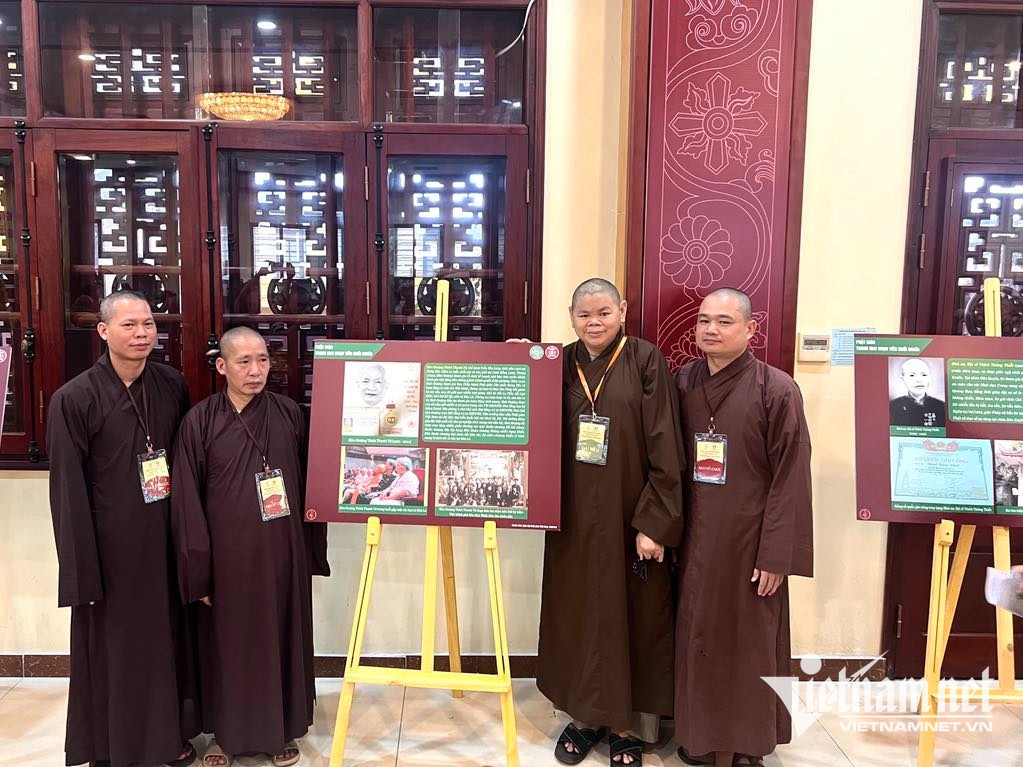
In conjunction with the seminar, an exhibition at Quan Su Pagoda showcased nearly 60 historical images under the theme “Buddhism and the Vietnamese Revolution”. The exhibition is divided into three periods: the pre-uprising era, the two resistance wars (1945-1975), and the period of national reconstruction and development from 1975 to the present.
Binh Minh
.svg)
