 Vietnamnet.vn

 Podcast



However, the boundary between legitimate spiritual practices and superstitious exploitation can be fragile.
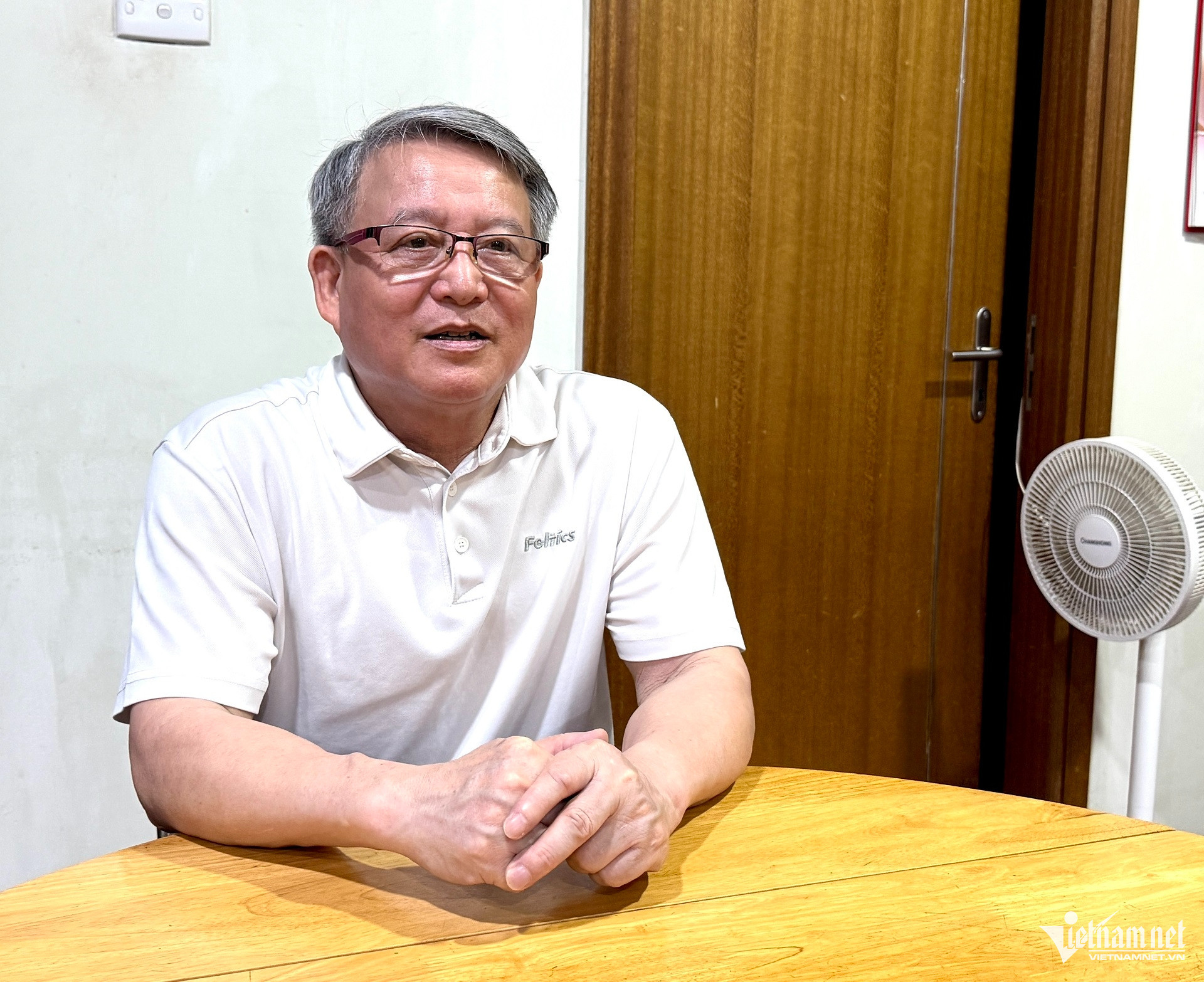
Bui Huu Duoc, former director of the Buddhist Affairs Department under the Government Committee for Religious Affairs, noted that Vu Lan represents a traditional cultural beauty for Vietnamese citizens and Buddhist adherents globally, reflecting moral education and high philosophical values.
However, many sacred values of this festival are being exploited, transforming holy rituals into commercial commodities, from ideology and offerings to ceremonial rites.
Instead of being a time for sincere expressions of filial piety, Vu Lan is increasingly becoming, for some people, a season centered on material offerings. Businesses use various tactics to capitalize on people’s desire to honor their parents and encourage them to buy votive offerings.
More worryingly, the practice has become increasingly distorted. In the past, votive offerings were usually simple paper money, gold-colored paper, clothes and hats. Today, people can buy paper airplanes, cars, phones, laptops and even paper effigies of “beautiful young maids” to offer to the deceased.
Following the notion that “prosperity brings more rituals,” many families compete to burn large quantities of votive paper so their deceased relatives will not be “shortchanged.”
Duoc, however, offers a different definition of wealth: “True prosperity is not simply about material possessions. More importantly, it lies in moral and spiritual values and filial piety. Moral wealth brings genuine peace of mind, rather than a race for material possessions that harms both individuals and society.”
He said the widespread burning of votive paper not only causes waste but also distorts people’s spiritual beliefs. For this reason, the Vietnam Buddhist Sangha has adopted a policy of limiting and eventually prohibiting the burning of votive paper at Buddhist establishments.
Distinguishing legitimate spiritual practices from superstition
To prevent people’s legitimate religious and spiritual needs from being exploited and distorted into superstitious practices, Duoc emphasized the roles of three groups: places of worship, management authorities and the public.
Places of worship have the most important role because those in charge understand spiritual practices and traditional rituals better than anyone else. If religious leaders at places of worship do not organize, permit or accept superstitious activities, such practices cannot take root there.
Management agencies responsible for religious and belief-related activities, together with other relevant authorities, need to effectively regulate religious and spiritual activities so that people’s legitimate needs are met while legal requirements are respected. They should also strengthen public education and guidance so people develop a proper understanding and voluntarily avoid actions that violate the law or traditional cultural norms.
For the public, greater awareness is needed, along with vigilance against scams and manipulation. People should avoid being drawn into the “commercialization of spiritual rituals” and actively stay away from inappropriate practices, while embracing the positive values that religion and traditional beliefs bring to social life.
Duoc also said the rapid development of cyberspace is creating major challenges for regulatory efforts. Attempts to circumvent regulations and misinformation about spirituality, beliefs and religion are widespread online, making it easier for people to misunderstand or believe in false claims.
“State management agencies have devoted considerable effort to addressing these issues. But in my view, beyond technical regulation, what matters most is regulation through ethics and thought.
“Measures to stabilize and develop society can only be highly effective when people have a proper understanding and a sense of self-discipline, rather than looking for ways to circumvent rules or undermine the common good. We should encourage people to remember their ancestors and embrace the positive values of the Vu Lan season,” he said.
On the morning of August 18, the Vietnam Buddhist Sangha issued guidance on the proper practice of releasing captive animals during the Vu Lan filial piety season and the seventh full moon of the Year of the Horse 2026, with an emphasis on protecting the environment and biodiversity.
There have been cases in which large quantities of birds, fish, turtles and other animals were ordered in advance for release. Such practices can unintentionally create market demand and encourage the capture, fishing, transportation, trading and confinement of animals. In some cases, animals that have been released are subsequently recaptured and sold.
The Vietnam Buddhist Sangha called on its provincial and municipal chapters, Buddhist establishments, monks, nuns and followers to strictly practice the release of captive animals on the basis of compassion and wisdom.
Binh Minh
.svg)
