 Vietnamnet.vn

 Podcast



Hanoi needs to resolve four long-standing issues that citizens expect action on: traffic congestion; urban order associated with green, clean, beautiful, civilized, and hygienic requirements; environmental pollution (including water and air pollution); and flooding in urban and peri-urban areas.
Professor Bui Minh Thanh, PhD, from the Institute of Non-traditional Security, has pointed out that Hanoi is facing many challenges, risks, and non-traditional security threats. In the 2025-2030 term, the city should prioritize handling these issues, along with ensuring food safety and health security for its citizens.
Little space for traffic flow
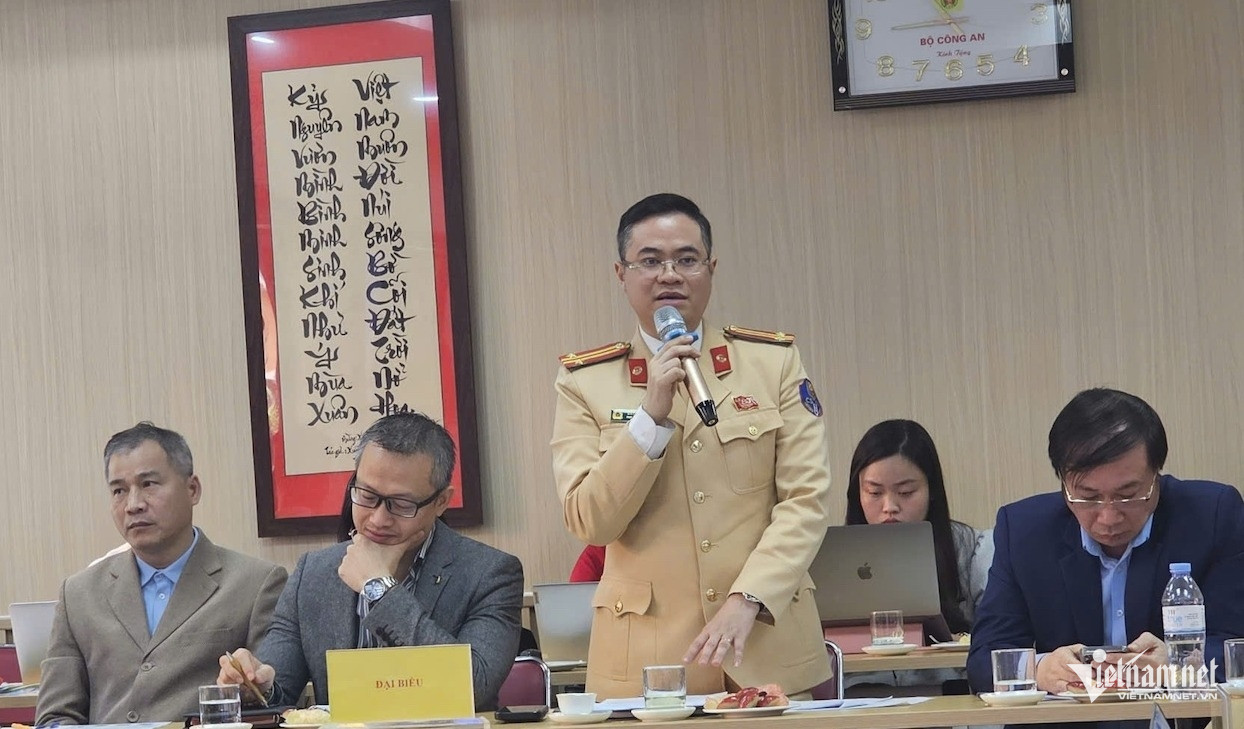
Lieutenant Colonel Dao Viet Long, deputy head of the Traffic Police Department, said that among the four groups of issues raised, traffic remains the “core”.
Nearly all current transport demand is concentrated on road surfaces. On average, for every 1km of road in Hanoi, the number of vehicles has far exceeded the carrying capacity, with thousands of motorbikes and hundreds of cars, leaving almost no space for traffic flow.
He expressed strong agreement with the idea of integrating non-traditional security criteria into governance. At the same time, Hanoi needs to consider undertaking major reform in urban spatial organization. This is a difficult issue involving many groups of interests. “The more difficult it is, the more policy courage is required,” he said.
A point noted by Long is connectivity. Hanoi’s traffic problem cannot only be viewed within the inner city but must be placed in connection with neighboring localities such as Hung Yen and Bac Ninh.
Regional and inter-provincial links are prerequisites for solving the traffic problem optimally. More importantly, it is necessary to promote the role of connecting prestigious scientists, research agencies, and major programs to gather dedicated and capable people for the common goal of the capital city and the country.
Infrastructure led by data models
From an infrastructure perspective, Khuat Viet Hung, PhD, Chair of the Member Council of Hanoi Railway Ltd, noted that a city is first and foremost a living and an economic activity space for humans, requiring technical infrastructure as a foundation.
The technical infrastructure and land use are two closely linked factors. However, to date, Hanoi still lacks a complete traffic model, not to mention other models such as hydrology, air, waste generation and management models. Questions about when waste is generated, where it is generated most, and the optimal collection methods all need to be answered with data and models.
Amid digital transformation and the 4.0 industrial revolution, he believes the city needs to focus heavily on building these models. Only with complete models can Hanoi answer big questions such as whether the metro should go underground or be elevated, or how underground space should be organized.
Haung said that urban railway lines are crowded during morning and afternoon, but empty in off-peak hours. He believes that infrastructure must be created early enough for people to have confidence, which could encourage them to shift their living and business production spaces around stations.
“I want to add a concept in transport studies called ‘time-area’. We do not only mention how many square-meters of road-bed, but also how many square-meter hours. Sidewalks and roadways can be used differently at different times of the day and week. With current camera systems and electronic governance, it is entirely possible to incorporate this concept into simulation models to optimize infrastructure use,” Hung said.
Lieutenant General Tran Vi Dan, deputy secretary general of the Central Theoretical Council, pointed out that Hanoi is a riverside city but has not achieved harmony seen in many other river cities. The river is sometimes depleted and at other times becomes a flooding threat in extreme situations.
He emphasized the need to approach urban governance as a comprehensive problem within the framework of an overall national strategy. If only concentrating on fixing certain cases, social costs will continue to rise.
“I have heard of a case where compensation for land clearance reached VND400 billion in Hanoi. That is why I believe a comprehensive and long-term approach is necessary,” he said.
“If, in 10 years, compensation figures continue to increase, national resources will be largely spent on compensation rather than on development,” he warned.
According to current management data, Hanoi’s population is about 8.6 million. In reality, however, the figure is much higher.
Thanh Hue
.svg)
