 Vietnamnet.vn

 Podcast



Substandard products removed from Ministry’s list
The Ministry of Agriculture and Rural Development has removed unsafe and substandard pesticide, veterinary medicine, fertilizer from its list.
1,774 pesticide products; 1,052 veterinary medicine and 3,621 fertilizers were banned in Vietnam as per the Ministry’s decision.
Additionally, the Ministry said that there has been progress in linkage between farmers and enterprises in consumption and supply chains of safe agricultural produce. There has been 1,249 supply chains with 1,450 safe products and 3,181 places to sell safe products in 63 cities and provinces.
Enterprises such as Vingroup, Dabaco, Hung Nhon, Sanha, Ba Huan poured its investment in cooperatives and household farms to provide high qualified agricultural products on a large scale. Vietnam Cooperative Alliance also set up supermarket chains connecting with over 100 agricultural cooperatives to form supply chains of safe farm produce.
There have been accredited-VietGAP 1,845 cultivation facilities on the land of more than 80,000 hectare, 500 aquatic farms on 2,618 hectare, 313 family farms and 2,502 breeding farms.
S. Korean firms seek to invest in Lach Huyen Port

A corner of Lach Huyen International Gateway Port. The first two container berths of Lach Huyen Port were put into service in May 2018
Some South Korean firms have shown interest in investing in and operating Lach Huyen Port in the northern coastal city of Haiphong, according to the Ministry of Transport.
Speaking at a meeting with Minister of Transport Nguyen Van The on March 6, South Korean Ambassador to Vietnam Kim Do-Hyon stressed that South Korea has experience in operating and developing seaports, as well as the potential to mobilize capital for projects.
Kim expected the Ministry of Ocean and Fisheries of South Korea and the Vietnamese Ministry of Transport to sign a memorandum of understanding (MoU) to develop Lach Huyen Port in the future.
Minister The said that the first two container berths at Lach Huyen International Gateway Port, developed by a joint venture between Saigon New Port Corporation and a Japanese partner, are operational, and added that Haiphong Port will be in charge of the third and fourth berths.
As such, The proposed that South Korean firms work with Haiphong Port to seize investment opportunities.
In addition, he said that the ministry had asked the Vietnam Maritime Administration to review and fine-tune the plan for Lach Huyen Port until 2020, with a vision toward 2030. Following this, the ministry will partner with other relevant ministries and departments to submit the plan to the prime minister for approval to begin investment and the construction of the remaining projected berths at Lach Huyen Port.
Although a decision on the cooperation with South Korean firms to develop the port is made by the prime minister and the Haiphong government, the Ministry of Transport has thrown its weight behind it.
Speaking about the MoU, The proposed that the competent authorities of the Ministry of Ocean and Fisheries of South Korea and the Vietnamese Ministry of Transport exchange information and discuss the investment with relevant ministries and departments before reaching a consensus.
Ministry approves using State budget for Rach Mieu 2 Bridge

A section of the existing Rach Mieu Bridge. Funds for the construction of the Rach Mieu 2 Bridge may be sourced from the State budget
The Ministry of Transport has given its nod to using funds from the State budget for the construction of Rach Mieu 2 Bridge in the Mekong Delta region to speed up the progress of the project.
Speaking at a meeting on the construction of the bridge and new development for National Highway 30 in Ben Tre Province today, March 11, Minister of Transport Nguyen Van The stressed that the construction of Rach Mieu 2 Bridge is extremely essential as the current Rach Mieu Bridge is severely overloaded.
“The overloading has caused difficulties in circulation and transportation in the Mekong Delta region, especially during holidays,” The said.
The Ministry of Transport had earlier proposed that the Government allow using official development assistance (ODA) loans to invest in the project, but access to these loans was difficult and time consuming, according to The.
“As such, after officials reach a consensus through the meeting, the ministry and the relevant agencies will ask the Government and the National Assembly for approval to use the State budget to finance the new bridge to save time and start work on the project, as completing procedures using ODA loans takes time, two to three years longer than finalizing procedures using the State budget,” The said.
Phan Van Mai, deputy secretary of the Ben Tre Party Committee, threw his weight behind the Ministry of Transport’s proposal to use the State budget to construct Rach Mieu 2 Bridge, saying that constructing the bridge is a matter of urgency.
The new bridge will be beneficial to the eastern coast corridor of the Mekong Delta, stimulating the economic development of the region and easing the burden on the National Highway 1, Mai added.
At the meeting, The asked the Directorate for Roads of Vietnam to direct the relevant agencies to generally review the traffic jams on the current Rach Mieu Bridge and report the matter to the prime minister.
The projected Rach Mieu 2 Bridge, which will be 3.8 kilometers upstream of the existing bridge, will have four lanes. The bridge is slated to connect to the HCMC–Trung Luong Expressway and Ham Luong Bridge on the National Highway 60 in Ben Tre Province.
According to the transport consulting firm TEDI, after construction of the Rach Mieu 2 Bridge linking Ham Luong Bridge is completed, vehicles will not go through the tollgate at the current Rach Mieu Bridge, but travel on Rach Mieu 2 Bridge instead by turning to Provincial Roads 884 and 886, and the National Highway 57B on the route spanning from the National Highway 60 in Ben Tre Province to Ham Luong Bridge, three of which connect with each other and lie behind the tollgate.
As a result, the consultant proposed relocating the current Rach Mieu BOT bridge tollgate to the new location at the end of the connection point between Ham Luong Bridge and Rach Mieu 2 Bridge.
Minister The said that the tollgate at the current Rach Mieu Bridge will end its toll collection in 2023, but the BOT (build-operate-transfer) tollgate will continue its toll collection for the expanded project of the National Highway 60, with the section from Rach Mieu Bridge to Co Chien Bridge.
To ensure the toll collection goes smoothly, it is necessary to relocate the tollgate to the end of Ham Luong Bridge, The added.
HCMC tax department to assist taxpayers with PIT finalization

Residents conduct procedures at the HCMC Tax Department
Members of the HCMC Tax Department and their subordinates in 24 districts across HCMC will support all taxpayers in the city to complete procedures for personal income tax (PIT) finalization between March 18 and April 1.
In addition, local taxpayers can print the tax returns themselves, using computers and printers available at the 25 offices. They will later submit the returns to the tax agencies.
Further, tax officials will be available to respond to all their queries.
At the tax offices, representatives of Bank for Foreign Trade of Vietnam will also be present to collect the tax.
Documents providing guidance on PIT finalization in both Vietnamese and English will be given to the taxpayers.
Innovation Partnership Grants now available
The first round of the Innovation Partnership Grants, part of the Aus4Innovation program - one of six initiatives in the Australian Government’s Aus4Vietnam investment - was launched on March 11. The grants provide targeted financial support to help scale already-tested activities that address emerging challenges or opportunities in any sector of Vietnam’s innovation system.
Grants of between A$100,000 ($70,500) and A$1 million ($705,000) will be awarded on a competitive basis to existing partnerships between Australian and Vietnamese institutions for activities that can demonstrate a clear pathway for scale or sustainability in Vietnam.
H.E. Craig Chittick, Australian Ambassador to Vietnam, said the Innovation Partnership Grants are an excellent opportunity to further enhance ongoing partnerships between Australian and Vietnamese organizations, helping them to scale innovative ideas, deepen collaborative linkages, and strengthen Vietnam’s innovation system.
“The launch of this Grant program is another step towards bolstering the dynamic and substantial innovation partnership between Australia and Vietnam, which was established to create new and lasting connections in science, technology, and innovation between the two countries,” he added.
To be eligible for a grant, there must be an existing partnership that includes at least one Vietnamese and one Australian organization. Preferred eligible Australian organizations include universities, research institutes, public sector agencies, or civil society organizations. Australian for-profit companies may not be lead partners in the first round. Eligible Vietnamese organizations include any private, public sector, or civil society organization operating in Vietnam.
In the program, innovation embraces new, innovative ideas with their derived activities and /or processes to help Vietnam enhance its innovation capacity and better prepare to take on opportunities and respond to emerging challenges in Industry 4.0.
Grantees will have up to 12 months to implement their proposed activities. More information is available at https://research.csiro.au/aus4innovation/apply/.
The Innovation Partnership Grant is an important part of the A$10 million ($7.05 million), four-year (2018-2022) flagship Aus4Innovation program helping strengthen Vietnam’s innovation system and preparing for its economic and digital future. It is co-funded by the Australian Department of Foreign Affairs and Trade (DFAT) and InnovationXchange (IXC), managed by the Australian Commonwealth Scientific and Industrial Research Organization (CSIRO), and in strategic cooperation with the Ministry of Science and Technology in Vietnam.
Through the Aus4Innovation program, Australia and Vietnam will together explore emerging areas of technology and digital transformation, trial new models for partnerships between public and private sector institutions, and strengthen Vietnam’s capability in digital foresight, scenario planning, commercialization, and innovation policy.
AIA Vietnam launches new brand promise
AIA Vietnam officially launched its new brand promise, Healthier, Longer, Better Lives, on March 9. The new brand promise is purpose-led, placing a firm emphasis on AIA Vietnam’s commitment to taking action to positively impact the lives of its customers.
“Healthier, Longer, Better Lives is a single, powerful brand promise that is an accurate and up-to-date reflection of what AIA stands for and what we do as a company,” said Mr. Stuart Spencer, Group Chief Marketing Officer at AIA. “Asia is getting wealthier but it is not getting healthier, given the rapid and prevalent rise of lifestyle-related diseases across our region. We are committed to helping address this disturbing trend by playing a proactive and positive role in the lives of our customers.”
To celebrate this special occasion, David Beckham visited AIA Vietnam for the first time in his capacity as AIA’s Global Ambassador. He joined more than 3,000 enthusiastic attendees at the “Song” Festival, AIA Vietnam’s large-scale public event designed to help launch Healthier, Longer, Better Lives in the country.
“I have been lucky enough to travel to many different places in my role as Brand Ambassador with AIA,” David said. “Vietnam is a beautiful country, and to be here today with all of the AIA customers, agents, staff and members of the public celebrating the Song Festival is really exciting. I believe it is so important to maintain a healthy lifestyle, and I am impressed by the positive and healthy living attitude here.”
The “Song” Festival at 7th Military Region Stadium generated an overwhelming response from the public with David Beckham’s presence and a wide variety of wellness, sports, cooking and art activities for participants and their families.
The “Song” Festival is just the kick-off for a series of exciting wellness events that AIA Vietnam has in store. At the press conference following festival, David Beckham also had the honor of introducing the ten winners of a 100-hour expedition to Son Doong cave in central Quang Binh province happening in mid-March - an initiative that is part of AIA’s year-long program of special events and activities to mark its Centennial Celebration across the Asia-Pacific region.
“Through AIA Vitality, which we look forward to launching in Vietnam, we can engage and empower all our stakeholders to make significant improvements in their health and reward them for doing so,” Mr. Spencer said. “Partnering with David as our Global Ambassador is also helping us to heighten public awareness as we look to create a movement, to change the way people across Asia take care of themselves.”
“AIA Vietnam is very excited to be part of AIA’s global initiatives to help people across Asia live healthier, longer and better lives,” said Mr. Wayne Besant, CEO of AIA Vietnam. “I believe that everyone can change and adopt a healthier lifestyle by taking one small step at a time. AIA Vietnam commits to stand side-by-side with our customers and stakeholders every step of the way, because we believe that ‘What is good for our customers is good for Vietnam’.”
Coffee firms should focus on deep processing: insiders

The coffee industry should focus on deep processing in the coming time to increase the quality and added value of its products.
The coffee industry should focus on deep processing in the coming time to increase the quality and added value of its products, according to insiders.
To realise this goal, regions like the Central Highlands – Vietnam’s coffee capital – must take measures in technical processes, from seed selection, watering, nutrition, and pest management to harvesting, preliminary processing, and diversification of crops, said Dr. Truong Hong, acting director of the Central Highlands Agriculture and Forestry Science Institute. Additionally, he noted, they must promote their coffee products and invite investment in deep processing to ensure stable productivity, high quality, and sustainable development.
Chairman of the board of directors for Vinh Hiep Co., Ltd., Thai Nhu Hiep, said that in order to increase the value and competitiveness of Vietnamese coffee in general and Gia Lai in particular, it is necessary to build high-quality raw material areas according to the organic farming process, thus creating the best and most competitive coffee products.
He suggested ministries and relevant departments offer legal assistance for roasted coffee producers and establish a Vietnamese roasted coffee association to protect the interests of local businesses.
Director of the Gia Lai ACOM coffee processing factory Nguyen Truong Hung said his facility produces over 30,000 tonnes of coffee annually and exports over 50 million USD worth of goods thanks to the province’s incentives, such as the exemption of land lease for 10 years and implementation of corporate tax support policies.
Currently, the factory’s products are exported to all markets, including Europe and Japan, he said. He added that previously, only its coffee beans were exported to the European Union and the Republic of Korea and entitled to zero percent tariff, while processed coffee products were subject to a high tax rate of 15-20 percent.
Vietnam has signed free trade agreements (FTAs) with these markets, which is an excellent opportunity for businesses to invest in processing coffee to boost exports, he said.
Vietnam is the second biggest exporter of coffee beans in the world, after Brazil. The Central Highlands, more specifically, has many advantages in soil and climate suitable for coffee development.
The region is home to nearly 600,000 ha of coffee farms, making up around 90 percent of the country’s total coffee areas.Gia Lai province in particular has 94,000 ha of coffee farms, ranking third in the Central Highlands with the average output of some 200,000 tonnes of coffee each year.
Deputy PM urges quicker disbursement of public investment

Deputy Prime Minister Vuong Dinh Hue speaks at a meeting with representatives from the working group of the Government
Deputy Prime Minister Vuong Dinh Hue recently requested that ministries, sectors, and localities speed up the allocation of public investment, amid the slow disbursement of public investment in the first two months of 2019.
According to a plan approved by the National Assembly, 416 trillion VND (18 billion USD) will be spent on development investment in 2019. To date, Prime Minister Nguyen Xuan Phuc has allocated 355.6 trillion VND to different projects.
Of the total allocated capital, disbursement during the January-February period reached 4.52 percent, 2.31 times higher than that of the same period last year, but still at a low level.
Therefore, the Deputy PM urged ministries, sectors, and localities to steer investors to quickly complete procedures to speed up disbursement and construction.
They were required to strictly follow the Government’s Resolution No.70 on main tasks and measures to speed up capital disbursement, including sending monthly reports on the implementation process to relevant ministries.
Over the past three years, procedure-related regulations of the 2014 Public Investment Law have resulted in slow investment disbursement, affecting the progress of projects and the nation’s economic growth.
The disbursement of public investment in 2018 reached 263.6 trillion VND, meeting just 66 percent of the National Assembly’s target.
Working regulations for steering committee on industrialisation strategy issued

Deputy Prime Minister Trinh Dinh Dung has recently issued the working regulations of the Steering Committee for Vietnam’s Industrialisation Strategy within the Vietnam – Japan cooperation framework until 2020 with a vision to 2030.
The committee is made up of members of the Party Central Committee's Economic Commission, the State Bank of Vietnam, the Government office, and the Ministries of Foreign Affairs; Information and Communications; Finance; Industry and Trade; Agricultural and Rural Development; Transport; Science and Technology; Education and Training; and Labour Invalids and Social Affairs.
The Japanese Ambassador to Vietnam (or a representative of the Japanese Embassy in Vietnam) and those from the Japan Business Association in Vietnam will be invited members of the committee.
The steering committee is responsible for assisting the Prime Minister in researching, directing and coordinating the implementation of the strategy.
It will support the Government leader in setting out plans to implement the strategy and proposing key tasks and issues that need inter-sectoral coordination.
The steering committee will also report to the PM on difficulties and problems arising in performing the strategy, as well as ask the leader to consider and devise solutions to those issues.
It aims to help the PM direct coordination among ministries and sectors in building and guiding the implementation of prioritised industrial development mechanisms and policies in the strategy, as well as urge ministries and sectors and People's Committees provinces and centrally-run cities to effectively perform the strategy.
Vietnam imports over 14,000 cars in February

Vietnam imported 14,134 cars worth over 300 million USD in February, the General Department of Vietnam Customs reported.
In comparison with the year-on-year import figures, when auto importers faced barriers from the Government’s Decree 116 on the conditions for production, assembly, import and business of automobile warranty and maintenance services last year, the February figure increased by 5,667 percent in volume and 1,696 percent in value.
February saw strong performance because importers have met the requirements of Decree 116, especially the Vehicle Type Approval Certificate, and stabilised their imports.
Cars imported from Thailand gained the highest volume of nearly 9,400 units, accounting for 66.4 percent of the total imports in the month. It was followed by Indonesia with over 3,820 units.
The average prices of Thai and Indonesian cars were at 19,700 USD and 16,600 USD each, respectively. These prices were low because they both enjoy zero percent import duty when exporting products to Southeast Asia members, including Vietnam.
The figures imported from countries including Japan, Russia, the US and the UK were not high, according to the general department.
Viet Nam’s credit growth expands 0.77% in two months of 2019

Mobilised capital in the first two months of 2019 rose by 1 per cent.
Viet Nam’s credit growth in the first two months of this year expanded by just 0.77 per cent against the end of 2018, the lowest level in the past few years, reports from the Ministry of Planning and Investment (MPI) showed.
The rise in the same period in 2018 and 2017 was nearly 2 per cent.
During the two-month period, mobilised capital rose by 1 per cent, with interest rates tending to rise in the few weeks before the Lunar New Year and drop after the country’s largest holiday, according to the report.
Interest rates for dong deposits averaged at 4.5-5.5 per cent per year for terms of less than 6 months, 5.5-6.5 per cent per year for terms of 6 to 12 months and 6.6-7.3 per cent per year for 12-13 months.
The rates were at some 6-9 per cent for short-term loans and 9.0-11 per cent for medium- and long-term loans.
In a move to boost economic growth, Prime Minister Nguyen Xuan Phuc last week asked the State Bank of Viet Nam to boost credit in the Government’s priority areas, including agriculture businesses, firms producing goods for export, small- and medium-sized enterprises, enterprises operating in auxiliary industries and high-tech enterprises including start-ups, so that experts believe the credit growth would expand at a faster rate in the coming months.
The Government set a credit growth target of 14 per cent this year, which both domestic and foreign experts believe to be reasonable. The rising rate was the same as last year when it saw the lowest growth rate since 2014.
Moody’s Investors Service has so far also hailed the moderation in Vietnamese banks’ credit growth, saying it was positive for their asset quality and capitalisation.
According to Moody’s, tighter credit can lead to rising problems for loan ratios, reflecting the seasoning of banks’ loan portfolios. However, lower credit growth encourages banks to focus on borrowers of better quality, which will improve asset quality in the long term.
The moderation in credit growth will also lower pressure on capital, especially for State-owned banks, the rating agency said in a recent report.
FLC Group to launch six projects in Hải Phòng

An artist’s impression of FLC Đồ Sơn complex in Hải Phòng City. — Photo FLC.vn
Property developer FLC Group has proposed six new projects in the northern port city of Hải Phòng.
The information was revealed at a meeting between the city’s leaders and FLC Group last week.
The six projects include Đồ Sơn resort and hi-end ecological villa complex, a resort and urban area complex in Hải An District, an urban area in Tân Thành Ward, a 70-storey trade centre and apartment building project at No 4 Trần Phú Street, an apartment building at No 45 Lạch Tray Street and a hi-tech agricultural project FAM - Hải Phòng.
FLC also proposed launching eight routes for its newly-launched Bamboo Airways from/to Hải Phòng including four domestic flights connecting Hải Phòng, Đà Nẵng, Quy Nhơn, HCM City and Phú Quốc and four international routes connecting the city to Bangkok, Singapore, Seoul and Siem Reap.
FLC’s chairman Trịnh Văn Quyết asked the city to facilitate land clearance and administrative procedures for implementation of the projects. Meanwhile, relevant agencies in the city should support them in completing investment procedures as soon as possible.
In addition, he proposed that Hải Phòng should accelerate adjustment of its common planning to be a foundation for the projects’ implementation.
The group asked Hải Phòng to submit a document to the Ministry of Transport and Civil Aviation Authority of Việt Nam (CAAV) to approve the opening of new routes to Cát Bi Airport.
Hải Phòng City’s Party Committee Secretary Lê Văn Thành said Hải Phòng has always created favourable conditions to attract investors. FLC Group is one of the investors with significant potential.
He asked FLC Group to explore investment opportunities in some other locations to fully tap into the city’s potential and advantages.
Hải Phòng would report on the progress of the projects each month and create the most favourable conditions for the group to develop the projects.
Bamboo Airways on Sunday launched three new flight routes connecting Hà Nội to Đà Lạt, Pleiku and Cần Thơ with one flight a day each.
After its first flight on January 16th, Bamboo Airways has accelerated its launch of new routes to bring the total routes to 20 in the first quarter of this year. It planned to open new routes connecting Hà Nội and HCM City with Quy Nhơn, Nha Trang, Đà Nẵng, Đồng Hới, Phú Quốc, Buôn Ma Thuột and Vinh.
Bamboo Airways targets 100 flights a day and serving five million passengers as well as connecting more local destinations this year.
Propak Vietnam 2019: Staying abreast of packaging trends
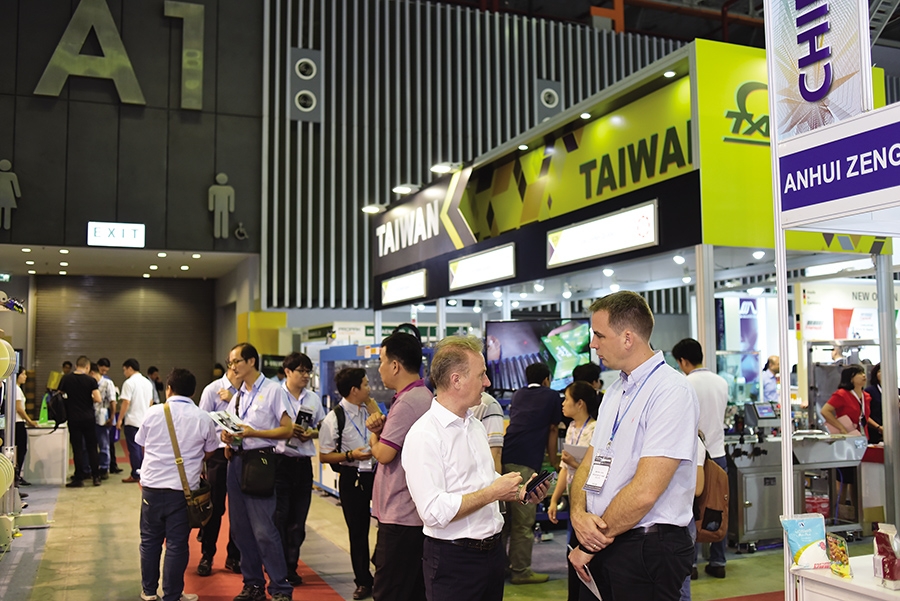
Economic growth and increasing consumer demands are some of the factors stimulating the development of the domestic printing and packing industry.
According to the Vietnam Printing Association, the sector has enjoyed growth of 15-20 per cent in recent years. In Ho Chi Minh City, it alone accounts for 60-65 per cent of the country’s total market share, whilst enjoying annual growth of 15 per cent annually.
According to the Mechanical Engineering Industry Association’s data, the food processing and packaging sector will likely grow by 38 per cent between 2015 and 2020, leading to a 25 per cent raise in the demand for machinery, printing, and packaging materials.
The 14th edition of ProPak Vietnam is set to take place from March 19-21 at Ho Chi Minh City’s Saigon Exhibition and Convention Centre. The event promises a creative platform to find potential business partners and admire the latest technologies in the processing and manufacturing industry.
Each edition of ProPak Vietnam focuses on educational programmes and features seminars and technological forums supported by foreign and local organisations.
Participants at the event will have the chance to share the most innovative technologies in use around the world. Also on offer are lectures and seminars featuring popular industry players such as Vietnam Association of Food Science and Technology (VAFoST), Multi Engineering Solutions Laboratory (MESLAB), Research and Development for Innovation (RDI Vietnam).
Having accompanied ProPak Vietnam for years, VAFoST is considered as one of the leading players in promoting the development of the industry. A seminar titled “Food Engineering and Packaging for Sustainable
Development”, moderated by Prof. Luu Duan, will provide a wide range of information.
In addition, MESLAB will present two seminars which aim to improve customer experience and product communication.
Making their debut at ProPak Vietnam, RDI Vietnam promises to attract participants with a lecture focusing on empowering research and development, technological applications, and the development of new business models for the packaging industry in the context of Industry 4.0.
Workshop seeks to aid farmers with hi-tech agriculture

Guests visit Ecofarm's hi-tech farm in the Mekong Delta province of Dong Thap
A workshop was held in the Mekong Delta province of Hau Giang last week to show farmers how to adopt hi-tech agricultural practices.
Held by the People’s Committee of Hau Giang Province, the Saigon Times Group and the province’s television station HGTV, the workshop, called “Helping farmers farm smartly,” saw the attendance of around 150 officials, scientists, entrepreneurs and farmers.
The province’s chairman, Le Tien Chau, said the workshop was aimed at contributing to the adoption of Prime Minister Nguyen Xuan Phuc’s directive on transforming the agricultural sector in the province from agrochemical to organic and smart agriculture, and further developing services and processing and supporting industries to serve the sector.
Chau noted that the agricultural sector is being restructured in the province at an accelerated pace. The move is meant to promote sustainable production and develop new rural areas in the advent of the Fourth Industrial Revolution, or Industry 4.0.
Since 2018, the province has been promoting green economy models toward smart agriculture and the creation of development links aligned with a market mechanism based on the logistics platform, with seafood, vegetables and rice as priorities.
The province has set up a 5,200-hectare hi-tech agriculture complex in the outlying district of Long My, and has offered many supporting policies for residents and investors to develop 4.0 agriculture and clean agriculture, as well as value chains for farming produce.
However, according to the local leader, many farmers are unsure of how to apply new technologies in the 4.0 platform. As a result, more polices are needed to facilitate their production chains in order to help raise the value of their products and increase their income.
Nguyen Duy Can, head of the Faculty of Rural Development at Can Tho University, pointed out that the agricultural sector in the province has a small production scale, insufficient information technology infrastructure, and limited knowledge among the manpower.
“This is why we need to develop a mindset to approach Industry 4.0 and apply advanced technology,” he said. Hau Giang has the potential to take this foward across various fields, such as rice production, basa fish breeding, and the combined cultivation of aquaculture and flowers or vegetables.
“The Faculty of Rural Development at Can Tho University is located in Hau Giang, which is advantageous to the exchange and development cooperation, especially in the field of hi-tech application,” he said.
Nguyen Hong Quang, general director of Ecology Farming Corporation (Ecofarm), said his company used to support watermelon and seedless lemon projects, in line with the Vietnamese Good Agriculture Practice standards, in Hau Giang.
Ecofarm plans to invest in smart agriculture projects combined with tourism in the province. “We are also willing to share information and resources with local agencies, firms and farmers,” he added.
After 15 years of establishment, Hau Giang Province has waterways and road transport routes, which link with the entire Mekong Delta region and HCMC. Last year, local farmers produced around 1.3 million tons of rice, 300,000 tons of fruit and 70,000 tons of seafood.
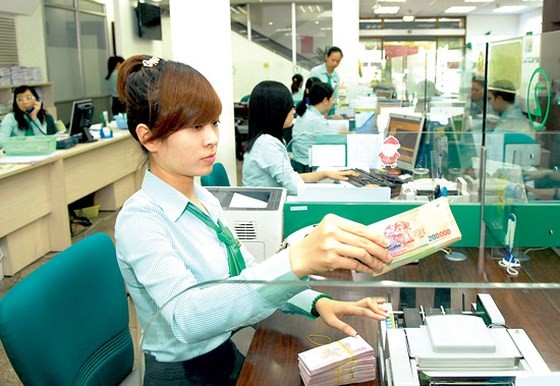
According to the project to restructure securities and insurance markets in the period of 2020 to 2025, the size of securities market is aimed to increase to 100 percent of gross domestic product (GDP) by 2020 and 120 percent of GDP by 2025, hereby increasing the number of investors participating in the market.
Currently, there are 2.2 million accounts being opened on the market, of which there are nearly 30,000 accounts of foreign investors. The project also sets a goal to attract one million more new investors on securities market after a year.
In order to increase market size, the project also draws up schedule to promote equitization and punish enterprises violating regulations on listing and trading registration after equitization. Accordingly, all joint stock commercial banks must list and register for trading on securities market by the end of 2020.
China remains largest iron, steel supplier to Vietnam
China remains the largest iron, steel supplier to Vietnam, according to the General Department of Customs’ statistics.
Statistically, Vietnam imported 1,15 million tons of iron and steels in January, a slight increase of 2.2 percent compared to the previous month.
Specifically, China remained its position as the leading exporter of iron and steel to Vietnam with 526,764 tons worth approximately $347,38 million, accounting for 45.7 percent of national iron and steels import and 43.4 percent of total turnover; followed by South Korea with 139.890 million tons of iron and steels worth $112.75 million and Japan with 146.924 tons worth $98.02 million, which made up 12 percent of the country’s quantity and import turnover of iron and steels.
According to the Foreign Trade Agency under the Ministry of Industry and Trade, exports of clinker and cement continued to post strong growth, reaching roughly 2.5 million tons, worth US$105 million in February.
With an average export price of $42 per ton, up 18.3 percent, cement exports were 15.2 percent higher in volume and 36.3 percent higher in value compared to the same period last year. In the first two months, cement exports touched 5.37 million tons, worth $228 million, up 7.4 percent in volume and 29.9 percent year on year.
The Philippines, China and Bangladesh remained the three main export markets of Vietnamese cement with 2.1 million tons, accounting for more than 75 percent of total clinker and cement exports of the country.
From 2017 to now, China increased importing clinker from Vietnam, contributing greatly to export growth of clinker and cement. Cement exports to China exceeded 21 million tons in 2017 and reached 31.6 million tons, worth more than $1.24 billion last year.
Consumption of cement from the beginning of this year was sluggish on domestic market. According to cement manufacturers, as the Tet holidays fall on January and February, the consumption of cement was poor.
Telephones and spare parts lead export revenue

In the first two months of 2019, overseas shipment of telephones and spare parts was estimated at US$ 6.79 billion, making it the largest hard currency earner, according to the Ministry of Industry and Trade (MoIT).
The MoIT reported that in the January-February period, eight commodities joined the US$ 1 billion export club. Most of them belonged to the processing industry.
Telephones and spare parts led the group with US$ 6.79 billion; followed by garments and textiles with US$ 4.89 billion; computers and spare parts with US$ 4.16 billion.
Overseas shipment of footwear ranked fourth with US$ 2.67 billion. Machines and spare parts brought home US$ 2.63 billion of export revenue.
Transport vehicles and spare part export earned US$ 1.4 billion of export revenue. Furniture export recorded US$ 1.38 billion of export turnover.
In the first two months, agricultural export revenue was estimated at US$ 3.41 billion, representing a year-on-year decrease of 11.8%. Noticeably, seafood export earned US$ 1.09 billion of export revenue.
Largest solar power plant inaugurated
Deputy PM Truong Hoa Binh attended the inauguration ceremony of the cluster of Srepek 1 and Quang Minh solar power plants in Buon Don district’s Ea Wer commune in Dak Lak province later last week.

The inauguration ceremony of the cluster of Srepek 1 and Quang Minh solar power plants, Dak Lak province, March 10, 2019 - Photo: VGP
The cluster of Srepek 1 and Quang Minh solar power plants has a combined capacity of 100MWP. It covers 120 hectares in Ea Wer commune, Buon Don district, with an investment capital of more than VND2.2 trillion (US$94.6 million).
The project started its construction work on October 19, 2018 and was put into commercial operation on January 31, 2019. It is currently the largest operating solar power plant project in Viet Nam.
Addressing the event, the Deputy PM emphasized Dak Lak’s extremely important strategic position in terms of economic development, security and defense in the Central Highlands region.
The development of renewable energy is a trend of the world and Viet Nam, especially Dak Lak province which possesses huge potential for solar power development, with an annual average solar irradiance of roughly 1,900 kW per square kilometers.
In addition to the Srepek 1 and Quang Minh solar power plant cluster, the future inauguration of many other solar power projects in the province will contribute significantly to local socio-economic development and ensuring national energy security.
He asked the investors and businesses, who are engaging in solar power development in Dak Lak and other localities, to implement the projects in line with sequence and procedures, operate the plants in accordance with the relevant processes, and especially pay attention to the issue of environmental protection during the process of handling and replacing batteries.
The Deputy PM called upon relevant agencies and localities to continue creating favorable conditions for investors to explore and establish solar power projects, aiming to effectively tap into local potential and advantages, create jobs, improve people’s income and contribute to socio-economic development.
HCM City to host int’l telecom, IT and communications products and services expo

Visitors at the Vietnam ICTComm 2018 expo. This year the event will be held at the Saigon Exhibition and Convention Centre from June 6 to 8.
Vietnam ICT COMM 2019, an international exhibition on products, services of telecommunications, information technology and communications, to be held in HCM City in June, will offer local and foreign companies a chance to network and explore business opportunities.
In line with market trends, Vietnam ICT COMM 2019 will continue to focus on products and technologies that support enterprises involved in sectors such as manufacturing, trading, finance, banking and construction.
Vietnam BROADCAST 2019, which is part of Vietnam ICT COMM 2019, will focus on leading new advanced technology trends from many countries, offering visitors a chance to experience top-notch equipment and technology in the communications industry, from cable to internet to satellites.
A wide range of technologies will be featured, including IoT, Blockchain, Big Data, AI, AR, VR, OTT, Pro-Audio, and Live production.
Vietnam ELECTRONICS 2019, another division of the Vietnam ICT COMM framework, will introduce new products and technologies, and update trends and solutions in the electronics sector such as connector accessories, mobile phone accessories; sound and light equipment, and others.
According to the organisers, domestic and foreign enterprises will be able to promote products and services, find customers and potential partners, and attract investment.
Businesses will be able to share ideas, contributing to the country’s telecom, IT and communications industries.
The scale of the exhibition this year is bigger by 30 per cent over 2018, with the participation of nearly 300 exhibitors from many countries and territories, including South Korea, Japan, Singapore, the US, mainland China, India, Thailand, Malaysia, Hong Kong, Taiwan and the host Viet Nam.
To be held by Adpex JSC in collaboration with the Viet Nam Internet Association, Viet Nam Association for Information Processing, National Agency for Technology Entrepreneurship and Commercialisation Development, and Viet Nam Climate Innovation Centre, the exhibition will be held at the Saigon Exhibition and Convention Centre from June 6 to 8.
.svg)
