 Vietnamnet.vn

 Podcast



New opportunities await exporters
The Vietnam Trade Promotion Agency under the Ministry of Industry and Trade, alongside Amazon Global Selling will be selecting 100 potential Vietnamese enterprises that meet Amazon’s criteria to introduce on the online retail platform. Thus, Vietnamese businesses will have many opportunities to expand exports via e-commerce to more than 300 million buyer accounts worldwide on the prestigious retail site.
According to the General Statistics Office of Vietnam, in 2018, the country had nearly 700,000 businesses, of which small- and medium-sized enterprises accounted for more than 98 percent. Many businesses still face difficulties in reaching the international market or online sales channels.
As such, the Amazon Global Selling programme has opened up great opportunities, especially for products such as handicrafts, textiles, leather and footwear, and consumer products.
Amazon will offer direct and online sales skills training, intensive support and advice, as well as discounted prices with local service providers throughout the Amazon sales process.
Besides, the 100 selected businesses will have the opportunity to participate in the second phase of the plan, focusing on the brand development of Vietnamese businesses and goods in the Amazon e-commerce environment.
It’s expected that Vietnamese businesses can reach more than 300 million Amazon user accounts worldwide regularly through this e-commerce platform. It is also an important channel to promote and export Vietnamese goods globally .

Director of the US Agency for International Development (USAID)’s Environment and Social Development Office Christopher Abrams has suggested Vietnam should pool domestic resources to develop renewable energy and import natural gases to increase their supply in the future.
In a recent interview with Vietnam News Agency, Abrams said Vietnam and other countries have recognised that clean and renewable energy is the future of the energy sector. With annual economic growth of 6-7 percent, Vietnam’s energy demand will increase by 10 – 11 percent between now and 2030.
The capacity of the domestic power sector is about 40 GW annually. As of this June, the country will have nearly 2,000 MW of solar power, a figure which has surged some 2,000 percent over the past three years.
According to him, Vietnam’s challenge in the next 5-10 years is managing discontinuous power resources and transmission systems to bring power to areas in demand.
The power development master plan VIII will be announced in the near future, which will devise measures to enhance the use of renewable energy apart from thermal power and natural gases, join wholesale and auction markets, as well as public – private partnerships in building transmission systems.
Lauding the potential of solar power from roof tiles, Abrams said it is also the future of dispersive power systems, dubbed “customer-oriented” systems, meaning that customers are also power producers.
He said the interaction between roof-tile solar power and the national grid, power purchase prices and taxes need to be clarified, adding that the USAID is assisting the Ministry of Industry and Trade (MOIT) and the Vietnam Electricity in the issue, including by building the power development master plan VIII based on its experience and expertise.
Accordingly, the MOIT will revise measures to ensure diverse and effective power supply by 2030.
Abrams also said Vietnam is home to a huge source of fossil fuel which is necessary for power development in the next three decades.
The USAID, other sponsors, domestic and foreign businesses are ready to help Vietnam achieve its goals, he said.
The newest movements in the dispute between Vietmindo and TAVIBA
Indonesian company PT. Vietmindo Energitama (Vietmindo) held a press conference in Hanoi to inform media about the newest developments in its dispute with Tan Viet Bac (TAVIBA).
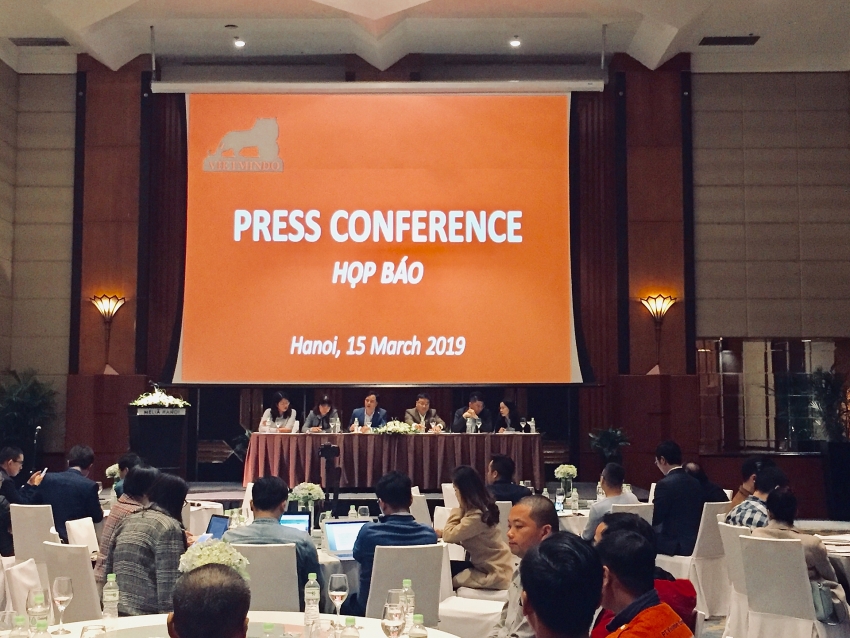
Besides reporters from different media agencies, company representatives, and their lawyers, 40 workers of Vietmindo also participated in the conference to answer all questions of the media.
Addressing the conference, Hendra Gumawan, CEO of Vietmindo, said that although Vietmindo strictly adhered to Conclusion No.24/TB-UBND issued by the Uong Bi People's Committee after the meeting on January 17, 2019 and transferred VND20 billion ($869,600) to TAVIBA, the other side did not move its vehicles and equipment from the mine, and the municipal authorities did not provide support in removing the obstacles from the mining site.
On March 12, Vietmindo sent a document to the Chairman of the Uong Bi People’s Committee and the Chief of Uong Bi Public Security. Accordingly, the company’s legal team requested the administrative and justice agencies to uphold the agreement between Vietmindo and TAVIBA and resolve the contractual dispute which should have been forwarded to the Singapore International Arbitration Centre (SIAC).
Besides, the lawyer also required the authorities to take the appropriate measures to punish TAVIBA’s employees for disturbing and obstructing normal activities at the site, agitating Vietmindo’s employees, and causing public disorder, as well as holding and using illegal weapons like guns.
In response, the Quang Ninh People’s Committee released Document No.1530/UBND-NC dated March 13, 2019 on ensuring security and order inside and outside the mining site of Vietmindo and Document No.534/UNND-NC dated March 13, 2019 in which the two companies are required to solve the dispute according to the agreement mentioned in the signed contract and the dispute should be handled by March so that the two sides can continue mining activities.
Meanwhile, according to Pham Xuan Manh, deputy director of TAVIBA, the company has reported the situation to the Supreme People's Court of Vietnam. To carry out the contract with Vietmindo, TAVIBA invested VND200 billion ($8.7 million) in machines, dozens of billions of VND in building, upgrading, and repairing roads, drainage system, infrastructure, and hired 300 permanent workers. “Vietmindo’s contract termination caused TAVIBA huge losses,” Manh said.
According to Manh, since carrying out the contract in 2015, TAVIBA did not violate the contract’s provisions, except for a single quarter in which they could not finish the target and TAVIBA compensated Vietmindo for the loss caused. Besides, TAVIBA timely corrected their mistake by increasing the output in the next quarters and the output for the whole year was even higher than the target.
At the moment, VIR is trying to connect the authorities of Uong Bi city and Quang Ninh province to provide coverage of the newest developments.

Mai Duc Loc, Deputy Chairman of the Vietnam Journalists Association speaks at the event.
A forum took place in Hanoi on March 16 to discuss the role of the press in linking the business community with the Government in the context of the Comprehensive and Progressive Agreement for Trans-Pacific Partnership (CPTPP) officially taking effect on December 30 last year.
The forum delved into opportunities and challenges that the pact brings to Vietnamese firms and the role of the press in seeking measures to address such challenges.
Participants agreed that the business community needs the media to get useful information and advertise their products and services, while entrepreneurs and businesses offer diverse topics to reporters and a source of financial assistance to media agencies.
Delegates underlined that both the press and business community take part in monitoring the implementation of the Government’s policies, particularly in administrative reform. The media has also contributed to helping firms increase domestic competitiveness and boost international economic integration, they added.
Mai Duc Loc, Deputy Chairman of the Vietnam Journalists Association (VJA), said the VJA has organised regular social activities to help connect enterprises with Party and State leaders, social organisations, and their foreign peers.
The forum was held as part of the ongoing National Press Festival 2019, themed “Renovated, creative, responsible Vietnamese press for the interests of the nation and people”. This year, the festival attracts 85 centrally-run press agencies and local journalist associations.
Hanoi launches practical activities to observe Vietnam’s Consumer Rights Day 2019

Representatives from the organisers press the button to launch a campaign in response to Vietnam's Consumer Rights Day 2019, Hanoi, March 16.
A meeting was held at Trinh Cong Son pedestrian street in Hanoi on the evening of March 16, in response to Vietnam’s Consumer Rights Day 2019 (March 15).
Celebrated on a national scale annually in March, the day aims to raise awareness on the importance of protecting the rights and interests of consumers, as well as affirming the role, position and importance of protecting consumers' rights alongside stable and sustainable development of the economy and society.
According to Deputy Head of the Hanoi municipal Department of Industry and Trade Nguyen Thanh Hai, consumer protection is the protection of the whole society, as every citizen is a consumer. In fact, the Consumer Protection Law has been issued and widely propagated to help consumers be aware of their legitimate rights, which are protected by law.
In addition to gratitude activities for consumers, this year’s programme also focuses on promoting propaganda and the dissemination of legal knowledge to consumers in the capital city, especially high school students, who are the future consumer class that are gradually forming consciousness in their shopping activities.
Following the meeting, the "Enterprises paying tribute to consumers" week was launched and will take place from March 17 to 23 at 70 trading venues across Hanoi, offering gifts, discounts, warranty support and product maintenance services for consumers.
From April 19 to 23, the "Product and goods festival for consumers" programme will take place with 50 stores run by prestigious brands and enterprises at Big C Thang Long supermarket campus, No. 222 Tran Duy Hung street, Cau Giay district.
Hoa Sen Group exports 15,000 tonnes of tole to European countries

A worker at Hoa Sen hot-dip galvanised steel pipe plant during his working hours.
Steel maker Hoa Sen Group stated on March 16 that it has exported 15,000 tonnes of tole worth more than US$11.5 million to the UK, Germany and Italy.
The announcement was made at an inauguration for its new Hoa Sen hot-dip galvanised steel pipe plant and to announce the successful deployment of its enterprise resource planning (ERP).
Hoa Sen currently leads the domestic tole market, accounting for nearly 34% of the total galvanised tole and 18% of the steel pipe market share. In 2018, Vietnam's galvanised steel export volume reached 1.75 million tonnes, of which Hoa Sen's contributed the most at over 639,000 tonnes, accounting for nearly 37% of the total export.
The group’s products are present in more than 75 countries and territories, especially in markets requiring high standards of quality, such as the US, Europe, and the Middle East.
Earlier, in February, Hoa Sen signed a contract to export 4,300 tonnes of tole worth roughly US$3.7 million to Mexico.
Its newly-inaugurated 5.3ha factory is located in Phu My 1 Industrial Zone in Ba Ria-Vung Tau province. The VND500 billion plant has a design capacity of manufacturing and supplying 85,000 tonnes of high quality hot-dip galvanised steel pipes to the market per year.
In addition to investment in technical improvements and the application of modern technology in production, after nearly two years piloting, Hoa Sen announced to officially put the ERP system into operation. With a network of a parent company, more than 10 factories and over 500 retail stores nationwide, the successful operation of ERP is expected to help the group improve its management efficiency and reduce operating costs.
Nam A Bank approved to open 35 transaction offices
Nam A Commercial Joint Stock Bank (Nam A Bank) has been approved by the State Bank of Vietnam to open 35 new transaction offices under the restructuring project’s second phase (2018-2020) and has been appointed to participate in restructuring three people's credit funds in Dong Nai province.
In addition, credit ratings agency Moody’s Investors Service has assigned its first ratings and assessment for Vietnam’s Nam A Bank, giving it a B2 stable outlook.
The information was given in Official Letter No. 187/2019 / CV-NHNA-01 dated March 15, 2019.
Accordingly, as of December 31, 2018, Nam A Bank's total assets reached VND75,000 billion, growing nearly 40% compared to 2017, reaching 114% of the plan; profit reached VND750 billion, nearly double compared to 2017 and reached 230% of the plan; and the number of customers reached nearly 450,000, doubling that of 2017.
In addition, before the information related to stock disputes between shareholders, Nam A Bank affirmed that the disputes (if any) are completely civil relations between shareholders, not related to the business activities of Nam A Bank - a public company operating publicly, transparently and strictly complying with the current legal regulations.
Forum discusses press - businesses ties in CPTTP era
Mai Duc Loc, Deputy Chairman of the Vietnam Journalists Association speaks at the event
A forum took place in Hanoi on March 16 to discuss the role of the press in linking the business community with the Government in the context of the Comprehensive and Progressive Agreement for Trans-Pacific Partnership (CPTPP) officially taking effect on December 30 last year.
The forum delved into opportunities and challenges that the pact brings to Vietnamese firms and the role of the press in seeking measures to address such challenges.
Participants agreed that the business community needs the media to get useful information and advertise their products and services, while entrepreneurs and businesses offer diverse topics to reporters and a source of financial assistance to media agencies.
Delegates underlined that both the press and business community take part in monitoring the implementation of the Government’s policies, particularly in administrative reform. The media has also contributed to helping firms increase domestic competitiveness and boost international economic integration, they added.
Mai Duc Loc, Deputy Chairman of the Vietnam Journalists Association (VJA), said the VJA has organised regular social activities to help connect enterprises with Party and State leaders, social organisations, and their foreign peers.
The forum was held as part of the ongoing National Press Festival 2019, themed “Renovated, creative, responsible Vietnamese press for the interests of the nation and people”. This year, the festival attracts 85 centrally-run press agencies and local journalist associations.
New decree on internal audit helps Vietnam’s listed companies enhance governance: PwC
"How to set up, enhance and standardize the IA function? This is the key question that listed companies have to ask themselves before the decree takes effect,” said Hoang Hung, partner and Vietnam Markets leader of PwC Vietnam at a workshop held in Ho Chi Minh City and Hanoi on March 14 and 15, 2019.
Themed "The updated regulatory requirements for internal audit & establishing an effective internal audit function for listed companies”, the workshop was organized by Smart Train in collaboration with the Asian Confederation of Institutes of Internal Auditors (ACIIA) and the Hanoi and Ho Chi Minh City stock exchanges.
According to experts at the event, the role and responsibility of IA in many Vietnamese organizations are currently misinterpreted or overlapping with internal controls or compliance functions, as a support to the senior management.
Meanwhile, as per international practices, IA is an independent supervising function and a third line of defense for businesses. This function regularly reviews and evaluates the internal controls, risk management and governance within the organization in an objective and independent manner. Thus, IA can bring many practical values, effectively helping the Board of Directors in governance and strategic decisions.
Hung said the contents of Decree 05 are in line with international practices on IA and aimed at enhancing information transparency and corporate governance. This is the first comprehensive legal framework that lays out how to organize and implement IA, as well as the roles and responsibilities of IA and related stakeholders.
Target groups (including listed companies) will have 24 months from this date to complete necessary preparations to implement IA in accordance with the decree. This is not considered a long period time, especially for organizations that have never had an IA function before.
This is because the establishment of a new internal audit function requires a detailed strategy and plan with complex steps. Therefore, the target groups of the decree will need to step up their efforts right now.
“In the process of preparation, businesses will need to focus on some decisive attributes,” Hung added. “These include the services and roles of IA, its people management, professional practices, performance management, organizational relationships, and governance structure, among others.”
Hung also advised that companies set up a detailed plan for the implementation of the IA function. With this in hand, the Board of Directors will be able to know whether they should hire external audit professional, partner with a professional service providers, or choose something in between depending on the current situation of the business.
Experts at the workshop also shared an expectation that in the coming time, the authorities will soon issue more specific guidelines for the implementation of Decree 05, helping IA to really become a part of many businesses.
Non-market based policies restrict development of Vietnam’s private sector: Experts
Experts said non-market based policies are restricting the development of Vietnam’s private sector and undermining competition in the business environment.
An unclear role definition of each economic component has led to unfair treatment and inefficient allocation of resources, said Bui Quang Tuan, head of the Vietnam Institute of Economics at a conference on March 15 discussing the development prospect of Vietnam’s private sector.
“The private sector is considered a driving force of Vietnam’s economy, but its contribution remains modest at 8% of the GDP,” said Tuan.
Vietnam currently has 700,000 enterprises, of which small-and medium-sized enterprises account for 98%.
According to Tuan, insufficient support from the legal framework and business environment is the major reason restricting the development of the private sector.
Tuan referred to Vietnam moving down one notch from the 68th to 69th place out of 190 economies in the World Bank’s 2019 Ease of Doing Business ranking, although its score went up 1.59 points compared to a year earlier to 68.36 out of a 100-point scale.
Sharing the same concern, economist Tran Dinh Thien said the private sector was the main factor driving Vietnam out of the economic crisis in the 80s, however the sector needs more support to develop.
“As of present, Vietnam has not had an appropriate strategy for the development of domestic enterprises, while current policies only focus on increasing the number of enterprises but not for long-term growth,” Thien stressed.
Notably, the long-overdue preferential treatment for the FDI sector has disrupted the economic model, in which incentive is considered key strategy for attracting investment capital instead of efficient legal system, Thien stated.
Thien also expressed concern over the slow progress in privatizing state-owned enterprises, which currently have huge amount of resources at their disposal.
Recently, the private sector has seen improvements in the rise of some leading corporations, however, they are facing a risky business environment with potential legal trouble in the future.
For the private sector to fulfil its role as growth engine of Vietnam's economy, Thien expected the government to focus on restructuring the economy and revise the growth model, which should be based on Vietnam’s commitments during the process of global integration.
“It is a substantial change in the institutional system and higher state governance capability that could help the development of Vietnam’s private sector,” Thien concluded.
Over 100 tons of clam in Ben Tre die due to high salinity level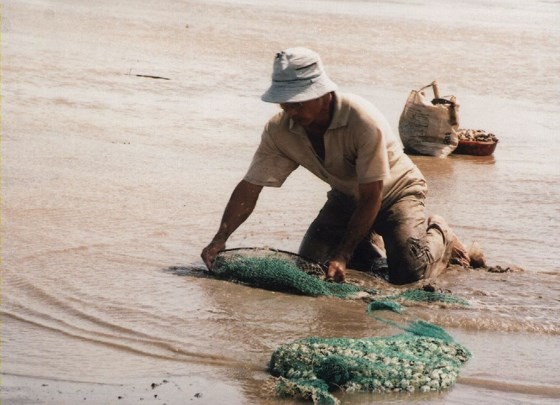
Clam breeders in the Mekong delta province of Ben Tre said that over 100 tons of the saltwater creature died due to high salinity level in water.
Many household farms and cooperatives in the province reported death of clam.
Specifically, from early March till now, An Thuy Cooperative in Ba Tri District has reported deaths of 10 percent of clam or over 100 tons of clam. The cooperative is breeding clams in 100 hectare farm.
Meanwhile Bao Thuan and Tan Thuy in the district also reported dead clam with rate of 5 percent.
Responsible agencies pointed out the culprit of clam deaths that is high salinity level to 20 -29 per thousand.
Agricultural agencies have guided breeders how to prevent the incident, warning cooperatives to regularly clean up and collect dead clams to curb environment pollution as well as early harvesting to minimize losses.
Village in central province certified with fish sauce handicraft village
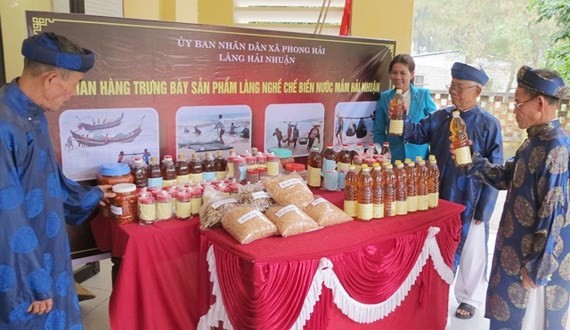
People’s Committee in Phong Dien District in the central province of Thua Thien – Hue yesterday organized a meeting to receive the certificate of fish sauce handicraft village of Hai Nhuan.
Hai Nhuan villagers live on fishing, shrimp breeding and making aquatic products. Fish sauce made in the village is family business passing down from generation to generation.
Fish sauce production procedure from choosing material to finished products is observed closely and made in traditional methods “ three fish one salt” without adding by-products and chemicals.
Hai Nhuan fish sauce has been consumed largely in the local and foreign markets.
Presently, over 200 households in Hai Nhuan village make fish sauce to produce 130,000 liter of fish sauce a year.
Vietnam’s economic structure is alarming: expert

Veteran economist Tran Dinh Thien, former director of the Vietnam Institute of Economics, speaks at the forum on March 15
Vietnam’s economic structure has many alarming issues after 30 years of economic reforms since the private sector accounts for less than 10% of the country’s gross domestic product, while the public and household sectors, making up the larger proportion of GDP, have the largest number of competence issues.
Veteran economist Tran Dinh Thien, former director of the Vietnam Institute of Economics (VIE) and a current member of the prime minister’s economic advisory team, made the statement while attending a forum on the development prospects of Vietnam’s private sector in 2019, held by the VIE in Hanoi on Friday, March 15.
Thien noted that the national GDP is mainly dependent on the public sector (28%) and the household sector (32%). However, the economy’s main drivers have competence issues.
The household sector has the smallest and weakest workforce, while the State economy operates quite inefficiently, incurs major losses and bad debts and wastes natural and other national resources, according to the economist.
The weak competitiveness of these sectors will make it challenging for them to become the pillars of the economy in the course of Vietnam’s global economic integration, he said.
He added that the domestic private sector should, in principle, be the main contributor to the GDP, but it currently contributes less than 10% after 30 years of economic renovation.
He cited statistics as indicating that 95-96% of the total number of businesses belong to small and micro-sized enterprises, while those on a medium scale make up a mere 1.7% of the total. This may prove that these private enterprises are difficult to grow in scale, while their workforce may not be good enough to transform them into major companies.
In contrast, the foreign direct investment (FDI) sector accounts for up to 20% of the GDP since these firms have advantages that are superior to Vietnamese private enterprises in terms of financial strength, governance capacity, market power, technological capability and ability to engage in global production chains, according to Thien.
Further, he added that FDI firms make the most of the Government’s incentives. In addition to natural incentives, labor, natural resources, geography and the market, they also enjoy preferential policies on land, taxes and competition to attract investment from them.
He said that these incentives are not allocated to Vietnamese private enterprises, while Vietnamese firms are legally bound to a slew institutions, policies and regulatory procedures, such as interest rates and exchange rates.
Private firms have difficult access to resources, especially land, because the majority of these resources are in the hands of State-owned enterprises, according to Nguyen Quang Huan, vice president of the Vietnam Private Business Association.
He added that private enterprises and household businesses lagged behind their global competitors when Vietnam joined the World Trade Organization in 2007 due to their small, scattered production and business activities, outdated techniques and weak competitiveness.
Ba Ria-Vung Tau approves two solar power projects

Ba Ria-Vung Tau has given the green light to two solar power projects in Chau Duc District. In this file photo, two employees are at work at a solar power plant on Con Dao Island off the province
Ba Ria-Vung Tau Province has approved two solar power projects in Chau Duc District, proposed by HCMC-based investors, with total capital exceeding VND1.5 trillion, reported Vietnamplus.
Energy Co., Ltd. was licensed to develop Tam Bo Reservoir solar power plant project at Tam Bo Reservoir. The plant, covering some 40 hectares of the lake’s water surface and valued at over VND790 billion, is to be operated for 49 years. With a peak capacity of 35 megawatts, it can generate annual output of more than 52,000 MWh.
The energy company was asked to work with district authorities to select an appropriate architectural design for the plant, so that it will not negatively impact the landscape of the nearby Kim Long Urban Center.
Also, the DTD Natural Energy Investment Co., Ltd. will build a 35-MWp solar power plant, covering 40 hectares of water surface in Gia Hoet 1 Reservoir, for the same duration of operations. This project will cost an estimated VND760 billion.
The two projects are located within Quang Thanh Commune.
The provincial government requires both investors to work with competent agencies to complete essential procedures, implement the projects in line with prevailing regulations, and demonstrate remedial environmental measures, in case of incidents.
They must also ensure that construction of the projects will not affect the quality of water and structure of the reservoirs, as well as surrounding landscapes.
Vietnam posts trade deficit of US$64 million in Jan-Feb
Steel rolls are unloaded from a vessel. Vietnam ran a trade deficit of US$64 million during the first two months of 2019.
Vietnam reported a trade deficit of US$768 million last month, leading to a total deficit of US$64 million in the first two months of 2019, according to statistics from the General Department of Vietnam Customs.
In February, Vietnam recorded export revenue of US$13.91 billion, but spent US$14.67 billion on imports, plunging 37% and 31% over the previous month, respectively. The slide was attributed to the long Tet holiday.
In the first two months of the year, the country imported goods worth some US$36.18 billion, while its export revenue totaled US$36.11 billion, a year-on-year increase of 5.8% and 4.2%, respectively.
However, the foreign direct investment sector generated a trade surplus of US$3.76 billion, while domestic companies were responsible for the deficit.
In the two-month period, there were five foreign markets generating export revenue of more than US$1 billion each for Vietnam, including the United States (US$8.18 billion), the European Union (US$6.18 billion), China (US$4.72 billion), Japan (US$2.94 billion) and South Korea (US$2.92 billion).
Particularly, exports to China edged down 16.3%.
On the other hand, imports from seven markets to Vietnam were valued at more than US$1 billion each, including South Korea, the European Union, the United States, China, ASEAN, Japan, Taiwan and South Korea.
Luxury British sports car enters Vietnam
Guests have a look at an Aston Martin sports car at the launching event in HCMC on March 16
Aston Martin - the iconic luxury British sports car brand - made its debut in the Vietnamese market today, March 16, marking a new milestone for the luxury sports car segment in Vietnam.
The Aston Martin is being displayed at a showroom in the Deutsche Haus building on Le Duan Blvd in HCMC’s District 1.
Phan Manh Ha, general manager of CT-Wearnes Vietnam, the official Aston Martin authorized dealer in Vietnam, said at the launching that there is a rising demand for luxury cars in Vietnam, not only for collecting, but for daily commuting.
“It’s time for Aston Martin, the iconic British sports cars brand, to set its footprint on the local market,” Ha said.
According to High Net Worth Handbook 2019 of Wealth-X, Vietnam is expected to join the top four rankings of fastest-growing high net worth countries.
In 2018, the number of millionaires in Vietnam had risen to 12,317, increasing 23% in the last five years.
Meanwhile, the Knight Frank Wealth Report predicts that the number of millionaires in Vietnam will increase 28%, higher than the average in Asia (21%) and the world (19%) in the next five years.
At the launch, the dealer displayed the Aston Martin DB11 and New Vantage - the first two models delivered under the company’s Second Century Plan.
Aston Martin has described the New Vantage as a “predatory beast” due to its 4.0L twin-turbo V8. The new Vantage is able to accelerate from 0 to 100 km/h in 3.6 seconds and achieve a maximum speed of 314 km/h.
Meanwhile, DB11 is the most powerful and efficient model in the famous DB line of Aston Martin. The car comes standard with a twin turbocharged V8 510 horsepower engine. The DB11 V8 model can accelerate from 0 to 100 km/h in 4 seconds, reaching a maximum speed of 301 km/h.
Wearnes Automotive Pte Ltd is a leading premium car distributor in Asia-Pacific, with dealerships in Singapore, Malaysia, China, Hong Kong and Vietnam.
Residential, office sectors stay upbeat
Residential players remained active in the fourth quarter of 2018 while office continued to be one of the most exciting property sectors across the region, as reported by real estate services provider Savills Vietnam.
As stated in its newly-released Vietnam real estate investment report for the fourth quarter of 2018, Savills Vietnam highlighted a number of thriving developments in the domestic market.
In particular, VinaCapital Opportunity Fund Limited (VOF) transferred 34.18 per cent interest in Green Park Estate, a 15.7-ha mixed-use development project in Tan Phu district, Ho Chi Minh City. Another VinaCapital fund – Vinaland – owns 63.47 per cent interest in the project but it plans to divest in the near future.
Meanwhile, Vinhomes, a subsidiary of the conglomerate Vingroup and a reputable local developer, announced plans for two new township projects in Hanoi, including Vincity Ocean Park in Gia Lam district and Vincity Sportia in Nam Tu Liem district. These major projects will provide a comprehensive range of facilities and parks for health, education, entertainment, leisure, and outdoor sports.
Office continued to be one of the most exciting property sectors across the region. Ho Chi Minh City enjoyed the best performance in the past five years, with average rents surging by 8 per cent on year and a very high occupancy rate of 97 per cent.
Seeing great potential in the market, WeWork, a US-based co-working space provider, entered Vietnam with its first flagship site at E-Town Central in Ho Chi Minh City.
Hanoi recorded a year on year hike of 3 per cent in average gross rent with improved Grade A performance in non-central business district (CBD) areas.
“There is massive interest from foreign investors at the moment. At the Savills Hanoi, Danang, and Ho Chi Minh offices, we are seeing many investor groups each day, mostly new entrants, who are keen to explore opportunities”, said Matthew Powell, Director of Savills Hanoi.
He revealed this interest is mainly coming from the region, including Japan, the Republic of Korea, China, Hong Kong (China), Singapore while US and European investors, and global funds are investigating heavily.
All the commercial and residential sectors are targets, said Powell, adding that most of the investor interest comes from funds who are not looking to develop, but are looking to acquire operating cash-generating assets – office properties, retail malls, 4 and 5 – star hotels.
“Looking into the future, we expect more deals in 2019 on asset, portfolio, and corporate investment level. The large number of initial public offering (IPO) valuation projects on which Savills Vietnam is working demonstrates investors’ interest in the property market.”
With many promising real estate sectors in the Vietnamese market, it is expected that investment flows will be directed to a wider variety of sectors, including opportunity assets like industrial and logistics properties, the Savills analyst said.
In 2018, Vietnam proved it was one of the world’s fastest growing economies, recording its highest GDP growth in the last ten years at 7.08 per cent year on year.
Foreign direct investment remains a key element helping to spur local economic development, with over 50 percent of newly-registered capital coming from the processing and manufacturing sector, boosting industrial real estate.
RoK steel businesses eye investment opportunities in Vietnam

Several steel businesses from the Republic of Korea (RoK) have outlined their plans to promote investments in the Vietnamese market, according to the Vietnam Chamber of Commerce and Industry (VCCI).
CEO of S&M Media Jung Won Bae said both big and small steel businesses from the RoK are keen on entering the Vietnamese market, noting that the country’s political stability in comparison with other emerging economies has gained the confidence of RoK businesses who have begun injecting their own capital into the market.
Additionally, amid the escalating US-China trade war, many RoK steel manufacturers are planning to relocate their production facilities from China to Vietnam in order to avoid tariffs from the US.
VN needs strategy to promote private firms

Seafood processed by workers of private Hong Ngoc Seafood Company at Phu Yen Province’s Hoa Hiep Industrial Park. Private firms, mostly small- and medium-sized enterprises (SOEs), are considered the spearhead of the Vietnamese economy but their contribution remains modest due to a lack of supportive policies.
Viet Nam needs a strategy to promote the development of private firms with a focus on quality, as their contribution to the economy remains modest, attendees heard at a conference in Ha Noi on Friday.
“After more than three decades of Doi Moi (Reform), Viet Nam does not have a true development strategy for private firms,” economic expert Tran Dinh Thien said at the forum about private sector development held by the Viet Nam Institute of Economics.
He said that more attention was now paid to how many firms were established rather than how healthy they were.
The economic structure of Viet Nam was showing considerable problems, Thien pointed out. He cited statistics showing that the private sector altogether contributed around 40 per cent to the country’s gross domestic product (GDP), of which, some 32 per cent was from business households and only eight per cent was from private firms. State-owned enterprises (SOEs) contributed around 28 per cent.
SOEs and business households were the two major contributors to GDP but they both had problems in capacity. Business households were of small scale while SOEs lacked efficiency in operation, Thien said, adding that these two forces were not major contributors to Viet Nam’s successful economic integration and international competition.
Private firms should be considered the major force of the economy, but their contribution to GDP remained modest at only eight per cent, he said. In comparison, the foreign direct investment (FDI) sector contributed 20 per cent to GDP.
“This is a problematic economic structure, making it difficult for private firms to develop.”
Thien said, for a normal economy, the contribution of the private sector to GDP should be around 60-70 per cent.
The problem was that about 96 per cent of private firms were of micro and small sizes, Thien said.
He pointed out that private firms faced a number of barriers, such as more difficult access to resources than other economic sectors.
The role of the private sector must be leveraged in the next five to seven years, he said, adding that private firms should be regarded as a dynamic driver of the market economy and it was critical to offer them fairness in accessing economic resources.
Two focuses of the development strategy should be developing technologies to enhance capacity of firms and building the business community, Thien stressed.
According to Bui Quang Tuan, Director of the Viet Nam Institute of Economics, the business climate of Viet Nam needed to be further improved together with the transition of the economic growth model towards promoting innovation.
"The digital economy and Industry 4.0 are disrupting a number of industries but offered opportunities for firms to speed up and make breakthroughs," Tuan said.
Tuan said that Viet Nam had a number of policies to promote business development but the enforcement of policies remained weak, stressing that it was important to ensure that policies work to benefit firms.
Viet Nam’s private sector has around 700,000 firms and 5.2 million business households.
The country targets one million firms in operation in 2020 and was encouraging business households to be transformed into firms in order to achieve this goal.
.svg)
