 Vietnamnet.vn

 Podcast



Australian firm to conduct renewable projects in Viet Nam

Deputy Prime Minister Trinh Dinh Dung receives Chairman and Executive Director of Macquarie Capital John Walker. — Photo baodientu.chinhphu.vn
Australia’s Macquarie Capital will soon invest in large-scale clean and renewable energy projects in Viet Nam, said its Chairman and Executive Director John Walker.
Speaking at a meeting with Deputy Prime Minister Trinh Dinh Dung in Ha Noi on Monday, Walker said his company had carefully studied this area. With a transparent and increasingly open investment environment, Macquarie Capital would certainly operate effectively in Viet Nam, thereby attracting more Australian investors.
Dung appreciated that Macquarie Capital had studied and evaluated the market methodically, laying the foundation for the development of investment projects in the field of renewable energy in Viet Nam.
He said the Viet Nam-Australia strategic partnership was developing smoothly, especially in trade and investment co-operation.
Two-way trade turnover reached more than US$7.7 billion in 2018, growing by 19.3 per cent year-on-year. In terms of investment, Australia currently has 425 projects worth $1.84 billion, ranking 19th among foreign investors in Viet Nam.
Meanwhile, Viet Nam has 47 projects investing directly in Australia with a total value of about $256 million. Australia is also the largest provider of non-refundable official development assistance for Viet Nam, reaching AUD92.7 million ($66.9 million) per year.
The Deputy Prime Minister said that the potential for trade and investment co-operation between the two countries was still significant. Therefore, Macquarie, one of the leading investors in Australia and around the world wanting to develop large-scale investment projects in Viet Nam would create great attraction, inspiring businesses of the two countries.
Dung said Viet Nam would create favourable conditions for big investors, including Macquarie, to conduct projects in the field of infrastructure, clean and renewable energy projects.
He asked Macquarie to closely work with relevant ministries and localities to soon decide the investment forms such as direct investment or joint venture, partnering with Vietnamese businesses to conduct the projects.
Attending the meeting were representatives of the Australian Embassy and Viet Nam’s Ministry of Industry and Trade and the Government Office.
HVACR Vietnam expo opens in HCM City

Visitors at the 2019 HVACR Vietnam, an international exhibition on heating, ventilation, air-conditioning, air filtration & purification and refrigeration systems.
A wide range of products and services related to heating, ventilation, air-conditioning, air filtration and purification, and refrigeration from more than 250 Vietnamese and international companies and brands are on display at an exhibition that opened in HCM City on March 25.
The 13th international exhibition on heating, ventilation, air-conditioning, air filtration and purification, and refrigeration systems (HVACR Vietnam 2019) is also showcasing energy-saving and renewable energy systems, heat pumps, fans and ventilators, refrigeration and air-conditioning equipment, and HVACR green products.
Attending are companies from Germany, Japan, Korea, China, Malaysia, Singapore, Thailand, Turkey, the UK, the US, Viet Nam, and others.
Some prominent exhibitors include AAF Manufacturing Sdn Bhd, Ayvaz, Formtek, Superlon, Ginice Co., Ltd, and Johnson Controls – Hitachi Air Conditioning Vietnam.
A series of seminars on themes like green buildings and smart technologies, industry insights and innovation and the future of energy efficiency in Viet Nam are set to be held.
This year the expo is backed by buoyant industry sentiment as the HVACR industry in the country continues to be fuelled by rising demand, Ian Roberts, executive regional director (ASEAN) for Informa, the event organiser, said.
“In Viet Nam, there continues to be Government-funded infrastructure development projects, expansion in the tourism industry, increases in construction activities in hospitality, and increases in investments in industrial and commercial sectors.”
The Vietnamese air-conditioner market is predicted to grow at 14.6 per cent a year until 2021, according to a study by TechSci Research.
International manufacturers are expanding operations in Viet Nam.
Water heater manufacturer Ariston Thermo Vietnam announced plans to continue its long -term investment in the country, introduce energy-saving devices, and step up investment in research to develop new products.
According to Navigant Research, the global HVACR systems market is expected to grow to US$265.2 billion by 2024.
By 2023 the Southeast Asian market is forecast to reach $13.6 billion.
Roberts listed the factors behind the growth of the global HVACR market like rising temperatures due to global warming and the global boom in construction.
Asia’s hot and humid climate, along with strong economic development, has driven the demand for HVACR products, making it one of the strongest markets in the world.
And because of global warming, governments and societies are calling for the construction of green buildings and energy-efficient HVACR solutions.
As a result, HVACR products are now moving towards integration with new technologies such as IoT sensors, remote control systems and hybrid HVACR units.
This shift has created new business opportunities for the industry.
The exhibition, organised at the Phu Tho Stadium by Informa Exhibitions and Vietnam Trade Fair & Advertising Joint Stock Company (VINEXAD), will go on until March 27.
PM calls on UAE firm to expand investment in Vietnam

Prime Minister Nguyen Xuan Phuc (R) and Executive Director and CEO of the United Arab Emirates’ (UAE) Investment Corporation of Dubai Mohammed Ibrahim Al Shaibani
Prime Minister Nguyen Xuan Phuc encouraged the United Arab Emirates’ (UAE) Investment Corporation of Dubai to expand investment in Vietnam, while hosting the group’s Executive Director and CEO Mohammed Ibrahim Al Shaibani in Hanoi on March 25.
PM Phuc said Vietnam attaches great importance to the sound friendship and multifaceted cooperation with the UAE, especially in economy.
He noted that the UAE is now the biggest trade partner of Vietnam in the Middle East, with an annual bilateral trade value of around 6 billion USD.
The PM believed that after its trip to Vietnam, the Dubai investment firm will develop long-term investment plans in the country.
Shaibani said that following the annual meeting of the World Economic Forum (WEF) in Davos, Switzerland, in January 2019, the group started working with Vietnam’s VinaCapital to plan a visit to the country to study cooperation opportunities.
The firm worked with authorities of Quang Nam and surveyed some locations planned for implementing a large-scale resort and entertainment complex project in the central coastal province, which reaped good results, he said.
He added that his group wants to seek reliable partners in Vietnam for long-term business.
Vietnam has a many advantages to develop tourism, such as hospitable people and beautiful landscapes, he said.
To attract more international tourists, the Southeast Asian country should invest more in infrastructure development and increase the application of information technology in entry and exit management, Shaibani suggested.
The UAE has a large demand for labour, so he hopes to cooperate with Vietnam to bring its workers to work in the Middle Eastern country, particularly in tourism services and hotels.
PM Phuc said Vietnam has a favourable business environment with improved infrastructure, and the number of international tourists to the country has been on the rise.
The location that the group chose to carry out its project is located near beautiful beaches, world cultural heritage sites, airports, seaports, and key national highways, so the possibility of success is very high, he said.
The PM expressed his willingness to cooperate with the UAE and the Dubai firm to bring Vietnamese guest workers to the country.
He emphasised that the Vietnamese government and ministries are interested in the group’s projects and hope it will expand investment in other fields, such as energy.
Over 250 exhibitors join int’l exhibition on heating, air systems

At the event
The 2019 International Exhibition on Heating, Ventilation, Air-Conditioning, Air Filtration and Purification, and Refrigeration Systems Vietnam – the 13th of its kind – opened in Ho Chi Minh City on March 25.
Co-hosted by the Informa Exhibitions and the Vietnam National Trade Fair and Advertising Company (VINEXAD), the event attracted over 250 exhibitors from China, Germany, Japan, the Republic of Korea (RoK), Malaysia, Singapore, Taiwan, Thailand, Turkey, the UK, the US, and Vietnam.
Several outstanding exhibitors include AAF Manufacturing Sdn Bhd from Malaysia, Ayvaz from Turkey, Formtek from the US, and Kyung Dong Industrial Co., Ltd from the RoK.
On display are some of the latest products in cold storage equipment, heat-resistant sheets, dehumidifiers, processed chemicals, gas pipelines, among others.
Regional Executive Director of Informa Exhibitions Ian Roberts said that as Vietnam is investing in infrastructure and expanding its tourism sector, industry, and trade, the domestic air-conditioning market is forecast to grow by 14.64 percent annually till 2021.
Meanwhile, foreign manufacturers are extending their operations in Vietnam, notably Ariston Thermo that specialises in heating and water heating systems.
Deputy Director of the Ministry of Industry and Trade’s Agency for Southern Affairs Phan The Anh said that the display of modern machinery during the exhibition will facilitate experience sharing from developed countries, which is an inevitable trend for Vietnamese firms.
The event will last until March 27.
BSR refining, petrochemical firm rakes in 112 trillion VND in 2018

Dung Quat oil refinery, owned by the Binh Son Refining and Petrochemical Company, in Quang Ngai province
The Binh Son Refining and Petrochemical Company (BSR), a subsidiary of the Vietnam Oil and Gas Group (PetroVietnam – PVN), grossed over 112 trillion VND (4.83 billion USD) in revenue in 2018 thanks to the production and sale of over 7 million tonnes of its products.
According to the company’s financial report, the BSR contributed over 11 trillion VND to the State budget and earned a profit of 3.6 trillion VND.
The total assets of BSR were 60.5 trillion VND mid-year, which reduced to 51.8 trillion VND by the year’s end.
Notably, its debt payment decreased from 29.6 trillion VND to about 20.6 trillion VND, while the equity increased from 30.9 trillion VND to over 31.2 trillion VND.
The year 2018 also marked several important events for the company.
Notably, on January 17, it became the first unit of the PVN to successfully conduct its initial public offering (IPO) at the Ho Chi Minh City Stock Exchange (HoSE), with over 242 million shares sold to investors, collecting 5.42 trillion VND for the State budget at 53.5 percent higher than expected.
On March 1, the BSR shares were listed on UPCOM.
On June 21, it successfully organised its first general meeting of shareholders and officially changed into a joint stock company on July 1.
On February 25, 2019, the BSR recorded 20 million hours of safe operation without accidents – a rare achievement that many global refineries would struggle to gain.
It is also ranked seventh in Vietnam’s biggest enterprises and 14th among the 500 most profitable firms in Vietnam.
Northwest international trade fair to open next week

The press conference to announce the northwestern region's international trade fair on March 25
The International Trade Fair of the Northwest Region is scheduled to begin on March 30 at the May 5 Square in Dien Bien Phu city, the northwestern province of Dien Bien.
The expo, which will run through May 5, will feature 270 stalls displaying mechanic equipment, machinery, agricultural products, and handicrafts, among others.
Vietnamese enterprises will be joined by their peers from Laos, Thailand and China at the event.
Vu Hong Son, Vice Director of the provincial Department of Industry and Trade, said the fair aims to promote local social-economic development and opportunities for investment cooperation, as well as to help expand trade between Vietnamese provinces and localities from northern Laos, northern Thailand and China’s Yunnan province.
Vietnam’s mountainous northwest region consists of Dien Bien, Hoa Binh, Lai Chau, Lao Cai, Son La, and Yen Bai provinces.
Vietnamese shares slip as global stocks decline

Investors watch stock indices at Bao Viet Securities Company’s trading floor in Hanoi
Shares dropped on both Vietnamese markets on the first trading day of the week, following the uneasy global market climate.
The benchmark VN-Index on the Ho Chi Minh Stock Exchange (HoSE) edged down 18.64 points to close at 970.07 points on March 25. A total of 245.7 million shares were traded on the day at a total value of over 5 trillion VND (215.89 million USD). There were 78 advancers and 236 decliners.
Meanwhile, the HNX-Index on the Hanoi Stock Exchange (HNX) fell 1.68 points to 106.41 points. The northern bourse saw the transaction of over 47.8 million shares worth 584.7 billion VND (25.24 million USD).
Red margins spread across the board, with no shares in the VN30 group ending in green. The worst performers included VRE (down 4.7 percent), VIC (2.9 percent), VHM (2.3 percent), and REE (3.7 percent), among others.
Oil and gas stocks also had a bad trading day as key stocks like GAS, BSR, OIL, POW, PVB, and PVD experienced considerable decreases.
Banking stocks were dipped in red, with VPB sliding 3.8 percent, MBB 3.3 percent, SHB 3.9 percent, STB 2.4 percent, and VCB and VIB both down 2.1 percent.
Securities shares were not in a better situation as significant codes fell in tandem with the market, including SSI (2.5 percent), SHS (3.5 percent), VCI (5.3 percent), MBS (4.2 percent), and HCM (3.9 percent).
However, the market received strong support from foreign investors net buying. Foreign players spent 195.89 billion VND (8.45 million USD) net buying over 8 million units on the HoSE, as well as over 1.9 million shares at 18.93 billion VND (817,300 USD) on the HNX.
Asian stocks tapered off at the beginning of the week due to investors’ worries about US economic recession and the darkening global economy outlook.
Meanwhile, the benchmark Nikkei on the Tokyo Stock Exchange dropped more than 682 points to 20,945 points due to worries of bad economic growth.
On the Sydney market, the S&P/ASX 200 fell 63.6 points to 6,131 points. China’s key stock markets of Shanghai and Hong Kong were also both in red margins.
Book on assessment of Vietnam’s economy in 2018 debuts

NEU Rector Prof. Dr Tran Tho Dat (L) introduces the book presenting assessments of Vietnam’s economy in 2018
A book presenting assessments of Vietnam’s economy in 2018 debuted at the National Economics University (NEU) in Hanoi on March 25.
The book was launched during a national symposium on Vietnamese economy in 2018 and prospects for 2019, with the participation of many domestic and international scientists and economic experts.
According to one of the authors, Assoc. Prof. Dr To Trung Thanh, the publication delivers the viewpoints of NEU experts on economic issues throughout the year, serving as a useful reference book for its readers and especially policymakers.
The book features assessments on the development of the Vietnamese economy in 2018 and its prospects for 2019, as well as analysis on the country’s fiscal policy (including budget collection and spending, budget allocation, and public debt) and its impacts on the economy. It also puts forward solutions towards sustainable fiscal policy, facilitating national economic development.
Participants of the symposium stated achievements and issues of Vietnam’s economy in 2018, as well as opportunities and challenges to support policy recommendations in economic management this year.
They also proposed suggestions in fiscal reform, aiming to ensure a safe and sustainable national finance, contributing to growth.
Addressing the event, NEU Rector Prof. Dr Tran Tho Dat said that in 2018, Vietnam’s economy recorded a growth of 7.08 percent, the highest figure in over a decade, while the quality of growth has also been improved.
The development of the national economy is attributable to the processing and manufacturing industry within the foreign direct investment sector, along with domestic consumption and trade surplus in spending, he added.
However, Dr Dat, a member of the PM’s economic advisory team, pointed out that improvements to the business climate have been stagnant, and the private economic sector still faces many difficulties and obstacles, while fiscal risks have been on the rise, among others.
Workshop discusses European technology, knowledge transfer

The workshop on knowledge and technology transfer is held at Can Tho University on March 25
A workshop was held at Can Tho University on March 25 to discuss the transfer of knowledge and technologies from Europe to Vietnam.
The event was part of the Vietnamese-European Knowledge and Technology Transfer Education Consortium (VETEC), a project funded by the European Union’s Erasmus programme.
Project coordinator Assoc. Prof. Nguyen Vo Chau Ngan said experts from different fields in Vietnamese and European universities discussed how to successfully transfer knowledge and technologies amid Vietnam’s specific conditions.
They also looked into the building of strategies and implementation plans to boost future knowledge development and technology transfers in the country, towards helping to promote local and national economic development, he added.
Prof. Nguyen Thanh Phuong, Vice Rector of Can Tho University, noted some of the difficulties in technology transfers in Vietnam, acknowledging that universities, academies and provincial departments of science and technology have been striving to step up the transfer and application of knowledge and technology to create products that better serve society. However, outcomes have been varied and overall remain unsatisfactory.
The VETEC project – coordinated by Belgium’s Vrije Universiteit Brussel – has been carried out since 2017 under the partnership between the University of Aveiro of Portugal; the Dresden University of Technology of Germany; and the Hanoi University of Science and Technology, Hue University, and Can Tho University of Vietnam. It is worth over 770,000 EUR (nearly 871,400 USD), including over 700,000 EUR funded by the EU.
The project builds training models for officials and managers to help Vietnamese partners and relevant sides improve their knowledge and technology transfer capacity and enhance their access to businesses to boost transfers and applications.
Government leader hosts Visa CEO

Prime Minister Nguyen Xuan Phuc (R) receives Alfred Kelly, CEO of Visa
Prime Minister Nguyen Xuan Phuc hosted a reception in Hanoi on March 25 for Alfred Kelly, CEO of Visa – the global payment technology company that looks to enable consumers, businesses, banks, and governments in using digital currency.
PM Phuc appreciated the US company’s presence in Vietnam over the last two decades, as well as its close coordination with the State Bank of Vietnam (SBV) and other Vietnamese partners.
The Vietnamese Government completely backs the cooperation between Visa and its Vietnamese partners for mutual benefit, he affirmed, hoping that the company continues helping to ensure security and safety for e-payments in the country.
He also conveyed his hope to receive Visa’s support for the building of the digital economy, e-government services, and smart cities in Vietnam.
He asked the company to work with Vietnam’s relevant offices to reach a consensus on an e-payment system this year.
For his part, Kelly pledged to cooperate with the Vietnamese Government, the SBV, and the National Payment Corporation of Vietnam (NAPAS) to set forth effective measures to serve Vietnamese people.
He proposed both sides coordinate to strengthen security in e-transactions as Visa has experience in this field.
He shared with his host that his company will organise a workshop on measures to ensure security in financial transactions in Vietnam within this week.
Visa wants to stand side-by-side with Vietnam in its economic growth process, and support the country in fulfilling socio-economic development tasks until 2045, Kelly added.
Vietnam sees rice export opportunity in Egypt

Vietnam sees chance to export 20,000 tonnes of rice to Egypt
Vietnamese enterprises see a chance to export 20,000 tonnes of rice to Egypt, according to the Ministry of Industry and Trade’s Import-Export Department.
The department said that it had a received a tender notice from the Egyptian Ministry of Supply and Internal Trade.
Under the tender notice, the type of rice required is short- and medium-grain white rice, which was harvested in the last crop of 2018 and meets Egypt’s requirements.
The volume of rice will be shipped to Egypt in two phases, from June 1-15 and from June 16-30.
The Import-Export Department said that this is a big opportunity for Vietnamese enterprises to boost rice export to this potential market.
The department advised the businesses to pay attention to the quality of rice so that to secure long-term customers.
In late 2018, Egypt agreed to import 1 million tonnes of white rice from Vietnam in the next three to four months after it reduced some the area for the cultivation of the grain due to a lack of water.
Yeah1's profit down 10 per cent

Yeah1 Group’s (code: YEG) after-tax profit was revised downward by 10 per cent after the audit as it poured all its reserve funds into Springme and buying treasury stocks.
The group has just sent a document to the State Securities Commission of Vietnam (SSC) detailing its 2018 after-tax profit before and after audit. Accordingly, after auditing, the company’s profit stood at VND163 billion ($7 million), down 9.4 per cent.
After 13 rounds of falling price on stock market, YEG price on March 20 reached VND95,700 ($4.16), down by 61 per cent against before occurring the accident with YouTube.
In addition to pouring its reserve funds into Springme, its buying back 600,000 treasury stocks may be the reason behind Yeah1’s decreasing profit. Previously, aiming to calm down shareholders, chairman Nguyen Anh Nhuong Tong and deputy general financial director Vo Thai Phong registered to buy 150,000 YEG stocks.
Despite this, Yeah1’s profit in 2018 still grew by 98.2 per cent against 2017. The group’s representative explained it has enhanced mergers and acquisitions activities with other firms and expanded in several business segments.
However, the firm is at risk of losing major profit in 2019 if it cannot reach a new agreement with YouTube. An expert stated that once Yeah1 loses its CHSA with YouTube, its subsidiaries Yeah1 Network, ScaleLab, and Springme will no longer be a part of YouTube’s multi-channel network and be managed by it. Thus, Yeah1 will lose all revenue from YouTube, which accounted for 28 per cent of its revenue in 2018.
Vietnam Italy Steel wishes to sell more shares to parent company
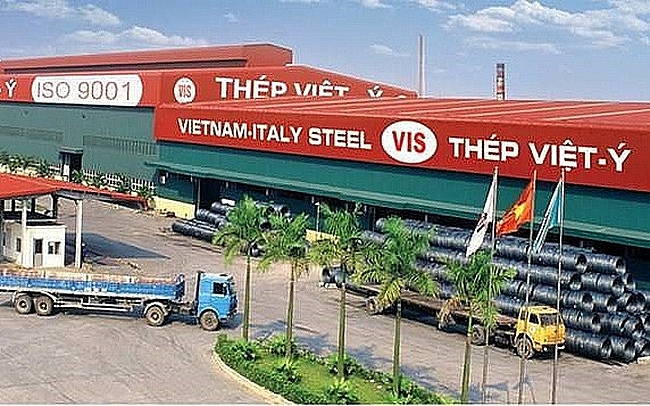
Vietnam Italy Steel JSC (code: VIS) wants to keep selling shares to Kyoei Steel despite its poor business performance after being acquired by a Japanese company.
Vietnam Italy Steel JSC’s board of directors has just submitted a document to its shareholders’ meeting on allowing Kyoei Steel, and relative members, to keep buying more than 10 per cent of its shares without submitting a public bid.
After receiving VIS stocks from Thai Hung, Kyoei Steel has kept increasing its ownership in VIS. Currently, the Japanese firm is VIS’s parent company with the ownership rate of 73.81 per cent, equalling 54.5 million stocks.
However, after falling into Kyoei Steel’s hands, VIS’ business has experienced a downturn. VIS’ financial statement for the fourth quarter of 2018 showed that the company suffered a loss of VND195.6 billion ($8.5 million), bringing its accumulated loss for the whole year to VND326 billion ($14.2 million). This is the third consecutive quarter that the company saw negative business results.
In 2018, VIS reported a net revenue of VND5.22 trillion ($226.95 million), down 14 per cent on-year and reaching only 74 per cent of its annual target. The value of unsold steel in 2018 was VND943 billion ($41 million), doubling against the beginning of the year. VIS stocks were also put on alert.
In addition, VIS forecasts negative business performance in 2019, anticipating a loss of VND92.54 billion ($4 million).
Automation will not lose people their jobs, but increase job opportunities in the future, as employers globally plan to increase or maintain headcount as a result of automation, according to the latest report of ManpowerGroup – the leading global workforce solutions company.
According to the Humans Wanted report which was released in Vietnam on March 22, 2019, as many as 87 per cent of employers globally plan to increase or maintain headcount as a result of automation, and organisations that are investing in digital and shifting tasks to robots are creating most jobs, while upskilling is on the rise. 84 per cent of companies plan to upskill their workforce by 2020, up from just 21 per cent in 2011.
The report also looks into robot workers replacing human jobs – the debate of the decade for long. In reality, the opposite looks true. ManpowerGroup's report Humans Wanted: Robots Need You found that more employers than ever – 87 per cent – plan to increase or maintain headcount as a result of automation for the third consecutive year. ManpowerGroup surveyed 19,000 employers in 44 countries on the impact of automation on job growth in the next two years.
Companies that are digitising are growing, and that growth is producing more and new kinds of jobs. Organisations that are already automating tasks and progressing their digital transformation are most confident of increasing headcount. Global talent shortages are at a 12-year high and new skills are appearing as fast as others disappear. More companies are planning to build talent than ever before, and this trend shows no sign of slowing. Eighty-four per cent of employers plan to upskill their workforce by 2020.
"The focus on robots eliminating jobs is distracting us from the real issue," said Jonas Prising, ManpowerGroup Chairman & CEO. "More and more robots are being added to the workforce, but humans are too. Tech is here to stay and it is our responsibility as leaders to become Chief Learning Officers and work out how we integrate humans with machines. Learning today cannot be done as it was in the past. That is why at ManpowerGroup we are reskilling people from declining industries like textiles for jobs in high-growth industries including cybersecurity, advanced manufacturing, and autonomous driving. If we focus on practical steps to upskill people at speed and at scale, organisations and individuals really can befriend the machines."
The Humans Wanted report also found that demand for IT skills is growing significantly and with speed; 16 per cent of companies expect to increase headcount in IT, five times more than those expecting a decrease. Production and manufacturing employers anticipate the most change in headcount: 25 per cent say they will employ more people in the next year, while 20 per cent say they will employ fewer. Growth will come in front line and customer-facing roles too – all requiring human skills such as communications, negotiation, leadership, and adaptability.
Humans Wanted: Robots Need You provides practical recommendations and best practice examples from around the world to help organisations upskill their people and become more agile with the right combination of building, buying, borrowing, and bridging talent.
Businesses urged to improve competitiveness for greater int'l economic integration

Vietnamese businesses are now considering changes to gain a greater competitive edge and secure a stronger foothold within the domestic market in order to achieve greater progression into the international economic integration process.
The signing of several free trade agreement (FTAs) has presented a wealth of opportunities for import-export businesses as import tariffs of several goods are set to be slashed to zero per cent. However, businesses still face the daunting prospect of competing with foreign rivals.
Le Vinh Son, chairman of the Son Ha Group, emphasised that international integration has exerted huge pressure upon the group, especially from within the domestic market. He noted that the group has made thorough preparations in order to keep up with the challenges met over the past ten years.
Previously, completely built units (CBUs) were subject to high import tariffs, which could be gradually reduced through assembly. In addition, imported spare parts were exempt from tariffs as products reached the highest localisation rate.
However, by joining FTAs, the import duty levied on CBUs will fall to zero per cent and imported spare parts will be subject to a host of new tariffs.
Son pointed out that these fresh tariffs could lead to businesses importing products whose country of origin is not Vietnam. This policy looks set to have a negative impact on the production capacity of many Vietnamese businesses and affect the overall supporting industry of the country.
He recommended that the state devise proper policies aimed at increasing the competitiveness of domestic businesses within the integration process.
Son underscored the importance of restructuring companies, their departments, and human resources, in order to take full advantage of the latest technologies available to avoid lagging behind international rivals.
Bui Tu Ngoc, director of Hanoi Olive Joint Stock Company said joining new FTAs will offer plenty of opportunity for businesses to bring their best products to the Vietnamese market and in turn help Vietnamese goods penetrate the global market.
Ngoc elaborated on ways in which her company’s products could gain entry into nationwide supermarkets, noting that she spent three years learning about olive products before importing them into Vietnam.
Like other import businesses, Ngoc is also anticipating the enforcement of the Vietnam-EU Free Trade Agreement as olive products will also enjoy a zero per cent tariffs that other products such as palm oil and soya oil imported into Vietnam previously enjoyed. Ngoc stressed the need to set up technical barriers in order to prevent the flood of foreign goods into the domestic market when the country joins the International Olive Council.
In other words, the nation’s economic integration through FTAs will likely facilitate the entry of foreign products, even low-quality products into the Vietnamese market.
The director also expressed her worries over the competitiveness of Vietnamese products when making inroads into foreign markets. Vietnamese farmers will also have to change their production methods to improve their product quality, meeting stricter requirements set by foreign markets.
She also cited an example of a Greek company which wants to import close to 40 tons of Vietnamese coffee each month with high quality coffee beans. However, the cultivation methods used in Vietnam are unable to produce high quality coffee beans, and farmers are forced to mix their produce with other types of coffee to maintain a consistent output, leading to an uneven quality in coffee products.
In addition, some businesses find it challenging to deal with the changes in the country’s policies. For example, olive products have been exported to Vietnam since 2011. However, according to a document released in 2013, Greece was not listed among the countries importing into Vietnam.
Bui Thi Hanh Hieu, general director of Bao Minh Farm Produce JSC, said to cope with the integration process, the company has established a closed production chain with a zoning plan on material zones to ensure the criteria is met in terms of organic, safe water and non-contaminated soil.
The firm has implemented this process since 2015 in order to produce high quality products that meet EU standards.
Hieu also unveiled plans to build new production models with access to large fields to meet the requirements of foreign partners.
Furthermore, he also underlined the importance of support from the relevant ministries, agencies, and localities necessary for businesses to take part in the process of international economic integration.
Ngoc also underscored the need to devise open policies which support businesses in introducing Vietnamese products to the world as import-export businesses now largely depend on exchange rates and policies.
E-procurement system applied to banks’ projects

In order to enhance competitiveness and transparency, two major lenders have begun using the Vietnam National E-Procurement System to bid online for construction and goods supply contracts for their projects.
In the opening phase, the national competitive bidding (NCB) method will be conducted by the Asian Development Bank (ADB) and the World Bank (WB), along with relevant agencies in the country over 15 bidding packages worth more than $71 million in projects funded by the two banks.
Bid notices and invitation documents for online packages will also be posted on the Vietnam National E-Procurement System (VNEPS), and bidders will compile and submit their dossiers online.
According to the ADB, when accessing online bidding, parties will have to post all information regarding their technical and financial capacity, the contracts that they are or have implemented, and on their equipment and human resources.
All of the information will also be recorded on the VNEPS, so that bidders can re-use the information to partake in other packages. This is an obligatory requirement for all bidders when they engage in packages funded by the two banks.
“We are supporting the e-government procurement system so that public procurement in Vietnam can benefit from advantages in transparency, efficiency, increased competition, and therefore lower prices that have been witnessed in similar systems in other countries,” said Alexander Fox, the ADB’s principal procurement specialist.
The ADB recently assessed the system and found that in many cases stakeholders were conducting paper-based procurement following traditional procedures and practices in parallel with e-procurement.
“This means that the administrative burden of procurement had actually increased, which compromises the benefits of the electronic version and the motivation of stakeholders to use it,” Fox said. “Now, the ADB and the World Bank are working with the government to use the e-procurement system to secure national competitive bidding contracts funded by the banks. I do believe that with such comprehensive efforts, the full benefits of e-procurement, in terms of improved competition, transparency, efficiency and economy, will flow to the citizens of Vietnam.”
The two banks and the Public Procurement Agency under Vietnam’s Ministry of Planning and Investment are now planning to hold an online bidding module introduction for NCB procurement and packages in projects funded by the two banks on March 26.
Earlier, thanks to smooth co-operation between the agency and the two banks, modules for online bidding for these packages were built and integrated into the VNEPS in January.
The VNEPS, operated by the national e-procurement centre, was introduced on a trial basis for six years and officially put into operation nationwide in 2016.
According to the agency, online bidding can help minimise negative acts like cheating, collusion, or obstruction in the bidding process. It also can keep information about prices and bidder names absolutely secret before packages are put out to tenders.
Under the prime minister’s Decision No.1402/QD-TTg dated July 2016, by 2025 all bidding information will have to be announced on the VNEPS, all procurements will be conducted online, and at least 70 per cent of the bidding packages under the revised Law on Bidding will have to go digital.
However, results from the agency showed that last year, the number of bidding packages conducted online by many ministries, agencies, and localities remain quite limited. Many units even failed to implement online bidding for any package. For example, last year Vietnam Railway Corporation conducted tender for 239 bidding packages with the total value of VND595 billion ($25.9 million), but no package was implemented online.
Vietnamese consumers using less cash, more cards: study
Vietnamese consumers are carrying less cash as they use credit and debit cards more frequently, a new study says.
A survey by Visa found almost half of Vietnamese consumer respondents saying they are using card and mobile payments at least two or three times a week.
It also found 73 percent of respondents using credit and debit cards last year, up 59 percent from 2017, while 82 percent have tried making transactions on mobile phones.
The 2018 Visa Consumer Payment Attitudes Study says the use of new payment technologies is picking up traction, with 44 percent of the respondents indicating that they are now making payments with mobile phone apps, while 32 percent are using "contactless" payment technologies that allows users to simply tap their card on the terminal to pay.
Nineteen percent have used QR payments, where a customer uses the phone to scan a unique merchant code that will transact money to the merchant’s account.
The total value of purchases made by Vietnamese consumers on their Visa credit and debit cards last year was up 37 percent, while the number of transactions was up by 25 percent, Visa said.
E-commerce in particular saw strong growth, with the total value of purchases up 40 percent, it added.
Dang Tuyet Dung, country manager for Visa Vietnam and Laos said: "These recent figures from our network demonstrate clearly the fact that digital payments are now truly a part of day-to-day life for many Vietnamese consumers."
"While digital payments are still in their relative youth in Vietnam, it’s been incredibly positive to see how consumers are embracing new payment technologies."
The Visa Consumer Payment Attitudes Study 2018 was conducted in August 2018 amongst 4,000 consumers in Indonesia, Malaysia, the Philippines, Singapore, Thailand, Vietnam, Myanmar, and Cambodia.
Visa’s data was confirmed by a report by the State Bank of Vietnam released last December, which said that there was a strong rise in payments over electronic channels between January and September last year, compared to the same period in 2017.
The value of online payments rose 18.3 percent year-on-year, while transactions over mobile apps and e-wallets rose by 126 percent and 161 percent respectively, the report said.
Vietnam’s e-commerce sector has been booming in recent years. E-commerce revenue reached $2.26 billion last year, a growth of 30 percent over 2017, according to Germany-based data portal Statista. It estimated that this figure will reach $2.7 billion this year.
.svg)
