 Vietnamnet.vn

 Podcast



REE issues fixed-rate bonds

Standard Chartered Bank Vietnam (SCB Vietnam) announced on January 29 it has successfully placed the Refrigeration Electrical Engineering Corporation (REE)’s inaugural $100-million (VND2.318 trillion) fixed-rate bonds. The issue was guaranteed by the Credit Guarantee and Investment Facility (CGIF), a trust fund of the Asian Development Bank rated AA internationally by S&P.
The fixed-rate bonds bear an interest rate of 7 per cent per annum with a ten-year maturity.
REE is a listed and diverse business group in Vietnam primarily operating in the fields of real estate development and management; mechanical and electrical engineering services; the manufacture, assembly, and sale of Reetech air conditioning systems; and power and water utility infrastructure. The company was one of the first to list on the Ho Chi Minh Stock Exchange and is among the 30 largest companies in terms of market cap.
SCB Vietnam’s expertise and capabilities to execute and distribute the deal enabled REE to achieve long-term fixed-rate funding at a competitive yield. Despite market volatility, bidding interest, especially in the longer tranche, remains strong. In view of the favorable pricing, the issuance strategy was adjusted by shifting the seven-year demand into the ten-year tranche.
This is the sixth time SCB Vietnam has acted as the bond issuance agent for a guaranteed VND-denominated corporate bond issue in Vietnam, reaffirming the bank as the bond issuance agent of choice when it comes to guaranteed local currency bond origination in the country.
“We are delighted to have CGIF onboard with us on our first bond issuance as we tap into the capital markets for fixed-rate long-term funding,” said Mr. Nguyen Ngoc Thai Binh, CFO of REE. “We see it as an important milestone as we continue to widen our funding options and sources in line with our business development and expansion needs.”
“We are pleased to support REE in this landmark transaction, which is a meaningful achievement for us as we celebrate our 115th anniversary of driving commerce and prosperity and serving our clients in Vietnam,” said Mr. Nirukt Sapru, CEO Vietnam and ASEAN & South Asia Cluster Markets at Standard Chartered Bank.
“The successful issue has contributed to deepening and developing Vietnam’s local capital markets, as it encourages more corporate issuers to consider the country’s bond market as a viable financing option.”
“CGIF is delighted to guarantee REE’s first fixed rate ten-year bullet bonds targeting institutional investors,” said Mr. Kiyoshi Nishimura, CEO of CGIF. “While REE’s previous bonds were placed with banks in traditional bank terms, such as floating rates and amortizing repayments, this ten-year guaranteed bond enables REE to tap into institutional investors’ funds with more suitable funding terms to the company.”
The rapid development of the VND corporate bond market since CGIF’s inaugural guarantee for VND bonds in 2014 is extremely encouraging. This transaction marks the eighth such bond CGIF has guaranteed in the VND corporate bond market totaling $532 million equivalent, and solidifies its role as a catalyst for strong bond market development in the country.
Hong Kong leads in 2M FDI to Vietnam

Total newly-registered and additional capital and capital contributions and shares purchased by foreign investors stood at $8.47 billion in the first two months of 2019, 2.5-times higher than in the same period of 2018, according to the latest report from the Ministry of Planning and Investment (MPI) released on February 20.
In the first two months of 2019, 514 new projects were granted investment licenses with total newly-registered capital of nearly $2.44 billion, up 75.7 per cent year-on-year, while 176 projects added capital to the tune of $854.8 million, up 22.1 per cent.
There were 1,039 instances of capital contributions and share purchases by foreign investors in the period, with capital contributions standing at $5.17 billion, four-times higher year-on-year. FDI projects disbursed $2.58 billion in capital in the first two months, up 9.8 per cent.
Eighteen fields received investment from foreign investors, in which processing and manufacturing attracted much attention, with total capital of nearly $6.93 billion, accounting for 81.8 per cent. Real estate ranked second, with $478 million, accounting for 5.6 per cent, while science and technology ranked third, with $306.7 million, or 3.6 per cent.
There were 66 countries and territories with new investment projects in Vietnam. Hong Kong led the way, with nearly $4.3 billion, making up 51 per cent of the total. Singapore followed, with $979.1 million, or 11.5 per cent. South Korea ranked third, with $873 million, or 10.3 per cent.
Forty-four cities and provinces received investment in the period, in which Hanoi attracted the most, with more than $4 billion, or 47.3 per cent of the total. Ho Chi Minh City ranked second, with more than $1 billion, or 12 per cent, then Bac Ninh province, with $541.7 million, or 6.3 per cent.
Exports by the foreign-invested sector (including crude oil) in February were $25.95 billion, up 3.7 per cent year-on-year and accounting for 70.7 per cent of the total. Exports excluding crude oil stood at $25.31 billion, up 3.2 per cent of the figure in February 2018 and accounting for 69 per cent of the total.
Imports by the FDI sector were $21.47 billion in the month, up 5.1 per cent against February 2018 and capturing 58.4 per cent of total import turnover. The FDI sector therefore recorded a trade surplus of $4.48 billion including crude oil and $3.84 billion excluding crude oil in February.
Bình Phước pepper prices down, spelling struggles for farmers

Farmers harvest pepper in the southern province of Bình Phước. — Photo baobinhphuoc
The price of pepper in the southern province of Bình Phước has sharply fallen, making local gardeners worried they could face a season of losses.
The price of pepper currently ranges from VNĐ45,000 (US$1.90) to VNĐ46,000 per kilo, down by about VNĐ5,000 from last month. With this price, many farmers failed to make a profit, with some even suffering losses due to the costs of fertiliser, electricity, water and labour.
Party Secretary of Bình Phước Province Nguyễn Văn Lợi said local farmers have harvested more than 30,000 tonnes of pepper qualified for export, only one-third of which had been ordered by a business. The remaining 20,000 tonnes had not yet been sold.
Lợi called for domestic and foreign exporters to pay attention to the local pepper harvests because the price was too low, which had caused difficulties for farmers.
Meanwhile, pepper harvesters still earn a lot as they are hired at a rate of VNĐ4,000 per kilo.
Nguyễn Văn Sơn, a resident in Hớn Quản District, said he can harvest about 80 kilos of pepper per day, while his wife can harvest 100 kilos. “We had a high income during the harvest this year,” he said.
Hà Nội records positive export growth

Garments are made at a factory of the Garment 10 Corporation. — Photo may10land.vn
Việt Nam’s capital earned an estimated US$2.24 billion from exports in the first two months of this year, up 21.3 per cent year-on-year, according the municipal Statistics Office.
Staples posting encouraging export turnover growth included machinery, equipment and parts, textiles and garments, telephones and components.
The domestic sector experienced a positive turnover rise of 14 per cent, accounting for 53.3 per cent of the city’s total export value in two month period, the office said.
The two-month performance was a good signal for the city’s economy in the context of the country witnessing an export turnover reduction of 1.3 per cent in January compared to the same month last year, director of the municipal Department of Industry and Trade Lê Hồng Thăng told kinhtedothi.vn.
However, Thăng said it would not be easy for the capital to reach its target of raising export value by between 7.5 per cent and 8 per cent this year.
The director attributed the situation to strong fluctuations in the global financial and monetary markets and a stretched trade war between the US and China.
In order to achieve the export target and facilitate the city’s exporters, Hà Nội would continue to help enterprises access loans, improve administrative reforms and accelerate trade promotions.
At the same time, it would help local firms diversify the design of their products, access new technologies, promote their brands and origin traceability in a move to increase the added value of their products.
The city would also call for investment to develop infrastructure, concentrated industrial zones, clusters, logistics infrastructure and service systems as well as build an information database for business and export activities.
Thăng also urged local businesses to develop their own trademarks while improving product quality and personnel to meet the strict demands of international markets.
Last year, Hà Nội shipped $14.23 billion worth of goods overseas, a year-on-year increase of 21.6 per cent, the department’s statistics revealed.
The US, Japan and China remained the city’s biggest markets, with values accounting for 16 per cent, 13 per cent and 12 per cent, respectively.
Vietnam-Germany trade, investment forum held in Leipzig

An overview of the forum
A Vietnam-Germany Trade and Investment Forum has been held as part of the “Vietnam Days in Leipzig”, highlighting investment potential and opportunities between Sachsen State and Germany in general and Vietnam as well as other countries in Southeast Asia and Asia Pacific.
The forum drew Vietnamese Ambassador to Germany Nguyen Minh Vu; Vice Chairman of the People’s Committee of Ho Chi Minh City Le Thanh Liem; Deputy Mayor of Leipzig Michael Schimansky; Managing Director of the Leipzig Trade Fair Martin Buhl-Wagner, and nearly 200 German enterprises.
Addressing the event, Ambassador Vu highlighted Vietnam’s economic development in recent years, as well as trade and investment partnership between Vietnam and Germany, affirming that Vietnam is a promising market for foreign investors.
Ambassador Vu also reiterated Vietnam’s commitment to creating optimal conditions for German investors.
Meanwhile, Vice Chairman of HCM City People’s Committee Le Thanh Liem pledged that the municipal government always offers suitable policies and incentives to attract more investments, while strengthening its economic connections between local firms and foreign partners, including those from Germany.
Director of the HCM City Investment and Trade Promotion Centre Pham Thiet Hoa said that taking advantages from the city’s current preferential policies, German businesses should tap opportunities from new chances to increase business activities in Vietnam.
At the same time, Trade Counselor at the Vietnamese Embassy in Germany Bui Vuong Anh called on German firms to attend the Vietnam FoodExpo 2019, while representatives from the Vietnam Airlines and Vietinbank introduced the tourism, aviation and banking development potentials of Vietnam.
Businesses of both sides also discussed various issues, including those related to administrative procedures for investment, energy, biotechnology for agriculture.
On the framework of the forum, the Vietnam Airlines showcased publications featuring the natural landscapes and tourist sites in Vietnam.
Vietnam – second biggest coffee supplier of Belgium in 2018

In 2018, Vietnam exported more than 1.8 million tonnes of coffee worth 3.54 billion USD, respective year-on-year rises of 20 percent and 1.2 percent
Vietnam was the second biggest supplier of coffee for Belgium after Brazil in 2018.
The Southeast Asian country exported 18,500 tonnes of coffee worth 36.07 million USD to Belgium in the year, year-on-year rises of 45 percent and 20.7 percent respectively, the highest growth level among the top 10 coffee supplier for the European country.
According to Vietnam Customs, Vietnam grossed 324.24 million USD from shipping 183,700 tonnes of coffee abroad in January 2019, up 19.4 percent in volume and 17.6 percent in value compared to December 2018.
In 2019, if the coffee sector maintains two-digit growth, Vietnam is likely to surpass Brazil to become the largest supplier of coffee for Belgium.
In 2018, Vietnam exported more than 1.8 million tonnes of coffee worth 3.54 billion USD, respective year-on-year rises of 20 percent and 1.2 percent.
South Korea lends housing support
South Korea has been boosting its support for Vietnam to formulate its social housing policy currently being implemented effectively nationwide, bringing major benefits to local people.
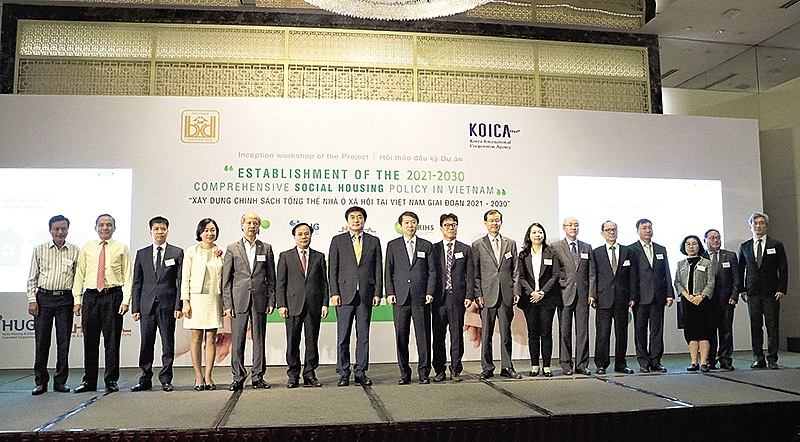
Kim Jin-oh, country director of KOICA in Vietnam (seventh from left) and participants at the workshop
On February 21, the Korea International Cooperation Agency (KOICA) and the Ministry of Construction (MoC) jointly organised the Inception Workshop for the project entitled “Establishment of the 2021-2030 Comprehensive Social Housing Policy in Vietnam,” with the attendance of Deputy Minister of Construction Nguyen Van Sinh and country director of KOICA in Vietnam, Kim Jin-oh.
The Vietnamese government has long been considering housing as a social issue and a priority mission in the national socio-economic development agenda. This includes developing social housing for marginalised groups such as low-income households in urban areas and labourers working at industrial parks, which received great attention from both legislators and the public.
Social housing is a pressing need in the context of rapid urbanisation in Vietnam, as big cities are encountering difficulties to provide adequate housing to the increasing population.
Sinh addressed the lack of social housing in his opening remarks, saying, “Social housing development efforts so far have only achieved 33 per cent of the target of 12.5 square metres per person set by the approved National Housing Development Strategy by 2020 with vision toward 2030.”
In this context, a comprehensive legal framework which provides guiding principles for social housing provision and management is essential to increase the supply of social housing as well as to ensure access to affordable housing to marginalised groups.
It is a field where South Korea’s experiences in social housing development could be widely shared.
Jin-oh emphasised South Korea’s strength in formulating housing policies as well as the willingness of this nation’s government to support Vietnam to achieve the National Socio-economic Development Strategy and the National Housing Development Strategy.
The Comprehensive Social Housing Policy project is financed by the government of South Korea with the total budget of $3 million.
The project is implemented from 2018 to 2020 by the South Korean consultancy consortium, including Korea Land and Housing Corporation, Korea Housing & Urban Guarantee Corporation, Han-A Urban Research Institute, Korea Research Institute for Human Settlements, and Seoul National University.
The project aims to study and propose the Vietnam Social Housing Development Strategy during 2021-2030, and contribute to the amendment of Vietnam’s Law on Housing issued in 2014 in terms of social housing development, focusing on those low-income households in urban areas and labourers working in industrial parks.
Five project components are designed to realise these objectives.
The first component is focused on the assessment of the current situation of social housing for low-income households in urban areas and labourers working in industrial parks, while the second component will conduct surveys and create a projection of social housing needs for low-income households in urban areas and labourers working in industrial parks in the 2021-2030 period.
The third component is about the development of social housing policies applicable for the target groups (low-income households in urban areas and labourers working in industrial parks) by referring to international experiences.
While the fourth component is centred on the improvement of the Law on Housing to enable the social housing policy suggested by the project, the fifth component involves a capacity building programme for public officials in the management of social housing development.
The inception workshop opened a platform for fruitful discussion on social housing issues among representatives of central ministries and agencies, local governments, research institutes, real estate associations, development partners, as well as domestic and foreign investors in the housing sector.
As housing is an important issue in Vietnam’s development agenda, the effective multi-disciplinary co-ordination among various stakeholders throughout the project’s implementation will definitely be the key to success.
Vietnamese firms eye Cambodian market

A number of Vietnamese enterprises have been seeking business opportunities in the Cambodian market with many seeing numerous similarities with Vietnam in terms of market demands and consumer habits.
Tran Song Hai, CEO of the Ho Chi Minh City-based high-speed craft service GreenlinesDP, noted that Cambodia’s tourism sector raked in a total of US$3.63 billion throughout 2017 with the coastal city of Sihanoukville emerging as a prime destination for visitors to Cambodia.
Hai was speaking at a workshop aimed at analyzing business opportunities in the Cambodian market.
The event was held by the Vietnamese Embassy in Cambodia on the sidelines of a State visit by Party General Secretary and President Nguyen Phu Trong to Cambodia on February 25-26.
Hai has high hope of tourism cooperation between businesses in the two countries, elaborating that Vietnamese firms could enjoy big advantages in planning and organizing tours.
Regarding the health care sector, many Vietnamese firms are seeking business opportunities in the growing Cambodian healthcare and pharmaceuticals market.
Ha Ngoc Son, general director of the TV.Pharm Pharmaceutical JSC (TV.Pharm) headquartered in the Mekong Delta province of Tra Vinh, unveiled his firm’s plan to build a pharmaceutical product manufacturing factory in Cambodia.
TV.Pharm is working on recruiting Cambodian labourers for the factory, Son said, stressing that Cambodia’s abundant workforce as a factor which would help the firm pursue sustainable growth in the neighbouring country.
As for potential cooperation in education, Vu Quang Minh, Vietnamese Ambassador to Cambodia, voiced his belief that as Cambodians are quite capable of speaking both English and French, Vietnam’s Business Management Institute, with an appropriate curriculum designed, is likely to seek a niche market in Cambodia and provide scholarships for Vietnamese Cambodian students.
Nguyen Thanh Dung, head of the Vietnam Business Club in Cambodia, pledged to promote the club’s role as a bridge that connects enterprises of the two countries and support Vietnamese firms to enjoy increased access to the Cambodian market and to carry out administrative procedures related to business and investment in the neighbouring country.
According to Do Thang Hai, Deputy Minister of Industry and Trade, there remains a huge potential for economic cooperation between Vietnam and Cambodia.
The deputy minister mentioned at a recent interview granted to local press that the two countries have numerous similarities in culture, market demands, and consumer habits, therefore making Vietnamese goods and services welcomed in the Cambodian market.
Along with bilateral agreements, trade deals in the Association of Southeast Asian Nations will help connect the two economies, Hai stated, suggesting the two countries could foster closer cooperation in consumer products, energy, mining, aquaculture, and forestry.
Vietnam is currently Cambodia’s third largest trade partner with bilateral trade enjoying an annual average growth rate of 9.8 per cent.
Last year, bilateral trade was estimated at US$4.7 billion, up 23.8 per cent on year. Of the figure, Vietnam’s exports made US$3.7 billion, up 35 per cent, and imports were US$963 million, down 6.5 per cent.
Vietnam gains trade surplus of $250m with Canada

Seafood is one of Việt Nam’s key export products to Canada. — Photo cafef.vn
Việt Nam gained a trade surplus of more than US$250 million with Canada in January.
According to the General Department of Customs, in the first month of this year, trade value between Việt Nam and Canada reached $379 million, of which export value hit $317 million and import value of $62.6 million. These figures rose 33.8 per cent and 6.9 per cent against the same period last year.
Việt Nam mainly exported to Canada industrial goods such as textiles, footwear, vehicles and spare parts. Textiles and garments accounted for $69 million, followed by footwear with $32.9 million.
Other export goods included seafood, timber and wooden products, coffee, cashew nuts and iron products.
Most export goods from Việt Nam to Canada increased in the first month, reported vov.vn.
Last year, Việt Nam’s export value to Canada reached $3.85 billion, up 9.3 per cent year on year, of which Việt Nam’s trade surplus reached $2.1 billion.
Australia to boost table grapes exports to Vietnam

Australian grape growers are heading to Vietnam to introduce their fruits and boost trade relations.
Three key growers from the Sunraysia region (which is responsible for around 99 per cent of table grape exports), representatives from the Australian Table Grapes Association and a delegation from Austrade, will be on the ground in both Hanoi and Ho Chi Minh City from February 28 to March 1 to spruik the premium product.
Hosted under the Hort Innovation Taste Australia banner, the upcoming trade marketing activity aims to cement existing trade relations and develop new and exciting partnerships.
Hort Innovation acting trade lead Dianne Phan said Vietnam was currently the 7th largest importer of Australian table grapes.
“Vietnam is a key exporting country for Australia, and the Australian table grape industry has worked hard to educate and promote Australian grapes to Vietnamese consumers,” she said.
“Over the past four years, Australian table grape exports have grown 73 per cent, demonstrating the increasing demand for our high quality and premium produce.
“Moving forward, we expect that we will be able to produce more of the grapes that Vietnamese consumers love.”
Australian Table Grapes Association CEO Jeff Scott said several new varieties were coming into production for export this year such as: Sweet Nectar, Sweet Sapphire, Pristine Seedless, Long Crimson, Cotton Candy and Melody Seedless to name a few.
“Many growers have planted new varieties in large numbers under commercial licences and have commenced exporting,” he said.
“If any variety proves successful or demand is high from importing countries, additional plantings will take place to satisfy demand.”
Scott said Thompson Seedless and Crimson Seedless were still expected to be Australia's main export varieties.
“As an industry we are seeing year on year growth in table grape exports and this is a very pleasing outcome for growers.”
Scott will present an industry update during the trade activities in Vietnam providing key partners with a seasonal overview of the 2019 crop forecast and the 5 to 10-year crop yield predictions.
He will also provide more information about the systems Australian industry have in place to continually maintain Australia’s clean, green and safe reputation.
VN firms should focus on brand building

Experts spoke at a seminar titled Brand in Relation to Strategies of Enterprise Development in HCM City on February 26.
Vietnamese enterprises, especially small- and medium-sized ones, need greater awareness of the importance of brands and developing them to competitiveness, a seminar heard in HCM City yesterday.
Assoc Prof Dr Mai Ha, chairman of the Viet Nam Intellectual Property Association (VIPA), told the Brand in Relation to Strategies of Enterprise Development seminar: “Brand is among intangible assets of enterprises and a core value in creating enterprises’ value.”
However, Vietnamese enterprises had not paid much attention to the value of brands, he added.
According to Luong Minh Huan, deputy director of the Viet Nam Chamber of Commerce and Industry’s Enterprises Development Institute, brand building is not only a key factor in facilitating exports and helping businesses compete but also establishes the reputation and brand of a country.
Viet Nam is among the largest exporters of agricultural products, but not many foreign consumers know they are using products from Viet Nam.
That is because the products are exported without brand names on the packaging.
Ha said: “We are worried that with growing international integration, enterprises face fierce competition. They will also face brand disputes, and if this happens, they will surely lose.”
To succeed, local enterprises, especially exporters, must focus on building their own brands right while starting their business, he added.
Peter Willimott of the World Intellectual Property Organisation said unlike tangible assets brands appreciate with time if enterprises make proper investment in them.
Johnathan Ooi, deputy general director of PwC Vietnam Limited’s valuation division, said: “Brands are one of the most important and valuable assets that businesses need to nurture and protect.
“A good brand builds customers’ trust in the products and services of a company. Thus, it will increase its revenue and profits.”
In addition, a good brand would attract more talent, one of the most important factors for a company’s success, and build suppliers’ trust, and this enhances a company’s competitiveness in the market, he said.
In an interview with the media, Seth Hay, chief representative of the International Trademark Association (INTA), said, “Vietnamese companies need to pay attention to the three Ps: be prepared, be proactive, and be positive about brand development.
“Being prepared means they need to register their trademarks in Viet Nam as well as outside Viet Nam. Being proactive means they need to set aside the money to make sure they protect the brand and prevent others from using it. Being positive means they need to go out and value their brands and think that a brand is a revenue generator, a brand can be licensed and can be used for loans and other assets.”
INTA’s research shows a strong relationship between economic growth and trademark-intensive industries.
In developed countries trademark-intensive industries could contribute over 50 per cent to GDP, while in developing countries it could be 25 per cent.
A company’s bosses “need to understand the importance of brands and pay attention to brands and invest in brands,” Hay added.
Global regulation
The seminar also discussed global regulatory trends undermining the future of brands, called the “slippery slope”.
It refers to the trend of applying restrictions first to tobacco and then to other consumer products such as alcohol and foods akin to a domino effect.
Measures such as taxation, pictorial health warnings, restrictions or prohibitions on advertising and promotion, and regulations on the product itself are increasingly being proposed and introduced on other products such as alcohol, soft drinks and foods.
One of its outcomes is plain packaging, which has major ramifications for other consumer goods because it could be extended to any product under increased regulatory scrutiny.
Paul Middleton, corporate development director at Japan Tobacco International, said: “Plain packaging has serious economic consequences: it distorts market dynamics, specifically damaging within-price-segment competition and ultimately generates down-trading to the value end of the market. It also increases illicit trade leading to significant reduction in tax collected by governments.”
The seminar was organised by VCCI, the VIPA, IPA-HCM City, INTA and the inspectorate of the Ministry of Science and Technology.
VN among nine countries with strongest US dollar in 2019

Foreign tourists visit the One Pillar Pagoda in Ha Noi.
Viet Nam is listed among nine countries where the US dollar is strongest in 2019, according to a report from Smart Travel.
According to the 2019 Backpacker Index of Smart Travel, a participant in the Amazon Services LLC Associates Programme, Ha Noi and HCM City are named as the top two most affordable cities to travel to in 2019 while Hoi An also makes the top ten.
“For less than US$20 per day, travelers to Viet Nam can pay for budget accommodation (hostels), meals, some entertainment, and public transportation. Mid-range accommodation also tends to be affordable,” Smart Travel says.
While the exchange rate is predicted to increase slightly in Viet Nam this year, the Big Mac Index suggests the dollar will remain very strong in Viet Nam in 2019.
According to Smart Travel, choosing a destination can be a difficult decision when you’re looking to maximise your travel budget. By choosing a destination with a favourable exchange rate and strong US dollar, you can make the most of every penny spent in 2019.
Besides Viet Nam, Smart Travel also suggests travelers looking to stretch the dollar this year should consider Latin America and parts of Africa and Asia. Projected prices for Latin America and Africa are expected to decrease by 2 per cent for air travel and about 1.4 per cent for hotel in 2019, according to the Global Travel Forecast.
“Whether you’re on a tight budget or looking for luxury without the high price tag, these undervalued currencies and decreasing foreign exchange rates should be on your radar,” Smart Travel says.
Viet Nam – Russia prepare for future

The Viet Nam – Russia Conference, organised by the Valdai Discussion Club in partnership with the Diplomatic Academy from Viet Nam in HCM City on February 25-26, discussed future cooperation between the two countries.
Diplomats at the Viet Nam – Russia Conference organised by the Valdai Discussion Clubon Feb 26 agreed to closely coordinate the Viet Nam Year in Russia and its counterpart activity in Viet Nam in 2019 and 2020, respectively.
The conference, held on February 25 and 26 in HCM City, with the theme “Prospects for Viet Nam and Russia’s Relationship after 2019”, noted that their agreement marked the 25th anniversary of the signing of the Agreement on Basic Principles for Viet Nam-Russia Friendship.
The two parties are also preparing to celebrate the 70th anniversary of the establishment of the bilateral diplomatic ties in 2020.
Attendees at the conference noted the impressive progress that has been made in Russia-Viet Nam cooperation in various fields, saying that 2019 promises to be an eventful year.
Practical cooperation between the two countries has developed in all fields, such as oil and gas, electricity, and defense and security. In the first 10 months of 2018, bilateral trade grew by 23 percent from a year earlier to US$4.8 billion.
To fully execute the agreement, both sides promised to address barriers to the import and export of goods, especially agro-fishery-forestry products, with the aim of raising two-way trade to US$10 billion by 2020.
Both sides agreed to step up large-scale projects in the fields of energy, industry, transport and agriculture, and to expand collaboration in information technology, digital technology and e-Government.
They affirmed their commitment to build a $350 million Nuclear Science and Technology Centre, while encouraging co-operation to develop urban transport infrastructure and railways in Viet Nam.
Both countries reached a consensus on the importance of security and defence cooperation, saying that they would renew collaboration in the fields of science-technology, culture, tourism, education-training and labour, as well as partnerships between their cities and provinces.
In the military sector, Col Le Trac Vuong of the Institute of International Relations at the Ministry of Defense, said that Viet Nam would always remember Russia’s great support for the country’s past struggle for national liberation and current nation building.
The Vietnamese leader hailed efforts made by the two defence ministries and Russian partners to implement the two countries’ priority tasks this year.
Both countries should focus on military technology and training co-operation as well as delegation exchanges to share experiences in the defence field, Vuong said.
Russia’s primary exports to Viet Nam include machinery and equipment, farm goods, fertilisers, chemicals, and iron and steel products, while Vietnamese exports to Russia include machinery and equipment, textiles and agricultural produce and materials.
Vietnamese investment in Russia totals $2.9 billion, while Russia’s investment in Viet Nam is $2 billion.
Russia has also assisted Viet Nam during times of natural disasters. When Storm Damrey hit the country’s central and southern regions in 2017, Russia sent 40 tonnes of goods and $5 million for relief.
World Bank arm supports green building

The International Finance Corporation, a member of the World Bank Group, signed an agreement with two Vietnamese architectural universities on Tuesay to help them improve training quality and create skilled architects and engineers for the development of green construction in Viet Nam.
The Ha Noi University of Architecture and University of Architecture of HCM City were the two universities.
A three-day course, which began yesterday to train teachers on bioclimatic and resource-efficient design, has been created to match global standards and offer international experience as well as a local context, he added.
The course is expected to equip over 200 young engineers and architects every year with green building design skills.
Increasing energy efficiency results in higher economic efficiency, reduction of scarcity of energy resources and reduction of greenhouse gas emissions associated with energy consumption, Martin Maier, Switzerland’s consul general in HCM City, said.
The programme provides practical responses to the challenges of Viet Nam’s rising population and economy, such as environmental degradation, inefficient use of energy due to outdated technologies and other negative effects of rapid urbanisation and industrialisation, he said.
Int’l processing, packaging exhibition to return to HCM City in March

Visitors at ProPak Vietnam 2018 (Photo: doanhnhandoisong.vn)
The 14th edition of ProPak Vietnam, the country’s largest processing and packaging exhibition, will take place at the Saigon Exhibition and Convention Centre (SECC) during March 19-21.
BT Tee, General Manager of UBM VES – the exhibition’s organiser, said on February 26 that 540 exhibitors from 31 countries and territories worldwide have registered to join the event, the highest number ever since it was first held in 2003.
A wide range of new technologies will be introduced at the fair, including those in processing, packaging and bottling of food-beverage, pharmaceuticals and cosmetics, along with printing machinery and materials, among others.
In addition, the Vietnam Association of Food Science and Technology (VAFoST) will join hands with competent authorities to organise the “Food Engineering and Packaging for Sustainable Development” seminar, which is expected to lure many domestic and international experts.
ProPak Vietnam is the premier sourcing and networking trade event for food, beverages, and pharmaceutical processing and packaging technology in Vietnam. Since its inception in 2003, ProPak Vietnam has grown steadily in stature and prestige to become a regional industry hub which has helped evolve and improve the processing and packaging sector in Vietnam and beyond.
Last year, the event drew the attention of more than 9,000 visitors and 407 exhibitors from 31 countries and territories.
Neighbours get to work on new bilateral projects
Vietnam is to continue tweaking and improving on its strong co-operation with neighbouring Laos and Cambodia in the sectors of trade, investment, and energy.
Authorised agencies of Vietnam and Laos are now working with each other to seek investment capital for strategic co-operation projects, including the 725 kilometre Hanoi-Vientiane Expressway, and the Vung Ang-Tan Ap-Mu Gia-Thakhek-Vientiane railway.
Both nations are also seeking investment capital for several other roads, while asking Vietnam’s Hoang Anh Gia Lai Group to boost the implementation of Nongkhang Airport in Houaphanh province, so that it can begin operations this year.
According to a bilateral co-operation plan for 2019 signed at the 41st meeting of the Vietnam-Laos Inter-Governmental Committee organised in Hanoi last month, both governments committed to “further facilitate Vietnamese investors into Laos and Laotian investors into Vietnam to seek investment opportunities and implement their projects. Priorities will be given to enterprises of both nations in implementing projects in areas along the joint border.”
Trade turnover in 2018 for both nations hit nearly $1 billion, up nearly 14 per cent on-year, with Vietnam enjoying a trade surplus. The two countries are striving to keep a stable increase of at least 10 per cent in bilateral trade turnover against last year.
They have also vowed to boost energy co-operation, in which Vietnam will continue developing hydropower projects in the latter, connecting electricity systems.
Laos will soon provide comments on the project to construct a warehouse and a petrol conducting pipe from Hon La Port in Vietnam’s central province of Quang Binh to the Laotian central province of Khammouane, so that both governments can officially negotiate the implementation of this project.
According to statistics from Vietnam’s Ministry of Planning and Investment, Laos currently has 409 licensed Vietnamese projects, with the total registered capital of $4.1 billion. In 2018, Vietnam licensed eight projects to be invested in the neighbouring nation, with the total registered capital of $95 million, up 2.6 times against the previous year. Vietnam is also financing Laos to build its National Assembly building.
Meanwhile, it is likely that a Vietnam-Cambodia business forum will be held next week, with the two countries inking new co-operation deals.
The two countries agreed to continue fostering partnerships in sectors such as education and training, border trade, tourism, telecommunications, minerals, aviation, banking, oil and gas, agriculture, and electric power.
Under a joint statement on strengthening the Vietnam-Cambodia friendship inked in July 2017, both countries affirmed that economic and investment ties will continue serving as one of the key bilateral co-operation pillars. The two sides also set the goal of raising bilateral trade volume to $5 billion before 2025.
To this end, Vietnam and Cambodia pledged to continue removing all hurdles facing enterprises of both sides, and boosting the connection of their road infrastructure, energy, and agro-forestry and aquatic product trading.
The two nations also agreed to boost the simplification of export-import and quarantine procedures, and step up the curbing of cross-border trade fraud and smuggling.
Currently, Vietnam has 210 valid investment projects in Cambodia, registered at over $3 billion, focusing on many sectors such as telecommunications, banking, aviation, and agriculture.
Many Vietnamese investors have been operating in Cambodia over recent years such as Viettel, Vietnam Rubber Group, PetroVietnam, Vietnam Airlines, VinaCapital, Vinacomin, Saigontourists, and Saigon Co.op. Meanwhile, Cambodia currently has 19 operational projects in Vietnam, registered at $63.42 million, engaging in agriculture, forestry, aquaculture, and trade.
Two-way trade hit $4.68 billion last year, up 23.76 per cent on-year, with Vietnam earning a trade surplus of $2.77 billion.
Viettel brings smart solutions to Mobile World Congress 2019

Viettel is attending the Mobile World Congress 2019 in Barcelona, Spain, between February 25 and 28 - the fifth time in a row it is the only representative of Vietnam at the largest annual event in the mobile technology industry worldwide.
It will present eight solutions in four groups of smart solutions.
The first group is smart network solutions, which aim at personal customization for each customer and supporting the system, which will reach billions of subscribers when implementing Internet of Things (IoT) services.
The second group is smart city solutions, which focus on satisfying demand for solutions that are able to supervise and coordinate all sectors directly affecting a city’s activities, such as Traffic, Public Security, Emergency Response, etc.
The third group is network security solutions, which serve demand for the early detection of abnormalities or remote attacks on IT systems of organizations.
The final group is smart terminal devices for the maritime industry, which support both the management demands of functional agencies and the need to protect fishermen at sea.
All of these solutions have been built based on resolving issues facing Viettel or Vietnam and are implemented in eleven markets where Viettel operates.
In addition to introducing its products, which reflect its vision of digital transformation, Viettel also aims to find partners to jointly conduct research and produce and deploy 5G in Vietnam.
“In bringing eight digital solutions to the Mobile World Congress, we hope to confirm that Viettel is not only a Top 30 telecom company in the world but also a digital solutions provider,” said Mr. Tao Duc Thang, Vice Chairman of Viettel Group.
The Mobile World Congress is the largest technology event of the year in the mobile industry, attracting 200 countries and territories (of which 60 per cent are from Europe, 18 per cent from the Americas, and 15 per cent from Asia). The theme of this year’s event is “Intelligent Connectivity”. MWC has an average of over 2,400 exhibitors and attracts more than 3,500 international media agencies.
Vietjet offering tickets to Hong Kong from $0
Vietjet Air is offering 10,000 super saving tickets from only $0 from February 26 to 28 on its website.
The promotional tickets are available on routes from Ho Chi Minh City and Phu Quoc Island to Hong Kong (China). The flight period for the Ho Chi Minh City - Hong Kong (China) route is from April 14 to December 31, and April 19 to October 25 for the Phu Quoc - Hong Kong (China) route.
The Phu Quoc - Hong Kong (China) route will have four return flights per week starting from April 19. With a flight time of two hours and 45 minutes per leg, flights will depart Phu Quoc at 10.50am and land in Hong Kong (China) at 2.35pm. Return flights will depart Hong Kong (China) at 3.40pm and arrive in Phu Quoc at 5.25pm (all local times).
Hong Kong is known as one of the world’s leading centers of finance and commerce and as a hub for numerous major corporations with headquarters in the Asia-Pacific region. With a blend of Western and Eastern cultures, a vast variety of cuisine, and a developed entertainment industry, Hong Kong is the most loved destination for tourism and shopping for many travelers.
With a network comprising 39 domestic routes and 66 international routes, Vietjet operates safe flights with a technical reliability rate of 99.64 per cent, the highest in the Asia-Pacific region. As a fully-fledged member of the International Air Transport Association (IATA), it has obtained the IATA Operational Safety Audit (IOSA) certificate and been awarded a seven-star ranking; the world’s highest for safety, by Airline Ratings.
.svg)
