 Vietnamnet.vn

 Podcast



Digitalised economy helps promote global competitiveness: expert

Vietnam needs to accelerate the digitalisation of its economy and make the most of its full potential and strengths to promote global competitiveness, according to an economic expert from AlphaBeta Consulting.
Konstantin Matthies – macroeconomic expert and foreign director of AlphaBeta – said that many countries in Asia-Pacific are doing well to speed up the digitalisation of their economy, thus increasing labour productivity and expanding growth.
In Vietnam, the Government has paid attention to and created favourable conditions for the business community to access, apply, and develop digital technology utilities.
The increased use of mobile phones in connecting communities through social networks; and strong development of telecommunications infrastructure 3G, 4G, or 5G towards e-commerce transactions and online payments have helped to modernise the lives of local people, enabling them to catch up with global development trends.
Chairman of the Vietnam Chamber of Commerce and Industry Vu Tien Loc said that the Government should focus on promoting the digital economy, towards transparent and effective administration. This is the most important requirement of a modern market economy, he stressed.
In recent years, Vietnam has been a predominant country in taking the initiative with discussions on the Fourth Industrial Revolution and is expected to make considerable accelerations in the field.
According to the Global Entrepreneurship Network’s report, Vietnam’s start-up index ranks sixth among the 54 economies surveyed. AlphaBeta also ranked Vietnam the second nation in terms of technology investment environment and third in digital talent in the Asia-Pacific region.
Experts said policymaking agencies should take further action to promote the development and application of sci-tech in the production, business, and trade activities of enterprises.
Director of the Central Institute for Economic Management (CIEM) Nguyen Dinh Cung said that the growth of digital technologies and the digital economic era are creating both room for potential and also possible barriers, adding that it is necessary to take advantage of new opportunities to overcome challenges.
Deputy Minister of Science and Technology Bui The Duy said Vietnam boasts advantages to promote innovation.
The ministry has devised different policies to promote and improve scientific and technological capacities of enterprises, with priority given to those specialising in developing new technologies, he added.
In looking towards a digitalised economy, it is not only the Ministry of Science and Technology but also many other ministries and agencies who must be actively applying technological achievements to support and facilitate the development of businesses, Duy said.
Steel producers urged to enhance product quality to compete

Enhancing product quality and cutting production costs would help domestic steel producers overcome difficulties (Photo: baodautu.vn)
Enhancing product quality and optimising production costs would help domestic steel producers compete with cheap products imported from China, said Nguyen Van Sua, Vice President of the Vietnam Steel Association.
Sua said the domestic steel industry still had the opportunity to grow in 2019 as the Vietnamese Government had set a high growth target of 6.8-7 percent this year. The Government was also pushing to speed up the disbursement of public investment funds, which would push up demand for steel products used in construction projects. He expects the industry to grow by ten percent in 2019.
According to the Ministry of Industry and Trade, the steel industry was estimated to increase by 20 percent in 2018.
Le Phuoc Vu, chairman of steel maker Hoa Sen Group, said the industry would face difficulties in 2019.
In the domestic market, there was more supply than demand. The inflow of cheap and poor-quality products from China was also contributing to the fierce competition.
Customs statistics showed that much of Vietnam’s imported steel and iron products came from China with a volume of 6.27 million tonnes, accounting for 46 percent of the country’s total steel and iron import.
Vu added domestic steel producers also faced a number of trade defence lawsuits over the past year, which were weighing down exports.
Vnsteel’s director Nguyen Dinh Phuc said the market would see fierce competition in prices of steel products this year.
Phuc anticipates the Government will introduce policies to tighten the import of steel products which Vietnam is able to manufacture domestically. It should also create measures to prevent the influx of cheap and low-quality steel products from China.
Solutions to stimulate demand and develop markets for steel products should be introduces, including speeding up disbursement of public investment, creating farouvable conditions for steel producers to access credit and boosting the development of the real estate market, Phuc said.
Le Viet, Director of Southern Steel Sheet Co. Ltd, said it was important for steel producers to reduce production costs and enhance quality to be able to compete.
Deputy Minister of Industry and Trade Do Thang Hai urged domestic producers to keep a close watch on the market to monitor supply and demand and create appropriate production plans to avoid high inventory volumes.
Over 10,000 new businesses set up in January

As many as 10,079 enterprises registered to be set up in the first month of this year with total registered capital of 151.1 trillion VND (6.5 billion USD)
As many as 10,079 enterprises registered to be set up in the first month of this year with total registered capital of 151.1 trillion VND (6.5 billion USD), according to the General Statistics Office (GSO).
These numbers represented a 7 percent year-on-year reduction in the number of new businesses but a 53.8 percent increase in capital.
In January, the average registered capital per enterprise reached 15 billion VND, up 64.8 percent, while the number of registered employees at newly established enterprises was 107,914, an increase of 26.5 percent compared to the same period last year.
During the month, total registered capital of enterprises was 635.1 trillion VND, a year on year increase of 0.8 percent, including 151.1 trillion VND from the new firms and 484 trillion VND (up 121.9 percent) from existing enterprises adding capital.
As many as 8,465 firms resumed operations in January, up 84.5 percent against the same period last year, raising the total number of businesses newly established and resuming operations to over 18,500.
The number of enterprises which have completed disclosure procedures rose by 16 percent to 1,802.
However, 10,804 companies temporarily suspended operations, up 25.3 percent year on year.
In January, there were 4,767 businesses not operating at their registered address. This is a new criterion for 2019.
Hoa Sen Group closes 21 branches
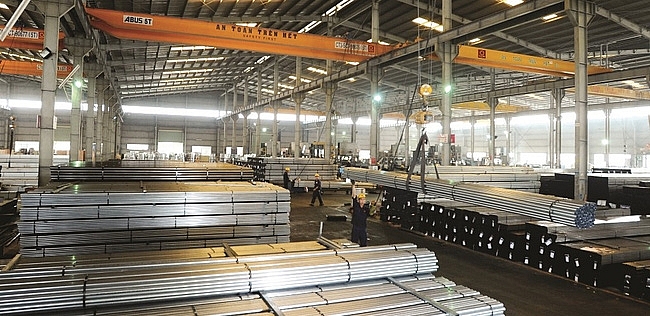
The board of management of Hoa Sen Group (HSG) has just issued the resolution on terminating the operation of affiliated branches to convert them into business locations under provincial branches. During this restructuring, 21 branches have cancelled operations, including 13 in Binh Dinh and 8 in Tay Ninh province.
HSG’s board of management justified the move by claiming it will improve performance as well as strengthen the handling of debts, liquidated contracts, and social welfare activities for the employees of these branches.
According to the annual statement released in early-2019, HSG had 491 branches and stores across the country after 15 years of significant development and success. Moreover, the group has applied the enterprise resource planning (ERP) system in order to optimise organisation and operation, reducing the number of employees to 7,000 from 9,300.
In the time coming, HSG will stop expanding. “In 2019, safety and cautiousness will be highlighted. The board of management decided not to speculate on raw materials as before, but keep inventories at 70-80 per cent of monthly demand to promote cash flows and continuous production,” said Le Phuoc Vu, HSG chairman.
During 2017-2018, the steel has been in constant flux, which increased costs. HSG’s profit has also reduced sharply due to fierce competition. A large amount of debts equalling VND14 trillion ($608.7 million) making up 70 per cent of HSG's capital, along with extensive inventory, have decreased the group’s profit.
In 2018, HSG recorded a profit of VND410 billion ($17.8 million), down 69 per cent on-year, which is the smallest profit figure it has reported in the past four years. Particularly, in the fourth quarter, HSG lost VND100 billion ($4.35 million).
In the first quarter of the new fiscal year, HSG targets selling 428,000 tonnes of steel products, achieve VND2.6 trillion ($113 million) in revenue and VND60 billion ($2.6 million) in after-tax profit. The group also set the full-year of VND31.5 trillion ($1.37 billion) and VND500 billion ($21.7 million), respectively.
Sabeco reports slight reduction in net profit for 2018
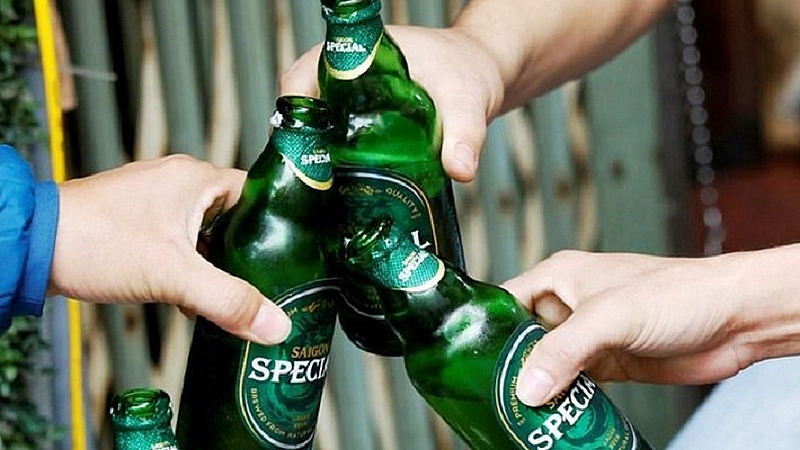
Saigon Beer-Alcohol-Beverage Corporation has just published its financial report for 2018, showcasing a slight reduction in both revenue and after-tax profit.
Accordingly, in the fourth quarter of 2018, Sabeco’s revenue reduced by VND176 billion ($7.6 million), while the cost of goods sold increased, reducing gross profit by 11 per cent (VND235 billion – $10.21 million). The reason was cited as the high price of inputs.
Sabeco’s accumulated income for the whole year of 2018 increased by 5 per cent to VND36.035 trillion ($1.57 billion). This growth comes from beer and material packaging revenue, while the remaining segments including soft drinks and alcohol both posted declines. Selling and management expenses were reduced, however, the incurred additional financial costs and reducing interest in joint venture companies decreased after-tax profit by 11 per cent to only VND4.4 trillion ($191.3 million). This is the first year Sabeco was taken over and operated by foreign shareholders.
In addition, Sabeco’s shareholders are interested in the decision to suspend the enforcement of Sabeco’s tax arrearsissued by the Ho Chi Minh City Tax Department.
According to Sabeco’s website, on January 2, 2019, this corporation received eight decisions under which the Director General of the Ho Chi Minh City Tax Department suspended the enforcement by taking money from Sabeco's bank accounts (following decisions issued by the tax department on December 28, 2018).
In addition, Sabeco received Official Letter No.01IVPCP-KTTH dated January 2, 2019 of the Government Office under which Prime Minister Nguyen Xuan Phuc directs the Ministry of Finance (MoF) and the Ho Chi Minh City People's Committee to further direct the city Tax Department to suspend the enforcement against Sabeco in relation to overdue payment and monetary penalties for special sales tax for 2007-2015 pending review by ministries and state agencies in accordance with the PM’s instructions.
Sabeco’s board of management confirmed that there was no wrongdoing in the declaration and payment of taxes, and the corporation strictly followed the instructions of the MoF and tax authorities, so they do not agree with the amount of VND3.1 trillion ($134.78 million) in the financial report.
In 2018, Sabeco was charged with tax arrears and late payment fees of over VND9.68 trillion ($420.67 million). 70 per cent of this was special consumption tax on alcoholic beverages. The company also owes more than VND1 trillion ($43.48 million) in tax arrears from previous years, accounting for nearly 18 per cent of the total value of its short-term debts.
ThaiBev, after buying more than 53 per cent of Sabeco from the Ministry of Industry and Trade at the end of 2017, then officially took over and began operating this company from April 2018. Currently, most of the board of management and the board of directors are related to the Thai shareholder. Most recently, Sabeco has been approved by the State Securities Commission to lift its foreign ownership limit to 100 per cent.
Kido reports 70 per cent decrease in pre-tax profit
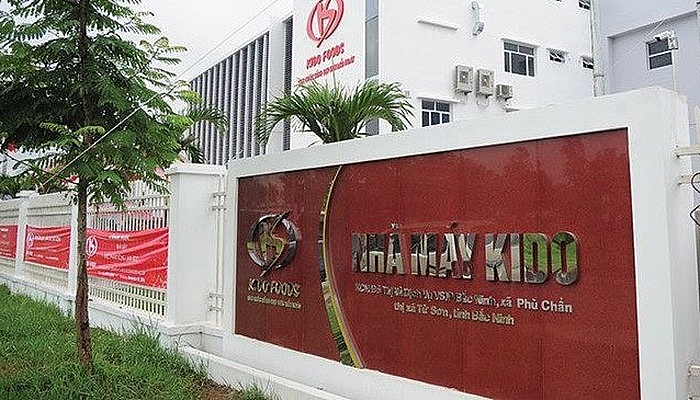
According to the business statement of the fourth quarter of last year, Kido reported VND1.89 trillion ($82.2 million) in net revenue, down 2 per cent on-year due tobleak performance in the ice-cream and yoghurt segment.
For the whole year, Kido acquired VND7.6 trillion ($330.4 million), up 8 per cent, while pre-tax profit decreased by 70 per cent to VND200 billion ($8.7 million). At the beginning of the year, the company set the target to acquire VND12 trillion ($521.7 million) in revenue and VND800 billion ($34.8 million) in pre-tax profit.
On the transaction session of January 25, Kido’s shares fetched VND20,550 ($0.89) per share, only half of their valuation last year. The company’s capitalisation was estimated at VND4.43 trillion ($192.6 million).
For the whole year, Kido acquired VND7.6 trillion ($330.4 million), up 8 per cent, while pre-tax profit decreased by 70 per cent to VND200 billion ($8.7 million).
Frozen foods, particularly ice-cream and yogurt used to be a strength of the company. KIDO Frozen Food JSC (KDF) under Kido was the leader of the ice-cream market with a market share jumping from 38 per cent in 2016 to 40.2 per cent in 2017 as sales grew by 15.7 per cent. The company set the target to hold 50 per cent share of the ice cream market in Vietnam by 2020.
However, at present, Kido is focusing on developing in the cooking oil segment. In last November, Kido completed the purchase of 51 per cent in Golden Hope Nha Be, which was a 51-49 joint venture company between Sime Darby Plantation from Malaysia and Vocarimex (a Kido subsidiary).
Golden Hope Nha Be is one of the leading cooking oil manufacturers in Vietnam with the revenue of VND1.3 trillion ($56.5 million). It is known for its Marvela and Ong Tao brands, among others.
Previously, Nguyen released that Kido has completed negotiations for the purchase of a food manufacturing and processing firm which has an annual revenue of VND1.6-2 trillion ($69.6-87 million). In late May 2017, the company wrapped up the purchase of more than 32.8 million shares of Vocarimex, increasing its total stake to more than 62.1 million, equal to 51 per cent.
Besides, in November 2016, Kido spent more than VND1 trillion ($43.5 million) on buying 65 per cent of Tuong An Vegetable Oil JSC.
ODA funding urged for key bridge in Mekong Delta region

The Ministry of Transport has sent a document to Prime Minister Nguyen Xuan Phuc proposing the use of official development assistance for building Rach Mieu 2 bridge in the Mekong Delta region, reports baodautu.vn.
The Ministry of Transport (MoT) made the proposal after the Rach Mieu 2 bridge project connecting the two provinces of Tien Giang and Ben Tre had proved financially unfeasible under the build-operate-transfer (BOT) investment format.
The document suggests PM Phuc assign both the Ministry of Planning and Investment, and the Ministry of Finance, to work alongside the MoT in order to seek official development assistance (ODA) and foreign concessional loans, with a view to hastening the implementation of the project.
The MoT attributed the unfeasible BOT execution of the Rach Mieu 2 bridge project to several ongoing BOT projects throughout National Highway 60 which stretches 115 km in total.
The first phase of Rach Mieu bridge project was inaugurated back in 2009 with toll collection underway on the Km4+617 section of the highway.
Meanwhile, the second phase is being executed to expand four sections connecting Rach Mieu bridge to Co Chien bridge. This phase is scheduled to be completed during 2019 with toll collection lasting until 2034.
Additionally, National Highway 60 is also home to the Co Chien bridge project which connects the two southern provinces of Ben Tre and Tra Vinh. This project was first put into service in 2015 with the toll collection expected to end by 2027.
The MoT had previously worked alongside Ben Tre province to find investors for the Rach Mieu 2 bridge project, including those who had invested in the Rach Mieu bridge project. However, this scheme failed as many potential financiers felt that the project had high levels of risk with unspecific returns on their investment.
Nguyen Nhat, MoT Deputy Minister, said that the use of the State budget to buy ongoing BOT projects along National Highway 60 is impossible as the country’s financial resources are limited. This also goes against the nation’s policy of incentivizing private investments in infrastructure projects.
Earlier, the MoT had met with representatives from the Republic of Korea’s Economic Development Cooperation Fund (EDCF). They revealed that the EDCF is likely to consider funding for the Rach Mieu 2 bridge project if the Vietnamese side makes a proposal.
The construction of Rach Mieu 2 bridge is an urgent need to ease traffic jams and boost socio-economic development in the Mekong Delta region as Rach Mieu bridge is currently overloaded.
Phu Quoc – potential real estate tourism market in 2019

The cable car system in Phu Quoc island
Phu Quoc island district in the southern province of Kien Giang has a lucrative tourism market and lots of potential in the real estate market for tourism and resorts.
This has opened up numerous opportunities for investors who want to do business in tourism on the pearl island.
Last year was a successful year for the Vietnamese tourism industry, as the country welcomed a record number of nearly 15.5 million international tourists.
From the beginning to the end of the year, the real estate tourism and resort market saw vigorous development in key areas such as Ha Long (Quang Ninh) and Phu Quoc.
Mauro Gasparotti, Director at Savills Hotels Asia Pacific, said the firm has a positive outlook for Vietnam’s real estate resort market in 2019.
Meanwhile, Nguyen Van Dinh, Vice Chairman of Vietnam Real Estate Brokerage Association, expressed confidence the number of transactions for real estate resort products in 2019 will surpass 2018’s figure.
The areas with the highest rate of new products will be Phu Quoc and Quang Ninh, he said, adding that Phu Quoc is expected to continue drawing investment thanks to its tourism growth.
The links between international air routes from European and Asian countries and domestic routes, and the connection from the mainland to Phu Quoc through high-speed ferries has helped attract a lot of foreign visitors to the island.
Notably, high-quality tourism products such as five-star hotels and the Sun World Hon Thom Nature Park entertainment complex with the world’s longest cable car system have boosted the island’s tourism growth.
The launch of Boutique Shophouse Melodia of Sun Premier Village Kem Beach Resort project in late November 2018 also made helped by providing various kinds of tourism services.
As a result, in 2018, Phu Quoc welcomed more than 4 million tourists, a year-on-year rise of some 36 percent.
Located 46km from the mainland, Phu Quoc is famous for pearl farming, fish sauce, pepper and “ruou sim”, a wine made from sim fruit or Rose Myrtle.
A variety of tours are provided for travellers, such as scuba diving, coral reef snorkeling, fishing and tours to visit traditional fish sauce making establishments, pearl farms, Ham Ninh fishing village, Phu Quoc National Park, pristine beaches and many more.
Hanoi welcomes over 2.4 million tourists in January

Foreign visitors take photos of a train in Hanoi. The railway running through some residential areas has become a tourist attraction in the city
Hanoi received more than 2.4 million tourists in January, a year-on-year increase of 10.4 percent, according to the municipal Department of Tourism.
Of the figure, international arrivals to the capital city reached nearly 634,000, up 16 percent compared to the same period last year. Those who stayed overnight in the city numbered 445,000, mainly from the Republic of Korea, China and Japan, according to local accommodation service providers.
Meanwhile, domestic holidaymakers amounted to 1.7 million, an increase of 8.5 percent.
Total tourism revenue was estimated to surge 34.2 percent year on year to 8.89 trillion VND (383.3 million USD).
Hanoi welcomed 5.74 million foreign visitors in 2018, up 16 percent against 2017, among 26 million tourists spending time in the city.
Last year, the city was ranked 12th among the 25 best global destinations, and one of the two cities in Vietnam to enter the most prominent group in the world in terms of room reservation.
It was nominated by the World Travel Awards as one of the 17 candidates for a prize of the world’s leading city destination 2018.
Hanoi’s key tourism markets include China, the Republic of Korea, Japan, France, the US, the UK, Germany, Thailand, Malaysia, Singapore and Canada.
Popular destinations in the city can be named as the Mausoleum of President Ho Chi Minh, the Temple of Literature and National University (Van Mieu – Quoc Tu Giam), the Hanoi Old Quarter, Thang Long Imperial Citadel, Hoan Kiem Lake and Ngoc Son Temple.
The city aims to greet 6.7 million foreign visitors out of nearly 28.6 million tourists in 2019.
Belgian-Vietnamese Alliance to boost support for businesses

Vietnamese Ambassador to Belgium and Luxembourg and head of the Vietnamese Delegation to the EU Vu Anh Quang (standing) speaks at the debut event of the Belgian-Vietnamese Alliance on January 29
The Belgian-Vietnamese Alliance (BVA) launched itself as a chamber of commerce and industry for Belgium, Luxembourg and Vietnam on January 29.
It was recognised as a member of the Federation of Belgian Chambers of Commerce on January 1.
At the debut event in Brussels, BVA President Andries Gryffroy said with its new functions, the entity will become a trustworthy partner of institutions and enterprises to develop an international business network and offer useful links for legal, economic and investment information.
Noting the alliance’s focuses in 2019, he said it will continue helping businesses learn about the content, signing and ratification of the EU-Vietnam Free Trade Agreement (EVFTA) and the Investment Protection Agreement (IPA), along with business and investment opportunities for both sides’ firms. The BVA will also provide language support for Belgian companies that want to invest and do business in Vietnam.
Vietnamese Ambassador to Belgium and Luxembourg and head of the Vietnamese Delegation to the EU Vu Anh Quang said after being signed and ratified, the EVFTA and the IPA will open up more chances for Vietnamese businesses to strengthen partnership with those of Belgium and other EU member countries.
Echoing the view, head of the EU Delegation to Vietnam Ambassador Bruno Angelet said 90 percent of transactions between Vietnam and the EU will be exempted from different taxes after 10 years, so there is huge potential for promoting bilateral trade and investment.
Founded in 2011, the BVA has made efforts to strengthen cooperation between Belgium and Vietnam in economic, cultural and social aspects. With its new functions, the alliance is expected to better serve as a bridge linking businesses of Vietnam, Belgium and Luxembourg.
Ministry allows exports of iron ore bought from Quy Xa Mine

The Ministry of Industry and Trade has given the green light to three firms to export a total volume of 340,000 tonnes of limonite iron ore which they previously bought from Quy Xa Mine of Viet-Trung Metallurgy and Mineral Company Limited in the northern province of Lao Cai.
Accordingly, Minh Duc Mining Joint Stock Company is allowed to export 200,000 tonnes, Lan Anh Construction Company Limited 70,000 tonnes and Hoang Lan Trading Company Limited 70,000 tonnes.
In December, the three companies proposed the exportation of the iron ore which they bought from Viet-Trung Metallury and Minieral Company Limited in 2018 after they failed to sell the iron ore in the domestic market
The ministry asked the three companies to report on the status of the exports regularly and must give priority to selling the ore in the domestic market in case there was demand. In addition, the ministry asked Lao Cai Province People’s Committee to tighten supervision on the export of these three companies to ensure the export of ore of right types, right origin and right volume.
Limonite is a raw ore which is subject to Viet Nam’s policy of limiting exports. The country only encourages the export of processed ore to earn higher added value.
In December 2017, the ministry also allowed Viet Phat Company to export 200,000 tonnes of iron ore from Quy Xa Mine.
Quy Xa Iron Mine, located in Van Ban District’s Son Thuy Commune, with a production capacity of three million tonnes per year, was one of two major facilities of Viet-Trung Metallurgy and Mineral Company Limited, besides Lao Cai Iron and Steel Plant.
Quy Xa Mine’s exploitation output was expected to supply Viet Trung Steel Plant, a joint venture between Viet-Trung Metallurgy and Mineral Joint Stock Company and a Chinese partner, which was one in twelve loss-making projects under the management of the Ministry of Industry and Trade.
The ministry recently proposed to remove Viet Trung Steel Plant from the list of 12 loss-making projects after Viet-Trung Metallurgy and Mineral Joint Stock Company reported profit of VND470 billion (US$420 million) in 2018.
However, the proposal faced disagreements that the profit mainly came from the export of raw ore from Quy Xa Mine while Viet Nam did not encourage the export of raw materials.
VN entitled to steep 86% tariff cuts from Japan
All seafood products that are not committed to abolishing taxes in the Viet Nam-Japan free trade agreement will be eliminated in the 6th year, 11th year or 16th year after the agreement comes into effect. — Photo thegioihoinhap.vn
According to commitments in the Comprehensive and Progressive Agreement for Trans-Pacific Partnership (CPTPP), Japan will eliminate 86 per cent of tariff lines for Viet Nam as soon as the trade pact becomes effective.
The pact became valid in Viet Nam on January 14, 2019.
This is the first time Japan has exempted most of Viet Nam’s agricultural and seafood imports from duties.
Japan also pledged to abolish taxes once the agreement takes effect for 78 per cent of Viet Nam’s agricultural exports; apply tariff quotas or partial cuts or commitments with trade defence measures for beef, pork, milk, dairy products, wheat, rice and their products.
Notably, most of Vietnamese key seafood products are entitled to a zero per cent tax rate right after the agreement comes into effect, such as yellowfin tuna, striped tuna, swordfish, some species of cod, surimi, shrimp and crab.
All seafood products that are not committed to abolishing taxes in the free trade agreement will be eliminated in the 6th year, 11th year or 16th year after the agreement comes into effect. Fruit and vegetables are committed to zero per cent tax rate in the 3rd or 5th year after the agreement comes into effect.
Ha Noi urged to change ways of using FDI capital

Ha Noi should change its mindset to draw more foreign direct investment (FDI) capital and improve the use of FDI capital in at least 10 years with rising challenges and opportunities, Deputy Prime Minister Vuong Dinh Hue said on Tuesday.
The capital city should strengthen its co-operation and development ties, take foreign investors as key partners, and carefully select the right investors to develop an independent integrative economy, he said.
The deputy PM also appreciated Ha Noi’s efforts to lure FDI capital in the past 30 years that have paid great contribution to the capital city’s socio-economic development.
In 2019-20, the city must address its top-priority sectors, which need focused investment and help the city and neighbouring provinces join the global production chain and promote their advantages, according to the deputy PM.
Ha Noi must develop an administration that serves and accompany businesses, improve investment conditions, and cut unnecessary administrative procedures for foreign companies.
According to Nguyen Doan Toan, vice chairman of the city People’s Committee, there were nearly 4,500 valid FDI projects as of December 31, 2018 with total registered capital of US$36.6 billion.
Ha Noi lured nearly $11 billion in 1989-2005, $15.2 billion in 2006-14 and $15.11 billion in 2015-18.
In 2018 alone, the value of FDI capital flowing into the city was $7.5 billion. The figure topped among 63 provinces and cities, was 2.18 times the 2017 figure and was also the highest in 30 years.
Eighty per cent of the city’s projects were totally owned by foreign investors. The remaining were associate and joint venture businesses.
FDI capital flew the most in property development (29.5 per cent of the total), processing and manufacturing industry (20.1 per cent), and telecommunication and information (11.5 per cent).
Japan was Ha Noi’s largest investor with total capital of $10.2 billion. The followers included Singapore ($6 billion) and the Republic of Korea ($5.5 billion).
According to the city chairman Nguyen Duc Chung, the city authorities had talked to investors to understand their investment plans, then showed the city’s willingness by arranging meetings between foreign businesses with top officials of the city to discuss the plans.
Besides, Ha Noi had worked to improve both living and working environment conditions for foreign companies. The city held meetings with the foreign business community to discuss and work on their problems and concerns.
The chairman also urged local authorities to set up a planning team to address key economic zones of the city with focus on logistic activities, and work with business associations to provide them with better working environment.
According to Ha Noi People’s Committee, there were some issues with the management of FDI projects such as the overlap of existing regulations, and lack of a co-working mechanism between central and local government agencies.
To resolve those problems, Ha Noi proposed the deputy PM review its draft plan on improving the quality of policies and management of FDI capital by 2030.
According to the draft plan, FDI projects must meet the socio-economic development of each local area, guaranteeing the general impact on society, economy, environment and natural resources.
With regard of the areas involving security and national defence, FDI proposals must be reviewed carefully and insightfully. The capital city of Ha Noi and neighbouring areas are urged to attract high-tech FDI projects that provide added values and benefit both socio-economic development and environmental protection.
January oil production exceeds target

Oil rigs off the coast of southern Viet Nam. Oil and gas output in January exceeded the monthly target by 5.8 per cent.
Viet Nam’s oil and gas output hit an estimated 2.05 million equivalent tonnes in January, surpassing the monthly target by 5.8 per cent.
According to Viet nam Oil and Gas Group (PetroVietnam), oil exploitation volume is 1.13 million tonnes and gas output reached 0.92 billion cubic metres, 3.7 and 8.6 per cent higher than planned, respectively.
In addition, the group’s urea fertiliser production came to 142,940 tonnes, up 4.4 per cent compared to the planned figure.
Petrol and oil production also increased to more than 1.12 million tonnes, exceeding the monthly goal by 6.7 per cent.
As a result, the group earned about VND56.8 trillion (US$2.4 billion) in revenue and contributed VND8.2 trillion ($353.7 million) to the State budget.
Also in January, PetroVietnam spent more than VND3 billion ($129,000) on social welfare projects, including building houses and presenting gifts to disadvantaged groups.
National IIP up about 8% in January

The national industrial production index (IIP) in January expanded 7.9 per cent year-on-year, much lower than the growth rate of 22.1 per cent in January 2018, according to theGeneral Statistics Office (GSO).
Despite its growth over last January’s level, the index fell 3.2 per cent from December 2018.
The processing and manufacturing sector, responsible for a large part of domestic industrial production, reported IIP growth of 10.1 per cent while the IIP growth of electricity production and distribution and the water supply and waste-sewage treatment sectors reached 8.8 per cent and 9.4 per cent, respectively.
Meanwhile, the mining sector’s IIP continued its downtrend, decreasing by 6.7 per cent year on year. Some major industrial products achieved very high production growth in January such as gasoline (95.2 per cent), raw iron and steel (68.6 per cent), beer (47.1 per cent).
However, some others had only slight growth or even declines in IIP year-on-year, such as fabrics made from natural fibers (up 1.1 per cent), rolled steel (up 0.7 per cent), NPK fertiliser (down 1 per cent), phone parts (down 2.3 per cent), sugar (down 4.6 per cent), natural gas (down 5.3 per cent), mobile phones (down 5.4 per cent), liquefied petroleum gas (down 6.2 per cent) and crude oil (down 17.1 per cent).
The GSO said Hai Phong’s IIP growth led the country with an increase of 23.6 per cent, followed by the provinces of Vinh Phuc with 18.2 per cent and Hai Duong with 11.9 per cent.
Ha Noi and HCM City had IIP surges of 6.2 per cent and 5.1 per cent, respectively.
However, Bac Ninh and Ba Ria-Vung Tau saw IIP reductions of 1.8 per cent and 5.3 per cent, respectively.
Consumer price index increases slightly in January

Vietnam’s consumer price index (CPI) in January rose 0.1 percent over the previous month and increased 2.56 percent year on year, according to the General Statistics Office (GSO).
Do Thi Ngoc, head of the GSO’s Price Statistics Department, explained that the CPI in January - the month before the Lunar New Year (Tet) festival - only increased slightly thanks to the abundant supply of goods for Tet.
Compared to the previous month, an upturn was seen in the prices of nine out of 11 groups of goods and services, leading by drinking and tobacco (0.69 percent), followed by food and catering services (0.66 percent); garment and textile, headgear and footwear (0.39 percent); housing and construction materials (0.35 percent); other goods and services (0.34 percent), and culture, entertainment and travel (0.33 percent).
Two groups enjoying a decrease in prices are transport (3.04 percent), and post and telecommunications (0.09 percent).
Ngoc said that due to higher demands, the prices of public transport and vehicle maintenance services grew 0.3 percent and 0.61 percent over the previous month. Gas price were also up 1.36 percent month on month.
One of the factors helping control the CPI in the month is the Government’s efforts to stabilise prices of goods, especially fuel with a drop of 0.29 percent.
At the same time, domestic gold price climbed up 2.25 percent over the previous month, while that of US dollar has been kept stable.
Standard Chartered arranges REE’s bond issuance
Standard Chartered Bank Vietnam on January 29 announced its arrangement for the Refrigeration Electrical Engineering Corporation (REE) to issue 2.31 trillion VND (100 million USD) in fixed rate bonds.
The issuance was guaranteed by Credit Guarantee and Investment Facility (CGIF), a trust fund of the Asian Development Bank that has been rated AA internationally by S&P Global.
REE, established in 1977, operates in the primary fields of mechanical and electrical engineering services (M&E), manufacturing and assembling and sales of Reetech air-conditioner systems, real estate development and management, and power and water utility infrastructures.
As one of the first companies to list its shares on the Ho Chi Minh Stock Exchange, REE is among the 30 largest companies in terms of market capitalisation (as of December 31, 2017, REE’s market value is 12.86 trillion VND).
According to Nirukt Sapru – a representative of Standard Chartered Bank Vietnam, ASEAN, and South Asia Cluster Markets – assisting REE in its first bond issuance helps Standard Chartered Vietnam develop its capital market.
The bank – with its deep understanding of the domestic market, large network, and considerable experience – commits to supporting its customers to concretise sustainable growth opportunities, he said.
Meanwhile, REE CFO Nguyen Ngoc Thai Binh said that the move helps his firm diversify capital mobilising measures to meet the demand of expanding its business.
The 100 million USD bonds are priced at an annual interest rate of 7 percent for the 10-year maturity term.

Hoa Phat steps up Australian beef supply in Vietnam
Hoa Phat Corporation has announced that its Hoa Phat Trading Co., Ltd., under the Hoa Phat Agricultural Development JSC, will expand the scale of its farms, further study the meat supply chain and learn about high-quality cow breeds for experimental farming in Vietnam in 2019.
Accordingly, it strives to post a 12 percent growth in beef trading and increase the market share of beef imported from Australia to 45 percent.
Last year, the Hoa Phat Trading Co., Ltd., earned a double revenue from 2017 and its imported Australian beef made up 42 percent of the market share nationwide, placing it as the top supplier of Australian beef after only three years of joining the market.
With many self-contained farms across the country, the company met nearly half of the domestic demand for beef cattle, surging its profit by 176 percent from 2017.
In 2018, it launched a partnership programme on feed for cattle with leading Australian experts to ensure that cows are cared for up to the best standards.
Hanoi needs to change mindset to draw FDI: Deputy PM

Deputy Prime Minister Vuong Dinh Hue (standing) speaks at the working session with Hanoi authorities
Hanoi needs to use a different approach in order to attract and effectively use foreign direct investment (FDI), given new opportunities and challenges that are expected to pop up in the next 10 years, Deputy Prime Minister Vuong Dinh Hue said at a working session with municipal leaders on January 29.
Hue suggested the capital city enhance investment and development cooperation, and consider foreign investors as important partners.
It is necessary to select investors and investment fields, and build an independent and self-reliant economy in line with the process of international integration, he stressed.
By December 31, 2018, Hanoi had nearly 4,500 valid investment projects with total registered capital of 36.6 billion USD, said Vice Chairman of the municipal People’s Committee Nguyen Doan Toan.
In 2018, Hanoi led the nation in FDI attraction with 7.5 billion USD, up 2.18 times against the previous year, the highest level over the past 30 years since its implementation of the policy to attract foreign investment, Toan noted.
The most attractive fields include real estate (29.53 percent), the processing and manufacturing industry (20.1 percent), and information communication (11.48 percent).
Japan is currently the biggest investor with nearly 10.2 billion USD, followed by Singapore with 6 billion USD, and the Republic of Korea with 5.48 billion USD.
To reap these outcomes, Hanoi has met directly with investors to discuss their short- and long-term investment plans in the city, said Chairman of the municipal People’s Committee Nguyen Duc Chung.
The city has also worked to improve the environment, including efforts to collect and treat waste, or deal with air pollution, and reform administrative investment procedures, he added.
In 2019-2020, Hanoi has defined some priority industries to draw investment in, towards joining global value chains and optimising the city’s advantages and strengths.
It also identified key markets to expand in, such as the US, the European Union (EU), Japan, and the Republic of Korea.
The city will focus on attracting high-tech, high added value, and environmentally friendly projects, while studying the establishment of a financial and high-tech centre at national and regional levels.

.svg)
