 Vietnamnet.vn

 Podcast



Lang Son tourism portal, application launched

A ceremony was held in the northern mountainous province of Lang Son on March 4 to launch its official tourism portal and application for use on mobile phones, following an eight-month pilot.
The portal is available at http://langsontourism.com.vn.
The activity is part of a strategic cooperation agreement between the provincial People’s Committee and the Vietnam Posts and Telecommunications Group (VNPT) for the 2015-2020 period.
The portal and application will update with information on tourist destinations, shopping outlets, local events, accommodation, restaurants, and travel agencies and services.
Speaking at the event, Vice Chairman of the provincial People’s Committee Duong Xuan Huyen asked the provincial Department of Culture, Sports, and Tourism; the Department of Information and Telecommunications; and VNPT Lang Son to work closely together to upgrade IT infrastructure as well as improve technological application to better serve investors, businesses, and domestic and foreign tourists.
On the occasion, the VNPT presented 200 million VND (8,600 USD) to a community-based tourism development programme in Mong An commune, Binh Gia district.
RoK tops foreign investors in HCM City for 2019 so far

Robots are tested at a laboratory in the Saigon Hi-tech Park of HCM City
The Republic of Korea (RoK) was the biggest investor in Ho Chi Minh City in the first two months of 2019, engulfing 43.2 percent of the city’s total foreign direct investment (FDI) for the period.
The southern largest economic hub of Vietnam attracted 1.02 billion USD of FDI capital in the year’s initial two months, equivalent to 94.7 percent of the figure for last year’s same period, according to the municipal Department of Planning and Investment.
In the list of investors, the RoK was followed by Singapore (15.8 percent), Japan (15 percent), the UK (7.3 percent), and the US (4.8 percent).
Around 96.69 million USD of the capital was channeled into 165 new projects, while another 31 million USD was added to 31 existing ones.
Among the new projects, those with science and tech-related activities attracted the most capital (51 percent), followed by wholesale and retail, along with motorised vehicle repair (34.6 percent); processing and manufacturing (5.7 percent); accommodation and food services (3.4 percent); and information and communications (2.2 percent).
In the last two months, HCM City also licensed 554 cases in which foreign investors contributed capital to or purchased shares of domestic businesses with total registered capital of over 894 million USD.
Meanwhile, more than 136.43 trillion VND (5.86 billion USD) of new and additional capital was registered by domestic investors, including over 94.26 trillion VND of some 4,400 newly established companies.
Narly 14,180 firms registered to add a total of 42.17 trillion VND to their existing capital, the Department of Planning and Investment said.
Hanoi steps up land clearance for F1 racing circuit

At the ceremony to approve a plan on the building of the F1 Hanoi Grand Prix circuit (Photo: dantri.com.vn)
Authorities in Nam Tu Liem district of Hanoi capital city are accelerating land clearance for the construction of the Formula One (F1) Hanoi Grand Prix race track surrounding My Dinh Sports Complex.
The circuit will be more than 5.5 km in length, with 22 turns. It will stretch over part of the My Dinh Sports Complex, while one section will be part of the public road.
In addition, an area has been zoned off for the construction of a control centre, a grandstand, warehouse, parking lot, and helipads to serve racing teams and spectators.
Earlier, Chairman of the municipal People’s Committee Nguyen Duc Chung approved a plan on the building of the F1 Hanoi Grand Prix circuit. Covering an area of more than 88 ha, the track will run through the wards of My Dinh 1, My Dinh 2, Me Tri, and Phu Do of Nam Tu Liem district.
The F1 Hanoi Grand Prix is set to take place in the summer of 2020.
Vietnam will be the third Southeast Asian country to host a F1 race, after Malaysia and Singapore.
Vietnamese shares gain on large-cap stocks

Vietnamese shares advanced on March 4 with the strong growth of large-cap stocks.
Vietnamese shares advanced on March 4 with the strong growth of large-cap stocks such as Vingroup (VIC), Vinhome (VHM), PV Gas (GAS), Vinamilk (VNM), and Vincome Retail (VRE).
The VN-Index on the Ho Chi Minh Stock Exchange (HoSE) edged up 14.36 points to close the trading day at 993.99 points. More than 235 million shares were traded on the bourse at over 5.03 trillion VND (215.97 million USD).
There were 230 advancers and 94 decliners.
Meanwhile, on the Hanoi Stock Exchange, the HNX-Index rose 1.27 points to close at 108.53 points. Some 54 million shares were sold on the northern bourse with a value of more than 695.7 billion VND (29.87 million USD).
VIC closed its trading day at 117,400 VND (5.04 USD) per share, up 2 percent; VHM hit 93,200 VND (4 USD) per share, up 2.4 percent; GAS at 103,000 VND (4.42 USD), up 3 percent; VNM at 142,900 VND (6.14 USD), up 1.1 percent; and VRE at 35,350 VND (1.52 USD) per share, up 1 percent.
Meanwhile, green margins dominated banking stocks, with Vietcombank (VCB), Vietinbank (CTG), BIDV (BID), Military Bank (MBB), and Techcombank (TCB) rising by 1 percent, 1.9 percent, 2.3 percent, 1.6 percent, and 1.5 percent, respectively.
Strong growth was witnessed in oil and gas as well as financial service groups, with the highest expansion seen in PetroVietnam Drilling Mud (PVC) at 8 percent and PetroVietnam Drilling and Well Services (PVD) by 5.4 percent.
Foreign investors remained net sellers at the beginning of the week, recording more than 137 billion VND (5.88 million USD) in value by selling 1.4 million shares on the HoSE.
Meanwhile, on the HNX, foreign players net sold over 1.4 million shares worth 4.23 billion VND (181,600 USD).
Festival to promote Buon Ma Thuot coffee brand

Decoration underway at coffee book street
The Central Highlands province of Dak Lak is busy preparing for the seventh annual Buon Ma Thuot coffee festival, which is expected to promote the local coffee brand to visitors.
According to Vice Director of the provincial Department of Culture, Sports, and Tourism Nguyen Thuy Phuong Hieu, decorations are being made for the March 9-16 festival, while competent authorities are paying due attention to ensuring social order and food hygiene during the festival.
Inspections will be enhanced, assuring that local service prices will be stabilised, she said.
Meanwhile, traffic police forces will be arrange to manage traffic flow, bringing safety to both local people and visitors, said head of the traffic police division under the provincial Department of Public Security Nguyen Quang Vinh.
The festival will feature a wide range of activities, including the 2019 Dak Lak investment promotion conference, an exhibition on coffee, a seminar on the development of Vietnamese specialty coffee, a photography exhibition on the history of coffee, a street festival, a contest for farmers, a Buon Don elephant festival, and a culinary competition.
Miss Universe Vietnam 2017 H’Hen Nie, who also finished in the top five for Miss Universe 2018, has been selected as the communications ambassador of the festival.
Vietnam exported more than 1.8 million tonnes of coffee worth 3.54 billion USD in 2018, an increase of 20 percent in volume and 1.2 percent in value compared to the previous year.
The Central Highlands province of Dak Lak boasts the country’s largest coffee-growing land with a total area of about 190,000 ha, producing 450,000 tonnes of coffee beans annually.
Binh Phuoc to awaken its ecotourism tourism
The poetic and untouched landscape of Bù Lạch grass plot in Đồng Nai commune, Bù Đăng district has captured the hearts of many visitors both far and wide. Tourists can immerse themselves in the beautiful scenery and take a leisurely stroll on endless fields of green grass.
Here lies a picturesque scene of a sparkling lake formed by groundwater, surrounded by forests and waterfalls. The grass plot has recently become more popular amongst travellers.
Binh Phuoc province is said to be the sleeping beauty among all the famous tourism sites of Vietnam, with its ecotourism sector in particular needing a strong call to attention.
GoBear Vietnam inks deal with FE Credit

GoBear and FE Credit have signed a deal to drive greater financial inclusion for Vietnamese people.
GoBear, Asia’s first and only metasearch engine for insurance and banking products, and FE Credit, the largest lender in Vietnam’s consumer finance market, have signed a deal to drive greater financial inclusion for Vietnamese people.
Under the partnership, GoBear Vietnam will synergise with FE Credit’s award-winning end-to-end digital lending mobile app $NAP.
The new GoBear powered by FE Credit app will enable an entirely digital application process, streamlining the user journey from comparison to application, and loan pre-approval within 15 minutes.
This will bring better access to unsecured loans to millions of Vietnamese who do not have banking accounts.
The app uses new technologies including facial recognition, AI algorithms, optical character recognition (OCR) and intelligent character recognition (ICR), voice-ased virtual assistant, speech to text, eSignature and more, to enable the lender to extend credit to unbanked customers while keeping risk in check.
Kalidas Ghose, vice chairman and CEO of FE Credit, said “As Vietnam’s economy continues to thrive, we see many opportunities to collaborate with financial technology companies to accelerate financial inclusion for the country.”
Bao Nguyen, country director of GoBear Vietnam, said: "Improving financial inclusion and serving the unbanked is very important in an emerging market like Vietnam. They have limited access to mainstream financial services, which is a significant problem as it can substantially restrict the flow of capital to would-be entrepreneurs and small businesses.
“With the new GoBear powered by FE Credit app, I believe we can help to improve financial accessibility for our users.”
The app is available for download on the Google Play store and will be available soon on the Apple’s App Store.
Since its entry in Vietnam in December 2016 with eight products — comparison of credit cards, personal loans, travel insurance, fixed deposits, bank accounts, home loan, home equity loan and car loan, GoBear Vietnam has received more than 10 million visitors on its website www.gobear.com/vn.
Programme enhances business linkages with European partners

At the “Meeting with Partners from Europe 2019” programme (Photo: congthuong.vn)
The “Meeting with Partners from Europe 2019” programme was held in Hanoi on March 4 as part of the Ministry of Industry and Trade’s efforts to promote trade and investment between Vietnamese businesses and European partners.
The event drew more than 100 representatives from Vietnamese ministries, sectors and localities, ambassadors and trade counsellors from the delegation of the European Commission to Vietnam and Russia, the UK, Sweden, Denmark, Ireland, Spain and Italy. More than 100 Vietnamese and European businesses were also represented at the programme.
In his remarks, Deputy Minister of Industry and Trade Hoang Quoc Vuong noted the thriving economic, trade and investment ties between Vietnam and the 40 European nations the country has has trade relations with.
Last year, two-way trade reached 62.11 billion USD, with Vietnam’s exports worth 44.93 billion USD, or 20 percent of the country’s total shipments.
In addition, European investors registered nearly 50 billion USD in 3,300 projects in Vietnam, he added.
Vuong expressed his hope that the programme will help enhance connectivity, and open opportunities for both sides to develop trade ties.
In the framework of the programme, a special zone was arranged to exhibit Vietnam’s standout products like coffee, leather shoes and household goods.
Samsung helps train Vietnamese support industry experts

Samsung in collaboration with the Ministry of Industry and Trade of Vietnam officially launched its first course in the Republic of Korea on March 4 for Vietnam’s support industry experts.
The course, the first of its kind between the two sides, will last for 14 weeks. Fourteen attendants are doctors from universities and government officials in charge of support industry from Ho Chi Minh City, Bac Ninh and Vinh Phuc provinces.
They will have the chance to learn about the world’s leading production processes at Samsung factories in Suwon, Gumi, and Kwangju as well as other outstanding enterprises in the RoK through similar cooperation programmes between Samsung and the Korea Institute for Advancement of Technology.
Vietnam Airlines launches “Hello Summer” promotion

National flag carrier Vietnam Airlines will launch its biggest annual promotion “Hello Summer 2019” on 90 domestic and foreign routes from March 15-24.
Passengers will have a chance to buy fares for domestic flights at 299,000 VND (13 USD) per route, and round-trip flights from Vietnam to other countries at 9 USD, before taxes and fees. The flights will depart from April 1 – October 31.
With nearly 40 domestic and more than 50 foreign flights, Vietnam Airlines can fly passengers to destinations across Vietnam, Southeast Asia, Northeast Asia, Europe and Australia.
During the promotion, the carrier advised passengers to buy tickets on its website or at official booking offices.
Chan May-Lang Co economic zone lures more investment

Chairman of the provincial People’s Committee Phan Ngoc Tho (R) presents investment decision to investor of Kim Long Motors manufacturing and assembling complex
The Chan May-Lang Co Economic Zone in the central province of Thua Thien-Hue attracted four projects with a total registered capital of over 15 trillion VND (652 million USD) in the first two months of 2019.
The four new projects bring to the total number at the economic zone to nearly 50 projects worth over 76 trillion VND (3.28 billion USD).
Notable projects include Kim Long Motors manufacturing and assembling complex worth more than 3 trillion VND, Lang Co-Lap An Lagoon, Bai Ca tourist areas, and Lang Co market.
The economic zone is upgrading its facilities to raise its wharves’ capacity to 6 million tonnes of cargo each year. By 2020, the province will complete a wave-proof dyke project to ensure safety for container vessels.
Chairman of the provincial People’s Committee Phan Ngoc Tho said Chan May port will accommodate six wharves with a total length of 1,680m by 2020, and eight wharves by 2030 along with an oil and gas wharf and a wharf for tourist boats.
After upgrade, the port is capable of receiving vessels up to 30,000 DWT and large-scale cruise liners with 3,000-4,000 passengers.
Located between Da Nang city and the ancient capital city of Hue, near UNESCO-recognised sites such as Hoi An ancient city and My Son Sanctuary, Chan May is the nearest and most convenient gateway to the East Sea from the East-West Economic Corridor, and a main port on the sea route connecting Singapore, the Philippines, Hong Kong (China) and Vietnam.
It welcomes about 40 cruisers each year, many of them are luxury ones. Chan May has become one of the 46 seaports chosen by the Asia Cruise Association as a stop-over for cruise liners in Southeast Asia.
Transport infrastructure in the economic zone has gradually improved, creating a chain connecting tourist and industrial areas, and seaports. Roads are also being built to develop tourist services.
RoK’s cosmetics firm plans to raise market share in Vietnam
AmorePacific, a major cosmetics conglomerate of the Republic of Korea (RoK), is planning to open retail shops and boost online selling so as to promote the consumption of its products in Hanoi and Ho Chi Minh City.
A representative of AmorePacific revealed the plan while talking to the Vietnam News Agency about its moves to gain a bigger market share in Vietnam.
Explaining the reason for this plan, the firm said Vietnam has a fast-growing economy, its population’s average age is 29, while the rates of working-age people and women are high, leading to high purchasing power.
It will open small shops to offer Vietnamese consumers products to try and improve their brand awareness.
Aside from Vietnam, AmorePacific, known for such brands as Sulwhasoo, Laneige, Mamonde and Innisfree, is also targeting other Southeast Asian markets like Singapore, Malaysia, Thailand and Indonesia.
Cement exports enjoy rise during first two months

The export of cement and clinker rose in both volume and value during the first two months of this year with Asian importers topping the list.
Cement and clinker exports recorded 5.37 million tons in volume and US$228 million in value during the first two months of 2019.
According to the Import-Export Department under the Ministry of Industry and Trade, the overseas shipments of cement and clinker in February were estimated at 2.5 million tons, totaling US$105 million in value.
These figures lifted the total cement and clinker exports during the first two months of the year to 5.37 million tons in volume and US$228 million in value, representing respective rises of 7.4 per cent and 29.9 per cent on year.
The Philippines was recorded as the largest importer of Vietnamese cement and clinker during the two-month period, with the consumption of 778,200 tons. This was followed by other Asian markets, including Bangladesh, China, Taiwan (China), and Malaysia.
Cement and clinker exports to Australia surged beyond expectations by hitting 25,700 tons in volume and US$1.3 million in value, soaring by 42 times and 18.2 times, respectively.
January in particular also saw cement and clinker exports enjoy a surge.
Hanoi: 1,300 more apartments to be available

Hanoi will soon have 1,300 new apartments thanks to a social housing project invested by Capital House Group, a real estate developer focusing on green buildings in Vietnam.
Located on Tan Xuan street of Bac Tu Liem district, construction on the Ecohome 3 project will start this month. The project with two 31-storey buildings is expected to be put into use in the fourth quarter of 2020, with a total investment of about 1.89 trillion VND (81.3 million USD).
Ecohome 3 will be Vietnam’s first social housing project to receive the Excellence in Design for Greater Efficiencies (EDGE) from the International Financial Corporation with 25 percent of energy, 36 percent of water and 32 percent of embodied energy in materials predicted to be saved.
Earlier, Capital House put into use Ecohome 1 and Ecohome 2 in December 2014 and January 2016, providing 1,900 apartments for nearly 5,000 people with low incomes.
In 2018, the group won the Achievement in Transformational Infrastructure: Green Buildings award from The Financial Times for its EDGE-certified property, Ecohome Phuc Loi.
US – top destination for Vietnamese investors in January-February

The US was the top destination for Vietnamese investors in the first two months of 2019, absorbing 5.3 million USD, or 84.8 percent out of the total overseas investment in the period.
Other destinations are Singapore, Finland, and Japan.
According to the General Statistics Office, local investors poured a combined 6.05 million USD in five new projects abroad in the period, and added 200,000 USD to an existing project in Myanmar.
Of the amount, 5.6 million USD was invested in three projects in wholesale and retail, and the remainder went into two projects in science-technology, and information and technology.
Last year, Vietnam’s investment overseas reached 432.1 million USD. Among 38 countries and territories where Vietnamese investors are doing business, Laos received the most investment with 81.5 million USD. It is followed by Australia and the US.
Experts outline pathways to improve competitiveness

Experts have called for greater efforts to increase the competitiveness of products, enterprises, and the nation at large, amidst radical challenges from signed and pending free trade agreements.
The free trade agreements which Vietnam signed and has been negotiating are expected to further boost access for domestic firms and their products to overseas markets.
The free trade agreements (FTA) which Vietnam signed and has been negotiating are expected to further boost access for domestic firms and their products to overseas markets. This in turn looks set to facilitate job generation, thus spurring economic growth.
Vietnam’s trade turnover was estimated at US$482 billion throughout 2018. As for the first two months of 2019, a positive figure of US$35 billion was recorded.
Local firms have tapped into the full advantages of exploiting traditional markets while maximizing efforts to increase market penetration and searching for new importers.
According to economic expert Vo Tri Thanh, Vietnam has taken advantage of furthering its integration into an increasingly globalized world. He underpinned his stance by the fact that the country has reached many FTAs and strategic partnership deals.
Local production and business activities are on the right track to keep up with global trends which advocate the establishment of production and value chains, the penetration of big markets, as well as a circle of capable entrepreneurs and investors.
Thanh raised concerns about the fact that accelerating trade protectionism, US-China trade tensions, and the pending Brexit process, are critical issues which could present a threat to policy instability and have adverse impacts on the global economy and trading.
Bui Thanh Son, Deputy Minister of Foreign Affairs, emphasized the need to take a more proactive part in global integration, heighten economic resilience, and to improve competitiveness edges.
The realization of commitments that Vietnam moves further along the global integration process is set to pose competitiveness-related issues at three levels, ranging from products, enterprises, and the nation, Son said.
He noted that a big problem remains on how to implement FTAs effectively with the aim of tapping into internal forces, improving productivity and competitiveness, and nurturing “rare Vietnamese genetic features” which could benefit the national economy.
Assoc. Prof. Dr. Vu Minh Khuong, a lecturer from the Lee Kuan Yew School of Public Policy (National University of Singapore), claimed that Vietnam’s growth model is heavily dependent on foreign trade, which in turn makes itself vulnerable to global fluctuations.
Khuong, who is also a member of the Macroeconomic Advisory Group for the Vietnamese Prime Minister, suggested that the country could found an economic reform council which is to focus on fostering reforms in line with global developments and facilitating free and fair trade.
Vietnam also needs to enhance its economic resilience to global economic developments with the country currently being at risk to market fluctuations, the lecturer said.
He noted that importance should therefore be attached to building institutions related to macro-economics, social issues, and others, adding that foreign loans should be restricted while efforts should be raised to better productivity and sustainability.
Khuong also called for sustained efforts to increase the efficiency of administration work and the reforms of economic institutions, as well as review and update administration - related scenarios which could include timely predictions.
Additionally, he underscored the significance of taking prompt actions in response to the wide-ranging impact that global trade competitiveness and protectionism have on the domestic economy.
Due attention should be paid to increasing exports and giving selective priority to foreign investment inflows, he suggested.
Start-up incubation programme launched in Hanoi

A start-up incubation programme, entitled “Start & Up – Behind the Scene”, was launched in Hanoi on March 4.
Co-hosted by the National Economics University (NEU)’s Centre for Social Innovation and Entrepreneurship, the Republic of Korea’s Nextrans venture fund, and V-Startup, the programme aims to seek start-ups with potential and provide them with capital, training, and market access.
The online training curriculum will feature interviews with CEOs and founders, as well as success and failure stories collected by founders of successful start-ups and corporate executives of major tech firms.
A maximum of 100 start-ups with be entered into the programme, each with the chance of receiving 20,000 USD for their ideas. On completion of achieving their original set goals, they could receive an additional nearly 200,000 USD and enter the second round of funding from Nextrans’ global investors.
NEU Rector Tran Tho Dat said that in order to promote entrepreneurship among students and new businesses, support from investors is needed to turn their ideas into reality.
He suggested closer linkages between students and businesses to create products meeting market demand.
Japan promotes investment in manufacturing in Vietnam

Japanese businesses appreciate Vietnam's business and investment environment and tend to boost investment in manufacturing in Vietnam.
This information was announced by the Japan External Trade Organisation (JETRO) in Ho Chi Minh City at a press conference on surveys covering the operations of Japanese enterprises in Asia and Oceania, held in Ho Chi Minh City, on March 4.
In 2018, Japan was the largest foreign investor in Vietnam with a total registered capital of nearly US$ 8 billion, accounting for 31% of the total foreign direct investment into Vietnam. In particular, investment in manufacturing tended to recover strongly after many years of continuous decline.
Explaining the investment trend of Japanese enterprises in Vietnam, Takimoto Koji, Head of JETRO in Ho Chi Minh City, said that Japanese enterprises highly appreciate the investment and business environment of Vietnam as well as the political and social stability.
According to the Head of JETRO in Ho Chi Minh City, in 2019, the manufacturing industry is still a field of interest and investment by Japanese enterprises in Vietnam. In addition, indirect investment and services also tend to increase.
However, Japanese enterprises still believe that Vietnam needs to improve the legal system, information transparency and operational mechanisms to attract more foreign investors in the future.
SwanCity co-operates with KinderWorld for Singapore-standard education
The co-operation between SwanCity and KinderWorld will contribute to improving the quality of the education sector of Vietnam, while simultaneously luring customers to SwanCity projects.
Real estate developer SwanCity and leading education group in Vietnam KinderWorld recently signed an agreement to develop a Singapore-standard education system at the former’s projects.
Accordingly, the construction of the first school will be implemented at SwanBay in Dong Nai province.
KinderWorld is the largest owner-operator of foreign-invested international schools in Vietnam with a market share amongst multi-level operators of 22.4-28.6 per cent based on market value. It has been in Vietnam since the commencement of its first KinderWorld International Kindergarten in Ho Chi Minh City in 2000 and currently provides education services for students from 18 months to 18 years of age through three main brands – KinderWorld International Kindergarten, Singapore International School, and Singapore Vietnam International School.
It offers three different programmes – International Programme, Integrated Programme, and Premium Vietnamese Education Programme – each providing different certifications and catering to the different needs of students.
Ho Chi Minh City tops nation in foreign investment attraction
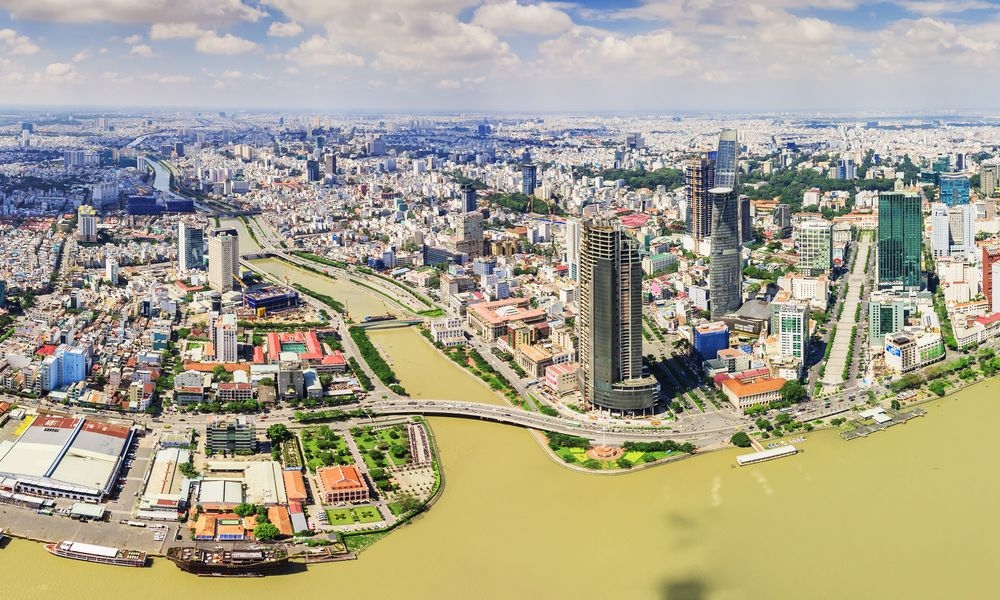
Ho Chi Minh City leads the country’s cities and provinces in attracting foreign investment capital in the first month of 2019, mainly through capital contribution and share acquisition deals.
According to a report by the Ministry of Planning and Investment, in January 2019, Ho Chi Minh City continued to attract the largest volume of foreign direct investment (FDI) in the country. Specifically, the city attracted $745.7 million, accounting for 39.1 per cent of the total investment.
According to a report by the municipal People’s Committee, 68 FDI projects were granted new investment registration certificates with a total investment capital of $32.72 million in January, increasing by 36 per cent in number and making up 33.7 per cent of the investment capital attracted last year. Another 11 projects increased investment capital by $4.07 million.
The city has also licensed 191 foreign investors to contribute capital to and/or buy shares worth a total of $452.71 million in the city, up 1.6 per cent in the number of cases and 3.7 per cent in investment capital.
According to Le Thanh Liem, deputy chairman of the Ho Chi Minh City People's Committee, the city attracted $7 billion in FDI capital last year, $6 billion of which came through capital contribution and share acquisition deals.
He noted that mergers and acquisitions (M&A) activities have picked up momentum in recent years. M&A capital in the city increased from $1.5 billion in 2016 to $3.68 billion in 2017. Since 1988, foreign investors have been licensed to pump over $10 billion into Ho Chi Minh City via M&A deals, accounting for 22 per cent of the total FDI in the city.
According to experts, foreign investors prefer investment through capital contribution and share acquisition as the current procedures for these deals are favourable. Accordingly, investors can register with regulatory bodies instead of applying for investment licenses when contributing capital to and/or buying shares at local companies.
However, local authorities are cautious about investment via M&A. According to a representative of the city’s Department of Planning and Investment, this form of investment may help foreign investors avoid some issues related to the state management of investment.
Foreign investors do not need to set up investment projects and apply for investment certificates if they acquire 100 per cent of a local company. When acquiring a property project from local firms, foreign investors do not need to deal with procedures of project transfer.
“Despite being an important channel to attract foreign capital, the form of investment remains a headache to regulatory bodies,” he said, noting that it needs legal documents guiding the management of this capital flow.
Public investment disbursement low in first two months of 2019

A city view of Ha Noi. The Ministry of Finance has to push the disbursement of public investment. - Photo congluan.vn
Disbursement of public investment was low in the first two months of this year partly due to the impacts of the nine-day Tet (Lunar New Year) holiday, according to a Ministry of Finance report.
The report showed that VND16.2 trillion (US$685 million) of public investment was disbursed in January and February, equivalent to 3.89 per cent of the National Assembly target set for the full year.
The ministry attributed the low public investment disbursement to the impacts of the prolonged Tet holiday in early February.
In addition, ministries, ministerial-level agencies and local authorities were still completing plans for public investment in the first two months of this year, making disbursement progress slow in the period.
The finance asked for relevant parties to speed up the progress of public investment disbursement.
The National Assembly has decided to spend VND416.8 trillion for development investment in 2019, 88 per cent of which would come from domestic capital and 12 per cent from foreign capital.
The disbursement of public investment in 2018 reached VND263.6 trillion, meeting just 66 per cent of the National Assembly’s target.
Economic expert Vu Dinh Anh said that greater efforts were needed to reform investment procedures to create favourable conditions for contractors in implementing Government–funded projects.
Việt Nam PMI declined to 51.2 in February

Viet Nam’s Manufacturing Purchasing Managers’ Index (PMI) in February fell for the third month in a row to 51.2, according to the latest reports from Nikkei and IHS Markit.
Though the index was down from 51.9 in January and the lowest since March 2016, it remained above the critical 50-point threshold that separates expansion from contraction in manufacturing output.
According to the report, while both output and new orders rose at sharper rates in February, the headline index was pulled down by reductions in employment and stocks of purchases.
“International demand weakness held back the Vietnamese manufacturing sector in February. New export orders rose at the slowest pace in over three years and signs of softening demand led firms to scale back employment,” Andrew Harker, associate director at IHS Markit, which compiles the survey, said.
The report showed that the decline in staffing levels was the first in almost three years as manufacturers responded to relatively weak new order growth in recent months. The reduction represented a marked turnaround from a record pace of job creation in November 2018.
“Although new orders continued to rise, and at a faster pace than in January, the latest expansion was much slower than those seen towards the end of 2018. The rate of expansion in new export orders, meanwhile, eased to a 37-month low,” it said.
Production growth quickened in February and was solid, but the latest rise was below the average seen across 2018. Where output increased, panellists reported that customer demand had improved.
According to the report, despite cutting back on staffing levels, Vietnamese manufacturers were again able to reduce their backlog of work as new order growth remained relatively weak. In fact, outstanding business decreased to the greatest extent in almost a year.
Stocks of purchases fell for the first time in 11 months, in spite of continued growth of purchasing activity. Stocks of finished goods increased, albeit to the least extent in the current five-month sequence of accumulation. Some panellists reported raising inventory holdings in line with expectations of further new order growth, but others indicated that softer rises in new work in recent months had led to an accumulation of unsold products.
Manufacturers registered a slight rise in input costs for the second month running in February, with the rate of inflation well below the series average. With cost burdens increasing only modestly, there remained a lack of pressure on firms to raise selling prices. Output prices were lowered for the fifth time in the past six months as part of efforts to attract new business in a softer demand environment.
Manufacturers remained optimistic that output would increase over the coming year, with confidence fuelled by expected improvements in market demand and new order growth. That said, sentiment eased to a four-month low and was below the series average.
“The sector remained in growth territory, however, with Vietnamese manufacturers able to secure greater volumes of new work despite current challenges,” Harker said.
Farmers use advanced techniques to breed fish in cages
High-density polyethylene (HDPE) floating cages are used to breed fish on the Chà Và River in Bà Rịa-Vũng Tàu Province’s Vũng Tàu City.
Farmers who breed marine fish in floating cages in Vũng Tàu City in the southern province of Bà Rịa-Vũng Tàu are using new advanced farming techniques with good results.
The new advanced techniques are using high-density polyethylene (HDPE) floating cages and nets with anti-fouling coatings, based on Norwegian technology.
A HDPE floating cage has three main parts: a frame, net and anchor. The frame is a buoy made of HDPE pipes and has either a round or square shape.
The floating cages can endure winds and waves, are easy to move, and can breed a large quantity of fish. They are convenient for checking and harvesting fish.
The floating cages are located in sea areas that are located far from shore and have clean water, preventing pollution and disease among fish.
Nguyễn Huy Hải, who has five such floating cages for breeding 25,000 pomfret and 5,000 cobia on the Chà Và River in Long Sơn Commune, said he had used this type of floating cages for two years.
Each floating cage has a perimeter of 100m and a depth of 4 – 6m.
The large perimeter allows the fish to swim and eat comfortably so they can grow faster, he said.
The profit from breeding fish in HDPE floating cages is higher than that of traditional wooden floating cages.
The cost of a HDPE floating cage is about VNĐ210 million (US$9,000), but it can be used for up to 30 years.
Many farmers own nets treated with antifouling coating to inhibit the build-up of marine organisms on the nets. Nets are coated with antifouling paint by dipping and drying.
Phan Hoàng Sơn, who breeds fish in floating cages on the Chà Và River, has used the coated nets for six months.
“Previously, I had to change and clean normal nets every week and this took much time and labour costs. With coated nets, the cleaning is easier,” Sơn said.
With coated nets, fish breeders have to change nets for cleaning every one to four months, he said.
Nguyễn Hữu Thi, head of the province’s Fisheries Sub-department’s Aquaculture Management Division, said the use of HDPE floating cages and anti-fouling coating nets have had positive results.
The use of anti-fouling coated nets helps fish breeders cut the pollution in the water in floating cages and nearby environment.
Bà Rịa-Vũng Tàu has zoned its cage aquaculture in three main areas - the Chà Và River, the Dinh River in Vũng Tàu City’s Ward 12 and the Mỏ Nhát River in Phú Mỹ Town.
Last year the province had 11,361 floating fish cages, according to the province’s Department of Agriculture and Rural Development.
To develop cage aquaculture, the department has warned fish farmers to pay attention to the quality of fish seed and market demand, and use advanced farming techniques to increase the quality of fish and other aquatic species bred in floating cages.
The department is also building a brand name for the province’s fish bred in floating cages so they can be sold directly to wholesale markets and supermarkets. This would add more income for farmers.
Last year, farmers had good profits because of the high yield and price of fish and other aquatic species.
Favourable weather conditions and quality water resources contributed to the high yield of fish and other aquatic species bred in floating cages, according to the province’s Aquaculture Management Division.
Hanoi to host first trade fair on traditional medicine
The first national trade fair on traditional medicine will be held in Hanoi from March 20-25, heard a press briefing on March 4.
The event will be co-organised by the Ministry of Agriculture and Rural Development’s Trade Promotion Centre for Agriculture (Agritrade) and the Ministry of Health’s (MoH) Department of Traditional Medicine and Pharmacy Management. It is expected to host up to 150 pavilions.
Agritrade Director Dao Van Ho said the trade fair will introduce and promote clean and safe traditional medicine of high quality, thus serving as a trustworthy destination for consumers.
It also aims to connect herb growers and traders with firms manufacturing traditional medicine, thus bolstering consumption of the products, he added.
According to the MoH, about 1,300 medicinal plant species have been found in Vietnam, with the country’s herbal medicine industry manufacturing under the World Health Organisation’s good manufacturing practices.

.svg)
