 Vietnamnet.vn

 Podcast



VN-Index fail to maintain 1,000 points

An investor follows stock movements on his mobile phone at the Saigon Securities (SSI) trading floor in Hà Nội
Although the VN-Index successfully surpassed the 1,000-point landmark on Thursday morning, it did not maintain the uptrend in the afternoon as the large selling force put pressure on many large-caps.
Việt Nam’s benchmark VN-Index on the Hồ Chí Minh Stock Exchange (HoSE) decreased by 0.05 per cent to end 994.03 points.
The southern market index increased by 0.21 per cent to end Wednesday at 994.49 points.
On the Hà Nội Stock Exchange, the HNX-Index climbed 0.37 per cent to end the session at 108.88 points.
It rose 0.21 per cent to end Wednesday’s session at 108.48 points..
A total of 293 million shares worth a combined VNĐ5.5 trillion (US$235 million) changed hands on the two bourses.
The VN30 Index, which tracks the top 30 shares by market value and liquidity on the HoSE, decreased 0.14 per cent to end at 922.29 points.
The market experienced a wide divergence amid large-cap stocks. Banking gained by 0.43 per cent with a small across-the-board increase. Real estate was up by 0.70 per cent thanks to Vingroup’s increase.
Oil and gas lost by 0.93 per cent as all the previously up stocks fell, including PetroVietnam Gas JSC (GAS), Việt Nam National Petroleum Group (PLX), PetroVietnam Drilling and Wells Service (PVD) and PetroVietnam Coating JSC (PVB). Media stock dropped by 5.43 per cent, marking its fourth consecutive declining session.
Quốc Cường Gia Lai Joint Stock Company (QCG) attracted attention when hitting the daily limit rise of 7 per cent, closing at VNĐ5,370 per share. Other codes like Vinaconex Investment and Tourism Development JSC (VCR), Sonadezi Long Thành (SZL) and Vạn Phát Hưng Corporation (VPH) also touched ceiling prices.
On the other side, many large caps declined in the session such as steel maker Hòa Phát Group (HPG), falling 2.6 per cent, Vietnam Commercial Joint Stock Export Import Bank (EIB), losing 1.7 per cent, Petrovietnam Fertiliser & Chemicals Corporation (DPM), decreasing 1.4 per cent, Refrigeration Electrical Engineering Corporation (REE) and Thành Thành Công — Biên Hòa Joint Stock Company (SBT), both slumping 1.3 per cent.
According to BIDV Securities Company (BSC), the market continued to have a fluctuating trading session under the resistance of 1,000 points, when domestic and international investors’ psychology is still waiting for new signals of trade negotiations between US — China and other new supporting information for the market.
Investors should continue to observe the world and domestic economic fluctuations to make investment decisions, gradually reducing the proportion of stocks in the portfolio, BSC said in its daily report.
Discounts for Int’l Women’s Day

A fashion shop at Rex Hotel in HCM City. On the occasion of International Women’s Day, many retailers nationwide are offering promotion programmes to female customers.
Retailers nationwide, including fashion companies, restaurants, service providers and online shopping platforms, are offering attractive promotion programmes for women on International Women’s Day, which falls on March 8.
As one of the companies that launched promotion programmes early for Women’s Day, Global Link Corporation, the owner of Runway fashion store chain and Tavola Restaurant announced they will have a special programme for their clients who use their service on Women’s Day.
From the beginning of this month until March 8, customers buying products at Runway stores will receive a gift. All women at tables at Tavola, the Italian restaurant in HCM City, will enjoy 15 per cent off their bill. An extra 5 per cent off will be counted if they book the table before 8 March.
A representative from Global Link told Viet Nam News that every year the company often organises special promotion programmes on this special day to honour women in the country and to attract more clients.
The Phu Nhuan Jewelry Joint Stock Company has launched a programme You Are My Sunshine to welcome the day as a thank you to women.
Huynh Van Tan, foreign relations director of the company, said that up to March 10 the company would apply a discount of 12 per cent on selected products.
A lucky draw will also be organised to select customers with the six biggest prizes worth one tael of gold each. Customers with bills of VND5 million (US$225) or more will also receive a gift.
Meanwhile, Sai Gon Jewelry Company Ltd (SJC) is offering a discount of 10 per cent on all jewelry products. Many other gifts will be sent to clients on the occasion.
This year, the promotion race among retailers and company has seen participation from banks, with a number of them launching attractive programmes.
For instance, the Orient Commercial Joint Stock Bank (OCB) is offering all female customers who open saving accounts up to March 15 an extra 0.2 per cent on the interest rate.
If they have transactions with the bank during this time, female customers will also receive many gifts. Owners of OCB bank cards will receive promotions from mobile applications like Grab, Leflair.vn and other services.
Sacombank is offering vouchers to buy flowers or cosmetics. Female customers will receive a preferential interest rate of up to 8 per cent per year if they have savings at the bank.
Many other programmes will be applied to company executives who are women.
As e-commerce is developing in the country, many clients are choosing online products rather than going to physical stores. Seeing the demand, online shops have also raced to introduce promotions to attract customers.
Many websites like tiki.vn, shopee.vn, sendo.vn and lazada.vn have introduced promotions in which the online platform co-operates with merchants to reduce prices or give presents to customers.
Shopee.vn has partnered with L’Oreal for the launch of the debut regional super brand day on Shopee.
In celebration of women and sharing beauty for all, Shopee users across seven countries will be treated to an exclusive range of deals from the top three women’s internationally favorite L’Oreal brands – L’Oreal Paris, Maybelline New York, and NYX Professional Makeup.
Themed “Women’s Day, Live Your Beauty”, the programme runs from March 5-8, and will feature unbeatable L’Oreal offers, exclusive first launches, and giveaways via the L’Oreal Official Store on Shopee Mall.
Lazada.vn, meanwhile, is offering programmes for women and mothers. Amateur sellers who open shops on Facebook are also offering many promotions to get more customers.
The International Women’s Day this year falls on a weekend so a boom in purchases is expected, with many retailers prepared for the day.
Dutch company eyes 5,000 ha of clean cashew land in Binh Phuoc

A farmer in Binh Phuoc takes care of the cashew farm
The MCE-MARD Group of the Netherlands has proposed to grow 5,000 ha of clean cashew trees in the southern province of Binh Phuoc to process the nuts for export, according to Vice Chairman of the provincial People’s Committee Huynh Anh Minh on March 6.
The Dutch firm also proposed to cultivate the plant on an area of 100 ha in a pilot project to establish a production chain, and connect with cooperatives in the province.
Binh Phuoc authorities have encouraged the company to join hands with local farmers and cooperatives, which will create optimal conditions for the establishment of a site producing clean cashew material.
The province is home to more than 71,600 households growing cashews on nearly 174,020 ha, accounting for 30 percent of total agricultural land.
The trees are being grown mainly in farms across the four districts of Bu Dang, Phu Rieng, Bu Gia Map and Dong Phu, yielding about 200,000 tonnes of nuts per year.
There are about 200 cashew companies and 400 cashew processing facilities in Binh Phuoc, with an annual combined capacity of 500,000 tonnes.
Representative of the MCE-MARD Group said it has worked with a Vietnamese partner in producing cashew nut shell oil (CNSO) in Binh Phuoc. The company also plans the construction of a CNSO factory in the near future.
In 2018, Vietnam’s cashew export revenue hit 3.52 billion USD. Major importers include the US, the Netherlands and China.
According to the Vietnam Cashew Association (Vinacas), in 2019, Vietnam plans to ship abroad 350,000 tonnes of cashew nuts for about 4 billion USD, a lower volume but higher value than the year previous.
State budget collection rises 18.2 percent in two months

Total state budget revenue was estimated at nearly 10.6 billion USD in January-February. (thoibaotaichinhvietnam.vn)
Total state budget revenue was estimated at nearly 246.5 trillion VND (10.6 billion USD) in the first two months of 2019, up 18.2 percent year-on-year and equivalent to 17.5 percent of the target for the whole year.
According to the Ministry of Finance, domestic revenue was estimated at 204.8 trillion VND (8.8 billion USD), growing 19 percent from the same period last year. The figure was equal to 17.4 percent of the estimate.
Earnings from crude oil fell 1.7 percent to approximately 8.7 trillion VND (374 million USD), accounting for 19.5 percent of the estimate.
In the period, state budget spending was at 195.4 trillion VND (8.4 billion USD), or 12 percent of the estimate and up 9.6 percent year-on-year.
The ministry said that it will work to ensure sufficient capital for the implementation of socio-economic targets.
It has also asked the General Department of Taxation and the General Department of Vietnam Customs to carry out efficient state budget collection measures, step up inspections on tax collection and post custom clearance, as well as enhance the management of tax debts.
Japan’s Acecook considers boosting production capacity in Vietnam

Japan’s instant-noodle maker Acecook is considering boosting production capacity in Vietnam, aiming to take on the growing economy and customers with higher income, Nikkei Asian Review reported.
Moreover, Acecook aimed to increase sales of cup noodles in Vietnam to around 350 million servings in 2022, more than double 2017 levels, as local consumers shift to pricier yet more convenient alternatives to bagged instant noodles.
The Japanese firm hoped to shore up sales of its popular Hao Hao cup noodles with television commercials featuring members of the national football team.
Vietnam is the world's fifth-largest market for instant noodles. Acecook is the leader in the Southeast Asian country with a market share of about 50%. The bagged variety still reigns supreme in Vietnam.
At around 34 cents apiece, cup noodles cost more than twice as much as bagged noodles. But as consumers seek out ever greater convenience, emerging markets have tended to shift to cup noodles. Acecook expected cup noodles to account for 9% of overall sales in Vietnam in 2022, up four percentage points from 2017.
Acecook is among 70% Japanese firms operating Vietnam looking to expand production in the country, according to the latest survey conducted by the Japan External Trade Organization (JETRO) in Hanoi, which is highest rate among ASEAN countries and significantly higher than that in China at 48.7%.
The reason behind such high rate was the high percentage of Japanese firms operating in Vietnam reporting a profit, reaching 65.3%, up 0.2 percentage point year-on-year.
Other factors such as stabilized macro-economy, the scale of the domestic market, and potential economic growth also added to the positive sentiment, said Kitagawa, JETRO’s chief representative.
Vietnam recalls herbal tea containing banned substances
Vy&Tea herbal tea will be taken out of circulation and removed from shelves in store for containing banned substances as per a decision of the Food Administration of Vietnam under the Ministry of Health.
The herbal tea with production date of December 20, 2018 and expiry date of December 20, 2019 manufactured by Ha Vy Company in Son Hiep village in Bu Dang District of the southern province of Binh Phuoc was found to contain toxic substances Sibutramine and Phenolphthaleine according to the Food Administration of Vietnam.
Before, the administration has received a document from the South Korea Embassy informing that the batch of Vy&Tea herbal tea into South Korea was containing the two toxic substances which had been banned in food production.
Countries in the globe have banned the use of the two substance because of its bad effect on human health. Consequently, Vietnamese Ministry of Health decided to withdraw all drugs containing Sibutramine and Phenolphthaleine.
Logistics develop inappropriately with potential in Mekong Delta
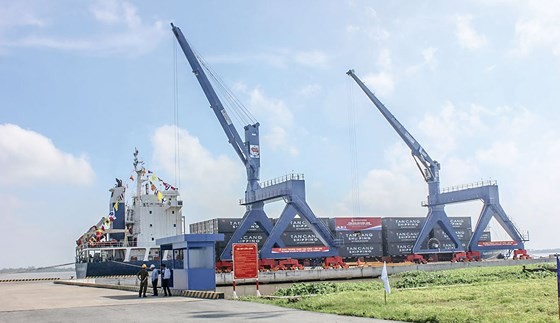
The Mekong Delta is a large region of agricultural products export as well as cargo and equipment import in Vietnam. Still, logistics services have been positioned in the first stage of development and can not promote its role sufficiently to boost production and exports, especially trading of farm produce which is the region’s strength.
The Mekong Delta now has four major methods of transport namely road, seaway, inland waterway and airway. Currently regional connectivity has not attracted appropriate attention.
Limitation in main traffic axes connecting production and consumption has affected socioeconomic development of localities in the region. This has caused high logistics costs.
Currently, over 85 percent of seaports in the delta are of small scale. They have mainly served loading and unloading demand of bulk cargo with a shortage of container ports. The region has 32 wharfs but only six of them are capable for container handling service with three locating in Can Tho city.
For the last past, many international shipping lines have been afraid of arriving at seaports in the Mekong Delta fearing transport cost increase. Their vessels are full of cargo when arriving in the delta but leaving empty or with insufficient goods.
The fairway for heavy loaded vessels to get in and out from seaports in the Hau river has been opened in Quan Chanh Bo canal. Still it just permits one way travel for large vessels. Lots of businesses have proposed to rationalize traffic segregation to prevent congestion from occurring when there are lot of boats travel in the route. They suggested dredging Dinh An passage to enable more large boats to enter the Hau river.
Mr. Nguyen Thanh Han, director general of Gennuine Partners Group, said that investment attraction policies play a very important role in developing logistics service in Can Tho city in separate and the Mekong Delta in general. Logistics development not only comprises seaports but also needs coordination among fields of customs, warehouses and other relevant services such as goods quality verification. They all should be developed and connected synchronously.
Currently, logistics service in the Mekong Delta has just been in the first phase of development and not fully promoted its role to contribute in boosting production and exports especially trading of farm produce, which is the region’s strength.
According experts, the Mekong Delta will save over VND2 trillion if reducing one percent of logistics costs a year.
Mr. Nguyen Minh Toai, director of the Department of Industry and Trade in Can Tho city, said that cargo export import and transport demand has been increasing in the Mekong Delta amid international integration and competition, so the region needs a modern logistics system able to meet cost reduction requirement and raise the competitive ability for commodities in the region.
Most of commodities in the Mekong Delta have been transited to ports in the southeast region for export. That has raised transport cost by at least US$10 a ton, he added.
Mr. Pham Anh Tuan, deputy director general of Portcoast Consultant Corporation, said that the Mekong Delta is the country’s major agricultural production zone with important role in developing the country’s economy. Hence it is needed to develop logistics service to facilitate trade and improve the competitive ability of farm produce in the region.
In order to step up logistics development, many businesses suggested central and local authorities to pay attention to solving knots in large transport by opening cargo transport flights to better exploitation of Can Tho airport, upgrading road infrastructure for cargo transport and soon open railway to the Mekong Delta.
Three important factors of logistics are large transport, port yard infrastructure and logistics service. If problems in large transport are solved, the development of the remaining phases will be boosted.
Several policies to support development of automotive industry
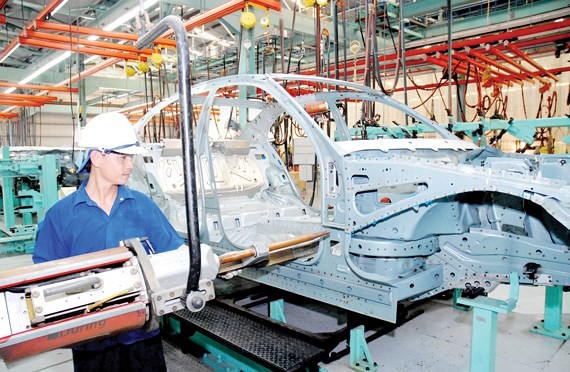
The Ministry of Industry and Trade has currently proposed the Government to reduce import of equipment and auto parts used in the automobile industry.
Besides preference in corporate income tax and land use tax for each project, the Government has been focusing on training high-quality human resource for supporting industry of automobile industry so as to meet demand of its partners.
Currently, Vietnam has 18 FDI companies and 38 local automobile manufacturers with a capacity of 460,000 cars annually. However, localization rate of the country’s automobile industry merely reached an average of 7-10 percent, causing its cost price much higher than that of other countries in the region.
Mr. Nguyen Thanh Binh, head of the Business Information Center under the Vietnam Chamber of Commerce and Industry Ho Chi Minh City Branch, said that according to the agreement to join the ASEAN Free Trade Area, import tariffs on cars from countries in the area were cut to zero percent from 50 percent.
The organizer of the third edition of Vietnam’s leading regional trade fair for the automotive service industry--Automechanika, has recently held a conference on tax policy and development strategy for Vietnam’s automobile market in Ho Chi Minh City.
Foreign investors net sold VND1.2 tril on HNX, UPCoM in Feb
Figures by the Hanoi Stock Exchange showed that foreign investors net sold about VND1.2 trillion on the exchange and the unlisted public company market (UPCoM) in February.
According to the Hanoi Stock Exchange, foreign investors traded 81.7 million shares with total trading value exceeding VND1.5 trillion. Of which, foreign investors bought more than VND400 billion and sold nearly VND1.1 trillion on the HNX. Therefore, they had net sold approximately VND700 billion last month.
On the unlisted public company market, foreign investors bought nearly VND500 billion and sold more than VND1 trillion. As a result, they had net sold more than VND500 billion in February on the UPCoM.
Business households allowed to open payment accounts at banks

Organizations without juridical entity which are legally established and operating are allowed to open payment accounts at banks and branches of foreign banks as of March 1.
According to Circular 02/2019/TT-NHNN which revises Circular 23/2014/TT-NHNN about opening and using payment accounts at payment service providers, organizations without juridical entity consist of private companies, individual business households and other organizations including branches, representative offices and law offices.
Earlier, the State Bank of Vietnam only allowed organizations with juridical entity to open payment accounts at banks and branches of foreign banks.

The labor market in HCMC after Tet holidays has been noisy with lot of businesses announcing recruitment of tens of thousands of workers to develop production and trading.
Gia Dinh Garment and Textile Company has entered a large recruitment totaling 1,250 workers mostly untrained with the apprenticeship salary of VND3.5 million a month and lunch money. A company representative said that a new production line has been opened so the firm needs a large number of workers this year.
Meantime Pro Kingtex Vietnam Company in Binh Tan district has announced recruitment of 300 skilled workers with the salary of VND8 million (US$345) a month.
Binh Thanh Import Export Production and Trade Company has been recruiting 115 employees with the payment of VND5.5-14 million a month while FBNC Trade Service Company has been finding 500 workers to supply for companies in Saigon Hi-Tech Park.
In middle and high class segments, MessageMedia Group Vietnam Company is seeking programing engineers paying VND22-23 million a month. Innochee Company is in need of fluent engineers of Japanese with the income reaching VND57 million ($2,455) a month. Similarly Innotech Vietnam needs programing engineers good at Japanese with the earnings approximating VND64 million a month.
Mr. Tran Anh Tuan, deputy director of HCMC Center of Forecasting Manpower Needs and Labor Market Information (FALMI), said that in March 2019, businesses in the city need about 30,000 workers. Recruitment demand has been in uptrend in industries namely information technology, electricity-electronics, food processing, construction, transport-warehouse-export import, trading-sale and hotel.
According to the center, last year HCMC had nearly 45,000 newly established firms with the labor scope of 199,000 people. This year, the number of new businesses is expected to continue increasing in accordance with the city’s policy of having 500,000 enterprises by 2020. The increase in the number of businesses has created lots of new jobs.
Still the distance between job education and the market demand is very big. Of these, sales field accounting for 23 percent of recruitment demand is always in need of experienced, flexible and dynamic employees with good communication skills. Transport-warehouse-export-import and logistics services have been expanding, yet high quality human resources with good English and IT skills has failed to meet the market demand. Tourism-restaurants-hotels field continues requiring employees with technology knowledge especially to restaurant supervisors and managers.
Currently HCMC is building smart city, speeding up hi-tech fields and in dire need of employees for positions including network security, programing, application development, website design and management.
Binh Tay temporary market confiscation expected in June
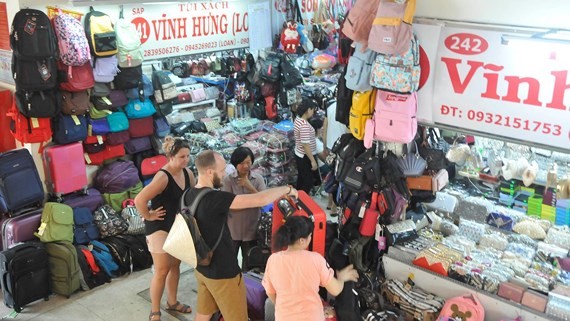
The Work Construction Investment Management Board under the People’s Committee in District 6, HCMC yesterday said that Binh Tay temporary market is expected to be confiscated in May or June to return the road face in Thap Muoi and Nguyen Huu Thuan streets to traffic.
Previously, the district People’s Committee built the temporary market over 5,000 square meters for traders to continue doing business during the repair and upgrading time of Binh Tay market.
The market repair and upgrading has been done since November 2018 but the temporary market has still existed, causing traffic jam and affecting the life and trading of residents in surrounding areas.
The temporary market has been built in two third of the road face in Thap Muoi street and almost the road face of Nguyen Huu Thuan street.
The city People’s Committee has approved the district People’s Committee to do procedures to dismantle the temporary market according to current regulations.
HCMC’s exports exceeds US$6.2 billion in first two months
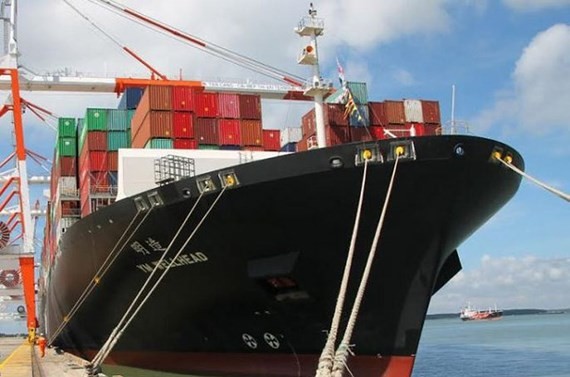
Report by the People’s Committee of Ho Chi Minh City showed that export turnover was estimated at US$6.25 billion in the first two months of this year, up 16 percent compared to an increase of 9.8 percent in the same period last year.
If excluding crude oil, the city’s export turnover estimated to reach $5.91 billion, up 18 percent over an increase of 12.3 percent in the same period last year.
Some export markets saw rapid growth including the Philippines with 152.2 percent, Taiwan with 70.5 percent, Australia with 47.5 percent and the US with 45.9 percent, whereas export to China, Indonesia and HongKong showed signs of slowdown.
Exports of some products were maintained or posted growth. Of which, electronic devices and accessories surged 19.4 percent; vegetables and fruits rose 17.9 percent; and garments and textiles soared 48.6 percent.
Meanwhile, the city’s import turnover was estimated at $7.04 billion, up 3.6 percent from an increase of 14.2 percent in the same period last year. Main imported products included equipment and materials for manufacturing industry. Of which, imports of machineries, equipment, devices and components climbed 22.5 percent; of chemicals elevated 41.3 percent; and of steel shot up 21.4 percent.
HCMC should say no to new housing projects in downtown area: official
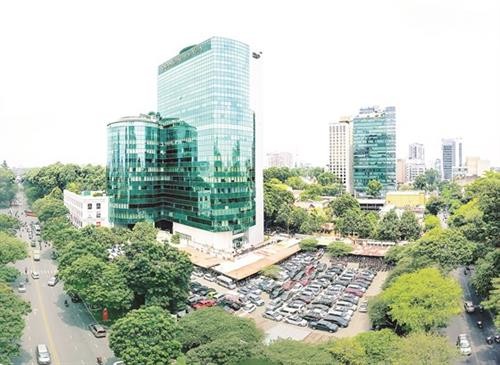
Le Duan street in the center area of HCMC
HCMC must be resolute in not licensing new housing projects in the center area and seriously abide by the 930 hectare downtown plan to reduce traffic pressure in the area, said HCMC People’s Committee Office chief Vo Van Hoan at a press conference yesterday.
According to him, if the city bans developing housing projects in the current downtown area covering 930 hectares, investors will flee to other places rather than flocking to the center area in the next 3-5 years.
At the meeting, deputy director of the Department of Transport Tran Quang Lam said that the agency is building a project on public transport intensification and private vehicle limitation.
The project would be implemented when there are necessary and sufficient conditions. Specifically, public transport system must be developed for residents to easily access to the system before private vehicles are limited.
Prime Minister Nguyen Xuan Phuc has sent a dispatch requiring the Minister of Transport to inspect and make clear information about out of control toll collection at BOT (Build-Operation-Transfer) projects.
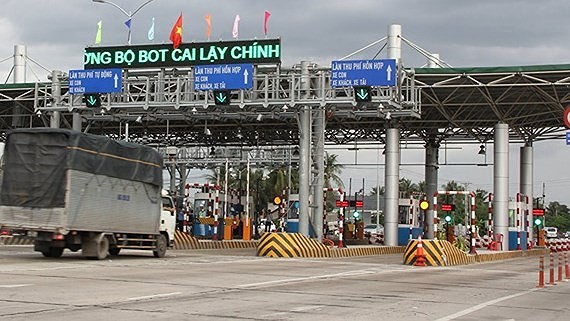
Cai Lay BOT tollbooth has resumed operation after a period of shutting down
The PM asks the minister to have measures to tightly control operation of toll stations nationwide in line with regulations.
According to the dispatch, the Minister of Transport and chairmen of provincial and municipal people’s committees should require relevant agencies to strictly implement non-stop electronic toll collection in association with the resolution of the National Assembly Standing Committee and the directive of the Prime Minister.
They will take responsibility to the Prime Minister on the progress and the roadmap of transferring toll collection into non-stop electronic model.
Salt price leap improves farmers’ income
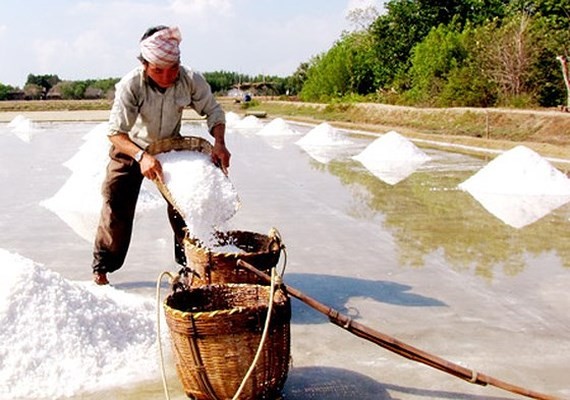
Farmers can earn healthy profit at the price.
According to the provincial Department of Agriculture and Rural Development, it is the time of the main crop of salt with favorable weather and strong wind helping to increase salinity and crystallization.
Head of the Department Vo Tien Si said that 1,468 salt-making households produced salt in 1,442 hectare for the crop. Ben Tre is the province with second largest salt land in the Mekong delta behind Bac Lieu Province. Salt making offers 3,369 employment for local laborers.
However, Mr. Si said salt infrastructure in the province is in poor repair makes increase in transportation fee and employment cost.
Accordingly, the province petitioned the Ministry of Agriculture and Rural Development to embark on construction project to improve infrastructure of salt field in Bao Thanh and Bao Thuan communes in Ba tri District with the aim to cut down transportation fee for local farmers.
HCMC approves design for Can Gio bridge

The HCMC government has chosen the design created by Kidohu Green Construction Investment JSC for the Can Gio bridge project connecting the city’s two outlying districts of Nha Be and Can Gio, said the chief of the city government’s office, Vo Van Hoan.
The cable-stayed bridge would be supported by a pillar shaped like a mangrove tree, a typical type of plant in Can Gio, besides other pillars. The bridge railing will take the shape of waves.
When vehicles cross the bridge at night, it would look like a mangrove forest.
However, the city asked for further consideration of the bridge’s technical parameters to meet Can Gio District’s planning adjustments.
Earlier, Can Gio Urban Tourism JSC had proposed developing Can Gio bridge over Soai Rap River. The 3.4-kilometer bridge, which would have four lanes, requires an estimated investment of more than VND5.3 trillion (US$228.3 million), excluding site clearance and compensation costs.
The project was proposed to be executed under the build-transfer format. In exchange, the city would allocate the company land in the Can Gio sea encroachment tourist urban area. If the land value is not equal to the capital injected into the project, the city must pay the balance in cash or allocate another lot of land.

Plain packaging is an expropriation of brands and sets a negative precedent for Vietnam in its protection of intellectual property rights.
This was the opinion of experts attending the recent “Brands in the strategy of enterprise development” workshop organized by the Vietnam Chamber of Commerce and Industry (VCCI) in collaboration with the Vietnam Intellectual Property Association and the Ho Chi Minh Intellectual Property Association.
Mr. Paul Middleton, Corporate Development Director of tobacco company JTI Asia Pacific, illustrated how tobacco-style regulations are progressively spreading to other consumer products such as alcohol, soft drinks, and food.
He described this trend of applying restrictions first to tobacco and then to other consumer products as a “slippery slope”. At the extreme end of this slippery slope is plain packaging that consists of removing trademarks, logos, non-prescribed colors, and graphics from cigarette packs and allowing only the use of the brand name in a prescribed font and size.
Plain packaging legislation was implemented in Australia in December 2012 and several other countries have followed suit, including France and the UK.
In Asia, Singapore and Thailand have also taken steps to mandate plain packaging. However, the measure has failed in Australia and data emerging from the first stages of plain packaging implementation in the UK and France is pointing in the same direction.
“If we take the example of Australia, which implemented plain packaging in December 2012, all the publicly available, reliable evidence - including the government’s own data - points to the same conclusion: the measure hasn’t changed the existing long-term declining trend in smoking rates and has not caused a reduction in youth smoking rates”, said Mr. Middleton.
Mr. Corrado Mautone, General Manager of JTI Vietnam, also highlighted the negative impact this restriction has had. “Plain packaging is an expropriation of brands, sets a negative precedent for the country on the protection of intellectual property rights and raises doubts about the country’s stability and reliability from an investment perspective,” he said. “It also distorts market dynamics and drives downtrading, reducing margins for retailers who will see their livelihoods impacted as a result. It also increases the consumption of illegal tobacco, leading to significant reductions in tax collected by governments.”
What should be worrisome for attendees at the VCCI workshop is that, in line with the “slippery slope”, regulators are increasingly looking to hit food and drink companies with the same “tobacco-style” punitive taxes, pictorial health warnings, and even plain packaging, whether it’s a bottle of wine, a chocolate bar, or a fizzy drink.
More and more food and drink companies are in the firing line when it comes to governments imposing regulations that simply don’t work. And such a trend poses a serious threat to all brand and trademark owners, especially in a country like Vietnam, where brand building and brand development are key factors supporting business growth.
According to Mr. Middleton, the negative consequences of plain packaging extend to all trademark owners. Depriving one industry of the right to brand its products creates a dangerous precedent for all trademark owners. “If one industry is deprived of its intellectual property, all trademark owners will lose,” he said. “Trademark owners in Vietnam need to remain vigilant to ensure this does not happen to them.”
Retail sales, service revenues increase in 2 months

Local people shop at a supermarket. The retail value of goods topped VND613.4 trillion, up 15 per cent year-on-year and accounting for 77.3 per cent of the total. - Photo phapluatdansinh.phapluatxahoi.vn
The country’s total retail sales and services revenue rose 12.2 per cent year-on-year to VND793.8 trillion (US$35.2 billion) in the first two months of this year.
Retail sales of goods and services reached an estimated VND390.8 trillion in February, marking a yearly increase of 11.5 per cent but a monthly decline of 3 per cent, the latest report from the General Statistics Office (GSO) showed.
GSO statistician Vu Manh Ha attributed the two-month retail sales growth, which would be 92.8 per cent excluding inflation, to local people’s strong purchasing power during the long-lasting Tet holiday.
The retail value of goods topped VND613.4 trillion, up 15 per cent year-on-year and accounting for 77.3 per cent of the total. Of which, the sales of food and foodstuffs increased by 15 per cent, home appliances 14 per cent, and garments and textiles 13.2 per cent.
Localities recording a significant retail sales increase included the central provinces of Ha Tinh and Quang Nam with 19.4 per cent and 16 per cent, respectively; the southern province of Long An with 17 per cent; the northern port city of Hai Phong with 14 per cent; HCM City with 13 per cent and Ha Noi with 11 per cent.
From January to February, restaurant and accommodation revenues were VND90.2 trillion, surging 5.7 per cent against the same period last year and making up 11.4 per cent of the total with positive revenue growth seen in several localities such as Hai Phong (16.5 per cent); the southern city of Can Tho (13.2 per cent); the central provinces of Khanh Hoa and Quang Nam (12 per cent and 10 per cent, respectively).
Tourism revenues stood at VND8 trillion, up 7.8 percent, the office said, adding that revenue from other services, which equaled 10.3 per cent of the total, witnessed a yearly rise of 5 per cent to VND82.2 trillion.
In 2018, the nation’s total goods retail sales and service revenues rose 11.7 per cent on-year to nearly VND4.4 quadrillion. Specifically, its goods retail sales surged 12.4 per cent to over VND3.3 quadrillion.
Under the domestic trade development strategy, total sales of goods and services would grow by 13 per cent each year through 2020 and by 14 per cent per year in the 2021-25 period.
Cassava exports fall sharply in first two months

Viet Nam’s cassava exports dropped sharply in terms of volume and value during the first two months of this year, mainly due to falling demand in China.
According to the Ministry of Agriculture and Rural Development, Viet Nam exported 457,000 tonnes of cassava, earning US$166 million. Those figures were down 20.1 per cent in volume and 5.4 per cent in value year on year.
China was still the largest export market for Vietnamese cassava, accounting for 93.1 per cent, followed by the Philippines with 2.6 per cent and Malaysia with 1.3 per cent.
However, cassava exports decreased by 31.9 per cent in volume and 18.6 per cent in value to China, and by 9.6 per cent in volume and 4.3 per cent in value to Malaysia. Exports to the Philippines increased by 7.7 per cent in volume and 23.2 per cent in value.
Since last year, China has been maintaining a policy of holding low corn stock, plus it has increased imports from Thailand.
It has also implemented strict regulations on labelling, packaging and information on Vietnamese cassava starch products exported via border gates.
The average export price of cassava in February reached $363 per tonne, up 18.4 per cent compared to the same period in 2018.
Chân Mây-Lăng Cô EZ lures $3.26b in investment

The Queen Mary 2 docked at Chan May Port in the Chan May Lang Co IZ in February.
The Chan May-Lang Co Economic Zone (EZ) in the central province of Thua Thien-Hue has attracted nearly 50 projects with total registered investment capital of more than VND76 trillion (US$3.26 billion).
In the first two months of this year alone the IZ welcomed four investment projects worth over VND15 trillion, local authorities said.
One of the largest projects in the zone is an auto manufacturing – assembly complex developed by Kim Long Nam JSC. The 160ha complex, expected to cost VND3.33 trillion in the first phase, will have a designed production capacity of 16,000 buses annually.
Others include the 126ha Lang Co-Dam Lap An and Bai Ca tourism projects, worth a combined of VND10.5 trillion, and the Lang Co market project, capitalised at VND85 billion.
In order to lure more investment to the zone, Thua Thien-Hue will continue to improve infrastructure with a focus on Chan May Port so it can handle six million tonnes of goods per year.
The province is working to develop six docks with a total length of 1,680 metres from now until 2020, online newspaper Vietnamplus cited chairman of the provincial People’s Committee Phan Ngoc Tho as saying.
With its strategic position as a significant gateway to the East-West Economic Corridor together with rational development strategies and streamlined mechanisms, Chan May-Lang Co would develop into a proactive and modern EZ in the central region, according to the EZ Management Board.
The zone spans more than 27,100ha in Phu Loc District.
Agriculture ministry slashes 122 administrative procedures

The Ministry of Agriculture and Rural Development (MARD) has announced a decision to cut 122 administrative procedures, equivalent to nearly one quarter of the procedures under its jurisdiction.
The move came following a government direction on reducing and simplifying administrative procedures to support businesses and improve the business environment.
Under the MARD’s decision, 71 central-level procedures were abolished while the number of scrapped procedures at the provincial and district levels are 31 and 20, respectively.
The forestry sector saw the most drastic cut with 98 out of 134 procedures axed, followed by 21 procedures in the fishery sector.
The MARD stated that it will continue to review the current procedures and make further simplification in the future in order to facilitate enterprises operating in agriculture and rural development.
The agriculture ministry’s move is the latest step in a wider government effort to enhance the business environment in Vietnam, with several ministries having made substantial cuts to their regulations.
Dung Quat refinery produces 1.1 million tonnes of products in two months

At the Dung Quat Oil Refinery Plant
The Dung Quat Oil Refinery Plant, operated by the Binh Son Refining and Petrochemical Company (BSR), produced more than 1.1 million tonnes of products in the first two months of 2019 using 108 percent of its designed capacity.
BSR’s revenue in the period hit 13.65 trillion VND (586.3 million USD), contributing 1.59 trillion VND (68.2 million USD) to the State budget.
BSR said the firm has operated stably in the context of unpredictable changes of crude oil prices in the world market.
According to S&P Global Platts Insight Magazine - a specialised magazine on world oil and gas published in Singapore, the oil price tended to increase at the end of February and the beginning of March, so BSR's profit is forecast to rise.
For efficient production in March and beyond, BSR will continue focusing on controlling production costs, optimising production and reducing crude oil consumption for processing.
It is also optimising the operation of Dung Quat oil refinery plant by adjusting the product structure, focusing on maximising the amount of highly effective products.
In addition, BSR has also taken measures such as minimising operating expenses, applying technical improvement innovation and reducing storage, along with management and macro administration solutions, aiming to achieve good profit in the first quarter of 2019.
Vietjet celebrates International Women’s Day with 2.4 million discounted tickets

Up to 2.4 million promotional tickets from Vietjet are available for lucky passengers to celebrate International Women’s Day.
Vietjet is giving away 2.4 million promotional tickets priced only from zero dong between now and Friday in a move to celebrate the upcoming International Women’s Day.
The promotional airfares, which are available from noon to 2pm at www.vietjetair.com, are for all domestic flights and Thai Vietjet’s domestic and international routes to Seoul, Busan, Daegu (South Korea); Kaohsiung, Taipei, Taichung, Tainan (Taiwan); Singapore; Bangkok, Phuket, Chiang Mai (Thailand); Kuala Lumpur (Malaysia); Yangon (Myanmar) and Siem Reap (Cambodia). Thai Vietjet is a joint venture between Vietjet and Thai airline Kan Air.
The airline’s flights connecting Viet Nam with Japan and Hong Kong will be part of the promotion including Ha Noi or HCM City to Osaka; Ha Noi to Tokyo and HCM City or Phu Quoc to Hong Kong.
The flight period is from May 7 to December 31, 2019, Vietjet announced on Tuesday.
With a network comprising 39 domestic routes and 66 international routes, Vietjet operates safe flights with a technical reliability rate of 99.64 per cent – the highest rate in the Asia Pacific region.
As a fully-fledged member of the International Air Transport Association (IATA), Vietjet has obtained the IATA Operational Safety Audit (IOSA) certificate and has been awarded a 7-star ranking, the world’s highest rating for safety, by AirlineRatings.
The new-age carrier operates 60 A320 and A321 aircraft with about 400 flights daily, carrying more than 70 million passengers to date, with 106 routes covering destinations across Viet Nam and international destinations.
Last week, Vietjet signed an agreement to purchase 100 new 737 MAX airplanes worth US$12.7 billion from Boeing. It was described by the airline’s President and CEO Nguyen Thi Phuong Thao as a move to meet its international flight network expansion plan with a higher capacity, thus offering passengers more exciting experiences by being able to fly to more new international destinations.
.svg)
