 Vietnamnet.vn

 Podcast



Experts suggest building specialised stock market for start-ups

Building a specialised stock market for start-ups will help connect them with investors to ensure regular capital for operation and development, experts have suggested.
According to the Ministry of Science and Technology, Vietnam is home to thousands of start-ups, nearly 70 joint working spaces, and 50 incubation facilities and organisations.
The quality and quantity of start-up investment deals surged in 2018 with the total capital of 889 million USD, up three-fold compared to that of 2017.
The building of a specialised stock market will make it easier for start-ups to access to diverse capital sources, experts said.
Accordingly, Deputy Prime Minister Vuong Dinh Hue recently assigned the State Securities Commission and the Ministry of Finance to build frameworks to submit to the Government and the National Assembly for permission to pilot a scheme on the development of a specialised stock market for start-ups and innovations.
Nguyen Viet Duc, deputy manager of product development at the securities services division of MB Securities Co., suggested revising the law on tax and other legal documents to match the development of start-up firms as most of them are active in the fields of economy and finance.
Le Duc Khanh, strategic director of PetroVietnam Securities Incorp., said the idea of building a specialised stock market is to promote innovative and emerging firms.
This is in line with the Government’s policy of promoting innovation and developing the private economy, he added.
Associate Professor, PhD Dinh Trong Thinh from the Academy of Finance, said that in order to realise this idea, management agencies need specific mechanisms and to disclose risks that investors may encounter when trading on the market.
IT for men is yesterday’s story

Women nowadays play an important role in many sectors, including business, education, healthcare – even information technology (IT), the sector which people used to think belongs only to men.
On March 6, Tek Expert held the "Women in Technology Roundtable Session" to celebrate Vietnamese women in technology and understand the unique challenges they face, especially those working in IT.
From the outdated preconceptions on male entrepreneurship to work-life balance nowadays, Tek Expert has explored how the role of working women has changed in recent years, especially in the IT sector.
Recently, the number of women employees working at IT companies has been on the increase.
Nguyen Thi Thu Giang, general secretary and director of the business development services department under the Vietnam Software & IT Services Association (Vinasa) said at the session that in her association women even outnumber men. In recruitment, Vinasa pays attention to balancing the percentage of male and female workers, however, it seems like women occupy bigger part in this association.
At the roundtable session, Tek Expert talked about five topics, including education, industry, recruitment, opportunities, and leadership.
In the first session about education, guests invited to the session mostly agreed that schools should introduce IT programmes early on, maybe from secondary school onwards and especially for girls to understand the advantages and importance of IT in life, therefore changing the preconception that IT is a field only for men.
Duong Kim Anh, representative from Microsoft Vietnam, also shared that the company has an internship programme for students to practise at the company for three months. After that, students will return to school and can apply to work at Microsoft when they finish their education.
It seems like companies understand well the importance of human resources and make investments to seek for potential employees regardless of gender.
Women nowadays are becoming increasingly good at balancing work and family. They are beginning to take on important roles or even key positions in business.
All the guests joining Tek Expert’s roundtable session agreed that companies should pay after performance, not gender.
Representatives from Tek Expert also shared that over the years, the company has been working with many schools and universities in Vietnam to prepare new graduates for a career in IT. They have given students the chance to visit their state-of-the-art offices, take part in workshops and held session to learn about their people so they can understand the skills they need to succeed and what a company looks for when recruiting IT experts.
They have also launched Tek Academy to give people the skills they need to be able to succeed.
There are ample opportunities waiting for those who have the ability, desire, and knowledge – regardless of gender. As more and more women appear on the firmament of successful IT companies and businesses, gender equality has created positive social changes.
HCM City to ensure pork supply

A Vissan butcher counter in HCM City.
HCM City authorities have developed plans to ensure pork supply for city residents after swine fever was detected in pigs in the northern city of Hai Phong in late February.
Huynh Phuong Trang, deputy director of the HCM City Department of Trade and Industry, said the department was working with major pork suppliers in the city to ensure supply of clean pork to city residents in case swine fever affects the southern region.
Pork sales at Vissan shops have slightly increased, said Nguyen Ngoc An, CEO of Vissan (Vietnam Joint Stock Company), one of the nationally recognised food manufacturers in processing and trading of fresh meat, processed foods and meat-related products in the country.
In addition to Vissan, other pig producers and pork processors in HCM City, such as C.P. and Sagri Agriculture Incorp, have also announced plans to cope with African swine fever.
Trang said live pigs were selling for VND51,000 – VND51,500 per kg, a drop of VN3,000 to VND4,000 after Tet.
Pham Khanh Phong Lan, head of the HCM City Food Safety Management said that even though African swine fever cannot spread to humans, customers should buy pork at licensed butcher’s stores, convenience shops and supermarts as unregistered pork could spread disease.
According to the HCM City Department of Trade and Industry, between 15 and 26 slaughterhouses in March have received nearly 1,500 pigs from the northern provinces of Tuyen Quang, Thai Nguyen, Vinh Phuc, Nghe An and Ha Noi. These localities had never sold live pigs to HCM City.
In addition, live pigs were also sold to the southern provinces of Long An and Vinh Long before being slaughtered and sold to HCM City.
At an online meeting chaired by Prime Minister Nguyen Xuan Phuc on Monday, Tran Vinh Tuyen, deputy chairman of HCM City People’s Committee, asked the central Government to strengthen pig disease control during the transportation of pigs from the north to the south.
The HCM City authority has also proposed suspension of unlicensed pig trading stores, improvement of quarantine stations, and better management of the disinfection of pigs transported on the highway to prevent the spread of disease.
Binh Duong to develop industry, smart services

A corner of Binh Duong province
The southern province of Binh Duong plans to focus on developing industry and smart services in 2019 by improving cooperation between the State, businesses and scientists, and promoting international exchanges.
According to Vice Chairman of the provincial People’s Committee Mai Hung Dung, Binh Duong will concentrate on 11 key projects, including smart logistics.
The locality will also develop semiconductor factories, high quality human resources, science-technology industrial parks, and sustainable development programmes such as clean energy, environmental protection, and waste treatment, in addition to operating hotlines and smart transport camera systems, he said.
Notably, Binh Duong will host the Asian Economic Cooperation Forum (Horasis), an annual innovative idea contest on smart cities, which is scheduled to take place in new Binh Duong city from November 24-25, Dung added.
HCMC reports increase in both imports and exports

A container vessel at Cat Lai Port in HCMC's District 2
HCMC made US$6.25 billion in export revenue and spent US$7.04 billion on imports in the first two months of the year, up 16% and 3.6% year-on-year, respectively, according to a report on the city’s January-February socioeconomic performance.
Without crude oil, the city’s export revenue would amount to US$5.91 billion.
Some import markets of the city saw high growth, including the Philippines, at 152.2%; Taiwan, 70.5%; Australia, 47.5%; and the United States, 45.9%. Meanwhile, exports to China, Indonesia and Hong Kong showed signs of slowing down.
The products that posted positive export growth included computers, electronic products and accessories, at 19.4%; vegetables and fruits, at 17.9%; and garments and textiles, at 48.6%.
As for imports, the city mainly purchased equipment and materials for the manufacturing sector, such as machinery, equipment, tools and machine parts; chemicals; and steel and iron.
The report also showed that the city’s retail sales of consumer goods and services hit some VND189.5 trillion (US$8.2 billion) in the first two months of the year, up 12% over January.
As for foreign investment approvals, the city attracted US$1.02 billion in the two-month period, equal to 94.7% over the figure recorded in the same period last year.
Some 165 new projects obtained investment certificates, with total registered capital of some US$96.69 million, rising by 29% and 45.4% year-on-year, respectively.
The science and technology sector attracted the most capital, making up 51% of the fresh capital. The wholesale and retail sector came in second, followed by the auto and motorcycle repair sector and the processing and manufacturing sector.
South Korea was Vietnam’s largest investor in January-February, representing 43.2% of the total, followed by Singapore at 15.8%; Japan, 15%; the United Kingdom, 7.3%; and the United States, 4.8%.
PwC global experts discuss the future of banking“Banks will need to be on the cutting edge of technology and make sure that customers’ needs are ingrained in every offering,” PwC’s global financial services leader John Garvey advised local bank leaders at “The Future of Banking” event held by PwC Consulting Vietnam in Hanoi today (March 6, 2019).
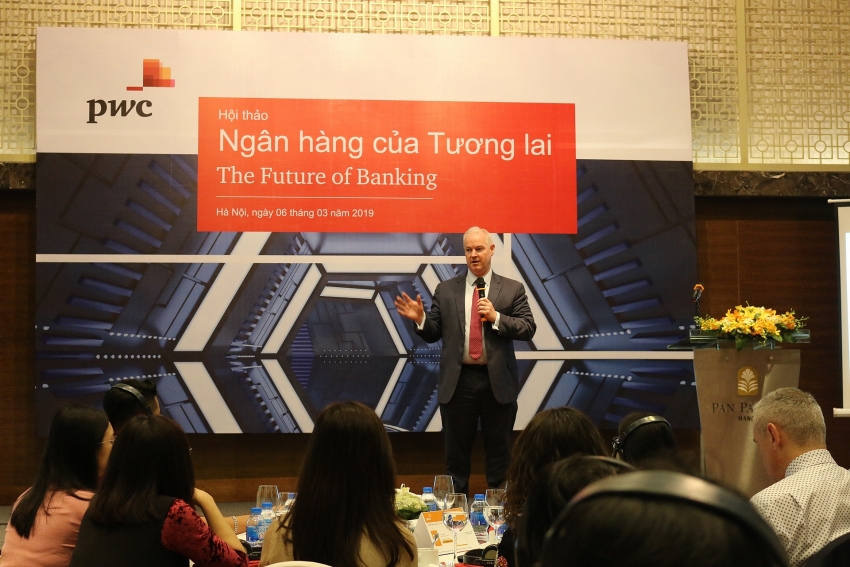
Global financial services leader of PwC John Garvey
John Garvey, together with a panel of distinguished industry experts from the US, Canada, Southeast Asia, Hong Kong, and Japan discussed what it takes for banks to thrive in this digital age, while maintaining their human relationships. The event attracted senior leaders from various Vietnamese commercial banks.
According to PwC, the banking industry is facing an imperative to change brought about by powerful forces, namely customer expectations, technological capabilities, regulatory requirements, demographics, and economics. Banks need to get ahead of these challenges and transform themselves for future success.
Focus on the customer
In particular, discussions at the event pointed to a strong interest in building a future bank that can cater to every customer’s needs across different stages of life in a unique, personalised way.
“The future of banking is about a highly-digitised customer experience and the expansion from traditional banking services to providing “lifestyle” services that cover customers’ needs across the whole of their lives,” John Garvey said.
“Banks need to look at the lifestyle of each customer and understand what needs or ambitions they have, whether it is to buy a car, buy an apartment or start a family. Banks should be in a position to help the customer achieve those personal goals through the use of their services, such as savings, loans, life insurance or third-party products like health insurance,” Grant Dennis, general director of PwC Consulting Vietnam, elaborated.
Most importantly, banks should be able to envision the needs of the customer and offer respective services even before the customer knows or asks for them. This is possible through proactive data analytics-driven customer insights, enabled by smart technologies and very often by partnering with fintech companies or other solution providers.
To demonstrate the latest solutions for data-driven insights, PwC specialists introduced the Customer Insights Platform at the event. This data analytics solution was developed by PwC and has been implemented successfully at some of the leading financial institutions in the world.
By combining and analysing data from different parts within the business and external sources, it helps banks answer questions like: Which customers are likely to be most valuable over time? Which channels offer the greatest growth opportunities? What can banks do to grow their customer value through cross-sells and upsells? What is the maximum “willingness to pay” for a certain product? With such insights, banks will be able to segment their customers and understand them with greater detail than ever. This will be the basis to grow and retain highly valuable customer relationships.
Industry experts at the event also discussed the fact that more regulations are being established around the world to manage the complexity of the banking sector and new banking activities. In Vietnam, with the adoption of Basel II, local banks will need to assess their current data governance processes and adopt proper controls to raise their risk resilience.
“Vietnam has been going through an exciting time of change with higher risk management standards and best practices adopted by the banking sector. The banks that are well-prepared with a proper implementation strategy will have a better chance to succeed and gain benefits,” Dinh Hong Hanh, financial services consulting partner of PwC Consulting Vietnam, said.
Furthermore, while the technologies available in the market provide an opportunity for unprecedented innovation, not all of them are covered by existing regulations. Therefore, PwC experts advised banks to become more proactive in conversations with lawmakers, to develop a regulatory landscape that nurtures innovation and consumer trust.
“Despite the emergence of new competitors, we believe that the traditional bank still has a bright future if it acts now and makes appropriate changes to be future-ready. Staying the same is not an option. The banks that will succeed are those who can best employ digital and data technologies to elevate customer experience and improve regulatory compliance,” Garvey concluded.
Scuffle at mining site of Vietmindo
One Indonesian staff of PT Vietmindo Energitama was injured in a scuffle between the company and Tan Viet Bac’s workers at Vietmindo's mining site.
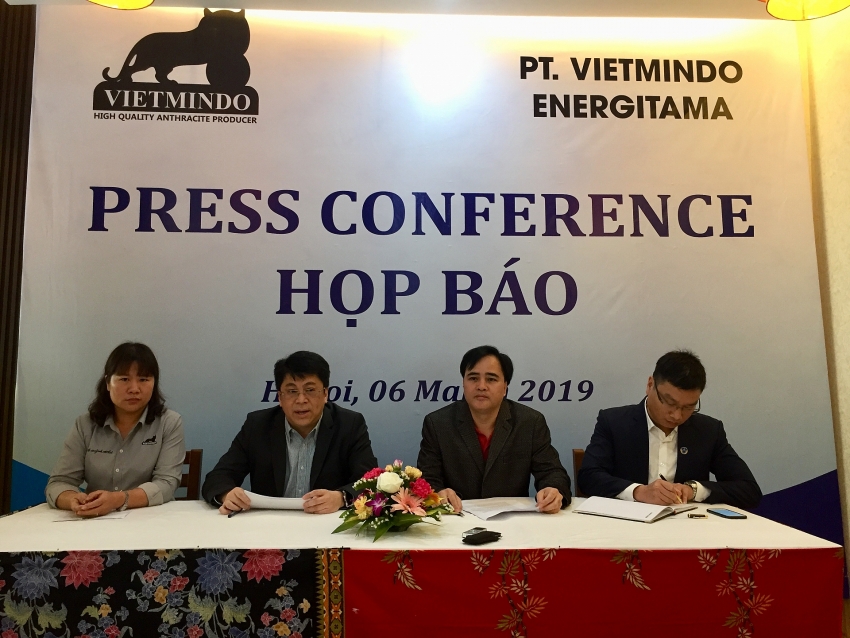
The press conference on the incident at Vietmindo in the morning of March 6
On March 4 and 5, 2019, on the mining site of Indonesian coal mining company PT. Vietmindo Energitama in Uong Bi city, Quang Ninh province, a scuffle broke out with the workers of Tan Viet Bac (TAVIBA), leaving one Indonesian staff of Vietmindo injured.
The cause of the incident was initially determined to be the dispute that has been going for 10 months between the two companies related to a contract signed in 2015 for a period of five years. Accordingly, TAVIBA will have to drill, blast, load, and transport raw rock and coal at the mining site. However, in late June 2018, Vietmindo unilaterally stopped the contract.
Protesting the termination, TAVIBA has blocked major roads of the mining site with vehicles, machines, and equipment. Besides, the company has also submitted increasing compensation demands, going gradually from VND60 billion ($2.6 million) to VND400 billion ($17.39 million).
Addressing today’s press conference in Hanoi, Hendra Gumawan, group CEO of PT. Vietmindo Energitama, said that according to Conclusion No.24/TB-UBND of the meeting between the two sides and Quang Ninh authorities on January 17, 2019, TAVIBA should have removed their vehicles, machines, and equipment from Vietmindo’s mining site before February 10, 2019 and Vietmindo transferred VND20 billion ($869,000) to TAVIBA.
“The conclusion was given, Vietmindo transferred the money immediately, including VND14.5 billion (630,400) for the debt and VND5.4 billion ($234,800) to support TAVIBA to move the vehicles and the equipment,” Hendra told VIR.
However, until March, there was no movement from TAVIBA. Therefore, on March 4 and 5, Vietmindo tried to clear the equipment and vehicles, but met with the opposition of more than 100 local people, resulting in the scuffle.
Hendra also said that due to the barriers, Vietmindo could not operate the mine, leading to losses and they were forced to lay off 188 workers on February 28. If the situation continues, they might lay off another 100 workers. “If there is no improvement, Vietmindo will permanently leave the mining project before the scheduled ending time of the project in 2021,” Hendra said.
Therefore, he called for the support from the Vietnamese authorities, particularly the Ministry of Public Security, the province of Quang Ninh, and the district of Uong Bi, to provide full assistance to help them resume production.
Meanwhile, at the meeting on March 1, 2019, Nguyen Van Bac, director of TAVIBA, said that TAVIBA compensated Vietmindo for the quarters when TAVIBA could not fulfil their tasks in accordance with their contract. Vietmindo’s unilateral termination has violated the contract and Vietmindo has to compensate TAVIBA for its investment in roads, blasters, and loan interest. “We have initiated legal proceedings at the Quang Ninh court,” he said.
Replying to TAVIBA’s representative, the CEO of Vietmindo said, “Our contract contains a provision that if any side’s economic rights are violated, they can submit the situation to the Singapore International Arbitration Centre. However, TAVIBA did not turn to the centre and used illegal means to prevent our production work.”
Coffee Festival 2019 on horizon

The Buon Ma Thuot Coffee Festival 2019 will take place on March 9 to 16 in Buon Ma Thuot city and the districts of Buon Don and Lak in the central highlands’ province of Dak Lak.
The annual festival aims to honor coffee growers, processors, and traders as well as promote the Buon Ma Thuot coffee brand and affirm Vietnam’s position in the international coffee industry.
With the theme “The Quintessence of the Jungle”, this seventh festival will highlight a specialty coffee competition, the launch of the World Coffee Exhibition and the World Coffee Museum with a photo and coffee history exhibition, the opening of Buon Ma Thuot Coffee Book Street, and seminars and conferences on the development of and investment promotion for Vietnamese specialty coffee.
There will be other cultural activities such as artistic performances, a street festival, an elephant festival, boat racing, a paragliding contest, a culinary competition, and folk games.
Born in Dak Lak, H’Hen Nie, Miss Universe Vietnam 2018 and in the Top 5 at Miss Universe 2018, will serve as social media ambassador for the festival, connecting coffee-lovers from across the globe with Buon Ma Thuot, known as the “Kingdom of Coffee”.
Visitors will also have the chance to taste local coffee free of charge.
Vietnam is the world’s second-largest coffee exporter, after Brazil. It exported a record 1.8 million tonnes from the 2017-2018 crop (from October 2017 to September 2018); 12.7 per cent higher than the previous crop, according to the Vietnam Coffee-Cocoa Association. Germany and the US remain the largest importers of Vietnamese coffee, with market shares of 12.5 per cent and 9.6 per cent, respectively.
Dak Lak is Vietnam’s largest coffee-growing area, with a total area of about 200,000 ha producing 450,000 tonnes of coffee beans annually.
Technology to drive the future of retail

What criteria have the greatest impacts on the success of Vietnam’s retail industry was among the major questions raised at the “Future of Vietnam’s Retail Industry” seminar held by Vincom Retail JSC last week in Ho Chi Minh City. The importance of the digital technology and the customer experience were cited most by speakers.
Product has become secondary to the experience nowadays. New retail trends show that innovation, the application of digital technology, and digital communications are the future of retail, according to Mr. Geoffrey Morrison, Founder and Executive Director of Concept i, an international design studio specializing in high profile retail / commercial, leisure and entertainment projects.
“The major factor affecting the success of the retail industry is technology,” he told the gathering. “Technology creates unique characteristics, creating customer interaction with digital technology and helping customers easily find everything through their smartphones, and they can even go to a store to design or choose and order items by themselves.”
Of a similar mind, Ms. Dinh Thi My Loan, Chairwoman of the Vietnam Retail Association, said that Vietnam’s retail sector cannot develop in the context of global integration without technology and innovation.
She added that the retail chain model is the development trend now adopted by many retailers, including small retailers and startups. This model has only recently arrived in Vietnam in recent years to increase brand awareness, increase competitiveness, and raise revenue. It’s estimated that the chain model has grown very strongly in the country, by about 20-30 per cent each year in recent times.
Mr. Morrison also said the three major criteria for the development of the retail industry should be increasing connectivity and interaction, frequent customer tagging, and integrated technology to increase the customer experience, while at the same time introducing creative innovations and creating a completely new experience for customers in order to form a creative innovation ecosystem.
He also emphasized that retail space trends are changing a great deal. Many leading brands have made specific moves, with Nike decorating their store interiors as innovative homes, helping customers have a more realistic experience. Fashion and dining stores have also promoted digital applications to speed up goods receipt and payments, which ensure accuracy.
Ms. Rebecca Pearson, Associate Director, Asia, Retail, at CBRE Asia Pacific, presented figures on the prospects for Vietnam’s retail real estate market and new trends influencing consumers’ shopping behavior. Some success stories and experiences were shared by tiNiWorld, Mr. Thomas Ngo, Co-founder and CEO of N Kid Corporation, and Ms. Patricia Marques, General Manager of Starbucks Vietnam, who also provided many valuable insights on how to build branding, conduct chain model management, and how best to develop.
Vincom Retail reported its development strategy and announced its expansion plans for 2019. It will launch 13 new Vincom shopping malls, bringing the total to 79 nationwide and maintaining its leading market position. It also discussed its plans to seize upon market trends and put them into its shopping centers.
The “Future of Vietnam’s Retail Industry” seminar identified three trends: enhancing the experience at the point of sale, shopping centers becoming not only a shopping and entertainment destination but also a community of cultural connections, and technology applications increasing the competitiveness between local and international retailers in Vietnam.
Report reveals mobility gap in local cities
Property analysts reckon there remains a big gap in mobility between local cities and those named in global rankings, following the fact that Vietnam has no localities included in a recent report on global tech cities.

Vietnamese cities are said to miss two of the three elements that would help improve their standing, including shared mobility services and metro systems.
Many have discussed their insights to the mobility situation of major cities such as Hanoi and Ho Chi Minh City (HCMC), asserting that local cities must take a long way to catch up with the top 30 global tech cities featured in the Savills report.
Do Thi Thu Hang, associate director and head of Research Savills Hanoi, said that Vietnamese cities are missing two of the three elements that would help improve their standing, including shared mobility services and metro systems.
There still remains room for improvement in the quality of urban infrastructure in both Hanoi and HCM City. Hang cited research from Savills titled “Urban Transport” in 2017 which noted that the then road area of Hanoi and HCMC only accounted for below 9 per cent of their urban area.
The rate is much lower than Shanghai, Seoul, Singapore and Tokyo, all of which were listed in the Savills 30 tech cities rankings, where road allocation was above 12 per cent.
“Air pollution has also been a concerning issue for the two big cities,” Hang said.
Featuring an in-depth sight on urban mobility, Bui Trung Kien, associate director and head of commercial leasing from Savills Hanoi, said corporate occupiers are coping with limited urban mobility in Vietnam by looking for locations that offer the best connectivity.
Hanoi’s central business district (CBD) should be considered as the first choice for corporate occupiers, due to heavy traffic, travelling time from the inner city out to the western area of the city increasing to around one hour.
This, combined with factors such as increasing rents and a limited supply of quality office spaces inside the CBD, has drawn tenants to non-CBD locations, Kien analyzed.
Hanoi’s metro developments also prioritize access to the city’s midtown and western area, bringing about connectivity advantages for office buildings in these areas.
Kien said that another factor in occupiers moving out of the CBD is that the largest number of employees, 763,000, reside in the secondary area, followed by the western area with 420,000 employees.
“This movement is reflected in the impressive growth of occupancy rate in the Midtown area, from 40 per cent in 2015 to above 85 per cent in 2018, and consistent occupancy in the western area at above 93 per cent”, he noted.
Meanwhile, Hang expressed her belief that the gap between Vietnam and the top 30 ranked global tech cities indicates there are learning opportunities for local cities.
“Different tech cities could learn from each other, we could also learn from them on how to improve our mobility and urban infrastructure, increase public transport usage, and reduce air pollution.”
This, along with local cities’ advantages like having a wide pool of tech talent, comparatively low real estate costs, a large flow of inbound foreign investment, should help raise the competitiveness of local cities in the tech sector, Hang further said.
The Savills Tech Cities 2019, the third iteration of "Tech Cities", highlights the top 30 global tech cities, including developed metropolises such as New York, San Francisco, London, Beijing, and Shanghai.
For the first time, Savills has measured ‘mobility’ as part of its Tech Cities rankings. With global urbanization rising, a city’s ability to get people from A to B efficiently has become increasingly important.
The cities rated by Savills are among the fastest growing developed cities in the world. Across the 30 tech cities, GDP is forecast to rise by 36 per cent over the course of the next decade, against a rate of 19 per cent across other developed centres.
The real estate service provider considers three elements when assessing mobility. They include the availability, density, and investment put into shared mobility services, such as car, bike and scooter sharing services. Secondly, the scale and level of innovation in the city’s metro system. Finally, the quality of urban infrastructure, the ease of walking, the cities cycle networks, congestion, and air pollution.
Despite not leading in any single category, London was ranked first overall for mobility. The city’s public transport system offers smart ticketing through use of mobile, contactless, and Oyster card, which have been integrated across all transport modes from rail to bus.
Vietnam gains US$4 billion trade surplus with EU in two months

Vietnam racked up a trade surplus worth over US$4 billion with the European Union during the first two months of the year, according to a State statistics office.
Europe has emerged as a potential market for an array of Vietnamese products, including garments and textiles, footwear, wooden items.
The General Statistics Office of Vietnam reported that exports to the EU edged up 1.2 per cent on year to US$6.3 billion during the two-month period while imports from the block enjoyed a dramatic surge of 15.9 per cent to US$2.2 billion, therefore resulting in a trade surplus of US$4.1 billion for the Southeast Asian country.
During January, Vietnam obtained a trade surplus of US$2.5 billion with the EU as the nation earned US$3.77 billion from exports while imports from the block only reached US$1.26 billion. Notably, Vietnam recorded trade surpluses with a number of EU member states in January, including the UK, Austria, Belgium, Spain, the Netherlands, France, and Italy.
Hoang Quoc Vuong, Deputy Minister of Industry and Trade, valued the European region as a significant market for Vietnam, noting that the country has always given priority to increasing co-operation with partners on the continent.
Europe has emerged as a potential market for an array of Vietnamese products, including tropical fruits, garments and textiles, footwear, wooden items, and telephones. Simultaneously, Vietnam could potentially serve as a bridge helping to accelerate the access of European firms and their goods to the wider Southeast Asian region.
Another facilitating factor is that Vietnam has signed and put into force a free trade agreement (FTA) with the Eurasian Economic Union while finalizing negotiations on the much-anticipated EU-Vietnam Free Trade Agreement. Vietnam is also maintaining efforts to complete negotiations on an FTA with the European Free Trade Association.
With several trade deals pending, they are expected to further leverage Vietnam’s trading position with European partners once they come into force.
Vietnam has so far established 23 partnerships through intergovernmental committees, joint committees, and bilateral policy consultations with European countries. These partnerships have helped to further bolster bilateral co-operation in trade and investment as well as giving the ability to promptly ease difficulties and barriers facing enterprises from both sides.
Statistics released by the General Department of Vietnam Customs indicate that bilateral trade between Vietnam and Europe swelled to US$62.11 billion last year. Of which, Vietnam raked in US$44.93 billion from exports to Europe while recording a trade surplus of US$27.75 billion, hence helping to boost the country’s trade balance.
Vietnam is now home to 3,300 projects invested by European enterprises, with a combined investment capital of nearly US$50 billion.
Property group FLC to launch three projects in Hà Giang

FLC Group representatives at a meeting with Hà Giang Province officials.
Property developer FLC Group has proposed launching three investment projects in the northernmost province of Hà Giang, according to Vice Chairman of its Board of Management, Deputy General Director Lê Thành Vinh.
He revealed the information during working sessions with authorities of the province on March 4 and 5. The projects include a spiritual and eco-tourism complex on Mỏ Neo Mountain, as well as an eco-friendly residential area across the three wards of Phương Độ, Nguyễn Trãi and Quang Trung in the city of Hà Giang. The final project is the Phong Quang resort complex in Vị Xuyên District and the city’s Quang Trung Ward.
Vinh voiced his hope that local authorities will pay attention to the implementation of the projects and help address difficulties that arise for the firm, adding that the group will promptly complete plans for the projects and hand them over to the province.
Chairman of the provincial People’s Committee Nguyễn Văn Sơn said Hà Giang has gained numerous socio-economic achievements over the recent years and has great potential as a mountainous border province. The province has introduced many policies and incentives, as well as bolstered administrative reform and human resources training, creating favourable conditions for investors, he said.
Protecting "Made in Vietnam" brand

Vietnamese goods are trusted by a large number of domestic and foreign customers (illustrative image)
According to the European Union (EU) statistics, the export of electric bicycles from Vietnam to the EU has been increasing sharply with nearly 139,000 units in 11 months of 2018, worth EUR66.9 million, an increase of 47.4% in terms of numbers and 22.6% in terms of export value over the same period in 2017.
Remarkably, that time coincided with the European Commission (EC) anti-dumping investigation into electric bicycles imported from China. According to the Ministry of Industry and Trade (MoIT), this may lead to the risk of EC investigation into tax evasion of some Vietnamese exporters, affecting genuine exporters. Therefore, the MoIT will strengthen the inspection and supervision of the issuance of certificates of origin from Vietnam for electric bicycles. In particular, special attention should be paid to the possibility of counterfeiting of Vietnamese origin goods.
In fact, many products and goods produced in Vietnam with high quality and stability are being trusted, selected and received by a large number of consumers in various countries around the world. Thus, the trade fraud through labeling of origin as made in Vietnam is increasing.
There are many cases of goods being imported or processed abroad, but they are labeled as goods produced in Vietnam for commercial fraud and deceiving consumers. Vietnam has increasingly participated in a number of free trade agreements (FTAs), thus, there is a tendency of foreign goods borrowing Vietnam origin to benefit from FTAs or avoid trade defence measures from the importing country.
The fraudulent label of origin not only affects specific products and consumers, but also creates significant impact on the domestic industry while reducing the reputation and competitiveness of goods made in Vietnam. Developed countries all have specific provisions on labeling of origin to protect the domestic manufacturing industry and the brand of specific products.
Sanctions against individuals and organisations deliberately misleading the origin of goods labels are also very strict. For example, under Canadian regulations, if an organisation or individual gives misleading information about products can be fined up to C$ 15 million and imprisoned from one to 14 years.
In Vietnam, the current regulations mainly regulate trademarks, geographical indications and brands. The concept of "Vietnamese goods" can be understood in many different ways, such as goods originating from Vietnam to enjoy tariff preferences under international economic integration commitments, or goods with the manufacturing stage in Vietnam, or goods branded in Vietnam. These concepts are different but often make people confused. Therefore, it is imperative to complete the legal regime for the "Made in Vietnam" label.
Through initial exchanges between ministries, sectors, experts and some associations, the labeling of made in Vietnam should be applied on the principle of voluntariness and self-declaration in the short term. When individuals or organisations label their products made in Vietnam, it is mandatory that goods must meet the set criteria as required. In case individuals or organisations label their products with manufacturing stages in Vietnam, they must prove that the goods undergo production and processing stages in Vietnam.
After a period of allowing regulations on goods labeling to gradually form in public awareness, the State management agency will review, evaluate and report to the Government to put forth mandatory labeling of specific goods produced in Vietnam in order to protect Vietnamese consumers and the domestic manufacturing industry as well as build strong domestic brands.
Forecast rise in world cashew nut prices brings hope to domestic processors

The world prices of cashew nut are forecast to recover in the second quarter of this year to levels higher than that in the past two years, according to the Department of Farm Produce Processing and Market Development under the Ministry of Agriculture and Rural Development.
Export revenue from cashew nut export this year has seen a strong reduction due to decreasing prices in the world market. Some 44,000 tonnes were shipped abroad in the first two months of this year for 365 million USD, down 3.1 percent in volume and 22.3 percent in value on a yearly basis. The export price in January averaged 8,136 USD per tonne, 21 percent lower than one year ago.
The US, China and the Netherlands remained the three largest customers of Vietnam’s cashew nuts, accounting for 33 percent, 15.6 percent and 10.4 percent, respectively, of the country’s total earnings from the export of the nut.
In the short term, the prices of cashew nut are expected to continue going down as it is harvest time in many major cashew nut producing countries such as Brazil, Indonesia and Nigeria.
However, the prices are said to begin picking up in April towards the end of the year, helped by rising demand in China and other importing countries, according to the International Nut and Dried Fruit Council.
Although Vietnam is a leading exporter of cashew nut, the country’s export value remains modest as many enterprises are still dependent on imported materials.
In 2018, Vietnam’s cashew export revenue hit 3.52 billion USD, but up to 70 percent of cashew materials for processing were imported, leading to high costs.
According to the Vietnam Cashew Association (Vinacas), in 2019, Vietnam plans to ship abroad 350,000 tonnes of cashew nuts for about 4 billion USD, a lower volume but higher value than the previous year.
Dong Nai province posts 500 million USD in trade surplus

Textile-garment are among the key foreign currency earners of Dong Nai province
The southern province of Dong Nai recorded a trade surplus of 500 million USD in the first two months of 2019, according to the provincial Department of Industry and Trade.
This surplus is the result of nearly 3 billion USD in exports, up 10.79 percent year-on-year, and 2.5 billion USD in imports during the period.
Several key commodities enjoyed fast export growth compared to the same period last year, including footwear (up 22.97 percent); garment-textiles (31.14 percent); timber products (38 percent); and machinery, equipment, and spare parts (31.61 percent).
The department attributed the export revenue increase to the fact that local businesses have actively made use of chances created by the Comprehensive and Progressive Agreement for Trans-Pacific Partnership (CPTPP), which officially took effect on January 14 this year, to sign orders. Many of them are producers of big foreign currency earners like footwear, garment-textiles, electronic products, machinery and equipment, wood products, coffee, fruits, peppercorn, and cashew.
Additionally, Dong Nai has carried out sound trade promotion activities in recent years, encouraging foreign invested and domestic firms to actively partner with one another to ensure domestic material supply and reduce the import of raw materials, the department said.
The province’s export revenue is forecast to keep rising fast in March, when businesses fully resume normal production activities after a long Lunar New Year holiday in early February.
Dong Nai is part of Vietnam’s southern key economic region, which also covers Ho Chi Minh City and the provinces of Tay Ninh, Binh Phuoc, Binh Duong, Ba Ria-Vung Tau, Long An, and Tien Giang.
.svg)
