 Vietnamnet.vn

 Podcast



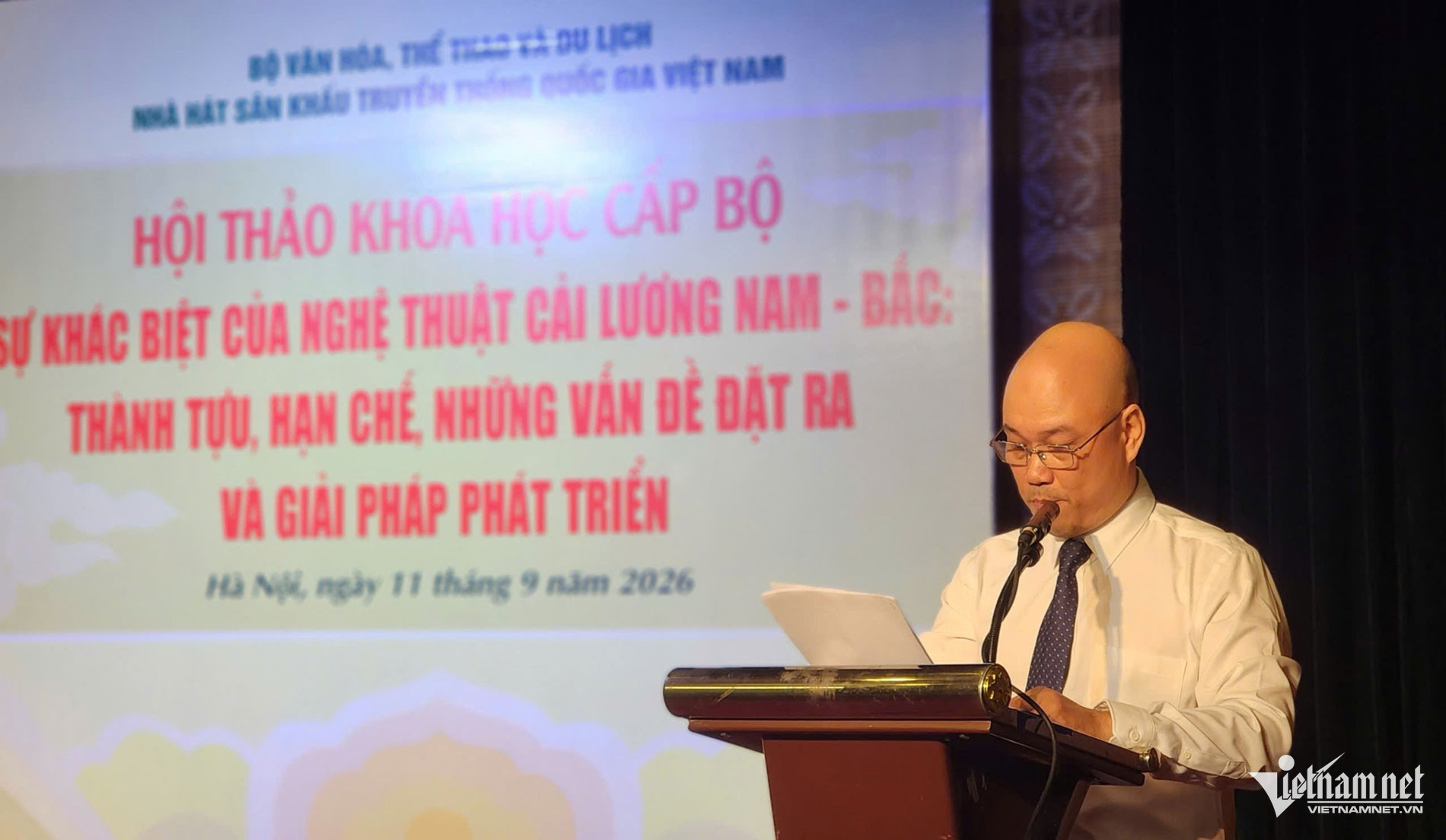
He spoke at a seminar on the differences between northern and southern cai luong, held on September 11 by the National Traditional Theater of Vietnam under the Ministry of Culture, Sports and Tourism.
The seminar was part of a ministry-level scientific research project led by Dr. and Meritorious Artist Trieu Trung Kien.
People’s Artist Le Tuan Cuong, Deputy Director of the National Traditional Performing Arts Theatre of Vietnam said cai luong, more than a century old, is an integral part of Vietnamese culture. The 2013 UNESCO recognition of Don Ca Tai Tu (the musical root of Cai Luong) as an Intangible Cultural Heritage of Humanity reaffirmed the immense value of this art form.
Although cai luong shares its roots with southern Vietnam, the art form developed its own distinctive identity after taking root in the North. Kien pointed to clear differences in the performance styles of the two regions.
In Hanoi, productions are mainly staged by public institutions and are carefully and seriously developed over several months. Northern cai luong favors historical and semi-historical themes, with an emphasis on ideological values and depth of content.
By contrast, the market in HCMC is more dynamic, with many private troupes serving diverse audiences, from domestic viewers to overseas Vietnamese.
Some private troupes often spend only a few days preparing a production; in one exceptional case, a troupe held just a single run-through before putting the show on for audiences, resulting in productions of relatively low quality.
Some troupes in HCMC have catered to audiences who favor “Ho Quang cai luong” (Vietnamese folk opera with Chinese opera influences). Because they have yet to fully recognize their responsibility and have catered to the tastes of some of the audiences, they have reintroduced almost intact elements of Chinese opera, stripping away much of the distinctive cultural value of Vietnamese art and putting cai luong at risk of serious decline and distortion.
“This is an alarming situation that has a major impact on efforts to preserve and develop cai luong,” Meritorious Artist Trieu Trung Kien said.
Elaborating on the different styles, Meritorious Artist Hoang Quynh Mai said Northern cai luong, after taking root in the land of a thousand years of civilization, interacted with local classical and folk art forms, creating a style that is scholarly, romantic and highly refined. Its defining features include clear and precise diction, polished and literary lyrics, while maintaining the distinctive character of revolutionary cai luong theater.
Despite their different characteristics, cai luong in both regions is facing some problems.
From an author's perspective, master’s degree holder Le The Song summed them up: “The generational disconnect among audiences exists amid the wave of digital entertainment, the script crisis that has led to spoken drama being performed as cai luong, the fading of veteran artists, and the shortcomings in training where the overuse of Western vocal techniques has diluted the national character.
“In addition, the lack of standard theaters in the South and the habit of passively waiting for orders for political and ideological scripts in the North are also holding back the development of this art form.”
Survival solutions: going digital, keeping pace with trends
The parallel existence of the two southern and northern styles is not about one eliminating the other, but about complementing and supporting each other.
To prevent cai luong from falling behind, experts at the seminar stressed the need to strike a balance between the emotional heart of the South and the scholarly mind of the North.
One proposed solution is to strengthen cross-regional exchanges: northern directors could go South to stage productions and enhance their ideological depth, while southern artists could travel North to share their expressive and emotionally rich singing and acting techniques, helping make Northern cai luong more supple.
In particular, in the digital and multicultural era, reaching young audiences has become a matter of survival. Researcher Tuan Giang of the Institute of Theater and Cinema Studies said the industry needs to change its mindset by proactively bringing cai luong to social media platforms such as TikTok, YouTube Shorts and Spotify through short-form videos that explain the art form in a humorous and accessible way.
Instead of simply listening passively, contemporary audiences need visually engaging experiences through the integration of modern audiovisual performance technologies such as 3D mapping and augmented reality (AR).
Tinh Le
.svg)
