 Vietnamnet.vn

 Podcast



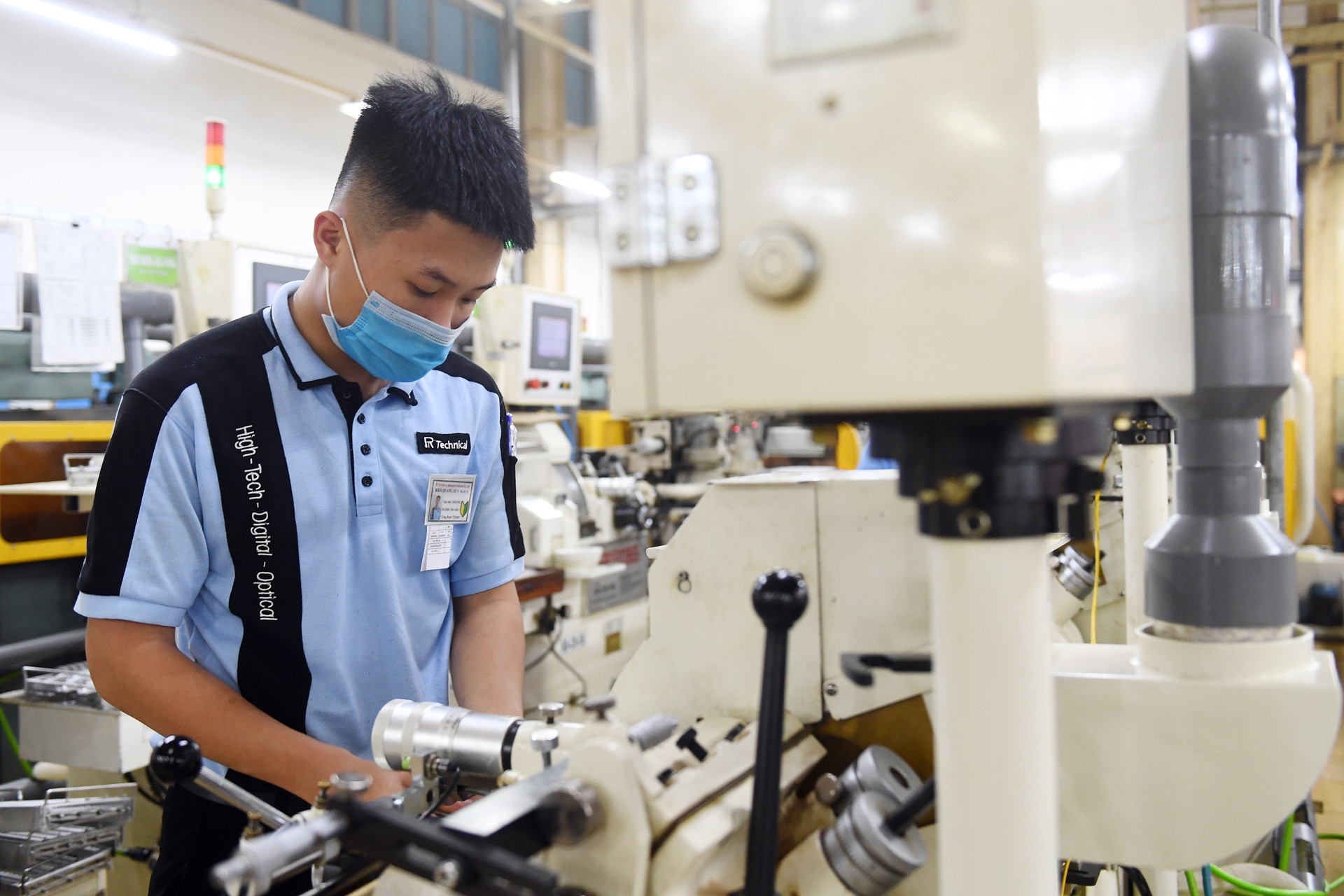
Registered foreign direct investment (FDI) in Vietnam exceeded $50 billion in the first nine months of 2026, creating new opportunities for domestic businesses. However, to make the most of these inflows, Vietnam needs to promote technology transfer and increase localization production ratios.
Economist Nguyen Tri Hieu said FDI enterprises were investing not only in manufacturing and processing for export but also in other sectors, including real estate, electricity and consumer goods.
This is a positive trend that helps inject resources into the economy and drive the development of various industries.
However, he said appropriate oversight mechanisms are needed for real estate investment to ensure capital is used effectively and to curb speculation, price inflation and the formation of property bubbles. This has also been a consistent position of the government.
He noted that 30 years ago, Vietnam attracted FDI largely on the strength of its low labor costs, with localization production ratios of only around 5-10 percent. Today, localization ratios in some industries have risen to 52 percent, marking significant progress in the country's efforts to attract FDI.
According to Hieu, what Vietnam needs from FDI is capital, technology and management expertise. At the same time, the country must reduce its dependence on FDI. In particular, localization ratios should rise from current levels to 60 percent, 70 percent, 80 percent and eventually 90 percent, as China has achieved.
Hieu cited China's experience several decades ago, when it invited foreign investors to establish operations on the condition that they transfer technology. China has since become a high-tech country, partly thanks to those transfers.
Vietnamese businesses need foothold in supply chains
According to SGS Vietnam general director Jackson Woo, the country should not view FDI enterprises solely as a source of investment capital, but also as a driver of stronger domestic supply chains. This would create opportunities for Vietnamese small and medium-sized enterprises (SMEs) to gradually join global supply networks.
He said the key to entering international supply chains is building trust with foreign partners. To become suppliers to major corporations, Vietnamese businesses must demonstrate that they can meet international quality requirements and standards.
“Most of our customers in Vietnam today are FDI enterprises, including Tier 1, Tier 2 and even Tier 3 suppliers to major corporations around the world,” he said.
According to him, global buyers tend to continue choosing FDI enterprises as suppliers because these companies have already met international product requirements and standards. This is an issue Vietnamese businesses need to address if they want to participate more deeply in global supply chains.
Although Vietnam has a population of more than 100 million and a large domestic consumer market, Jackson Woo said developing the domestic market and joining global supply chains are two different matters.
Therefore, alongside efforts to stimulate domestic consumption, Vietnam needs to help local suppliers participate more deeply in international supply chains by building an innovation ecosystem founded on trust.
Once this interconnected ecosystem is in place, the next key challenge is to substantially upgrade the capabilities of domestic businesses so they can take on critical roles in supply chains.
On this issue, Cha Ji Ho from Samsung Vietnam said that as global supply chains underwent major restructuring, Samsung has linked efforts to improve local suppliers' capabilities with its goal of strengthening the stabilization of its own supply chain.
The process has been carried out systematically in stages, from strengthening manufacturing foundations - through consultancy services for 379 businesses and training for 406 experts between 2015 and 2021 - to developing core capabilities through the Smart Factory model.
In 2026 alone, Samsung provided support to an additional 14 businesses, bringing the total number of companies whose operations had been standardized under the model to 96. It also trained hundreds of experts in smart mold-making and automation.
Samsung will adjust its strategy for supporting Vietnamese businesses in the coming period along three lines: expanding the scale of its programs, improving their quality and implementing them more systematically, in line with the orientations of Resolutions 10 and 280.
Specifically, support programs for domestic businesses will expand geographically. In addition to focusing on Bac Ninh and HCMC, Samsung will also roll them out in Phu Tho, Hai Phong and Thai Nguyen.
Tuan Nguyen
.svg)
