Vietnamnet.vn

 Podcast


Caodaism enriches Vietnam's cultural heritage
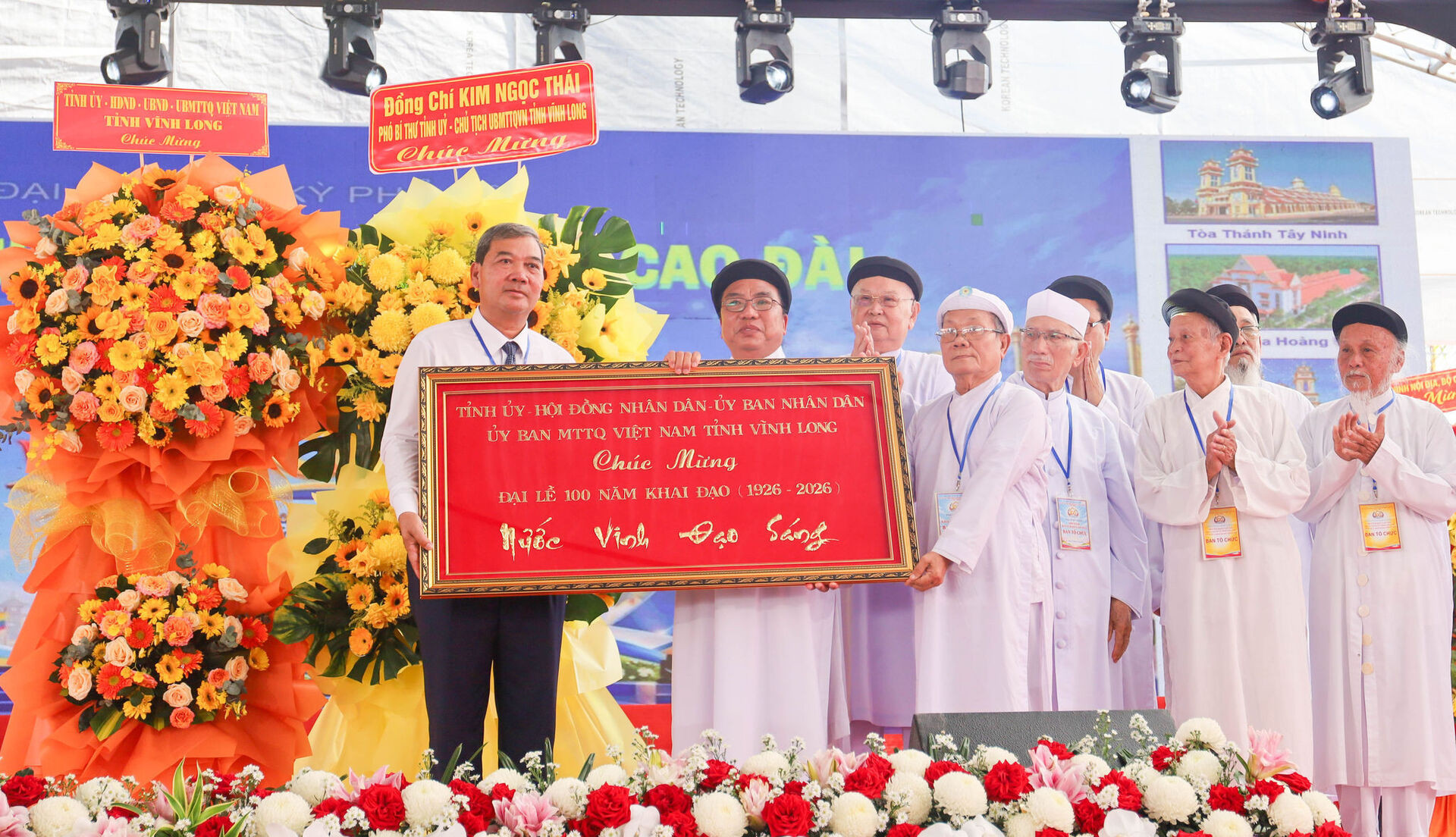
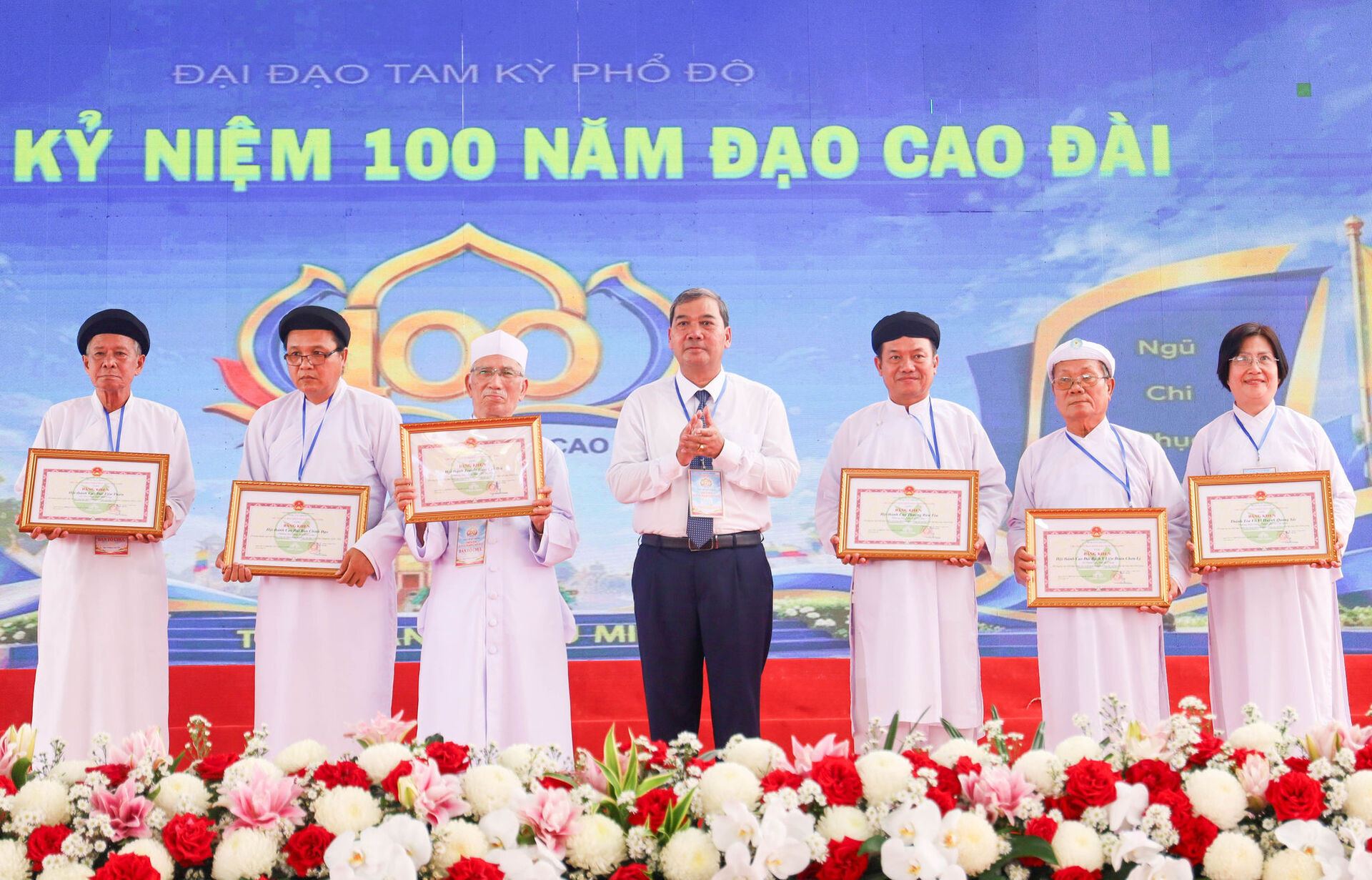
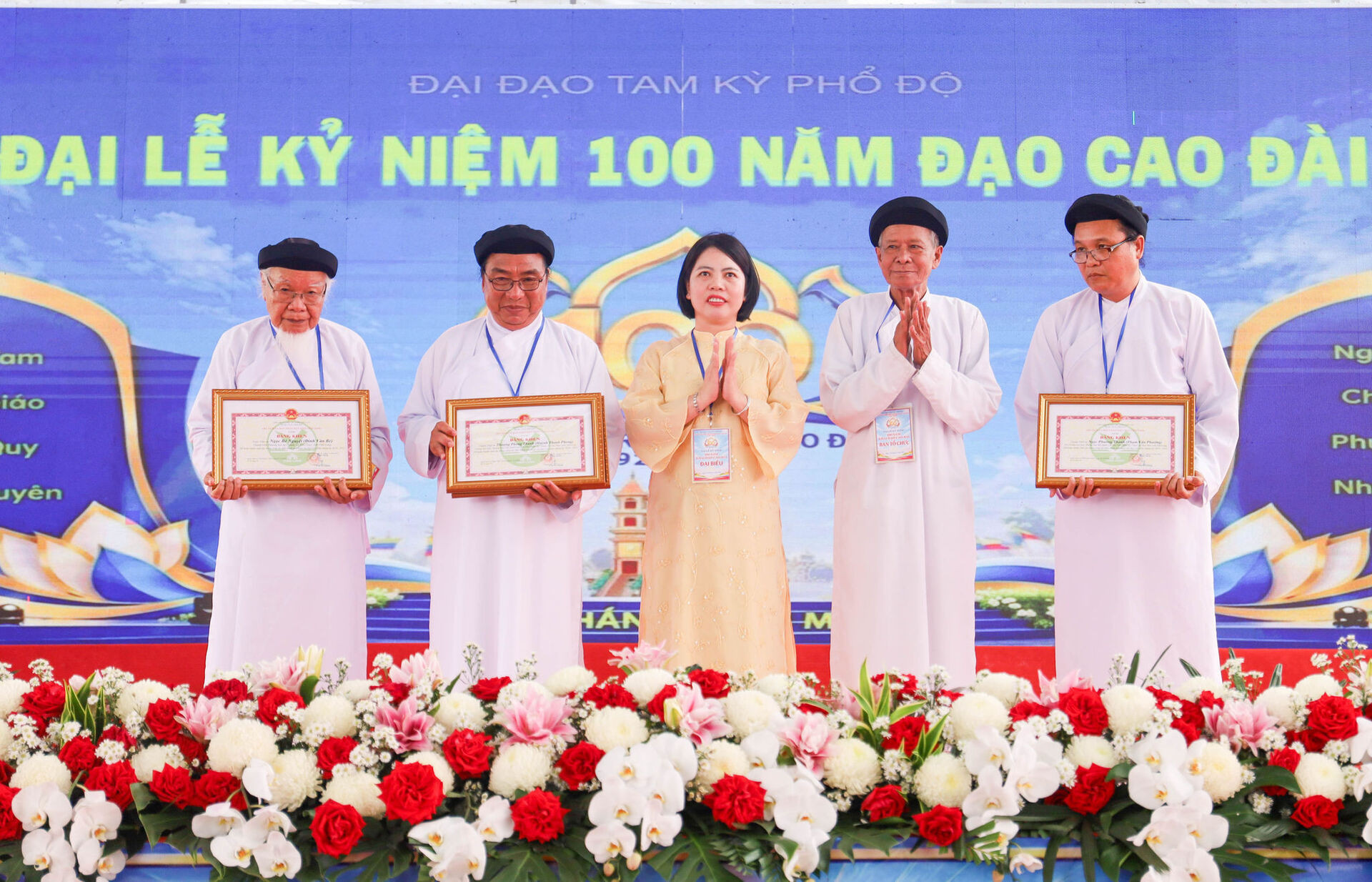
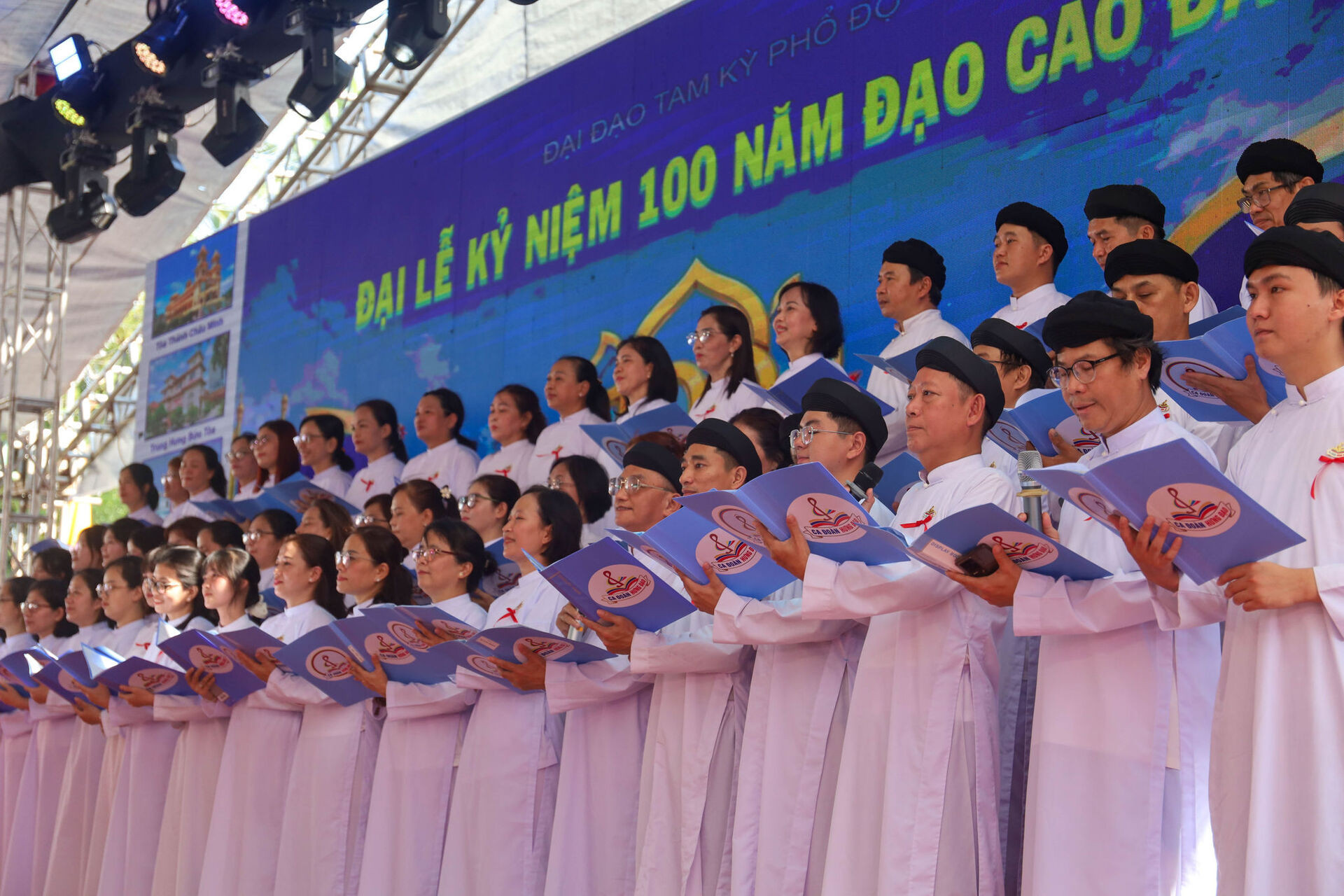
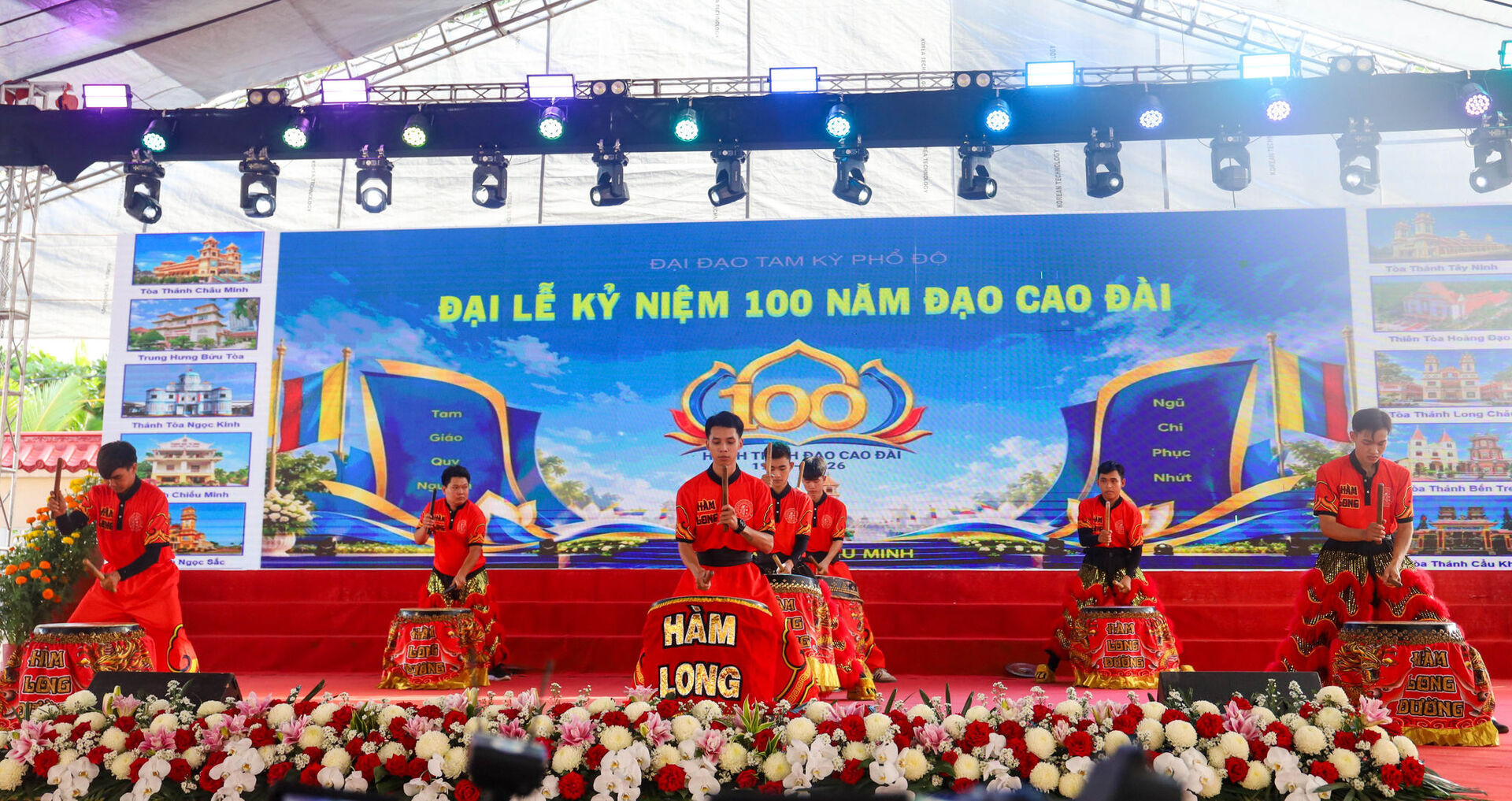
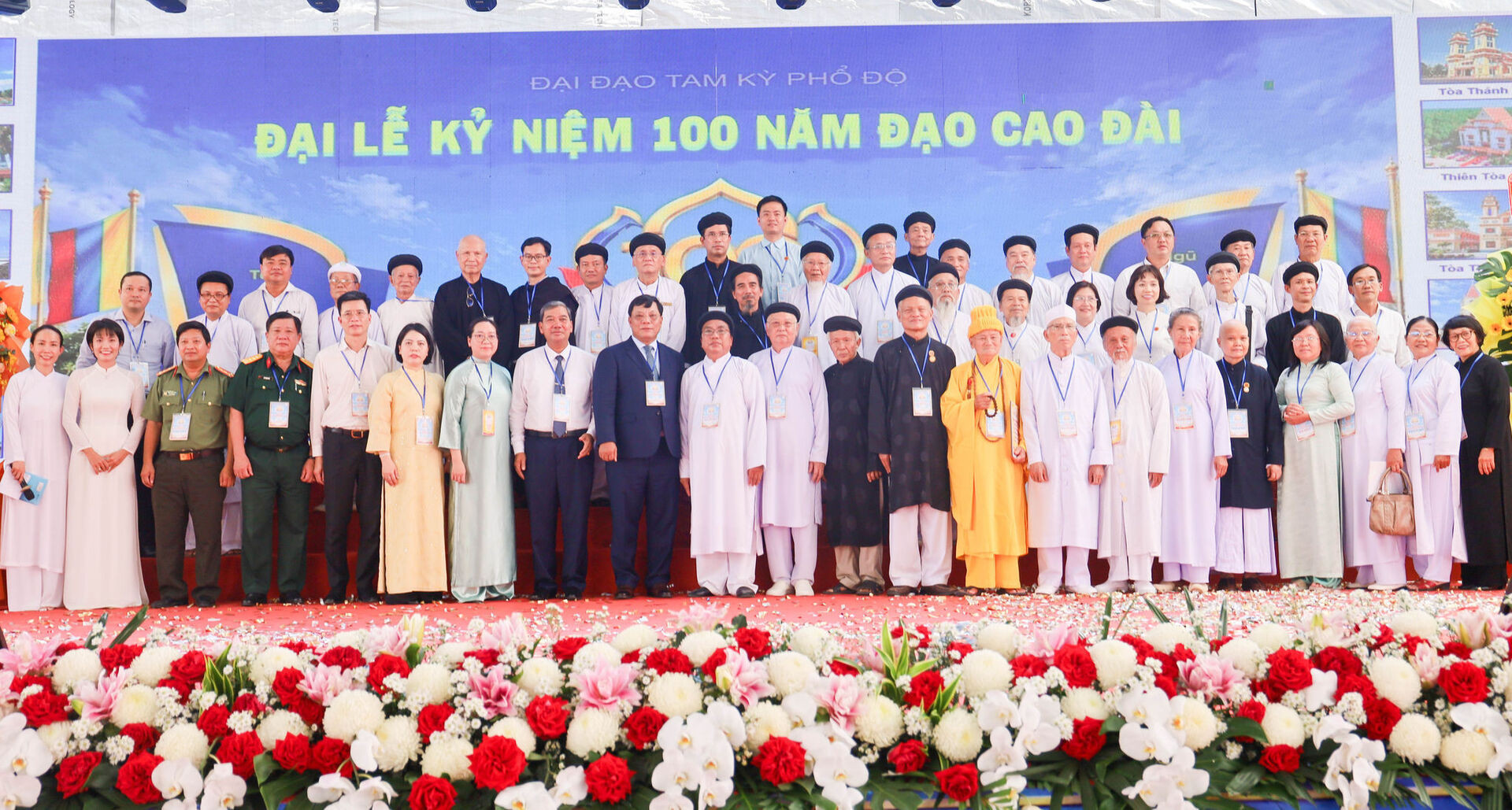
The Cao Dai Tien Thien Church held a grand ceremony on November 16 at Chau Minh Holy See in Tien Thuy commune, Vinh Long province, to commemorate the 100th anniversary of the founding of Caodaism (1926-2026).
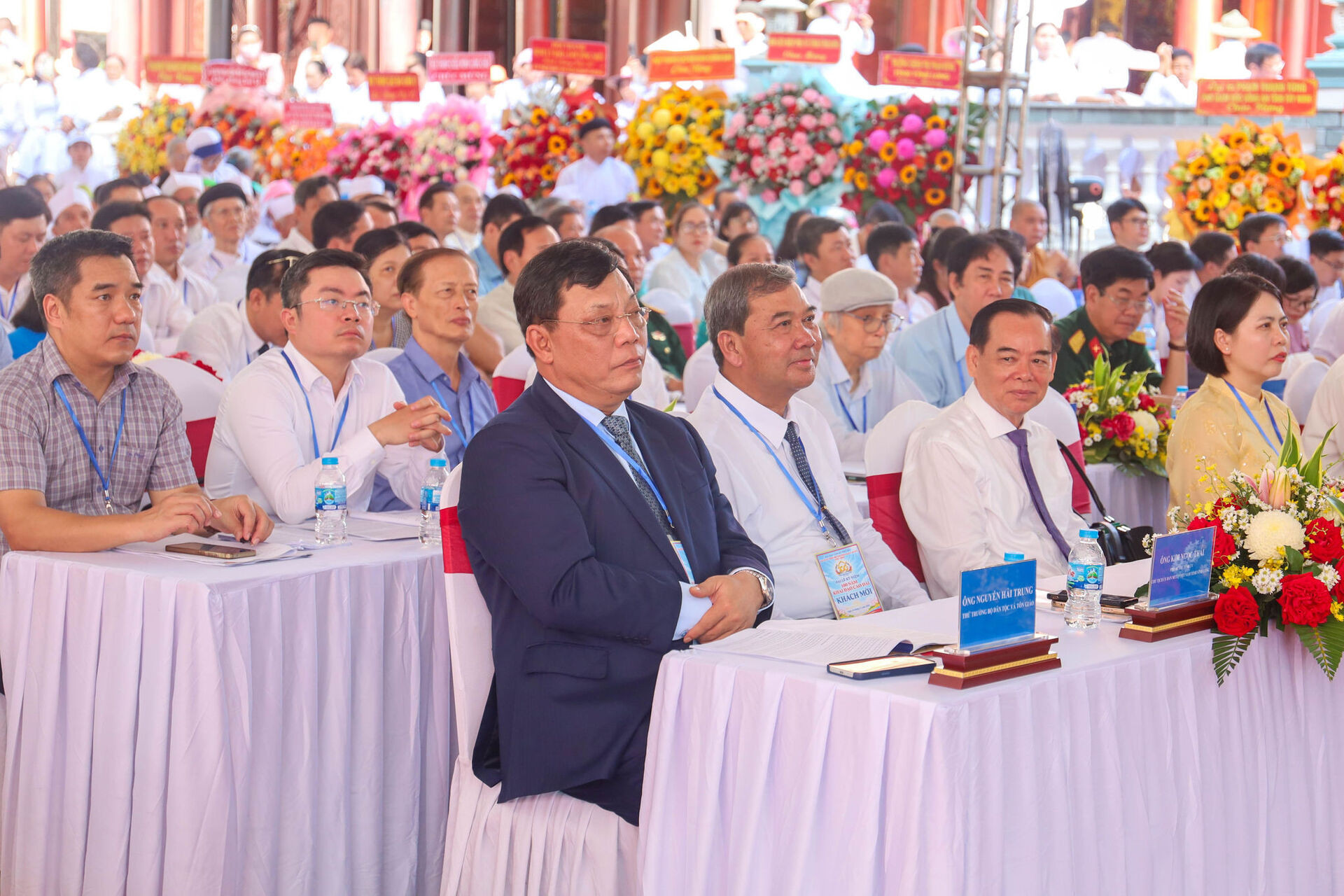
Deputy Minister of Ethnic and Religious Affairs Nguyen Hai Trung attended the celebration and delivered an address.
Other attendees included Kim Ngoc Thai, Deputy Secretary of the Vinh Long Provincial Party Committee and Chairman of the provincial Vietnam Fatherland Front Committee; representatives of central and local ministries, agencies and organizations; and dignitaries, officials and followers from Cao Dai churches.
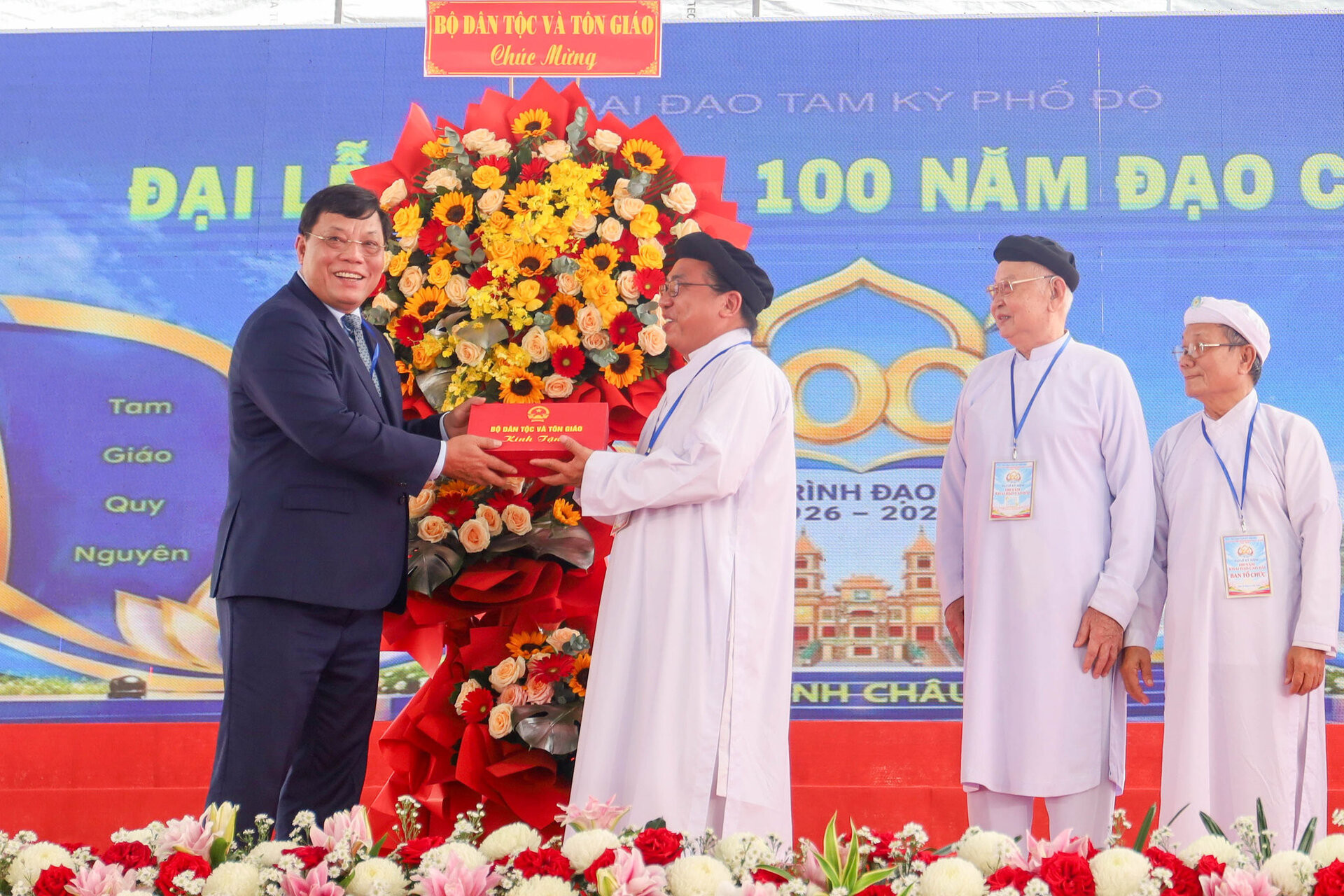
Speaking at the ceremony, Trung emphasized that Caodaism, guided by the principle of "Three Teachings Returning to One Origin, Five Branches Reuniting as One," has contributed significantly to Vietnam's cultural diversity.
The religion uses the Divine Eye as its symbol of worship of the Supreme Being and upholds the moral principles of "Love and Justice."
According to the Deputy Minister, these teachings promote ethical values, compassion, moral improvement and a sense of responsibility toward the community.
Caodaism has developed distinctive features within the cultural and spiritual life of southern Vietnam while helping strengthen solidarity and connections between religious dignitaries, officials, followers and the wider community.
A century of religious practice and service to the nation
Over the past century, despite periods of historical upheaval, Cao Dai churches have continued maintaining religious activities, developing places of worship, training religious dignitaries and guiding followers in observing religious teachings and regulations.
They have also participated actively in social initiatives.
"This journey demonstrates the enduring vitality of an indigenous religion rooted in Vietnamese culture, closely connected with community life and making noteworthy contributions throughout the nation's history," Trung said.
During Vietnam's resistance wars against French colonial rule and American military intervention, tens of thousands of Cao Dai followers participated in revolutionary movements, directly engaging in combat or supporting military operations.
Among them, many were awarded the title of Hero of the People's Armed Forces.
More than 260 Cao Dai followers received the title of Vietnamese Heroic Mother, either during their lifetimes or posthumously. The community also recorded 4,786 fallen soldiers and more than 5,000 wounded veterans.
According to Trung, during the difficult struggle for national independence, many Cao Dai dignitaries, religious officials and followers demonstrated patriotism by linking their religious devotion with responsibilities toward the country.
Cao Dai communities contribute to national solidarity
During the period of peace and national reunification, particularly since Vietnam began its Doi Moi economic reforms, Cao Dai churches and organizations have continued promoting their patriotic traditions through practical contributions to social development.
Religious dignitaries, officials and followers have maintained their religious practices in accordance with church teachings, regulations and charters.
They follow the principle of "Three Establishments," encompassing the cultivation of virtue, the performance of meritorious deeds and the expression of meaningful teachings.
At the same time, Cao Dai communities actively participate in patriotic emulation movements, gratitude programs for people who contributed to the nation, poverty alleviation and support for disadvantaged households.