 Vietnamnet.vn

 Podcast



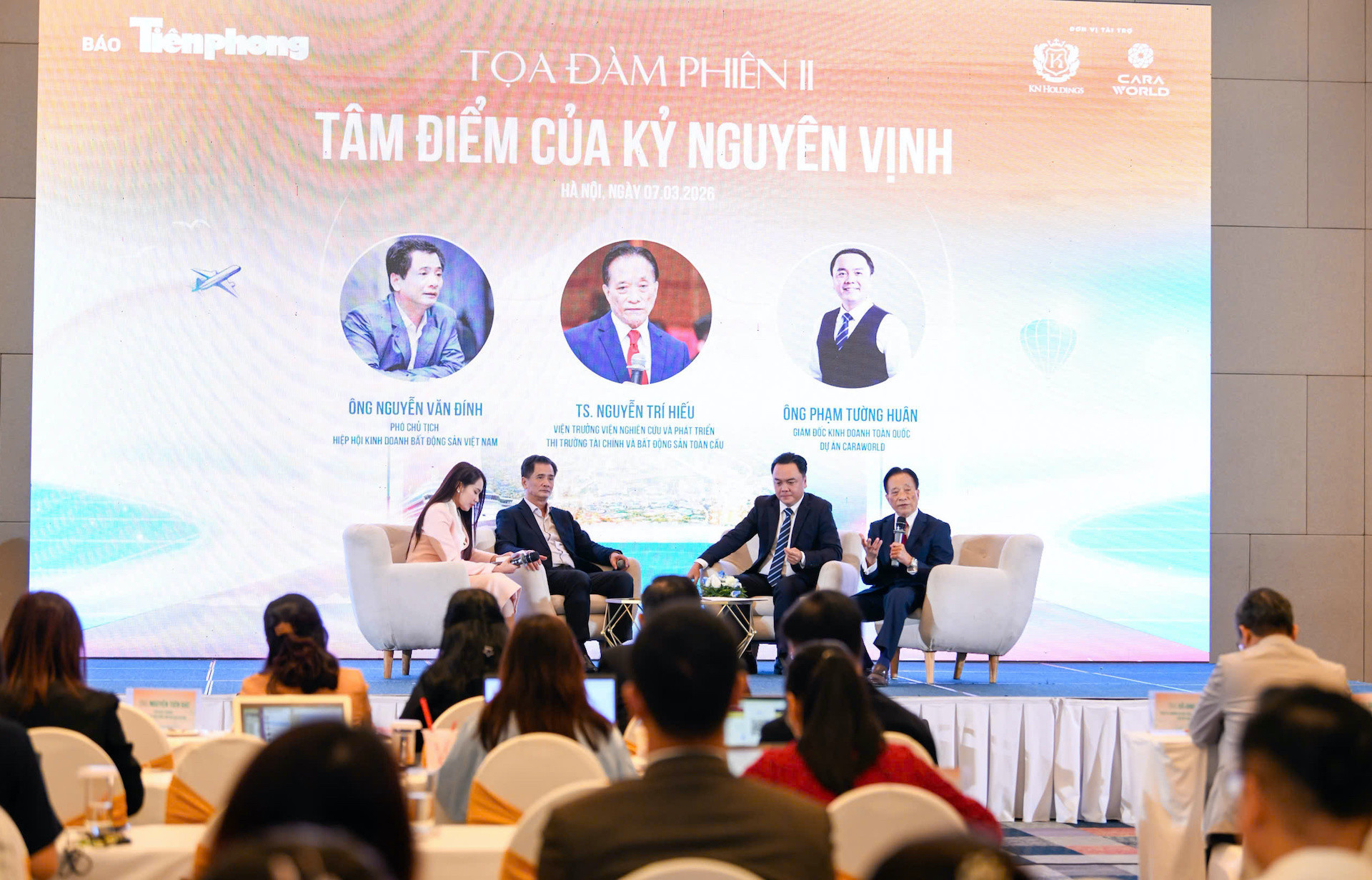
Speaking at the seminar “The Era of Coastal Bays: Global Trends in Marina Leisure Ports” organized by Tien Phong Newspaper on March 7, Vu Anh Tu, Deputy Director of the Planning and Architecture Department under the Ministry of Construction, said Vietnam has more than 3,260 km of coastline and 48 bays and inlets, which are important resources for developing the marine economy and bayfront real estate.
According to Tu, to manage marine and coastal spaces, the government has improved the legal framework and planning system in line with the orientation of the Vietnam Sustainable Marine Economic Development Strategy to 2030, with a vision to 2045.
In addition to the legal framework, national, regional and local planning schemes have also incorporated orientations for developing and controlling marine space. In practice, many large projects have been formed and effectively tapped marine potential in localities such as Can Gio (HCMC), Cam Ranh (Khanh Hoa) and Ha Long (Quang Ninh).
However, Tu also pointed out that management still faces several limitations, such as overlaps between marine spatial planning and urban planning, inconsistent implementation in some localities and insufficiently strong sanctions for marine environmental violations. In addition, many plans have not fully integrated Environmental – Social – Governance (ESG) factors and still lack long-term monitoring mechanisms.
According to Tu, to sustainably develop the bayfront real estate market, it is necessary to continue improving the legal framework, introduce tax and credit incentives for green projects along coastal bays and promote public–private partnership (PPP) models in infrastructure investment.
At the same time, it is necessary to clearly zone functional areas, strictly control land reclamation activities, prioritize public spaces along bays and strengthen transport connections between seaports, airports and tourism areas.
New momentum for coastal cities
Nguyen Van Dinh, Vice Chair of the Vietnam Real Estate Association, said that with its long coastline and rich marine ecosystem, Vietnam has many opportunities to strongly develop its marine economy. Its location along important maritime routes in the region not only enhances its geostrategic position but also opens opportunities for maritime industries, logistics, renewable energy and especially marine tourism.
He said many coastal cities currently contribute up to about half of national GDPs around the world. In addition to generating large revenues from tourism and services, the development of coastal cities also drives growth in trade, real estate, transport and logistics.
Globally, many countries have succeeded with coastal urban development strategies such as Singapore and Dubai. In Vietnam, several localities such as Da Nang and Khanh Hoa are gradually developing coastal cities based on integrated models combining tourism, services and living spaces.
Tran Xuan Luong, Vice Director of the Vietnam Institute for Real Estate Market Research and Evaluation, said Vietnam is facing a major opportunity to develop integrated marina real estate models.
The combination of the marine economy and coastal real estate is considered by many experts to be a “blue gold mine”, generating significant economic value but still not fully tapping its potential. Cam Ranh Bay, in particular, is seen as an area with many favorable conditions for developing urban areas associated with marina.
National Sales Director of CaraWorld project Pham Tuong Huan said the area is being developed toward a large-scale marina complex combined with festival streets, squares and year-round marine events.
According to Huan, the goal of the project is not only to build housing but also to create a marine event economy ecosystem where visitors can experience yacht festivals, water sports, conferences and international exhibitions.
Returning the planning, Vu Anh Tu said that for Cam Ranh to become a destination for international superyachts, the key factor is infrastructure and a long-term development vision.
“Infrastructure should not be just the marina area but must also include transport systems, services and regional tourism products. Visitors traveling by superyacht usually do not stop at a single location but want to explore multiple destinations in the region,” Tu said.
Hong Khanh
He emphasized that investment in transport systems, services and regionally connected tourism products will play an important role in attracting and retaining this high-end group of visitors.
.svg)
