 Vietnamnet.vn

 Podcast



Record-breaking performance
According to the Department of Vietnam Customs, Vietnam’s cashew exports in 2025 are estimated at 766,600 tonnes, generating more than 5.2 billion USD. This represents an increase of just 5.7% in volume but a sharp rise of 20.4% in value compared with the previous year. The strong performance has enabled cashew exports to set successive new records, reinforcing their increasingly solid role in Vietnam’s agricultural export structure.
A notable highlight in 2025 was a shift in export markets. China overtook the US for the first time to become Vietnam’s largest cashew buyer, with import turnover reaching 1.115 billion USD. The US followed with 975 million USD, while the Netherlands ranked third at 495 million USD. This change reflects growing consumption in Asian markets and demonstrates the flexibility of Vietnamese exporters in responding to global market fluctuations.
The Vietnam Cashew Association (Vinacas) said export results far exceeded expectations, as the initial target for 2025 was set at 4.7 billion USD. The additional revenue has created optimism for 2026, especially as the industry sets clearer priorities such as increasing value added, reducing reliance on imported raw materials and pursuing more sustainable development pathways.
Vinacas President Pham Van Cong noted that the industry has undergone a significant transformation over the past decade. Once largely associated with social welfare and poverty reduction, cashew processing has evolved into a multi-billion-dollar sector supplying products to more than 100 countries and territories. Central to this shift has been the application of science and technology.
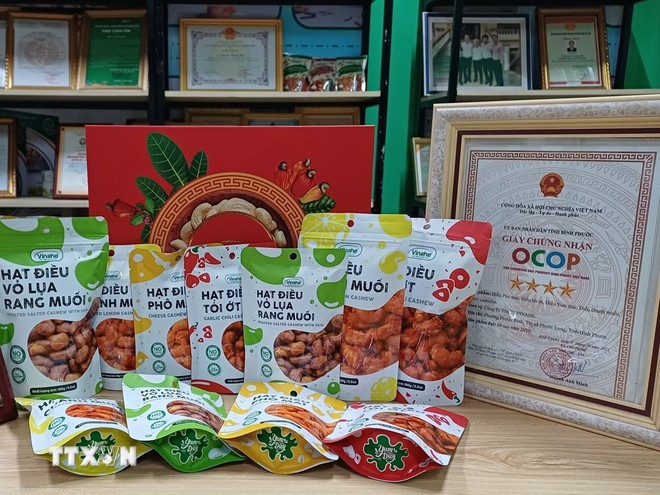
Since 2010–2011, the introduction of automated shelling and peeling machines has improved productivity, stabilised quality and enabled Vietnamese cashews to meet stringent standards in demanding markets such as the US, the European Union, China and Japan.
Taking control of market regulation
Despite these achievements, the industry continues to face a structural challenge - raw material dependence. Domestic processing plants require more than 3 million tonnes of raw cashew nuts each year, while domestic supply meets only about 10% of demand. In 2025, Vietnam imported over 2.9 million tonnes of raw cashews worth around 4.5 billion USD. This heavy reliance on imports leaves exporters vulnerable to policy changes and price fluctuations in supplying countries.
Vu Thai Son, Chairman of the Board of Directors of Long Son Joint Stock Company and Chairman of the Dong Nai Cashew Association, pointed out a paradox in the sector. Although export turnover has hit record highs, many cashew exporters, particularly small and medium-sized enterprises, have suffered losses and even exited the market. He attributed this to rising raw material costs, minimum export price policies imposed by some African suppliers, and the tendency of Vietnamese firms to rush into purchasing raw nuts early in the season, pushing prices up and squeezing margins.
Looking ahead, industry experts expect global cashew consumption to continue growing, especially in markets such as China, Japan, the Republic of Korea, Russia, Nordic countries and ASEAN. Younger consumers are also driving demand for cashew-based products such as butter and plant-based milk.
To ensure long-term growth, Vinacas has identified domestic raw material development and deep processing as strategic priorities.
With coordinated policies, technological innovation and more disciplined market behaviour, the industry aims to ensure that its global leadership is measured not only by export volume and value, but also by efficiency, profitability and sustainability./. VNA
.svg)
